Loading…
Loading video…

1,195 views
Ever wondered why your Uber driver never gets lost, even in downtown Manhattan's maze of one-way streets? Errors in global positioning system technology can create navigation challenges that affect millions of daily users, from emergency responders to delivery drivers across America. The Global Positioning System relies on satellite triangulation, but atmospheric interference, signal blockage, and receiver limitations can cause location inaccuracies ranging from a few feet to several meters. Understanding What is Global Positioning System and its error sources helps explain why your phone sometimes shows you standing in the middle of a building when you're actually on the sidewalk. Watch the full video on JoVE Coach to master this concept with expert-led visuals and step-by-step explanations.
The Global Positioning System represents one of humanity's most remarkable technological achievements, yet like all complex systems, it faces inherent limitations that create positioning errors. These errors in global positioning system functionality stem from multiple sources, each contributing to the final uncertainty in your device's location calculation.
The most significant GPS errors originate from signal propagation delays as satellite transmissions travel through Earth's atmosphere. Ionospheric delays occur when GPS signals pass through charged particles in the upper atmosphere, slowing signal speed and creating distance measurement errors of up to 15 meters during peak solar activity. Tropospheric delays happen in the lower atmosphere due to water vapor and temperature variations, typically adding 1-3 meters of error.
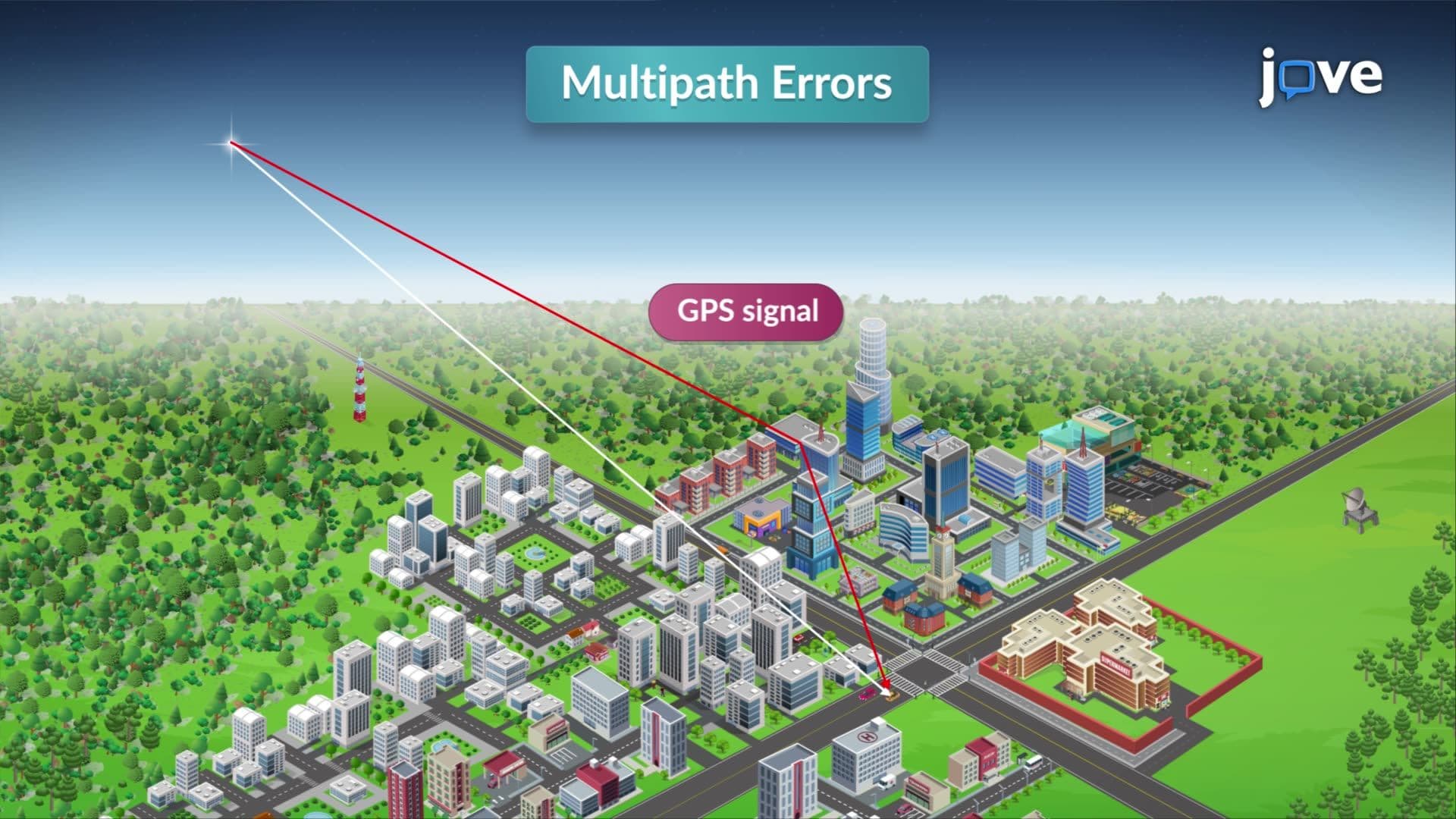
Multipath interference presents another major challenge, especially in urban environments like downtown Chicago or New York City. When GPS signals bounce off buildings, creating multiple signal paths to your receiver, the device struggles to determine which signal represents the direct path from the satellite. This phenomenon explains why navigation apps sometimes show erratic position jumps when walking between skyscrapers.
Satellite geometry significantly impacts positioning accuracy through a concept called Dilution of Precision (DOP). When available satellites cluster in one area of the sky rather than spreading evenly, position calculations become less reliable. This geometric challenge affects hikers in canyons, drivers in tunnels, and anyone using GPS in environments with limited sky visibility.
Receiver clock errors also contribute to positioning uncertainties. Since GPS relies on precisely timed signals to calculate distances, even nanosecond timing errors translate to meters of position error. Modern receivers address this through sophisticated algorithms, but the fundamental challenge remains.
Understanding these error sources proves crucial for AP Physics students studying wave propagation and signal processing. College engineering programs examine GPS errors when teaching satellite communications and navigation system design. The Federal Aviation Administration requires pilots to understand GPS limitations for instrument flight procedures, making this knowledge essential for aviation careers.
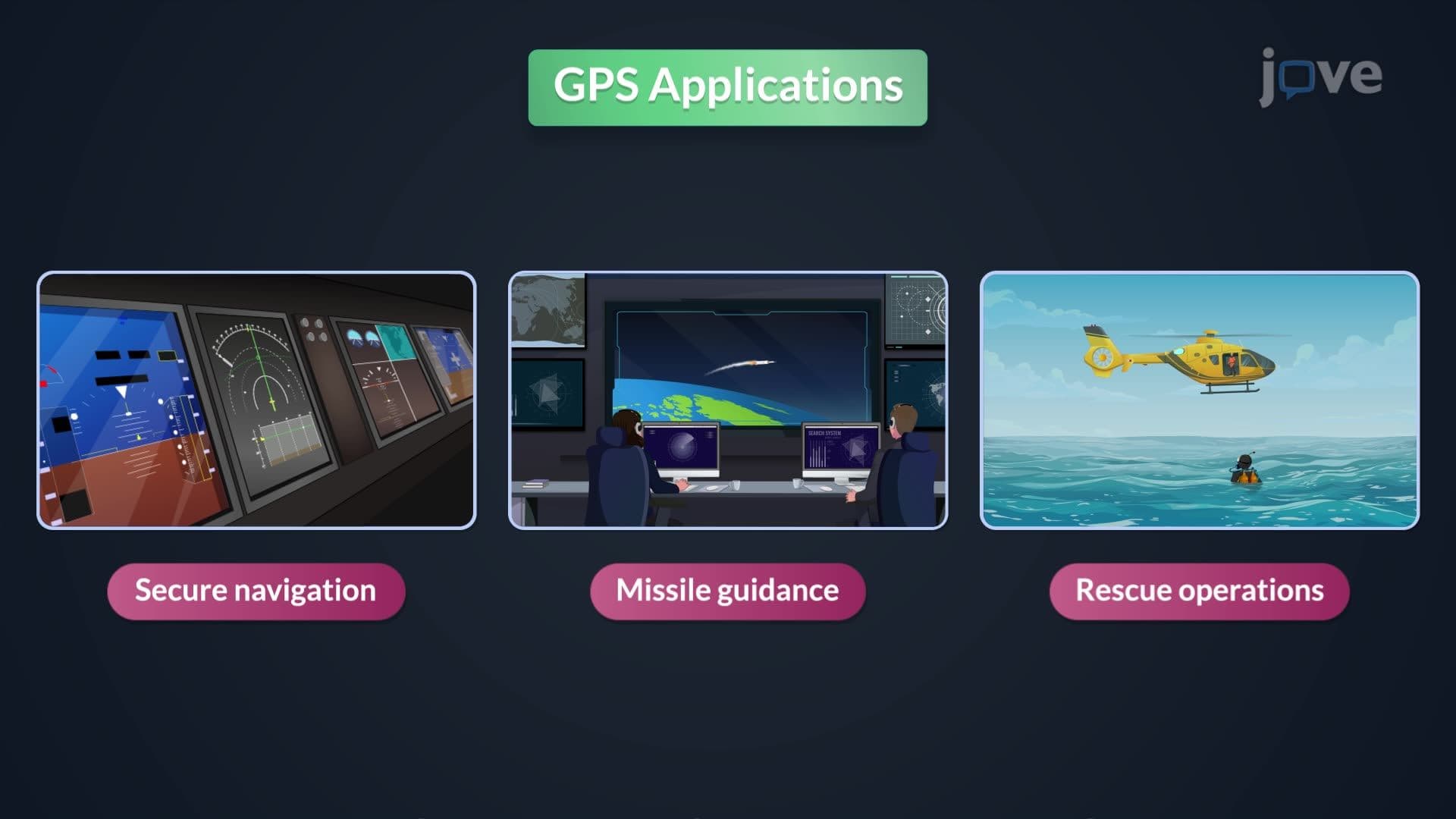
Emergency response systems across the United States must account for GPS errors when dispatching ambulances or coordinating disaster relief efforts. The margin of error can mean the difference between reaching victims quickly or arriving at the wrong location during critical situations.
Frequently Asked Questions
The Global Positioning System is a satellite-based navigation network that determines location through triangulation of signals from multiple satellites. Positioning errors occur when atmospheric conditions, signal reflections, satellite geometry, or receiver limitations interfere with accurate distance measurements between satellites and your device.
AP Physics exams often include questions about wave propagation delays and signal interference affecting GPS accuracy. College engineering courses test understanding of error sources, geometric dilution of precision calculations, and error mitigation strategies used in navigation system design.
MCAT physics sections may test understanding of electromagnetic wave propagation through different media, signal attenuation, and basic principles of satellite communication systems. Questions often focus on how atmospheric conditions affect signal transmission and reception accuracy.
Urban environments create multipath interference when GPS signals bounce off buildings before reaching your receiver, causing position errors and signal delays. Highways provide clear sky visibility with minimal signal obstruction, allowing optimal satellite signal reception and more accurate positioning.
Basic algebra and trigonometry provide sufficient mathematical foundation for understanding GPS error principles. While professional GPS system design requires advanced calculus and signal processing knowledge, high school students can grasp fundamental error concepts through geometry and basic physics principles.
Focus on understanding each error source's physical cause rather than memorizing numerical values. Practice explaining how atmospheric conditions, satellite geometry, and environmental factors affect signal propagation, and work through problems calculating basic position uncertainties.
Consider studying differential GPS correction systems, real-time kinematic positioning, and integration with inertial navigation systems. Advanced topics include Kalman filtering for error reduction and multi-constellation GNSS systems that combine GPS with international satellite networks.
Systems like the Wide Area Augmentation System (WAAS) used by the FAA transmit correction signals that help receivers compensate for atmospheric delays and satellite clock errors. These augmentation systems can improve accuracy from meters to sub-meter precision for critical applications like aircraft landing approaches.
Related Micro-courses
Related Subjects
 Electrical Engineering 33 micro-courses›Mechanical Engineering 28 micro-courses›