Loading…
Loading video…

2,792 views
Ever wondered why the $15 billion California High-Speed Rail project faced construction delays? Poor surveying accuracy, including profile leveling and cross sections errors, contributed to costly rework. Common leveling mistakes and errors explained in surveying can derail major infrastructure projects across the United States, from highway construction in Texas to bridge building in New York. These fundamental measurement errors occur when surveyors misread instruments, position equipment incorrectly, or fail to follow proper procedures. Watch the full video on JoVE Coach to master this concept with expert-led visuals and step-by-step explanations.
Surveying accuracy forms the foundation of every major construction project in the United States, from the Golden Gate Bridge to the Interstate Highway System. When surveyors commit leveling errors, the consequences extend far beyond simple measurement mistakes—they can result in structural failures, cost overruns, and project delays that affect entire communities.
The most frequent mistakes occur when surveyors fail to maintain clear telescope sight lines. Partial obstructions from vegetation, construction equipment, or atmospheric conditions create systematic errors that compound throughout the survey. Professional surveyors working on projects like the Second Avenue Subway in New York City must constantly verify their line-of-sight remains unobstructed, especially in dense urban environments where buildings and infrastructure create challenging measurement conditions.
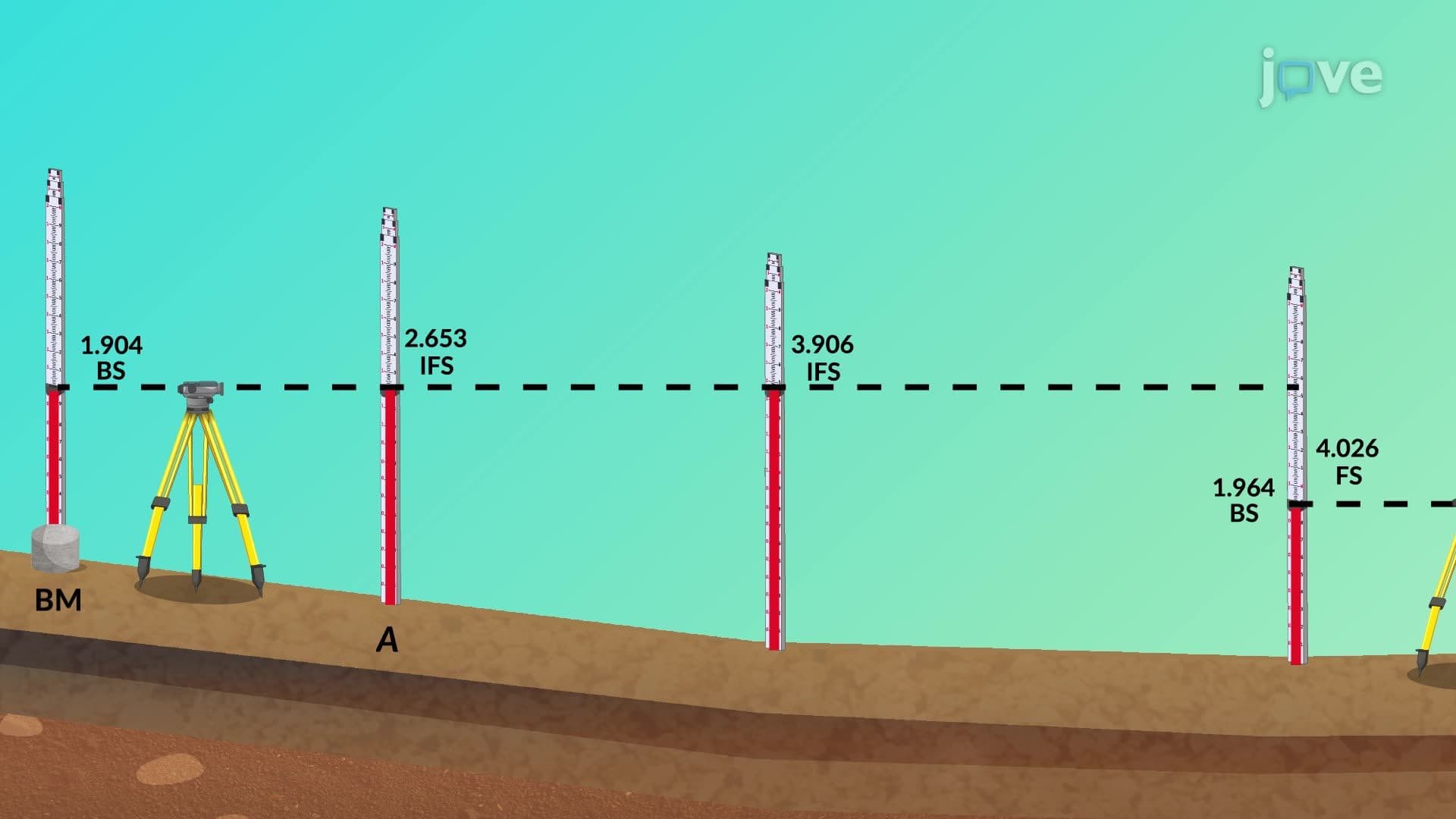
Incorrect turning point selection represents another critical error category. When surveyors relocate their instruments and take readings from wrong reference points, the entire elevation profile becomes compromised. This mistake frequently occurs during profile leveling and cross sections work on highway projects, where multiple elevation changes must be accurately mapped across varied terrain.
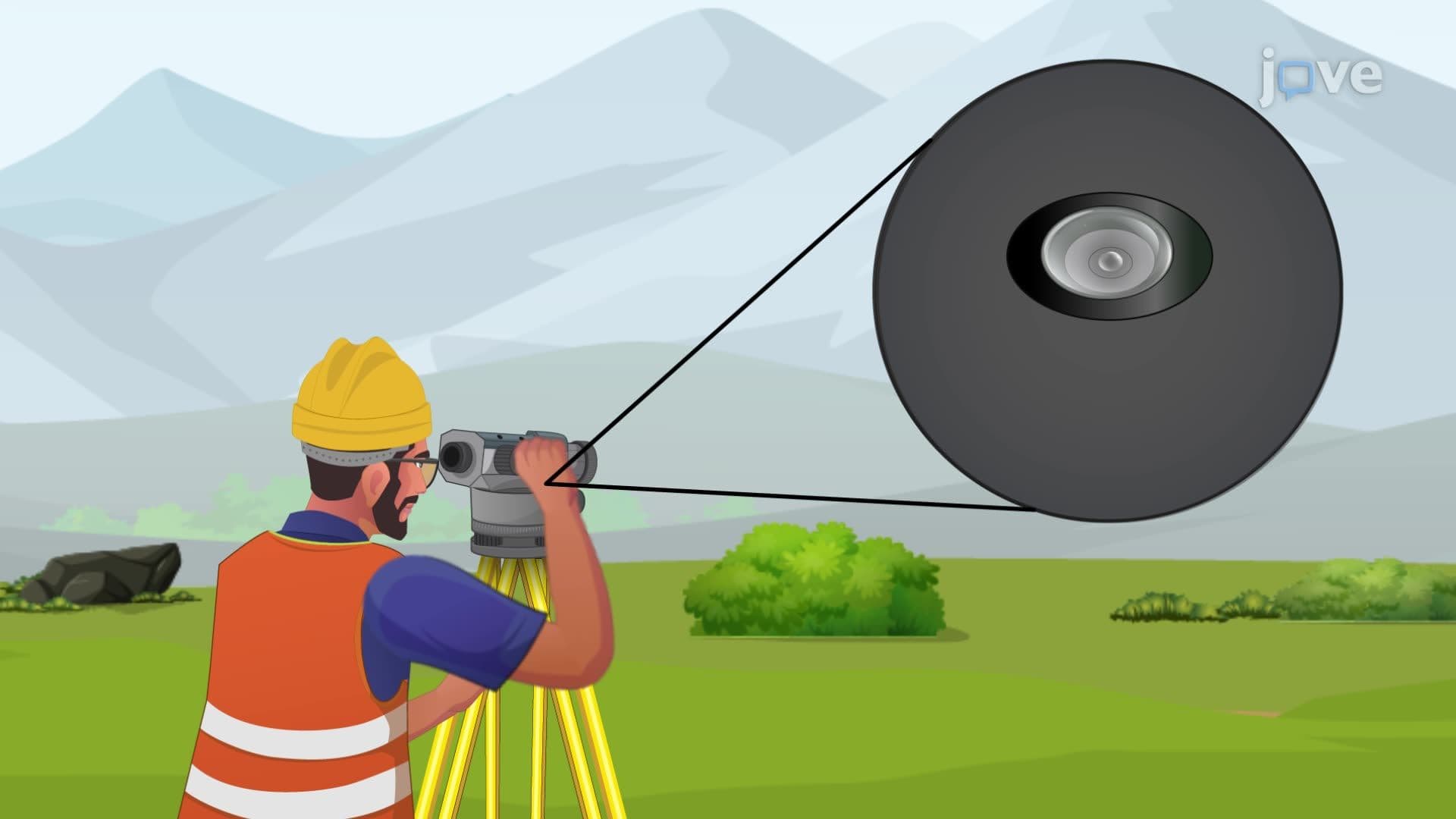
Proper rod handling requires meticulous attention to vertical positioning and base preparation. The circular bubble levels on surveying rods serve as critical indicators—when not properly centered, readings can deviate significantly from true vertical. Civil engineering students studying for AP Environmental Science or college-level surveying courses must understand that even small angular deviations translate to substantial horizontal errors over long distances.
Extension rod procedures present additional challenges. Improperly secured upper sections can shift during readings, while failure to retract carefully can damage precision instruments. Major infrastructure projects like the California High-Speed Rail system require surveying accuracy within millimeters, making proper rod handling essential for project success.
Modern surveying instruments demand precise calibration to maintain accuracy standards required for profile leveling and cross sections tutorial applications. Bubble centering, telescope focusing, and cross-hair alignment must meet strict tolerances. The horizontal cross-hair must remain perfectly perpendicular to the instrument's vertical axis, while the telescope's line-of-sight must stay parallel to the level tube.
Students preparing for college surveying exams should understand that equal backsight and foresight distances minimize systematic errors by canceling out instrument imperfections. This principle applies directly to SAT Subject Tests in Mathematics Level 2, where geometric principles underlying surveying calculations frequently appear in coordinate geometry problems.
Frequently Asked Questions
Common leveling mistakes include obstructed telescope sight lines, incorrect turning point readings, improper rod positioning, and instrument calibration errors. These mistakes can cause significant measurement inaccuracies that compromise construction project success. Professional surveyors use systematic verification procedures to prevent these errors from affecting final measurements.
AP Environmental Science exams frequently test surveying principles through topographic map interpretation and watershed analysis questions. Students must understand how elevation profiles determine water flow patterns and erosion potential. Cross-sectional analysis helps evaluate habitat connectivity and land use impact assessments in environmental studies.
Telescope focusing errors and improper bubble centering typically cause the most point deductions in college surveying labs. These mistakes demonstrate poor understanding of fundamental instrument operation principles. Students who master systematic equipment checks and verification procedures consistently earn higher laboratory grades and perform better on practical exams.
The Boston Big Dig project experienced significant cost overruns partly due to surveying inaccuracies that required tunnel realignment. Modern projects like the Tappan Zee Bridge replacement used advanced GPS and laser leveling to prevent similar mistakes. Accurate surveying prevents structural problems and keeps infrastructure projects within budget and timeline constraints.
Profile leveling requires only basic trigonometry and coordinate geometry skills typically taught in Algebra II or Geometry courses. Students comfortable with slope calculations and coordinate systems can easily master these surveying concepts. The mathematical foundation builds naturally from high school mathematics without requiring calculus or advanced statistical methods.
Create systematic checklists for instrument setup procedures and practice identifying error sources in sample field scenarios. Focus on understanding why each verification step prevents specific types of mistakes rather than memorizing procedures. Draw elevation profiles by hand to reinforce the relationship between field measurements and final survey products.
Civil engineering, environmental consulting, and construction management careers all require surveying knowledge for project planning and execution. Urban planning programs increasingly emphasize spatial analysis skills that build directly from surveying fundamentals. Geographic Information Systems (GIS) specialists use these principles for digital mapping and environmental analysis applications.
GPS surveying and laser scanning technology represent the cutting edge of modern surveying practice. Total station operation and digital mapping software provide practical skills valued by employers. Students interested in environmental applications should explore photogrammetry and remote sensing techniques used for large-scale land management projects.
Related Micro-courses

Related Subjects
 Electrical Engineering 33 micro-courses›Mechanical Engineering 28 micro-courses›