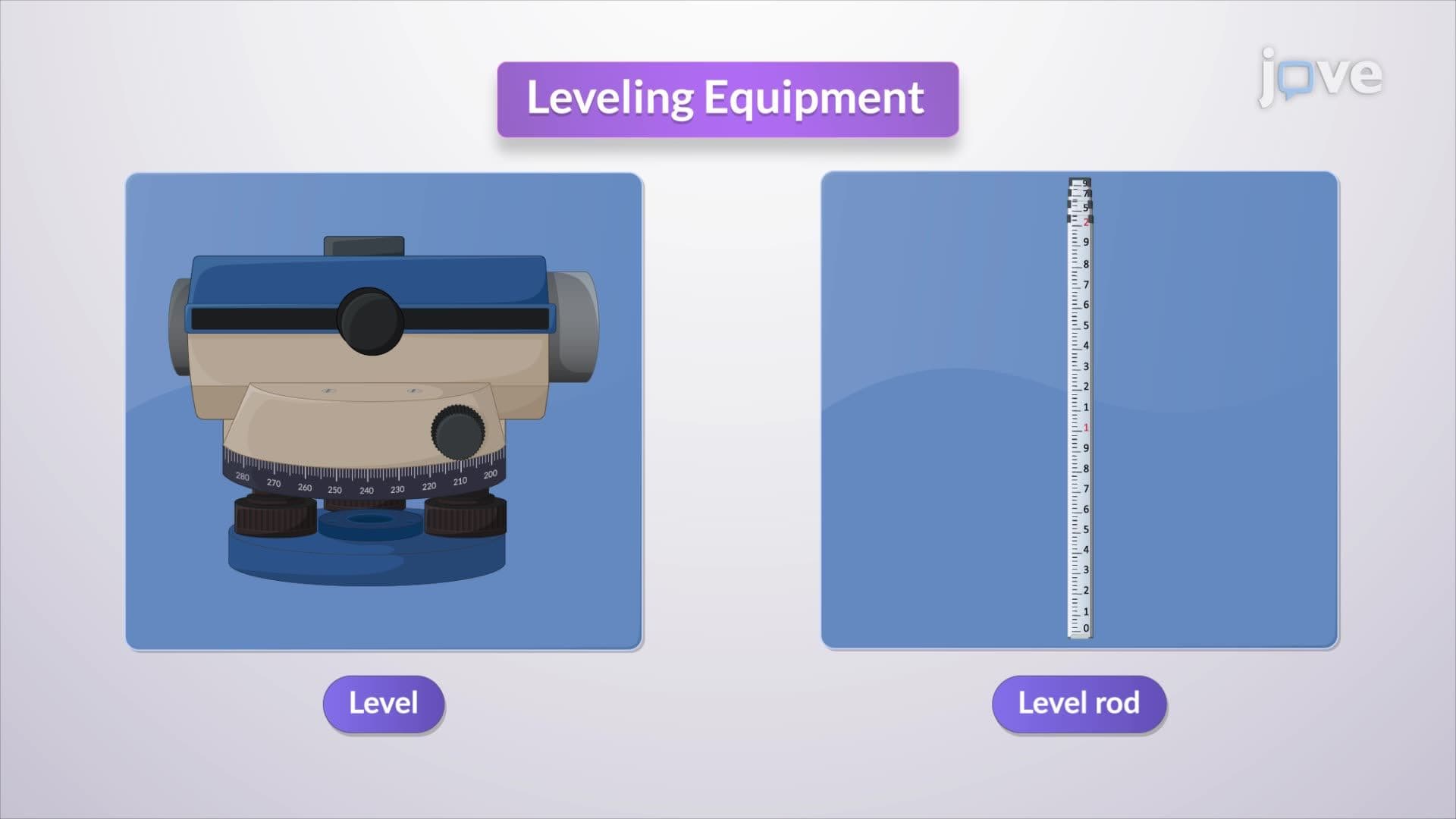
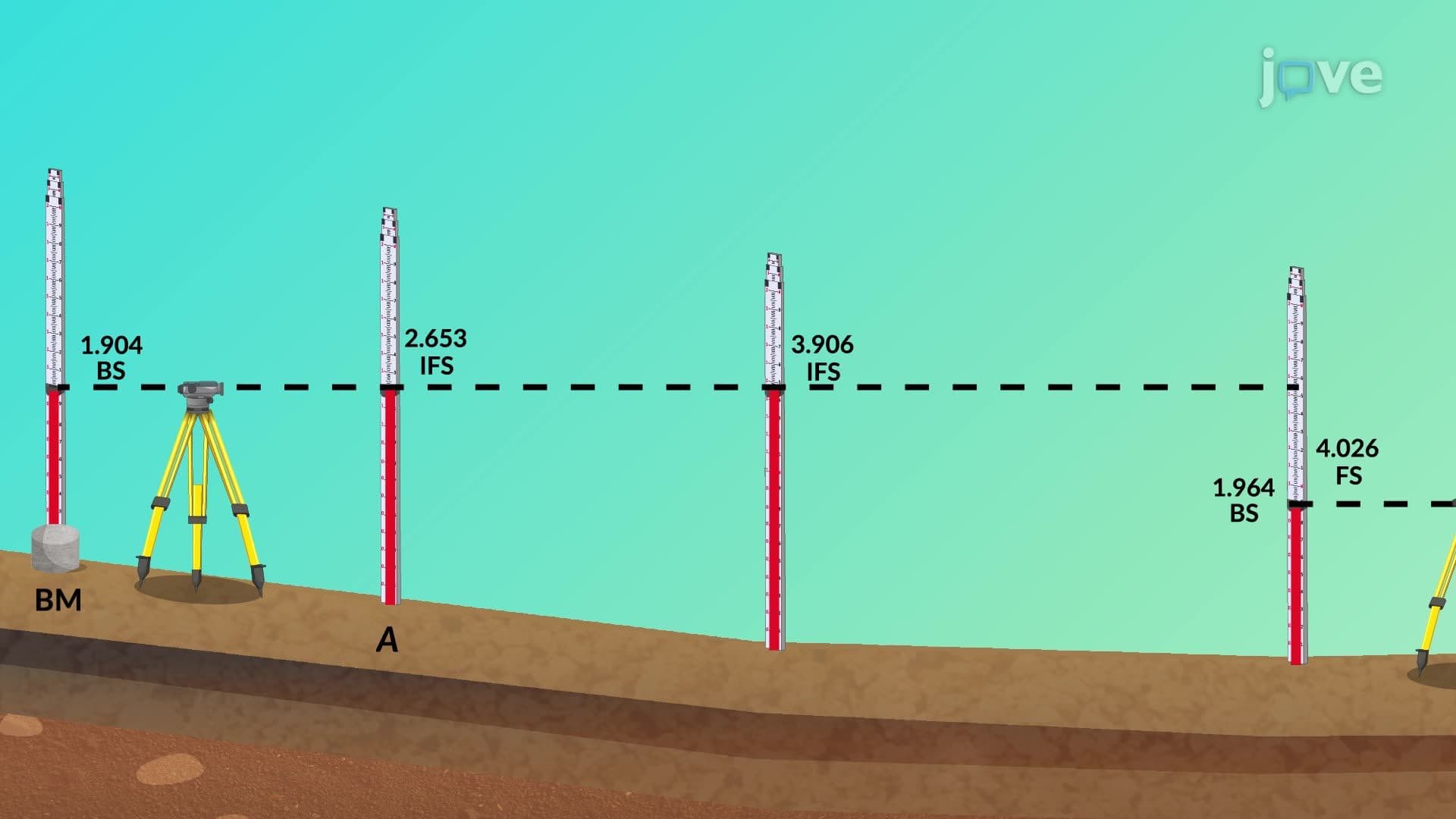
Loading…
Loading video…

2,792 views
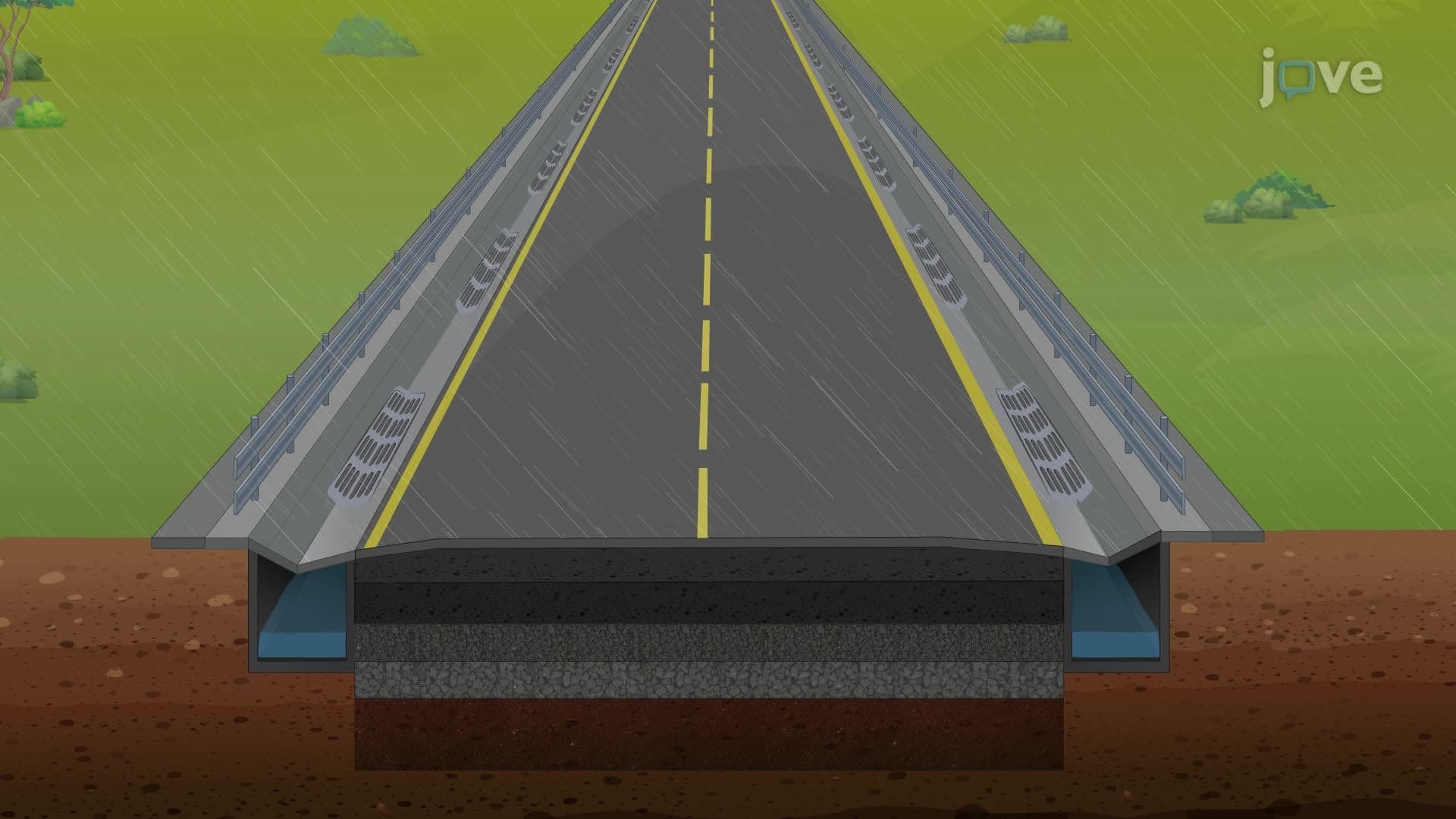
Meridians serve as invisible reference lines that help surveyors and engineers create precise elevation maps for major infrastructure projects like California's High-Speed Rail system. Understanding meridians definition becomes crucial when establishing accurate horizontal and vertical control points for large-scale construction projects. The design example maintaining level of explained demonstrates how surveyors use meridian-based coordinate systems alongside leveling instruments to ensure roadway embankments maintain proper gradual slopes across uneven terrain. Watch the full video on JoVE Coach to master this concept with expert-led visuals and step-by-step explanations.
Meridians form the backbone of precise surveying and engineering design across the United States. These imaginary north-south lines create a standardized coordinate system that allows engineers to maintain consistent reference points across vast construction projects. When combined with elevation control methods, meridians enable the accurate positioning required for infrastructure projects like the Interstate Highway System or major airport runway construction.
The meridians definition encompasses both geographic and surveying contexts. Geographic meridians are lines of longitude that run from the North Pole to the South Pole, with the Prime Meridian serving as the global reference point. In US surveying, however, meridians refer to the principal north-south lines established by the Public Land Survey System (PLSS), which divides much of the country into standardized townships and ranges. States like Nebraska, Kansas, and Iowa rely heavily on these meridian-based property boundaries for agricultural and development planning.
Understanding what is meridians in detail requires examining how these reference lines integrate with modern surveying technology. The State Plane Coordinate System divides each US state into zones, each with its own central meridian to minimize distortion in mapping large areas. For example, California uses six different zones, each with its own meridian, to maintain accuracy from the Pacific Coast to the Sierra Nevada mountains. This system proves essential for projects like the California Aqueduct, where precise elevation control must be maintained across hundreds of miles.
A comprehensive meridians study guide reveals how these concepts appear in standardized tests and professional practice. AP Environmental Science exams frequently test understanding of coordinate systems and mapping principles. College-level surveying courses require students to calculate distances and bearings using meridian-based coordinates. Professional licensing exams for civil engineers include questions about State Plane Coordinate Systems and their applications to real-world construction projects.
The integration of GPS technology with traditional meridian systems has revolutionized modern surveying. Projects like Boston's Big Dig tunnel system required precise coordination between GPS satellites and established meridian reference points to maintain accuracy during underground construction. This combination ensures that separate construction teams working on different sections can align their work perfectly when sections meet.
Frequently Asked Questions
Design example maintaining level of explained refers to surveying methods that use meridian-based coordinate systems combined with elevation control to ensure consistent slopes and grades across construction projects. This approach is essential for infrastructure like highways, railways, and airport runways where precise elevation changes must be maintained over long distances. The method integrates horizontal positioning through meridians with vertical control through leveling instruments.
Meridians frequently appear on AP Environmental Science exams in questions about mapping, coordinate systems, and land use planning. College surveying courses test meridian calculations, State Plane Coordinate conversions, and practical applications to construction projects. Students should practice converting between latitude/longitude and State Plane Coordinates, calculating distances along meridian lines, and understanding how meridian zones minimize mapping distortion.
Professional engineering exams test meridian applications in real-world scenarios like highway design, property boundary surveys, and infrastructure planning. Common questions involve State Plane Coordinate calculations, meridian convergence corrections, and integrating GPS data with established meridian reference points. These exams emphasize practical problem-solving skills rather than just theoretical knowledge.
Interstate highway projects use meridian-based State Plane Coordinate Systems to maintain consistent positioning across state boundaries and varying terrain. The Interstate Highway System relies on these coordinates to ensure proper alignment when construction crews work on different sections simultaneously. Projects like I-70 through the Colorado Rockies demonstrate how meridian systems handle elevation changes while maintaining precise horizontal positioning.
Basic understanding of meridians requires only algebra and geometry skills typically covered in high school mathematics. While professional surveying involves trigonometry and calculus, introductory concepts focus on coordinate systems, distance calculations, and practical applications. Students comfortable with graphing coordinates and basic trigonometric functions can successfully master meridians basics and their applications to construction projects.
Focus on understanding the practical applications rather than memorizing formulas, as tests emphasize problem-solving skills. Practice converting between different coordinate systems, work through real construction scenarios, and understand how meridians integrate with elevation control methods. Create visual aids showing how State Plane Coordinate zones relate to your local area, and practice calculations using examples from nearby infrastructure projects.
Modern GPS receivers automatically convert satellite positioning data to local meridian-based coordinate systems like State Plane Coordinates. This integration allows surveyors to combine traditional meridian reference points with real-time GPS positioning for enhanced accuracy. Understanding both systems prepares students for careers in surveying, civil engineering, and geographic information systems where both traditional and satellite-based positioning methods are essential.
After understanding meridians fundamentals, explore geodetic surveying, which deals with Earth's curvature effects on large projects, and geographic information systems (GIS) for spatial data analysis. Advanced topics include photogrammetry for aerial mapping, hydrographic surveying for marine construction, and precision GPS techniques for high-accuracy positioning. These skills are increasingly valuable in environmental consulting, urban planning, and infrastructure development careers.
Related Micro-courses



Related Subjects
 Electrical Engineering 33 micro-courses›Mechanical Engineering 28 micro-courses›