Loading…
Loading video…

2,601 views
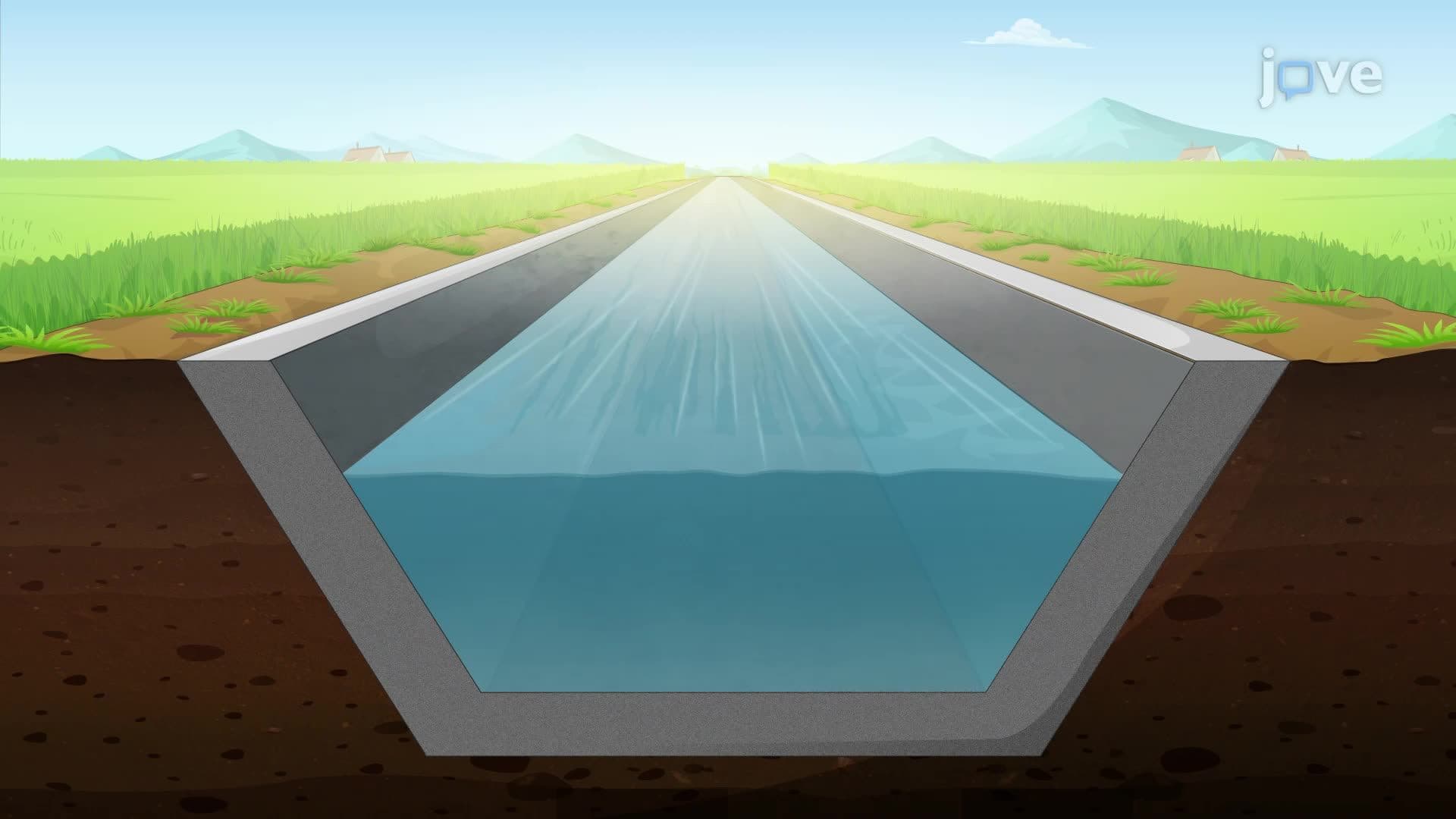
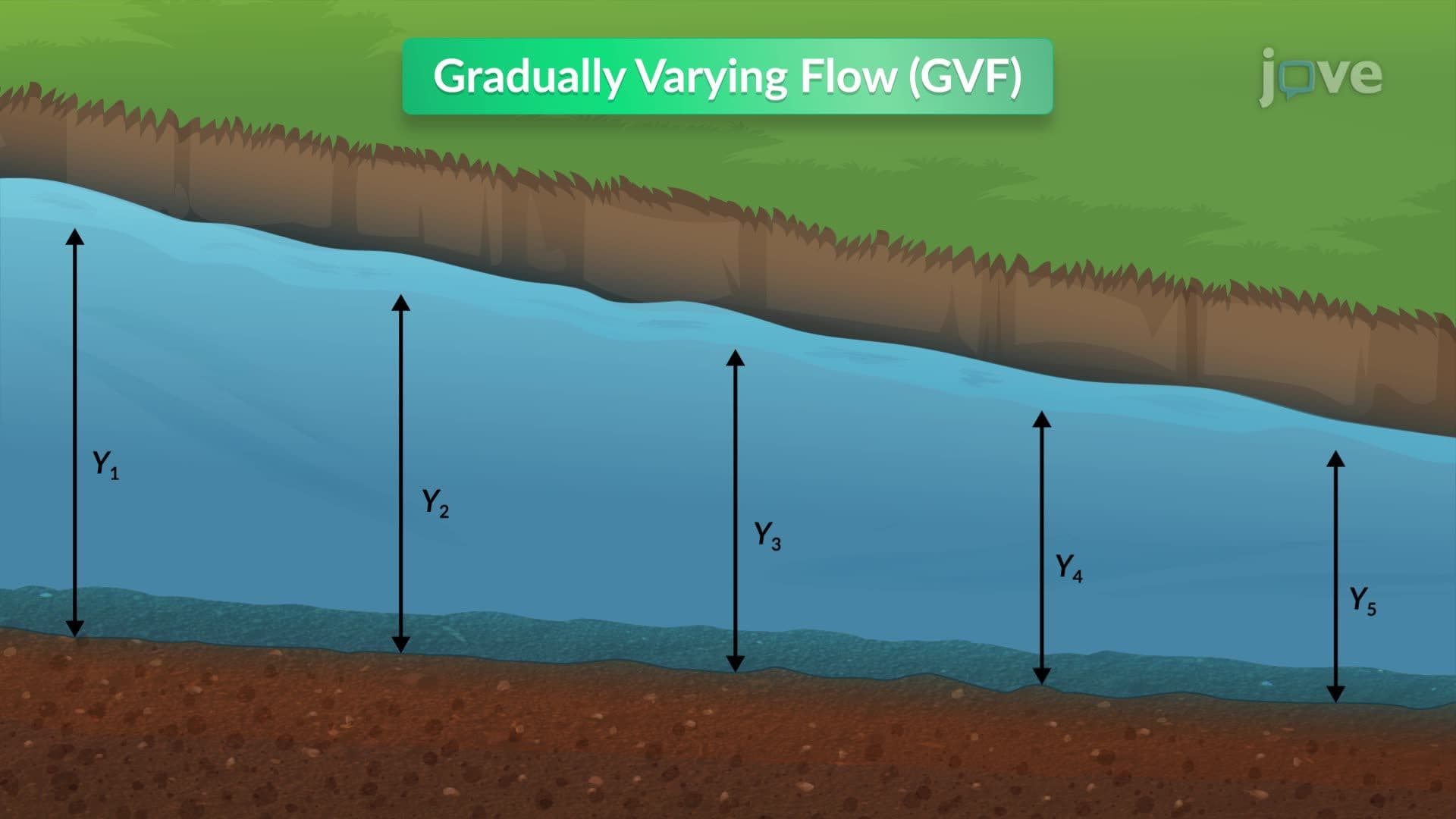
Did you know that calculating water flow through channels like those in Colorado's irrigation systems requires understanding gradually varying flow principles? Gradually varying flow occurs when water depth changes gradually along a channel's length, affecting velocity and discharge rates. Engineers use uniform depth channel flow problem solving explained through Manning's equation to design everything from storm drainage systems in Miami to agricultural channels in California's Central Valley. Watch the full video on JoVE Coach to master this concept with expert-led visuals and step-by-step explanations.
Open channel flow represents one of the most fundamental concepts in hydraulic engineering, with applications ranging from designing storm water management systems to agricultural irrigation networks. When water flows through channels at constant depth—known as uniform flow—engineers can apply specific mathematical relationships to predict flow behavior and optimize channel design.
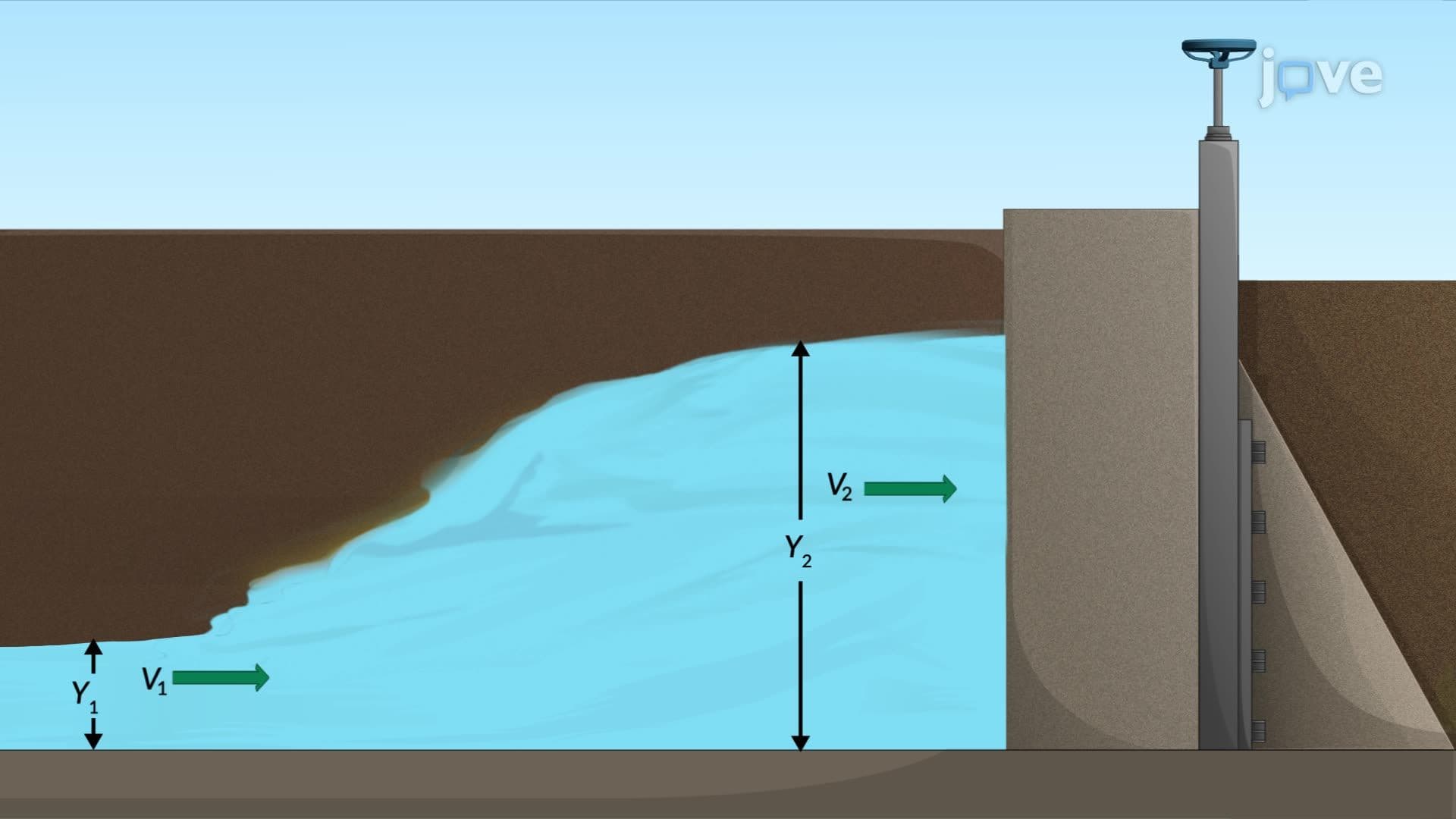
The gradually varying flow definition encompasses situations where water surface elevation changes slowly along the channel length, maintaining relatively steady conditions locally while exhibiting overall variation. This differs from uniform flow, where depth remains constant, and rapidly varied flow, where dramatic changes occur over short distances. Understanding what is gradually varying flow in detail requires recognizing that most real-world channel flows exhibit some degree of variation due to changing channel geometry, roughness, or slope conditions.
The foundation of channel flow calculations rests on Manning's equation: Q = (1/n) × A × R^(2/3) × S^(1/2), where Q represents discharge, n is Manning's roughness coefficient, A is cross-sectional area, R is hydraulic radius, and S is channel slope. For trapezoidal channels—common in irrigation systems like those found in Arizona's Salt River Project—calculating the cross-sectional area involves combining the rectangular bottom section with triangular side areas. The wetted perimeter includes both the channel bottom and the sloped sides in contact with water.
Students preparing for AP Physics or college-level fluid mechanics courses should focus on the step-by-step approach: first determine geometry parameters, then calculate hydraulic radius (A/P), select appropriate Manning's n values, and finally solve for discharge. Common Manning's coefficients range from 0.012 for smooth concrete (like Los Angeles flood control channels) to 0.035 for natural earth channels.
Channel flow calculations prove essential in numerous US engineering projects. The California State Water Project utilizes these principles for designing aqueducts that transport water across hundreds of miles. Similarly, urban stormwater management in cities like Houston requires precise flow calculations to prevent flooding during hurricane events. Civil engineering students studying for the Fundamentals of Engineering (FE) exam encounter these problems regularly, as they form the basis for more complex hydraulic design scenarios.
Understanding gradually varying flow basics helps engineers predict how changing channel conditions affect flow behavior, enabling optimal design of flood control structures, irrigation systems, and environmental restoration projects throughout the United States.
Frequently Asked Questions
Uniform depth channel flow problem solving involves calculating water flow rates when depth remains constant along the channel. While uniform flow assumes constant depth, gradually varying flow represents the more realistic scenario where depth changes gradually. Both concepts use Manning's equation but apply different boundary conditions for practical engineering calculations.
AP Physics and college exams typically present channel flow problems requiring Manning's equation application with given geometry, slope, and roughness values. Students must calculate cross-sectional area, wetted perimeter, and hydraulic radius systematically. Practice problems often involve comparing different channel shapes or materials to test conceptual understanding.
The FE exam commonly includes open channel flow problems requiring Manning's equation application, hydraulic radius calculations, and critical depth determinations. Expect problems involving rectangular, trapezoidal, and circular channel cross-sections. Review Manning's roughness coefficients for different materials and practice systematic problem-solving approaches.
Engineers apply these calculations in designing irrigation systems like California's Central Valley Project, urban storm drainage networks in flood-prone areas like New Orleans, and hydroelectric facilities along rivers like the Colorado. Flow calculations determine channel capacity, optimize energy efficiency, and ensure environmental compliance in water resource projects.
Basic gradually varying flow problems require only algebra and geometry skills typically covered in high school mathematics. While advanced applications involve differential equations, introductory concepts focus on applying Manning's equation with given parameters. Students comfortable with area calculations and basic hydraulic principles can successfully master these fundamentals.
Focus on memorizing Manning's equation and systematically practicing geometry calculations for different channel shapes. Create a reference sheet with common Manning's n values and practice converting between different units. Work through problems step-by-step, always checking that your hydraulic radius and flow rate results make physical sense.
Channel flow concepts build foundation knowledge for advanced topics like sediment transport, flood routing, and hydraulic structure design. These principles connect to pipe flow analysis, pump system design, and environmental fluid mechanics. Mastering gradually varying flow basics prepares students for specialized courses in water resources engineering and hydraulic design.
Civil engineers specializing in water resources, environmental consultants designing stormwater systems, agricultural engineers developing irrigation networks, and municipal engineers managing flood control systems regularly apply these concepts. Positions with agencies like the US Army Corps of Engineers, Bureau of Reclamation, and state departments of transportation frequently require channel flow analysis expertise.
Related Micro-courses
Related Subjects
 Electrical Engineering 33 micro-courses›Mechanical Engineering 28 micro-courses›