Loading subject page…

- Civil Engineering
- Open Channel Flow
- Hydraulic Jump
Micro-course: Open Channel Flow
2,601 views
Learn key concepts and earn your certificate.





Hydraulic Jump

00:00
01:29
Video Summary: What Is Hydraulic Jump
Ever wondered why the water at the base of Niagara Falls appears to "bounce up" dramatically? This phenomenon demonstrates hydraulic jump problem solving in action-a critical fluid dynamics concept where high-velocity water suddenly transitions to deeper, slower flow. Engineers at major US dams like Hoover Dam rely on understanding what is hydraulic jump problem solving to prevent dangerous erosion downstream from spillways. Watch the full video on JoVE Coach to master this concept with expert-led visuals and step-by-step explanations.
- Understand what is hydraulic jump and identify the critical conditions required for its formation in supercritical flow
- Analyze the relationship between Froude numbers and hydraulic jump characteristics in different flow regimes
- Compare the six distinct types of hydraulic jumps based on upstream Froude number classifications
- Evaluate energy dissipation and depth ratio changes across hydraulic jump transitions
- Apply hydraulic jump principles to solve engineering problems involving spillway design and erosion control
- Recognize real-world applications of hydraulic jumps in dam safety and water management systems
- Explore the mathematical relationships governing flow transitions from supercritical to subcritical conditions
- Identify submerged jump configurations and their occurrence in various channel geometries
Understanding What is Hydraulic Jump: The Physics Behind the Phenomenon
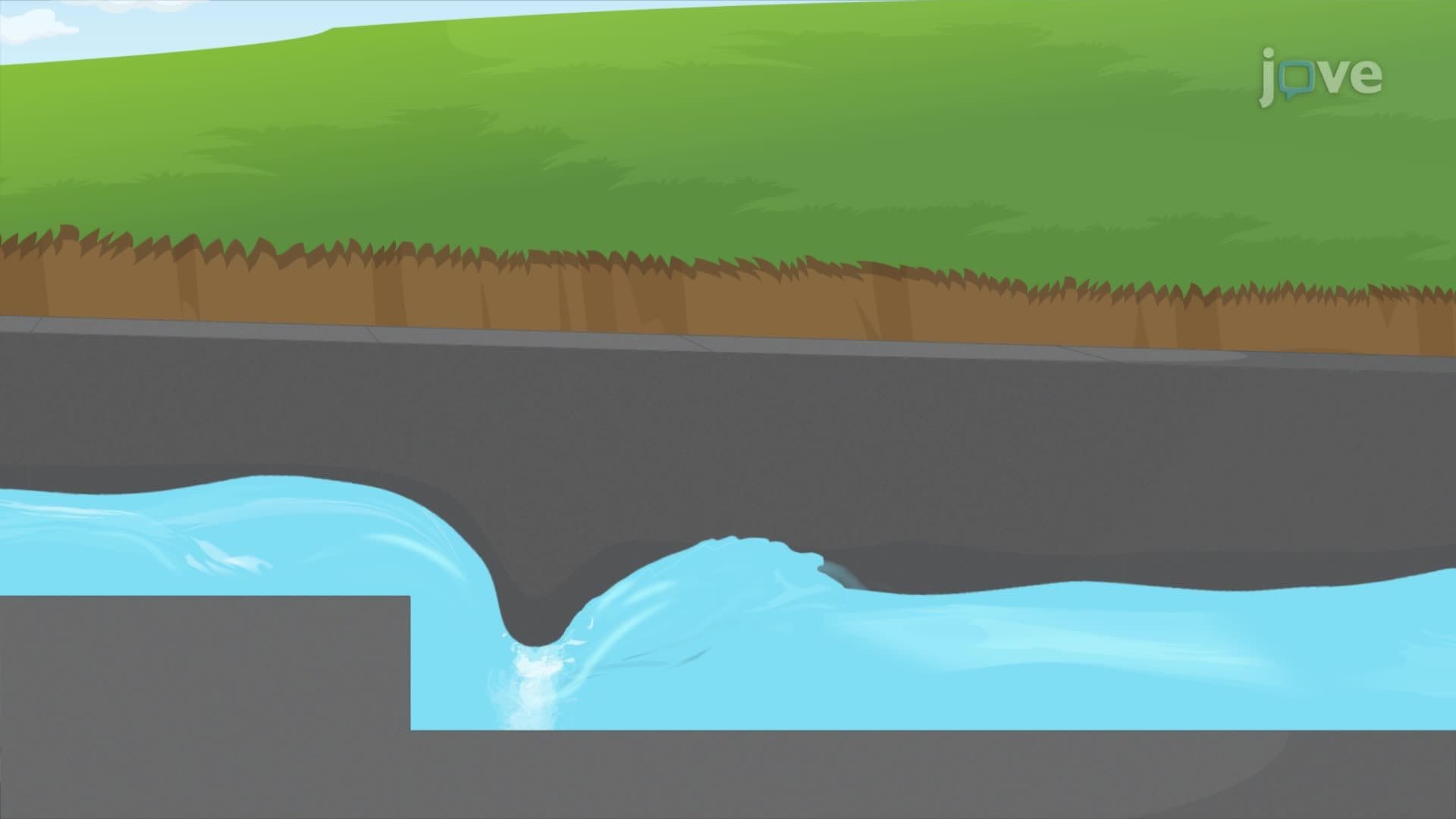
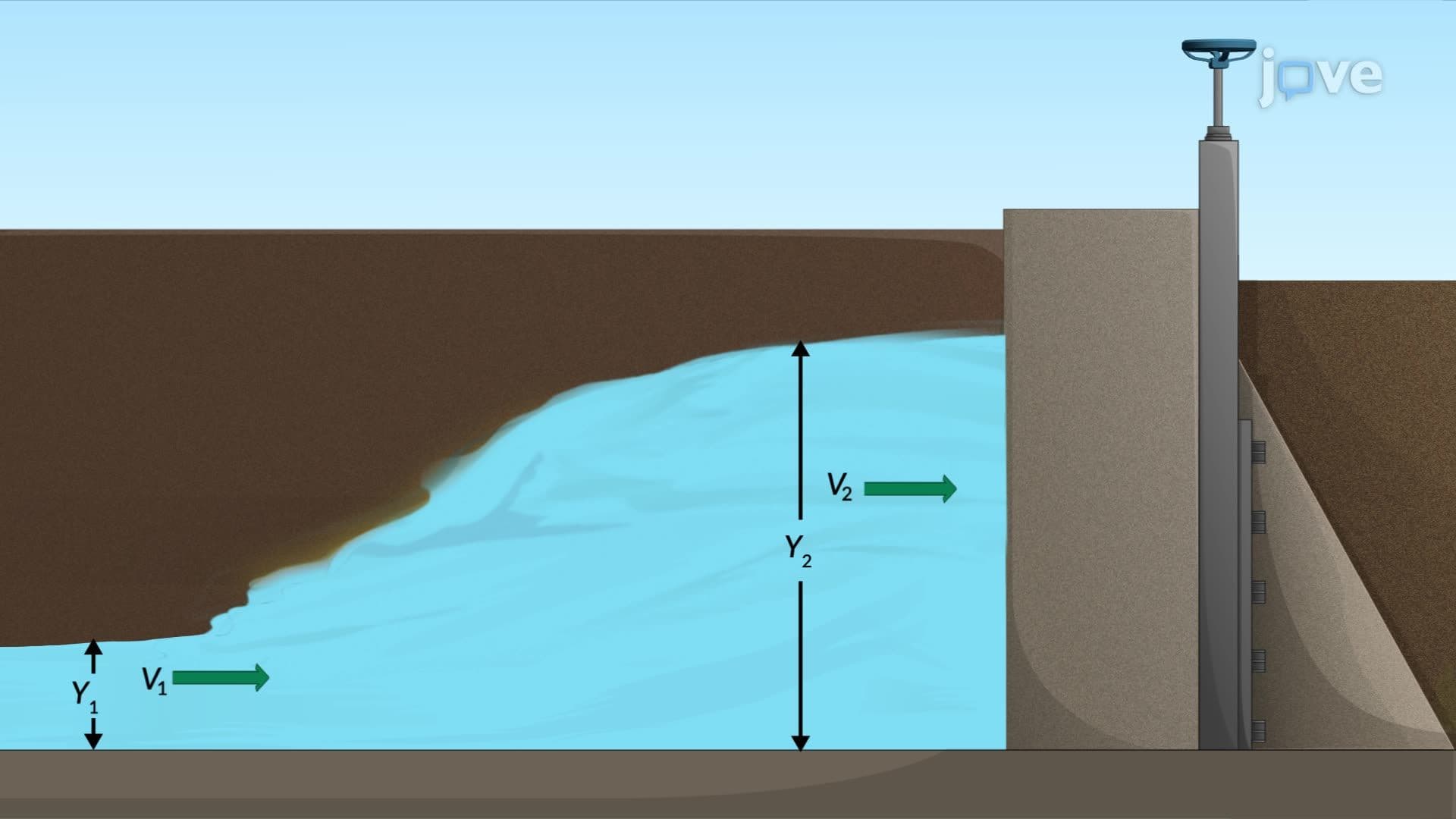
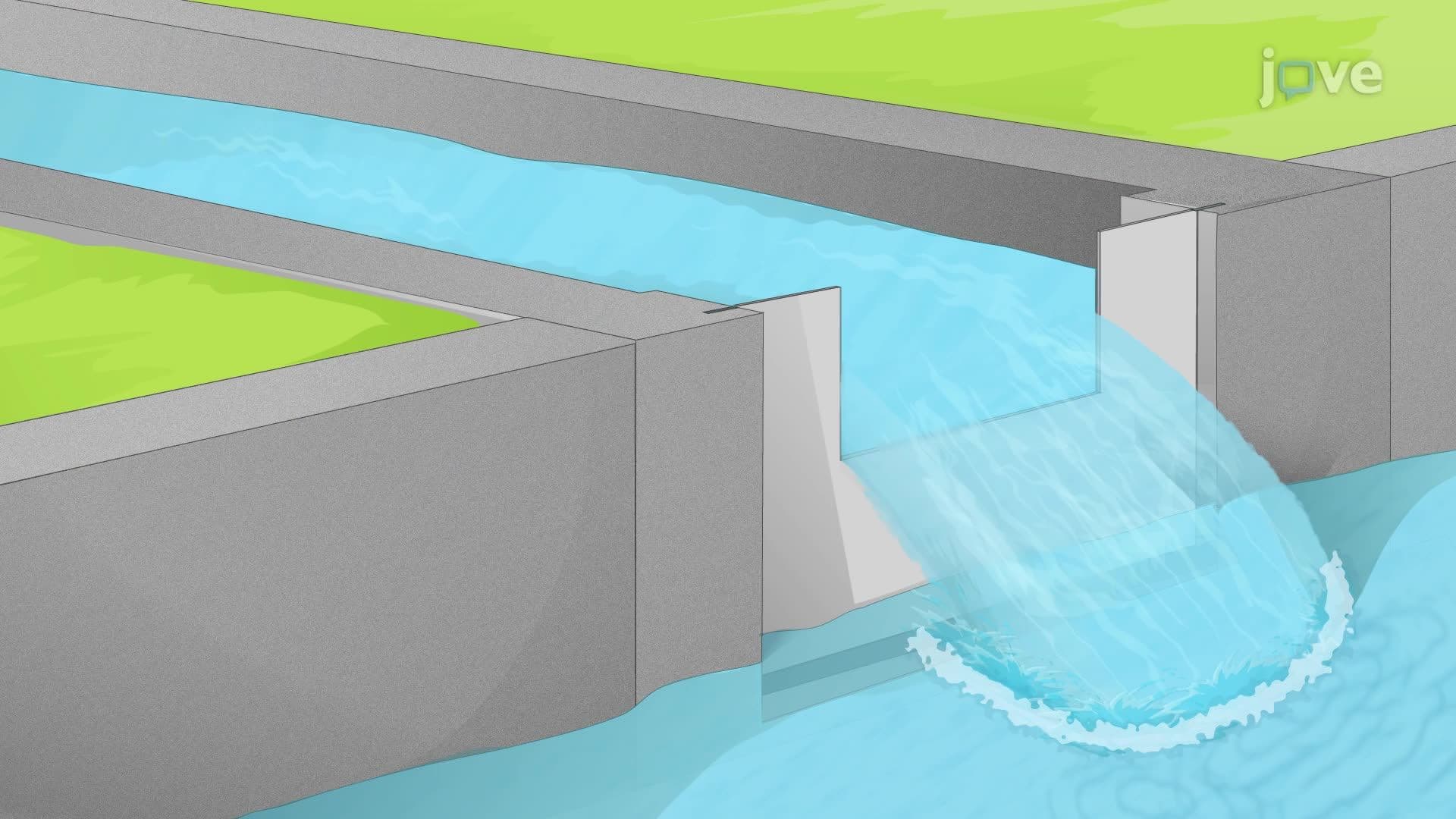
A hydraulic jump represents one of the most dramatic transitions in open channel flow, occurring when supercritical flow (high velocity, shallow depth) abruptly transforms into subcritical flow (lower velocity, greater depth). This hydraulic jump problem solving concept centers on the Froude number, a dimensionless parameter comparing inertial forces to gravitational forces in the flow.
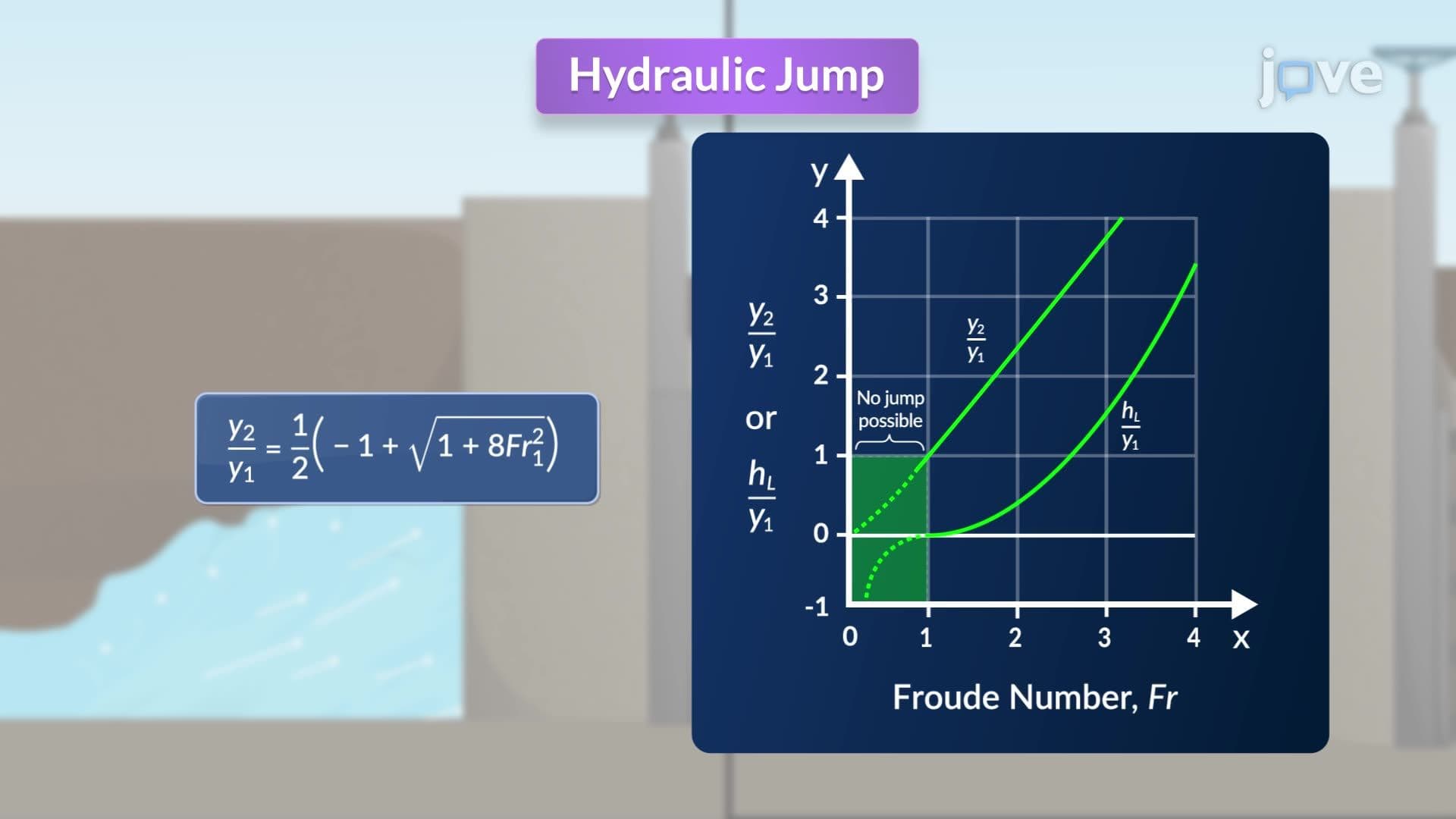
The Froude number (Fr = V/√(gD)) serves as the key indicator: when Fr > 1 (supercritical flow), hydraulic jumps can form, while Fr < 1 (subcritical flow) prevents jump formation due to insufficient energy. Students studying for AP Physics or college-level fluid mechanics courses must grasp this fundamental relationship to excel in hydraulic jump problem solving.
Classification System: Six Types of Hydraulic Jumps
Understanding hydraulic jump problem solving requires mastering the classification system based on upstream Froude numbers. Jump Impossible occurs when Fr₁ < 1.0, while Standing Wave or Undulant Jumps form when 1.0 < Fr₁ < 1.7, creating gentle surface undulations. Weak Jumps (1.7 < Fr₁ < 2.5) produce small rollers, while Oscillating Jumps (2.5 < Fr₁ < 4.5) create unstable conditions with irregular pulsations.
The most significant transitions occur with Stable Jumps (4.5 < Fr₁ < 9.0) and Strong Jumps (Fr₁ > 9.0), where dramatic depth increases and substantial energy dissipation occur. College engineering students studying for midterms should memorize these ranges, as they frequently appear in problem sets and exams.
Engineering Applications: Energy Dissipation in US Infrastructure
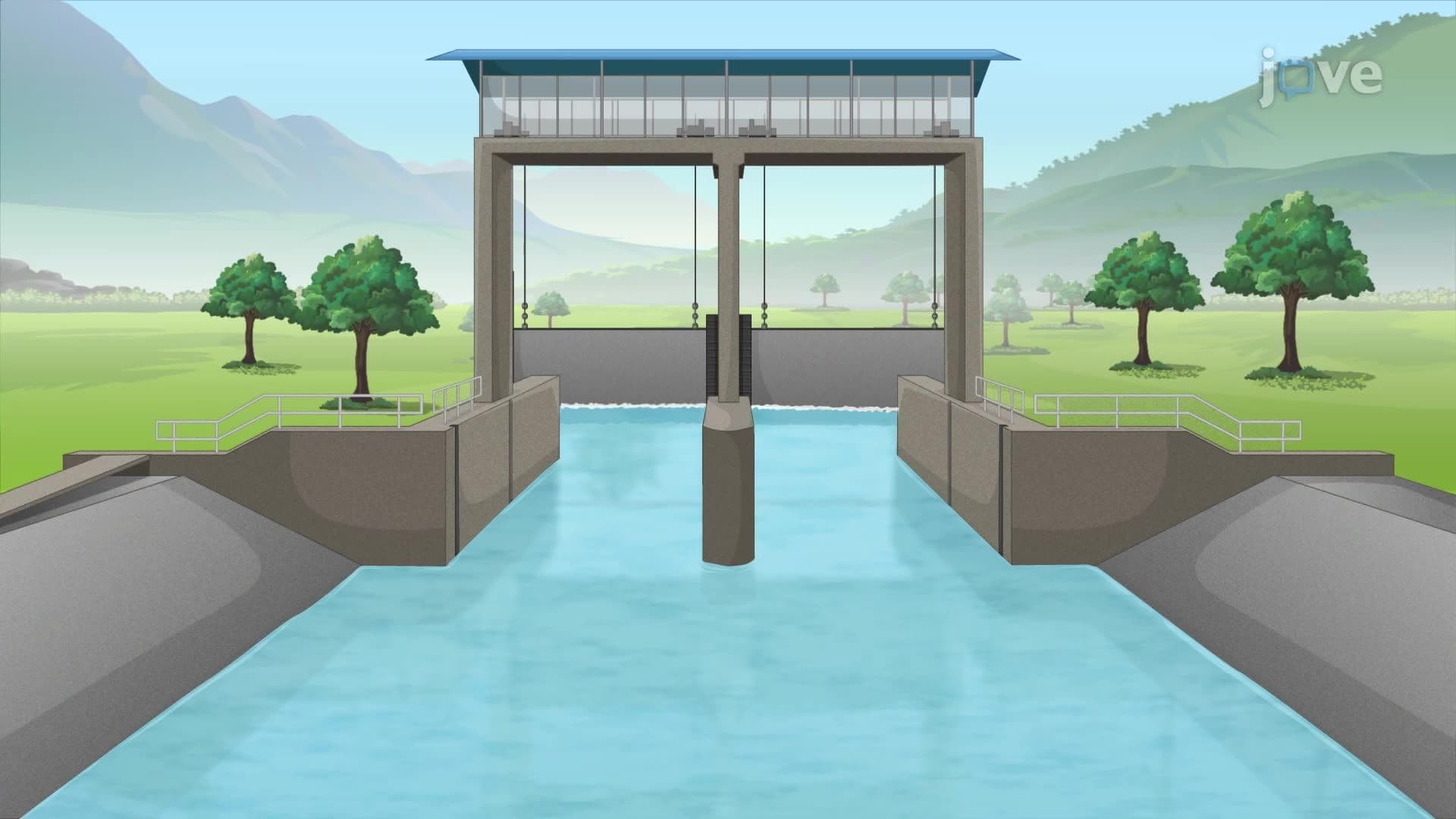
Hydraulic jump problem solving plays a crucial role in American infrastructure design. At Glen Canyon Dam in Arizona, engineers designed stilling basins that utilize controlled hydraulic jumps to dissipate the enormous kinetic energy of spillway discharge, preventing catastrophic erosion of the Colorado River channel downstream. Without proper hydraulic jump implementation, high-velocity discharge could undermine dam foundations and destroy valuable ecosystems.
The Tennessee Valley Authority employs similar hydraulic jump problem solving techniques across its 49 dams, where energy dissipation through hydraulic jumps protects navigation channels and prevents sediment displacement. Students preparing for the Fundamentals of Engineering (FE) exam should understand these practical applications, as they demonstrate the real-world significance of theoretical fluid mechanics principles.
Frequently Asked Questions
A hydraulic jump is a sudden transition where high-velocity, shallow water flow abruptly changes to slower, deeper flow. It only occurs in supercritical flow conditions where the Froude number exceeds 1.0, providing sufficient energy for the dramatic flow transition. This phenomenon is essential for energy dissipation in hydraulic engineering applications.
Exam questions typically focus on calculating Froude numbers, determining jump feasibility, and solving for depth ratios across jumps. Students must apply the conjugate depth equation and energy conservation principles. Common problem types include spillway design calculations and determining downstream flow conditions given upstream parameters.
While the MCAT rarely includes detailed hydraulic calculations, understanding fluid dynamics principles like continuity equation and Bernoulli's principle provides valuable foundation. Focus on conceptual understanding of energy conservation and pressure-velocity relationships. These concepts support broader physics reasoning skills tested in MCAT physics sections.
Visit major dam spillways like those at Hoover Dam (Nevada/Arizona) or Grand Coulee Dam (Washington) during discharge periods. Urban storm drainage systems also demonstrate smaller-scale hydraulic jumps. Even household examples exist-observe your kitchen sink when water hits the bottom at high velocity and spreads outward in a circular pattern.
Not at all-the basic concept builds on fundamental physics principles like energy conservation and fluid flow that high school students already know. Start with conceptual understanding before tackling complex calculations. Many AP Physics students successfully master hydraulic jump basics by focusing on the Froude number relationship and energy dissipation principles.
Create a formula sheet with key relationships: Froude number calculation, conjugate depth equation, and energy loss formulas. Practice drawing flow diagrams showing before/after conditions. Work through progressive problem sets starting with simple Froude number calculations, then advancing to complex spillway design problems with multiple variables.
Progress to gradually varied flow analysis, weir flow calculations, and pump system design. These topics build on hydraulic jump principles while introducing new applications. Consider studying computational fluid dynamics (CFD) fundamentals if pursuing advanced engineering coursework, as modern hydraulic design increasingly relies on computer modeling techniques.
Engineers select specific jump types based on energy dissipation requirements and space constraints. Stable jumps provide maximum energy dissipation for high-energy spillways, while weak jumps suffice for smaller applications. Understanding these classifications helps engineers optimize stilling basin dimensions and select appropriate energy dissipation strategies for different project scales.
Related Micro-courses