Loading video…


 11 Concepts
 2.6K views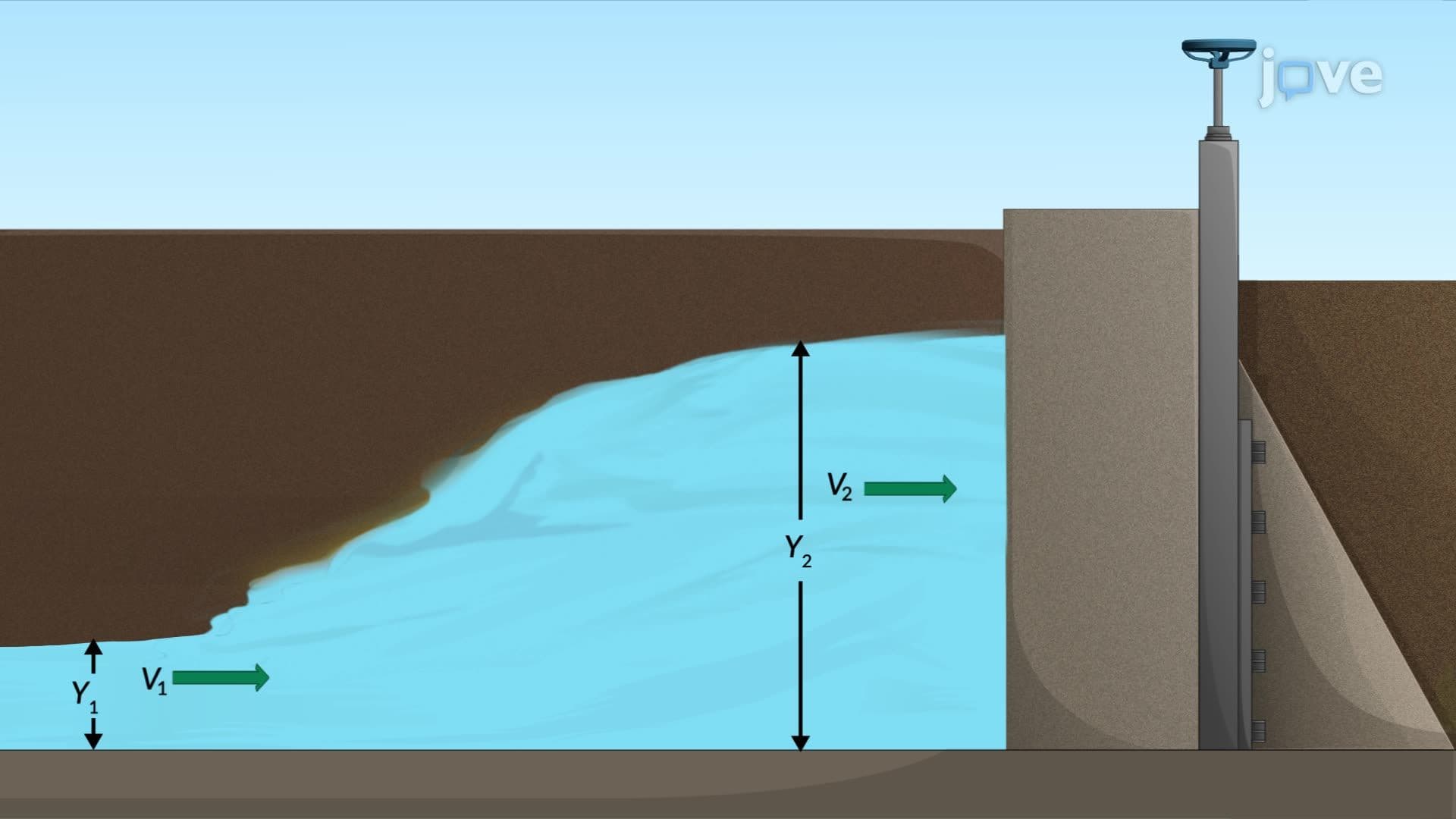

Video Summary: What Is Hydraulic Jump Problem Solving
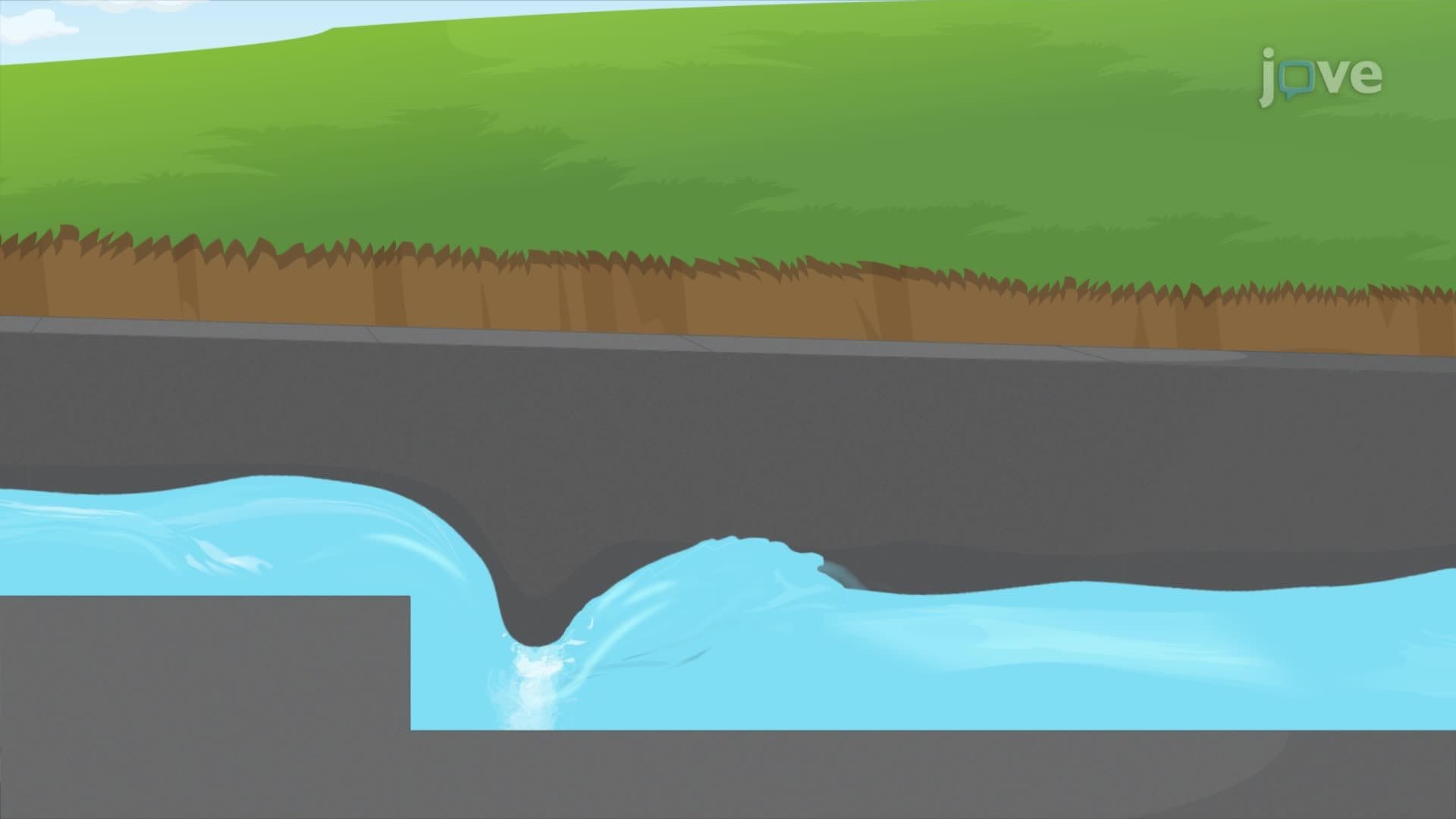
Ever wonder how engineers design spillways at Hoover Dam to prevent catastrophic flooding? A weir creates controlled water flow, but when that flow encounters obstacles, hydraulic jump problem solving becomes critical for safety calculations. This phenomenon occurs when fast-moving shallow water suddenly slows and deepens, like what happens downstream of major US dam releases during flood control operations. Understanding these calculations helps engineers predict water depths and flow patterns essential for infrastructure design. Watch the full video on JoVE Coach to master this concept with expert-led visuals and step-by-step explanations.
Hydraulic jump problem solving represents a cornerstone of fluid mechanics engineering, particularly crucial for designing safe water infrastructure across the United States. This phenomenon occurs when high-velocity, shallow water flow (supercritical) encounters an obstacle or change in channel geometry, forcing it to transition into slower, deeper flow (subcritical). Understanding weir behavior provides the foundation for these calculations, as weirs often create the initial conditions that lead to hydraulic jumps downstream.
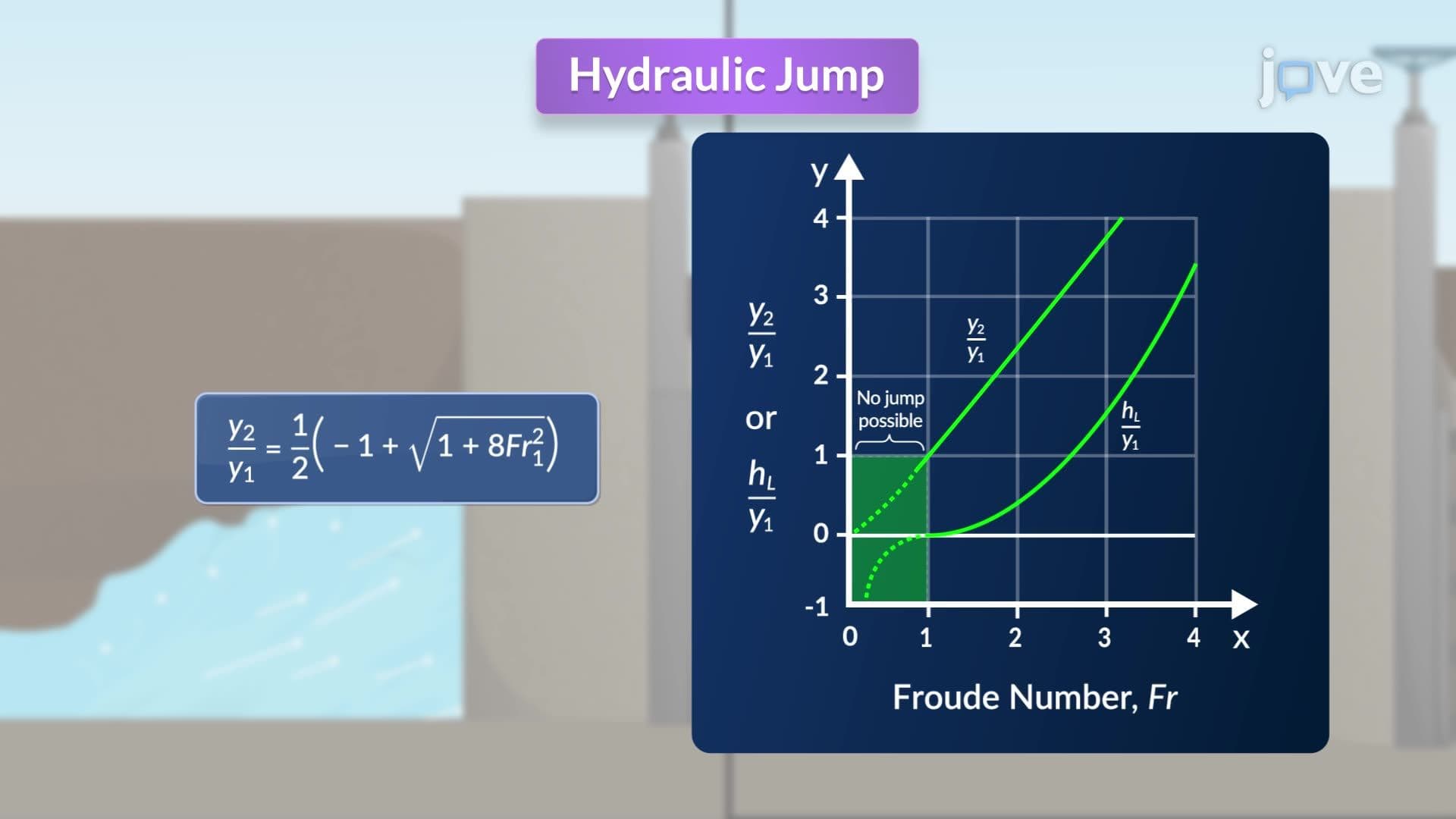
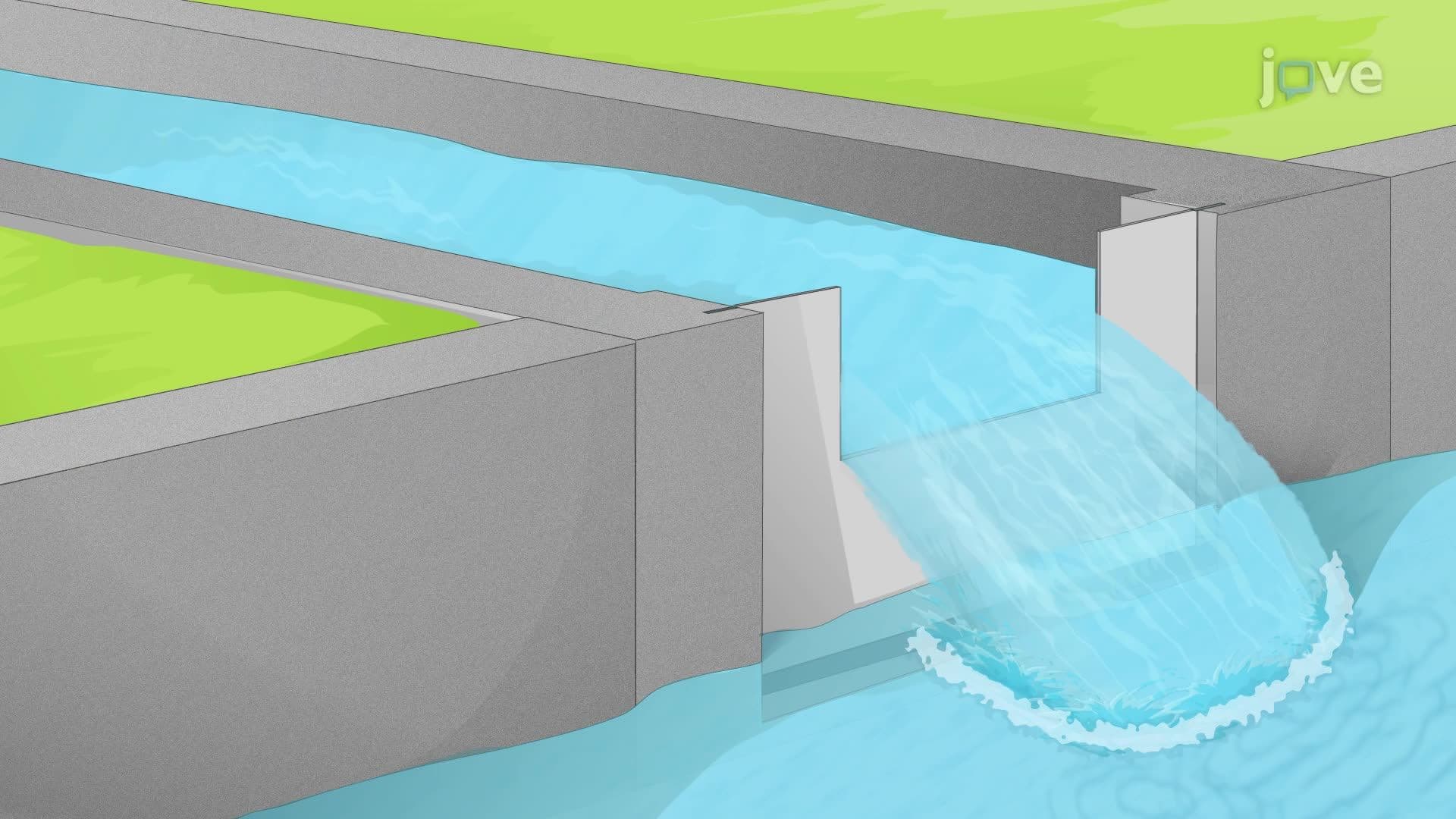
The weir definition encompasses any structure that controls water flow over its crest, creating specific upstream and downstream conditions. When water flows over a weir, it accelerates and becomes shallow, achieving supercritical flow characterized by high velocity and low depth. The Froude number, calculated as velocity divided by the square root of (gravitational acceleration × depth), determines flow regime. Values above 1.0 indicate supercritical flow, while values below 1.0 represent subcritical conditions.
Engineers use the continuity equation (Q = A × V) to maintain flow rate consistency throughout the system. This principle explains why velocity and depth have an inverse relationship - as velocity decreases during a hydraulic jump, depth must increase proportionally to maintain constant discharge.
What is weir in detail becomes apparent when examining major US water projects. The Glen Canyon Dam in Arizona uses carefully designed spillways that create controlled hydraulic jumps to dissipate energy safely. Similarly, the Corps of Engineers applies these principles when designing flood control channels throughout the Mississippi River system. These applications require precise calculations to prevent erosion and ensure structural integrity during extreme weather events.
For students preparing for AP Physics or college-level fluid mechanics courses, hydraulic jump problems frequently appear as applied mathematics questions. The MCAT often includes similar conservation of mass and energy principles in its physical sciences section.
The weir concept extends beyond simple overflow structures to encompass comprehensive flow analysis. Engineers begin by establishing initial conditions: upstream velocity, channel geometry, and flow rate. Using the Froude number relationship, they calculate upstream depth, then apply conservation principles to determine downstream conditions. The depth ratio typically ranges from 2:1 to 8:1, depending on initial flow velocity and channel characteristics.
This systematic approach appears in undergraduate civil and environmental engineering curricula at institutions like MIT, Stanford, and UC Berkeley, where students learn to balance theoretical understanding with practical design applications essential for professional engineering practice.
Related Micro-courses