Loading subject page…


2,602 views
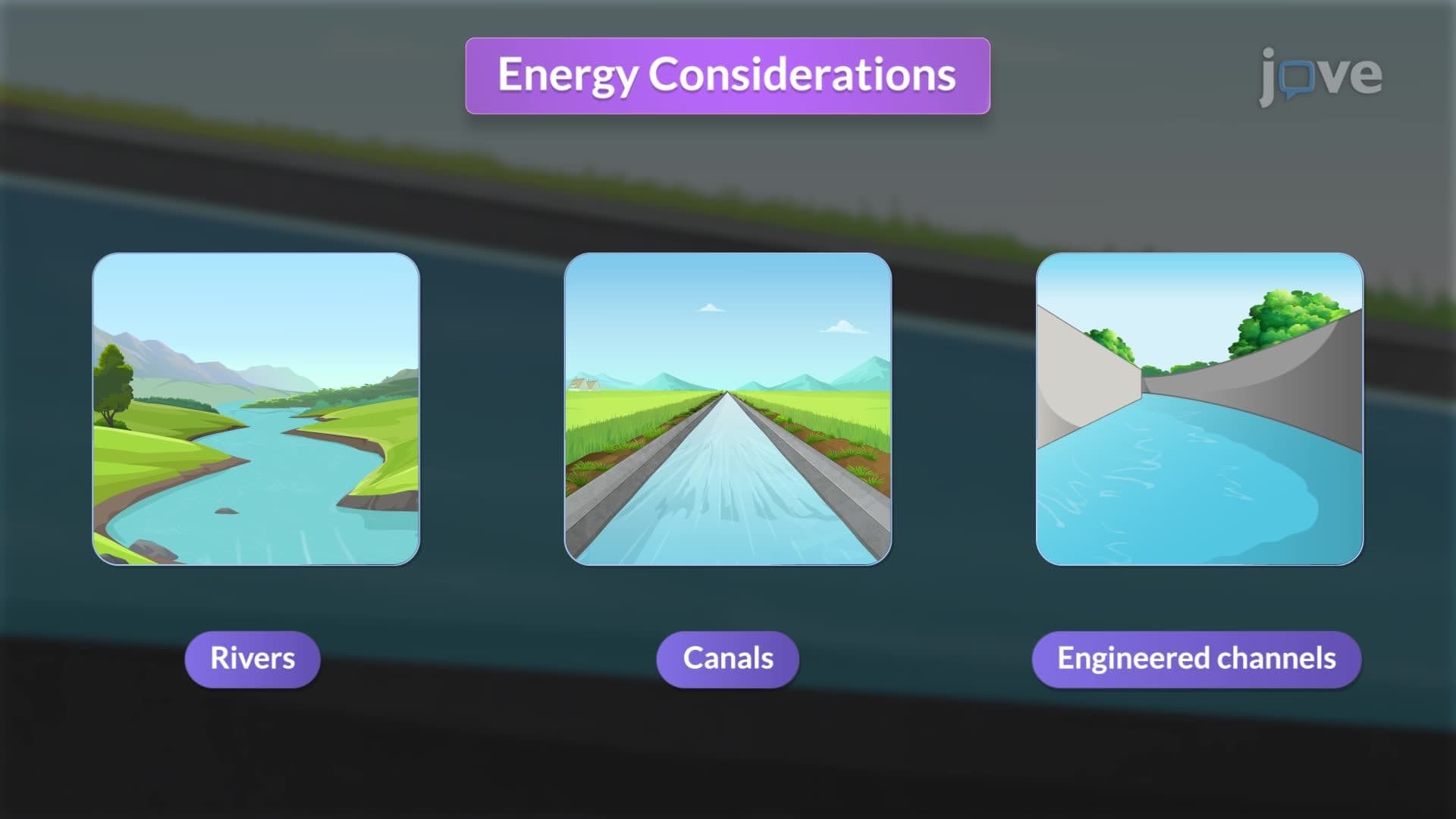

Video Summary: What Is Energy Considerations
Ever wondered why the Mississippi River flows differently in shallow rapids versus deep pools? Uniform depth channel flow occurs when water maintains constant depth along a channel, representing a perfect balance between gravitational forces and friction resistance. The Colorado River through the Grand Canyon demonstrates this principle, where specific sections achieve uniform flow conditions. Energy considerations help engineers predict and control these flow patterns in everything from irrigation canals to urban storm drains. Watch the full video on JoVE Coach to master this concept with expert-led visuals and step-by-step explanations.
Energy considerations form the foundation of hydraulic engineering, governing how water behaves in rivers, canals, and drainage systems. Unlike pressurized pipe flow, open channel flow deals with free water surfaces where atmospheric pressure and gravity create unique flow dynamics. Engineers use energy principles to design everything from the Los Angeles River flood control system to agricultural irrigation networks across California's Central Valley.
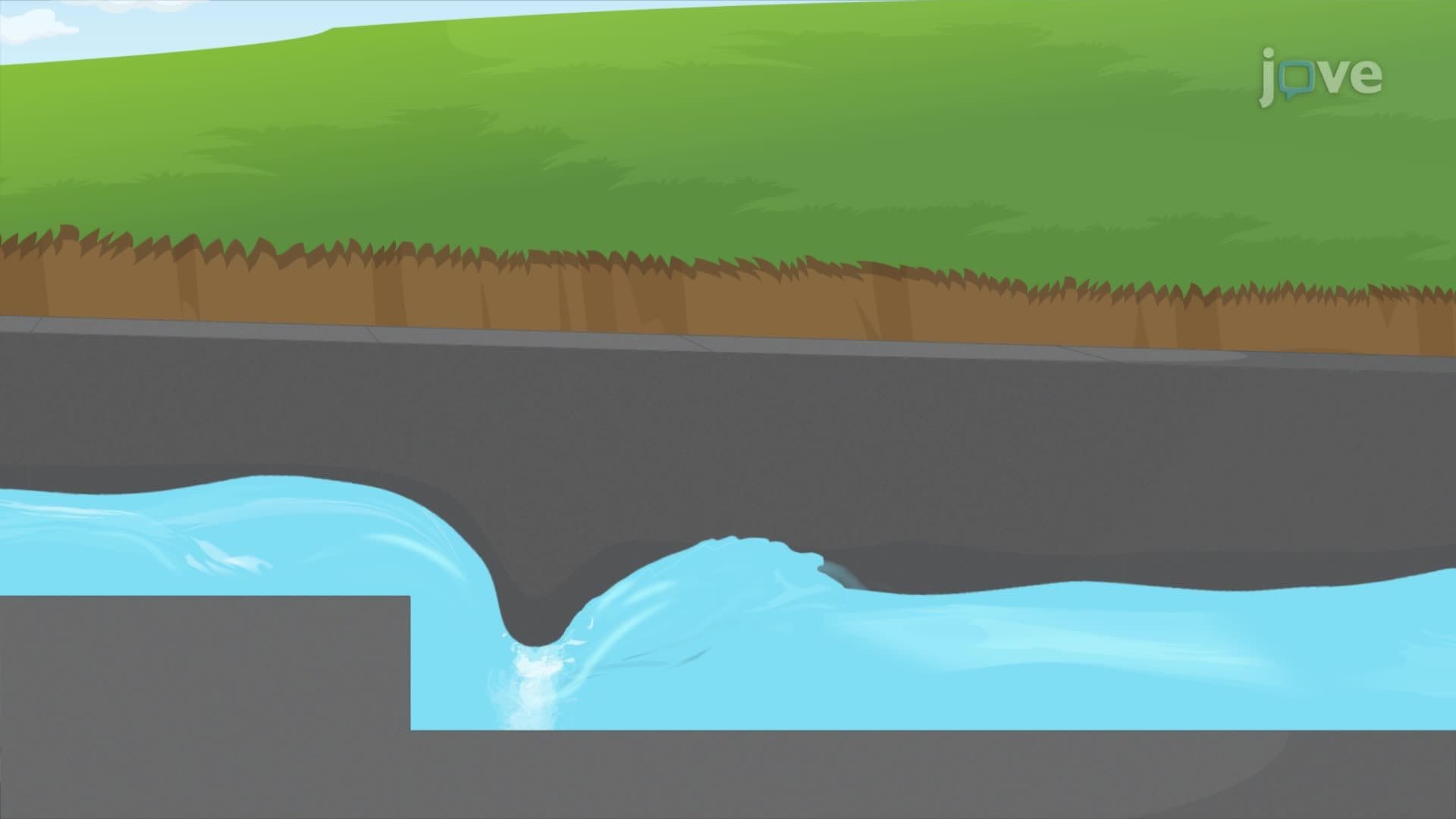
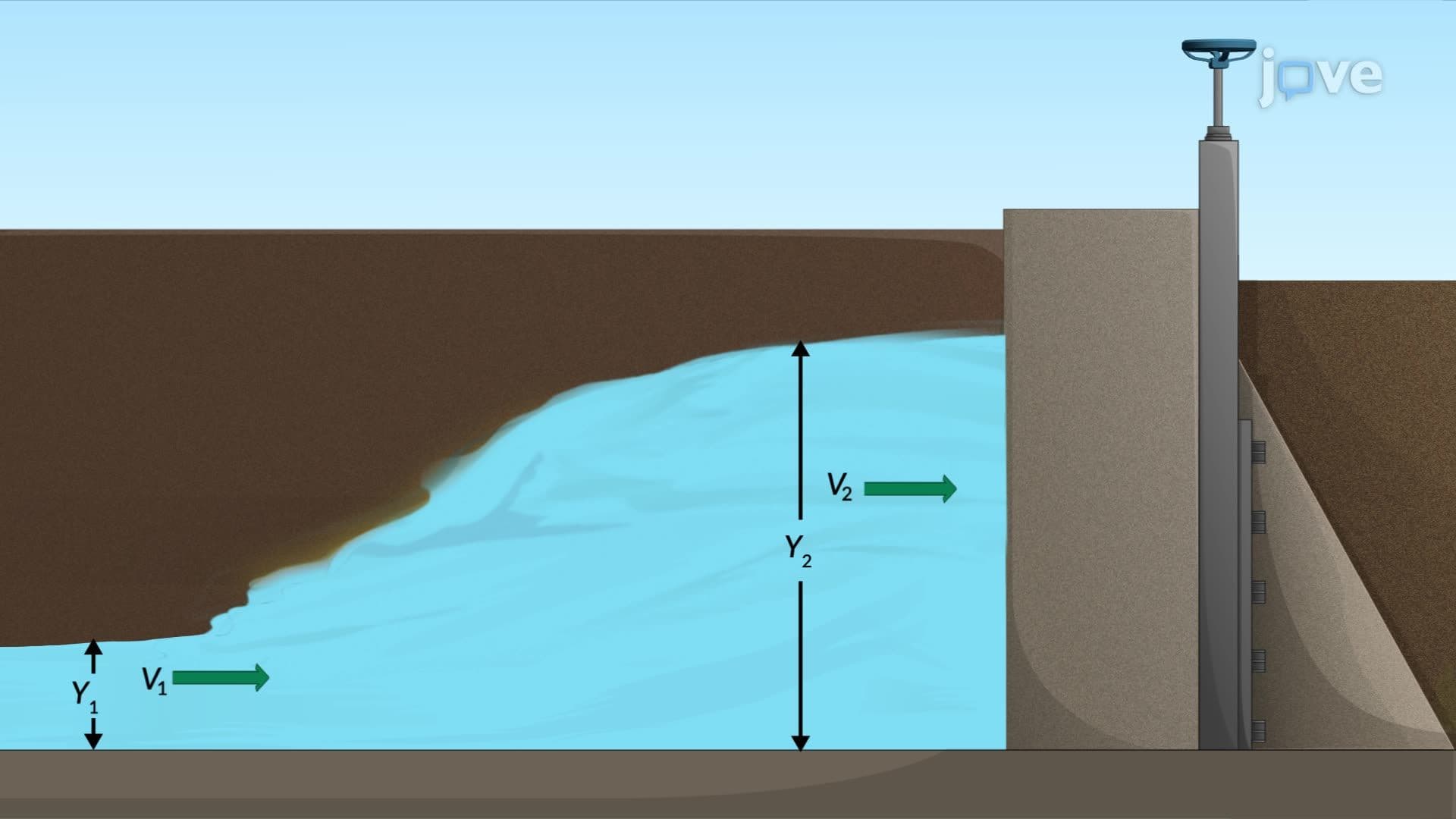
The concept of specific energy (E) combines gravitational potential energy and kinetic energy per unit weight of fluid. This relationship reveals that for any given flow rate, two possible depths can occur: deep, slow subcritical flow or shallow, fast supercritical flow. The Niagara River exemplifies this principle, transitioning from subcritical flow upstream to supercritical flow as it approaches the falls.
The Froude number (Fr) serves as the critical parameter distinguishing these regimes. When Fr < 1, gravity dominates creating subcritical flow typical of most natural rivers. When Fr > 1, inertia forces prevail producing supercritical flow seen in steep mountain streams. Critical flow (Fr = 1) represents the transition point where specific energy reaches its minimum value.
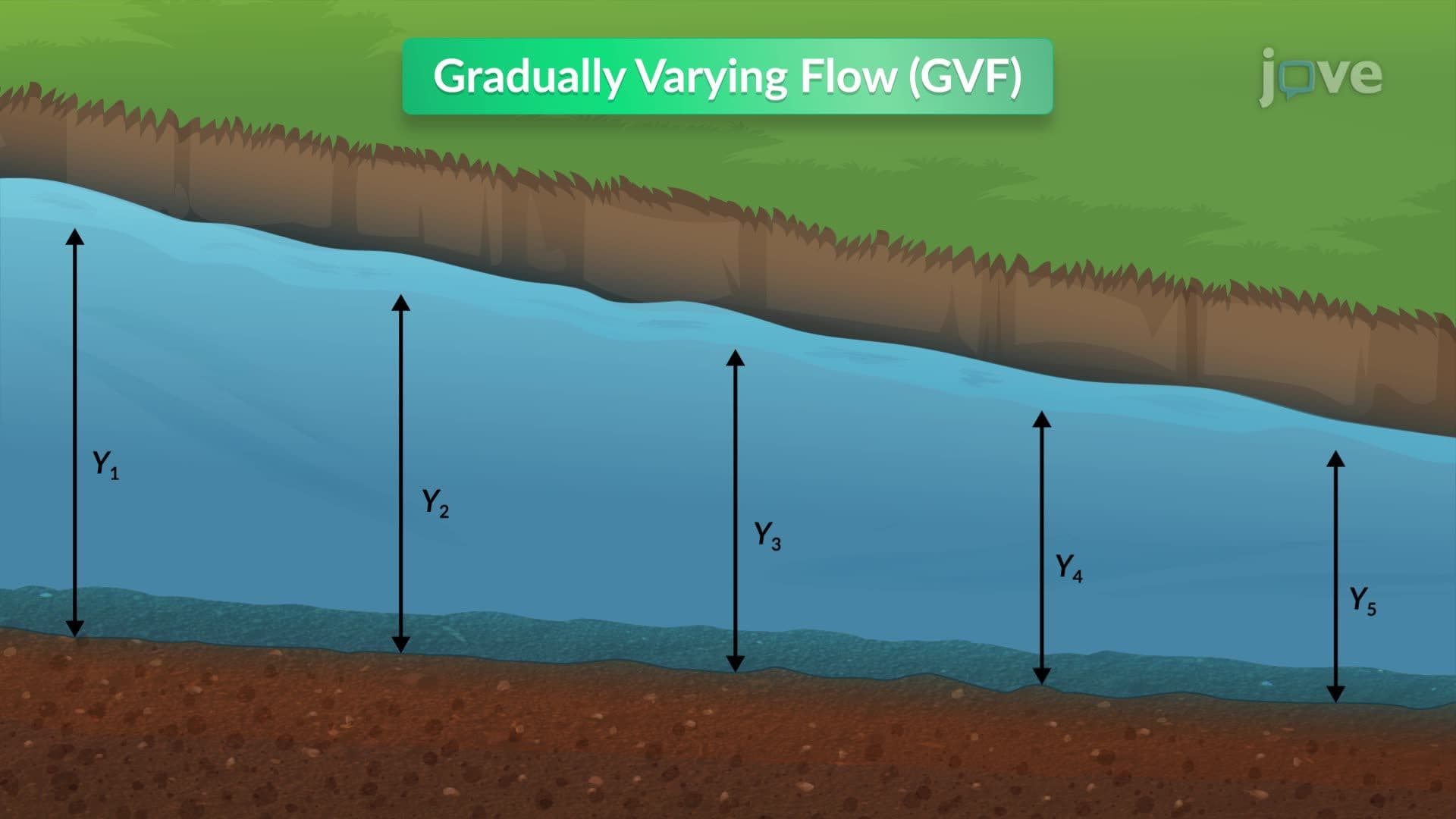
Uniform depth channel flow represents the equilibrium condition where flow depth remains constant along the channel length. This occurs when the energy slope (friction loss per unit length) exactly equals the channel bed slope. The Tennessee Valley Authority's navigation channels demonstrate this principle, where careful engineering maintains consistent depths for commercial shipping.
In uniform flow conditions, the velocity distribution and flow characteristics remain unchanged from section to section. This stability makes uniform flow invaluable for design calculations in hydraulic engineering. Students preparing for the AP Physics exam or college-level fluid mechanics courses should recognize that uniform flow represents a simplified yet powerful analytical tool.
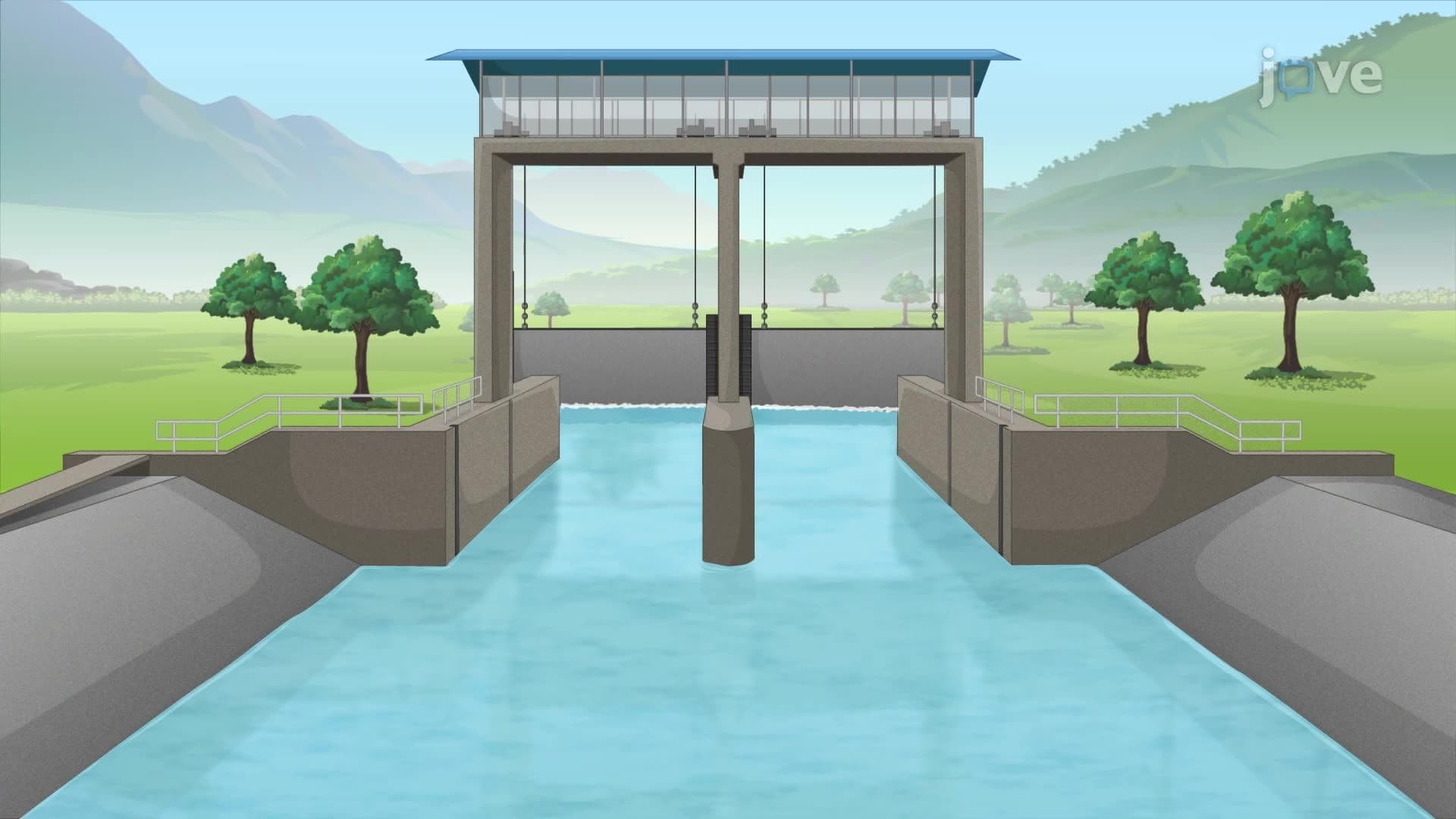
Understanding energy considerations enables engineers to design efficient water conveyance systems. The California aqueduct system, spanning over 400 miles, utilizes these principles to maintain optimal flow velocities while minimizing energy losses. Channel designers must balance slope, roughness, and cross-sectional geometry to achieve desired flow characteristics.
For students tackling MCAT physics sections or engineering coursework, mastering energy considerations provides essential problem-solving skills applicable across multiple disciplines, from environmental engineering to urban planning.
Related Micro-courses