Loading subject page…

- Civil Engineering
- Open Channel Flow
- Rapidly Varying Flow
Micro-course: Open Channel Flow
2,601 views
Learn key concepts and earn your certificate.



Rapidly Varying Flow

00:00
01:24
Video Summary: What Is Rapidly Varying Flow
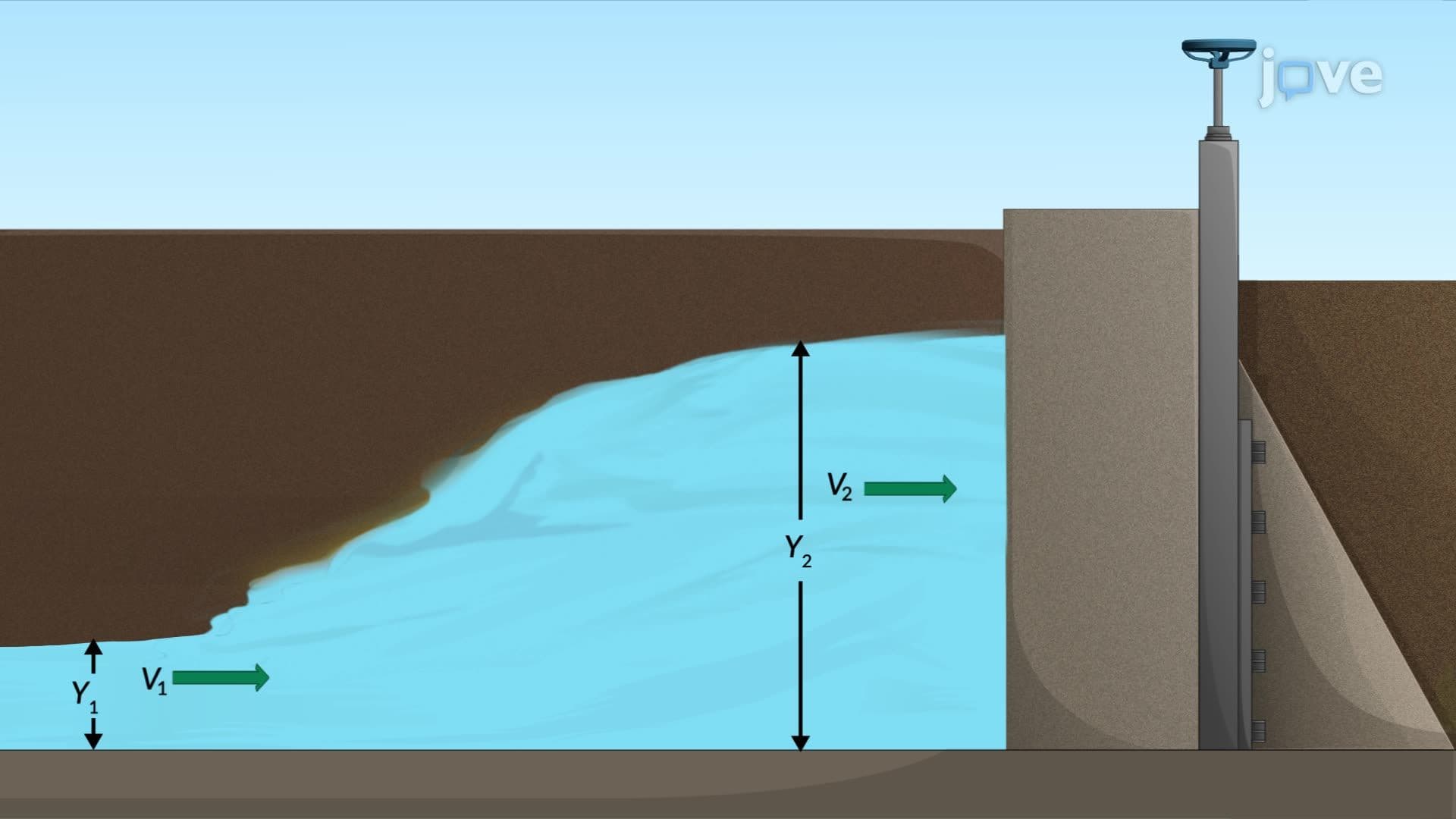
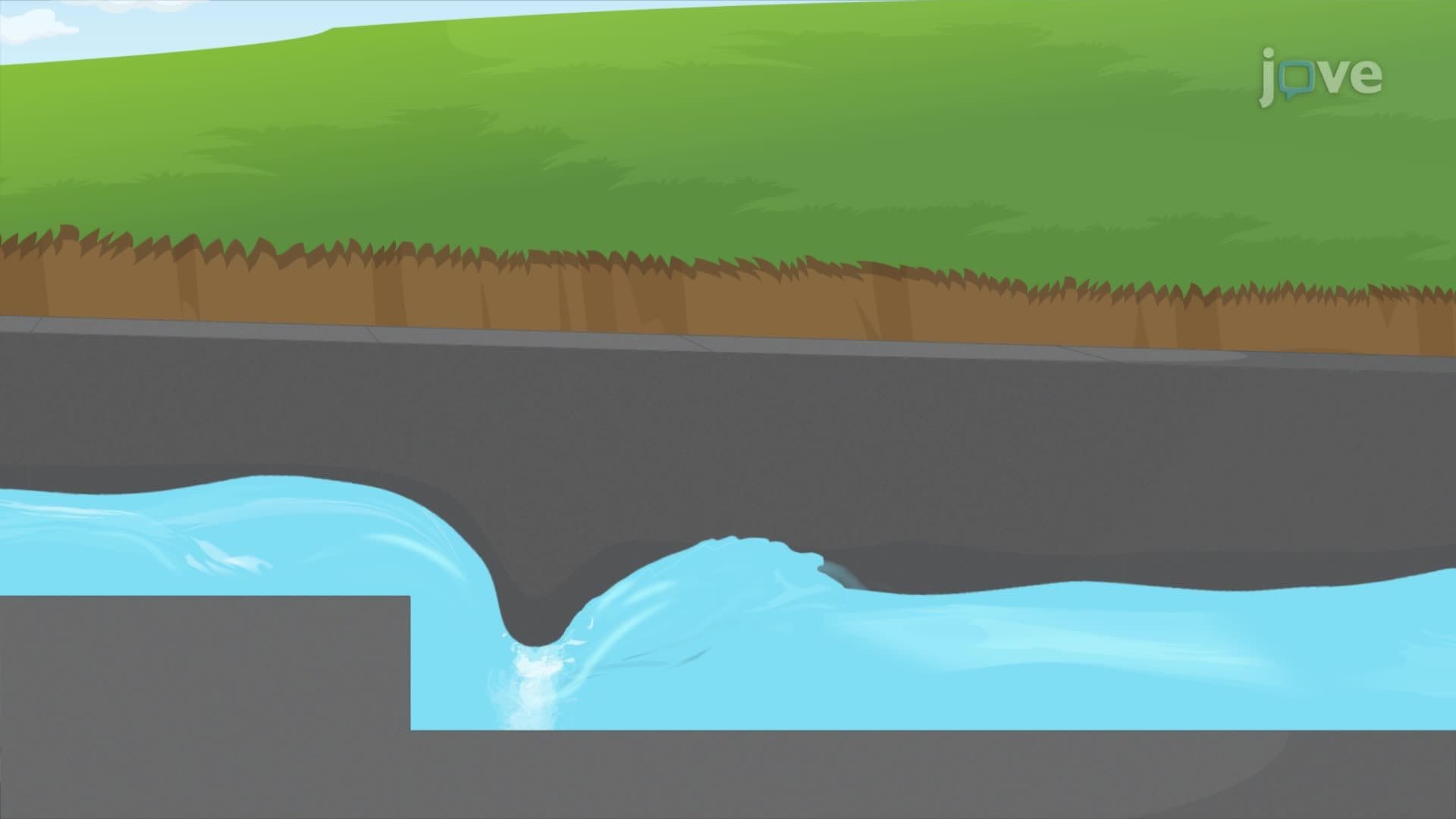
Ever wonder why water suddenly becomes turbulent and choppy below a dam spillway? This dramatic change is called a hydraulic jump, a prime example of rapidly varying flow where water depth changes drastically over just a few feet. At locations like the Hoover Dam's spillway, engineers deliberately create these hydraulic jump zones to safely dissipate the tremendous energy of falling water. What is rapidly varying flow, and how does it protect critical infrastructure from catastrophic erosion? Watch the full video on JoVE Coach to master this concept with expert-led visuals and step-by-step explanations.
- Understand what is rapidly varying flow and identify its key characteristics in open channel systems
- Recognize hydraulic jump formation as the most common example of rapidly varying flow in engineering applications
- Analyze how flow depth changes significantly over short distances with rates approaching unity
- Compare rapidly varying flow to gradually varying flow and uniform flow conditions
- Evaluate the energy dissipation mechanisms that occur during hydraulic jump transitions
- Apply simplified modeling techniques to solve rapidly varying flow problems in practical scenarios
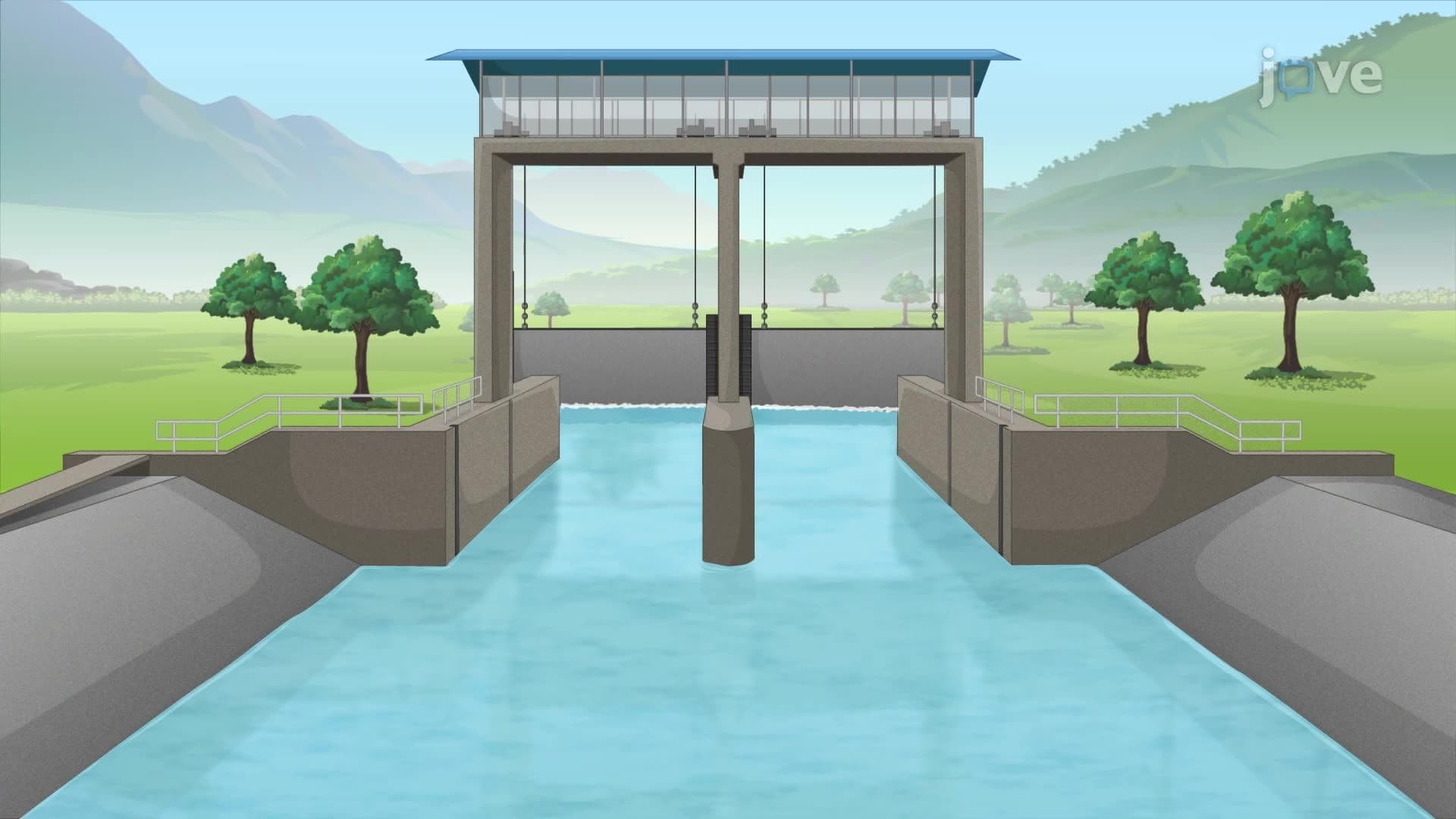
- Identify real-world applications including weirs, flumes, and sluice gates used for flow measurement
- Explore the role of rapidly varying flow in preventing downstream erosion and protecting infrastructure
What is Rapidly Varying Flow: Fundamental Characteristics
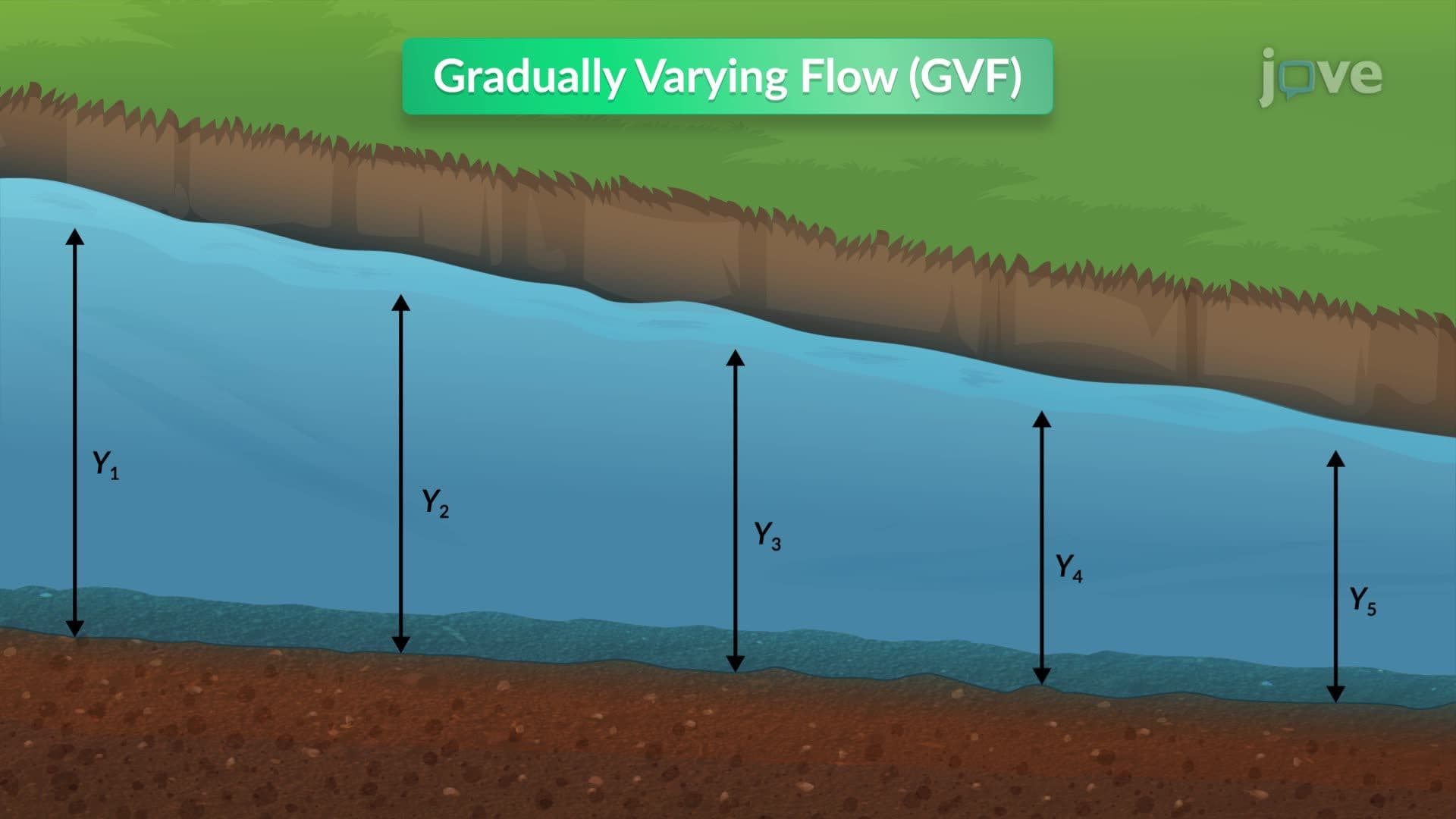
Rapidly varying flow represents one of the most dynamic and challenging phenomena in open channel hydraulics. Unlike gradually varying flow where changes occur slowly over long distances, rapidly varying flow involves dramatic depth transitions occurring within just a few channel widths. The defining characteristic is that the rate of depth change with distance (dy/dx) approaches or equals 1, creating steep water surface profiles that challenge traditional hydraulic analysis methods.
This flow regime typically develops when external forces create sudden boundary condition changes, forcing the water to rapidly adjust its depth and velocity to maintain continuity and energy balance. The flow becomes highly three-dimensional, often involving separation zones, recirculation patterns, and complex turbulence structures that simple one-dimensional models cannot fully capture.
Hydraulic Jump: The Classic Example
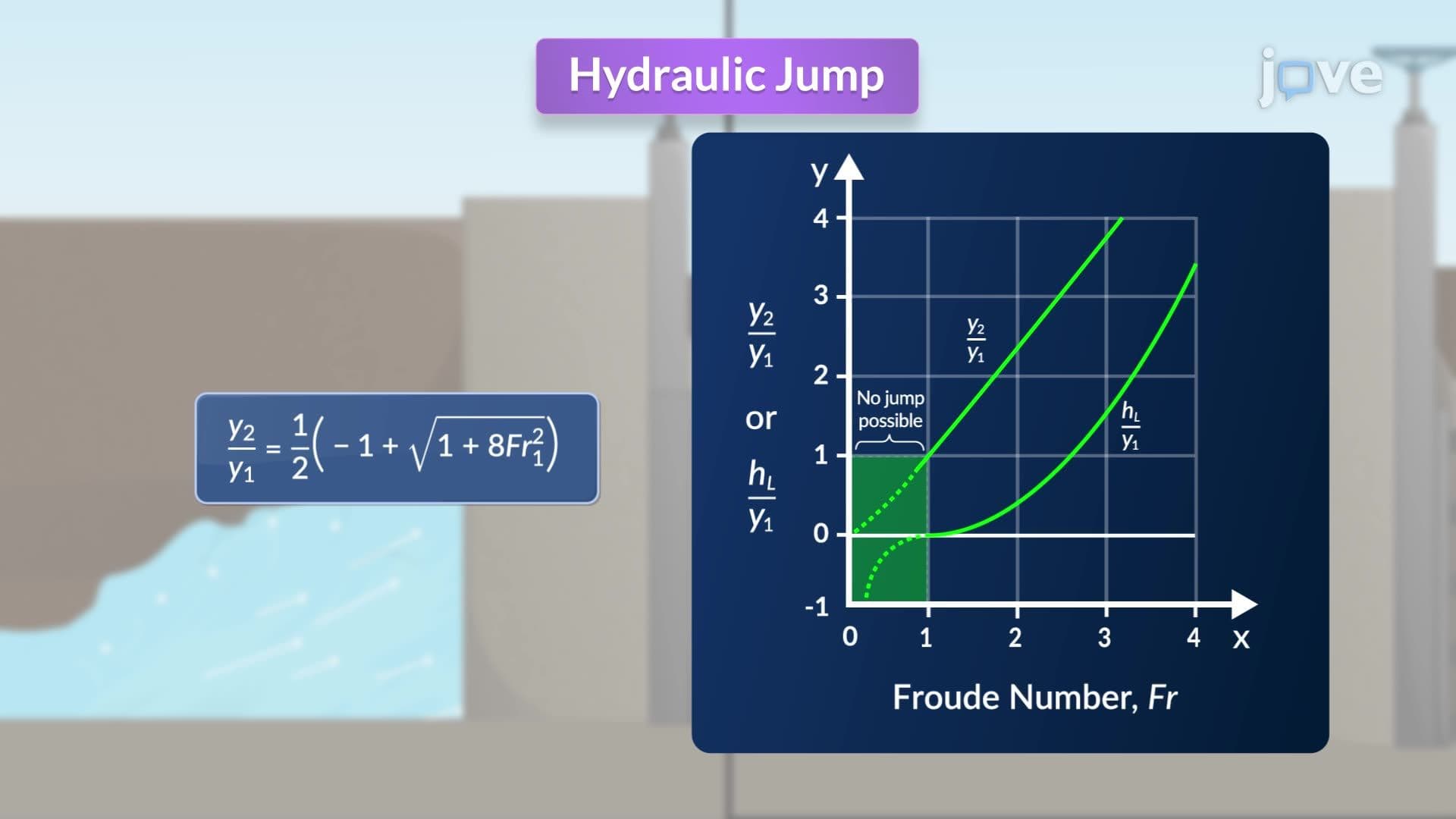
The hydraulic jump stands as the most recognizable form of rapidly varying flow, occurring when high-velocity, shallow flow (supercritical) transitions abruptly to low-velocity, deep flow (subcritical). This phenomenon is governed by the principle of momentum conservation and represents a highly efficient energy dissipation mechanism.
In a typical hydraulic jump, the upstream flow approaches at Froude numbers greater than 1, carrying significant kinetic energy. As the flow encounters downstream conditions that force a depth increase, it cannot gradually adjust due to the supercritical regime's inability to transmit information upstream. Instead, the transition occurs through a standing wave or jump, where depths can increase by factors of 2-10 within distances of just a few feet.
Engineering Applications and Flow Control Devices
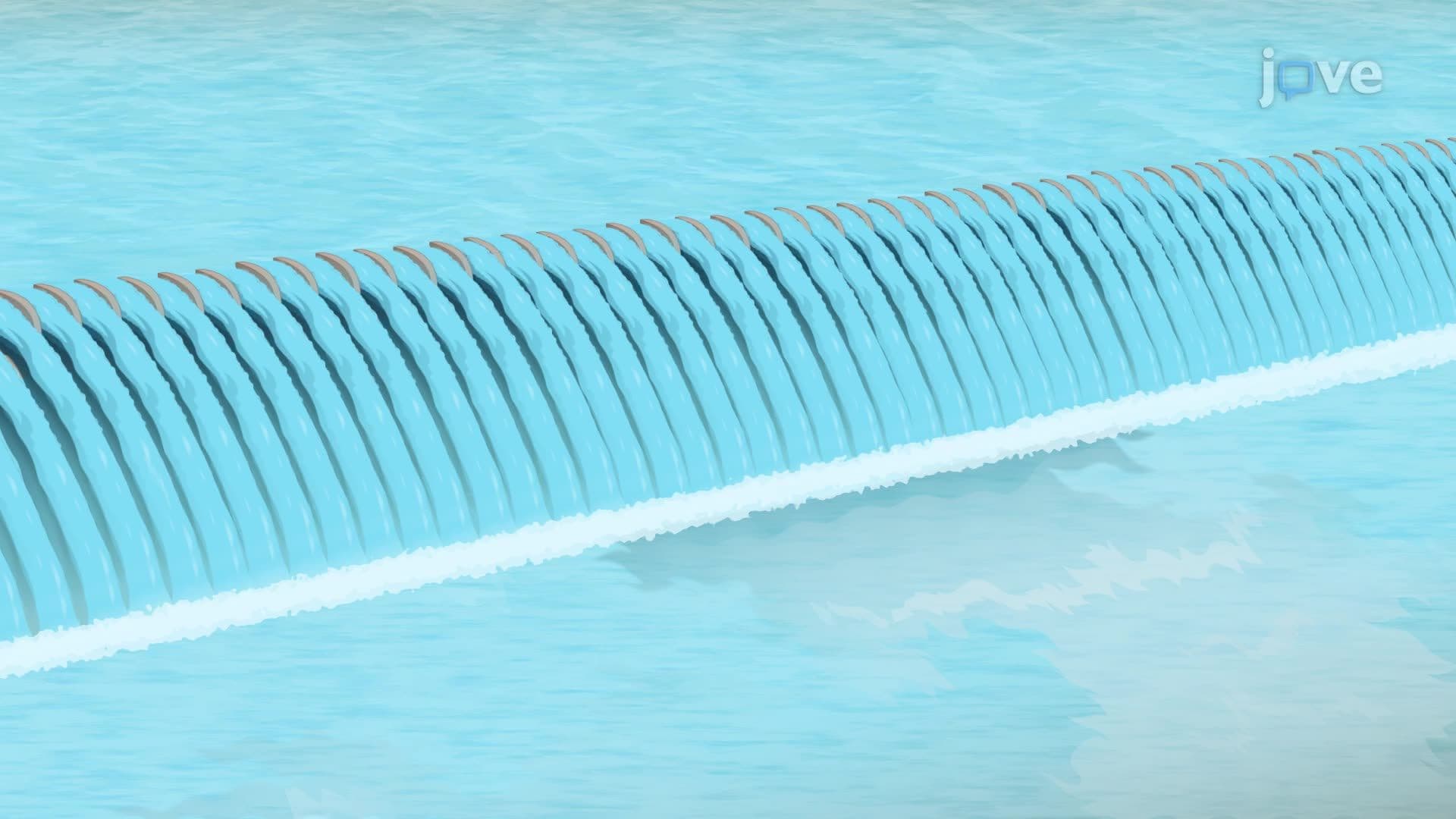
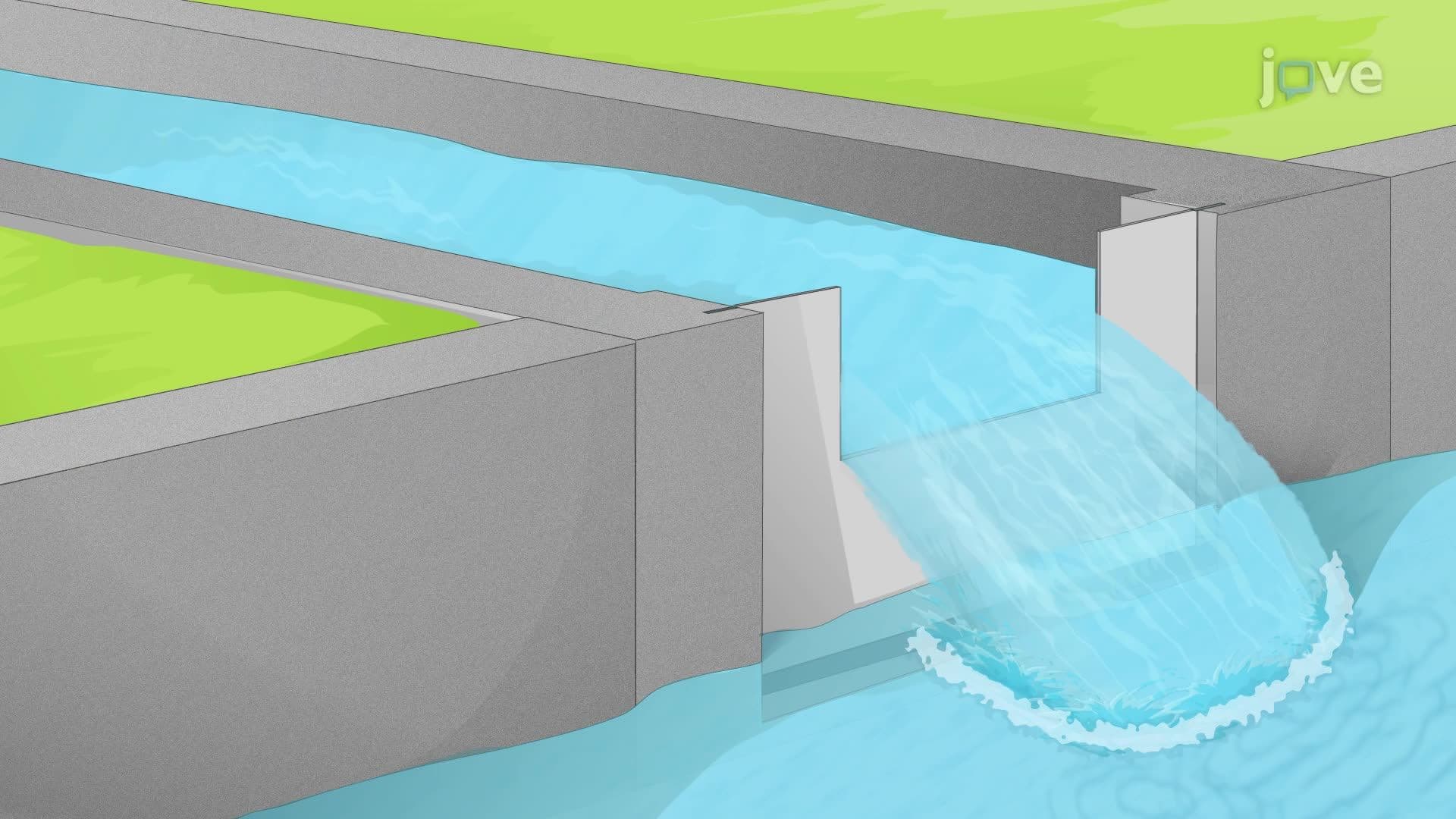
Engineers harness rapidly varying flow principles in numerous water management applications across the United States. Weirs, commonly seen in irrigation systems throughout California's Central Valley, create controlled rapidly varying flow zones that enable precise discharge measurements. The sharp-crested weir forces flow to accelerate over the crest, creating a rapidly varying region where the depth-discharge relationship becomes predictable and measurable.
Similarly, flumes like the Parshall flume, extensively used in municipal water treatment plants from Denver to Miami, utilize rapidly varying flow to measure flows ranging from small streams to major conduits. These devices create a controlled throat section where rapidly varying flow develops, allowing operators to determine discharge rates through simple depth measurements upstream of the throat.
Practical Implications for Students and Professionals
Understanding rapidly varying flow becomes crucial for students pursuing careers in civil and environmental engineering. AP Physics students encounter these principles when studying fluid dynamics, while college-level hydraulics courses dedicate entire units to rapidly varying flow analysis. The concepts directly apply to MCAT fluid mechanics sections and appear frequently in professional engineering licensing examinations.
For practical problem-solving, engineers typically employ simplified approaches like the momentum equation for hydraulic jumps or discharge coefficients for control structures. These methods, while approximate, provide sufficient accuracy for most design applications while remaining computationally manageable for both classroom exercises and professional practice.
Frequently Asked Questions
Rapidly varying flow occurs when water depth changes dramatically over very short distances in open channels. It's like water suddenly becoming much deeper or shallower within just a few feet, creating turbulent, dynamic conditions that are difficult to predict using standard flow equations.
A hydraulic jump forms when fast-moving, shallow water (supercritical flow) suddenly transitions to slow-moving, deep water (subcritical flow). The jump occurs because downstream conditions force the water to slow down, but the high-speed flow cannot gradually adjust, so it creates an abrupt standing wave that dissipates energy through turbulence.
Exams often focus on hydraulic jump calculations using the momentum equation, identifying flow regimes using Froude numbers, and analyzing energy losses across jumps. Students should practice calculating conjugate depths, sequent depth ratios, and energy dissipation percentages for different upstream conditions.
MCAT fluid mechanics sections cover Bernoulli's equation and continuity principles that govern these flows. AP Physics C mechanics includes momentum conservation, which explains hydraulic jump formation, while AP Environmental Science discusses these flows in watershed management and flood control contexts.
You'll find rapidly varying flow at dam spillways like Hoover Dam, in storm drain outfalls during heavy rains, and at irrigation canal control structures throughout agricultural regions. Urban stormwater management systems deliberately create these flows to control flooding and prevent erosion damage.
Basic algebra and trigonometry are sufficient for most rapidly varying flow problems at the introductory level. While advanced analysis requires partial differential equations, students can master practical applications using simplified momentum equations and empirical coefficients that only require arithmetic operations.
Start by memorizing the momentum equation for hydraulic jumps, then practice identifying whether jumps will form using Froude number calculations. Work through progressively complex problems involving energy loss calculations and sequent depth relationships, focusing on consistent unit management and logical problem-solving sequences.
Consider studying computational fluid dynamics (CFD) for complex rapidly varying flow modeling, sediment transport in rapidly varying flows, and specialized applications like fish ladders or energy dissipator design. Advanced coursework might include unsteady rapidly varying flow and two-dimensional surface wave analysis.
Environmental engineers use rapidly varying flow principles for designing stormwater management systems, protecting streams from erosion, and creating fish-friendly hydraulic structures. Understanding these flows helps in flood control design, habitat restoration projects, and sustainable water resource management throughout the United States.
Related Micro-courses