Loading…
Loading video…

12,994 views
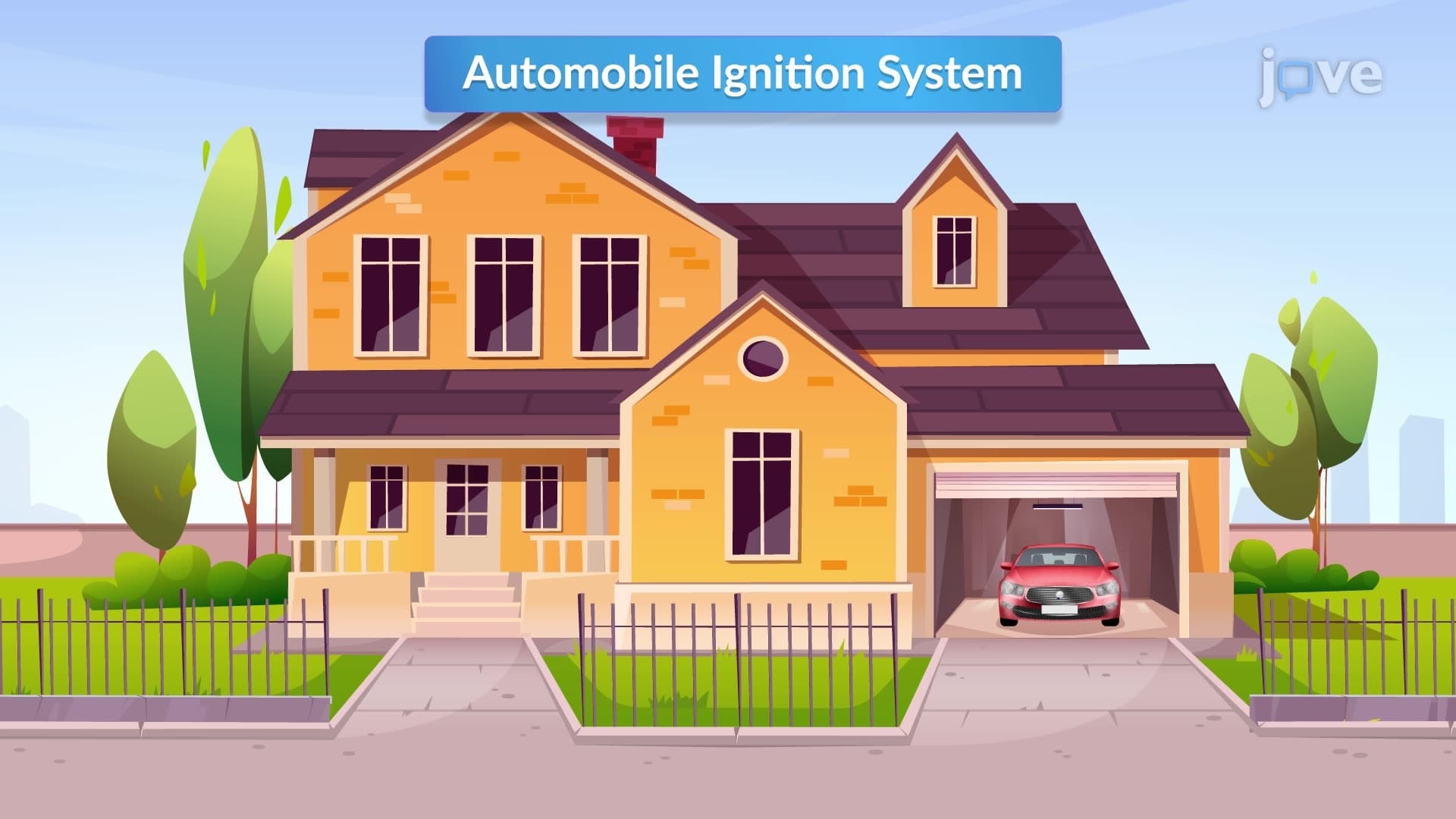
Ever wondered how your car's engine creates the precise spark needed to ignite fuel thousands of times per minute? First order circuits make this automotive marvel possible through carefully engineered electrical systems. The Design Example Automobile Ignition System Explained demonstrates how a simple 12-volt car battery generates the thousands of volts required for spark plug ignition using inductor properties and rapid switch timing. Watch the full video on JoVE Coach to master this concept with expert-led visuals and step-by-step explanations.
The automotive ignition system represents one of the most practical applications of first order circuits in everyday technology. At its core, this system transforms a modest 12-volt battery into the 15,000-20,000 volts needed to create combustion sparks. This voltage transformation relies entirely on first order circuit principles, specifically the behavior of inductors when current changes rapidly.
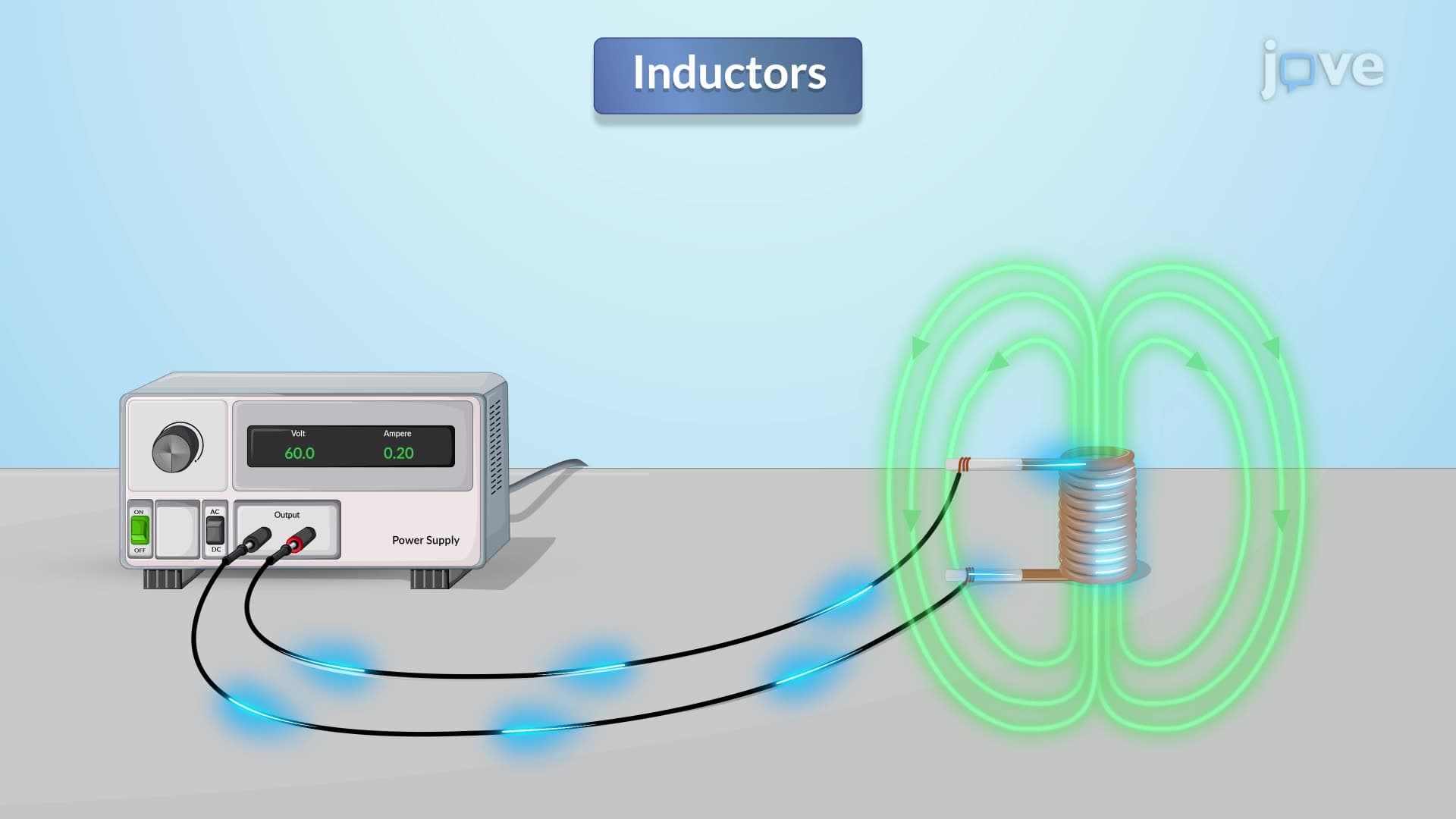
First order circuits contain only one energy-storage element (either an inductor or capacitor) plus resistors and sources. In automotive ignition systems, we primarily encounter RL (resistor-inductor) first order circuits. The spark coil acts as both an inductor and resistor, creating what engineers call an "ignition coil" or "spark coil." When current flows through this coil at steady state, it stores magnetic energy. The circuit reaches equilibrium when the inductor voltage drops to zero, allowing maximum current flow determined by Ohm's law: I = V/R.
The magic happens during the switching event. When the ignition switch opens abruptly, the magnetic field around the inductor collapses rapidly. According to Lenz's law, this changing magnetic flux induces a voltage opposing the change. The inductor voltage equation V = L × (dI/dt) shows that rapid current changes (large dI/dt values) create proportionally large voltages. In automotive systems, microsecond switching times generate the extreme voltage spikes needed for spark formation.
Understanding first order circuits proves essential for AP Physics C students, particularly in the electricity and magnetism section. College electrical engineering students encounter these concepts in introductory circuits courses, where they learn to solve differential equations governing circuit behavior. The time constant τ = L/R determines how quickly the circuit responds to changes. In ignition systems, engineers design coils with specific time constants to optimize spark timing and energy delivery. This knowledge appears frequently on the MCAT physics section and forms foundational understanding for automotive engineering careers at companies like Ford, General Motors, and Tesla.
Frequently Asked Questions
An automobile ignition system uses first order circuit behavior to transform 12-volt battery power into high-voltage sparks for fuel combustion. The system contains an inductor (spark coil) that stores magnetic energy when current flows, then releases this energy as high voltage when the circuit opens rapidly. This demonstrates classic RL first order circuit dynamics where voltage and current change exponentially with time.
AP Physics C frequently tests first order circuit analysis through both multiple choice and free response questions. Students must solve differential equations, calculate time constants, and analyze energy storage in inductors and capacitors. Automotive ignition systems provide excellent real-world contexts for these problems, requiring knowledge of exponential functions and basic circuit laws.
Absolutely - first order circuits form the foundation for advanced circuit analysis in electrical engineering programs. Universities like MIT, Stanford, and Georgia Tech build entire courses around circuit analysis starting with first order systems. These concepts directly apply to control systems, signal processing, and power electronics courses later in the curriculum.
Electric vehicles use sophisticated first order circuit principles in their battery management systems, motor controllers, and charging circuits. Tesla's Model S employs RC and RL circuits for power conditioning, regenerative braking systems, and thermal management. Understanding these circuits helps explain how EVs achieve precise motor control and efficient energy storage.
While basic first order circuit concepts can be grasped with algebra, calculus becomes essential for complete understanding. The exponential functions governing circuit behavior derive from differential equations requiring calculus knowledge. However, many practical applications can be understood using simplified relationships and given formulas.
Focus on identifying circuit types (RC or RL), calculating time constants, and recognizing steady-state versus transient behavior. Practice with automotive examples like ignition systems helps connect abstract math to tangible applications. Create a formula sheet covering exponential relationships and practice sketching voltage/current curves over time.
RC circuits excel in timing applications like camera flashes and computer memory, while RL circuits dominate power applications like automotive ignition and industrial motor control. RC circuits respond faster but store less energy, making them ideal for signal processing. RL circuits handle higher power levels, perfect for automotive and industrial machinery applications.
First order circuits lead naturally to second order circuits (RLC), AC circuit analysis, and Laplace transform methods. Advanced topics include filter design, control system analysis, and electromagnetic field theory. Students planning careers in electrical engineering, robotics, or power systems will encounter these extensions throughout their academic and professional development.
Related Micro-courses

Related Subjects
 Civil Engineering 30 micro-courses›Mechanical Engineering 28 micro-courses›