Loading…
Loading video…

3,373 views

Did you know that the energy in a Spotify song can be calculated two completely different ways and yield identical results? The convergence of fourier series demonstrates this remarkable property through Parseval's Theorem, which reveals that a periodic signal's average power equals the sum of squared magnitudes of its Fourier coefficients. In audio engineering at companies like Apple and Netflix, this principle ensures compressed music files maintain their original energy content. What is Parseval's Theorem becomes crucial for understanding how digital signal processing preserves audio quality. Watch the full video on JoVE Coach to master this concept with expert-led visuals and step-by-step explanations.
Parseval's Theorem stands as one of the most elegant bridges between time-domain and frequency-domain analysis in signal processing. Named after French mathematician Marc-Antoine Parseval, this fundamental principle states that the average power of a periodic function over one complete period equals the sum of the squared magnitudes of all its Fourier coefficients. This theorem provides mathematical proof that energy is conserved when transforming between different representations of the same signal.
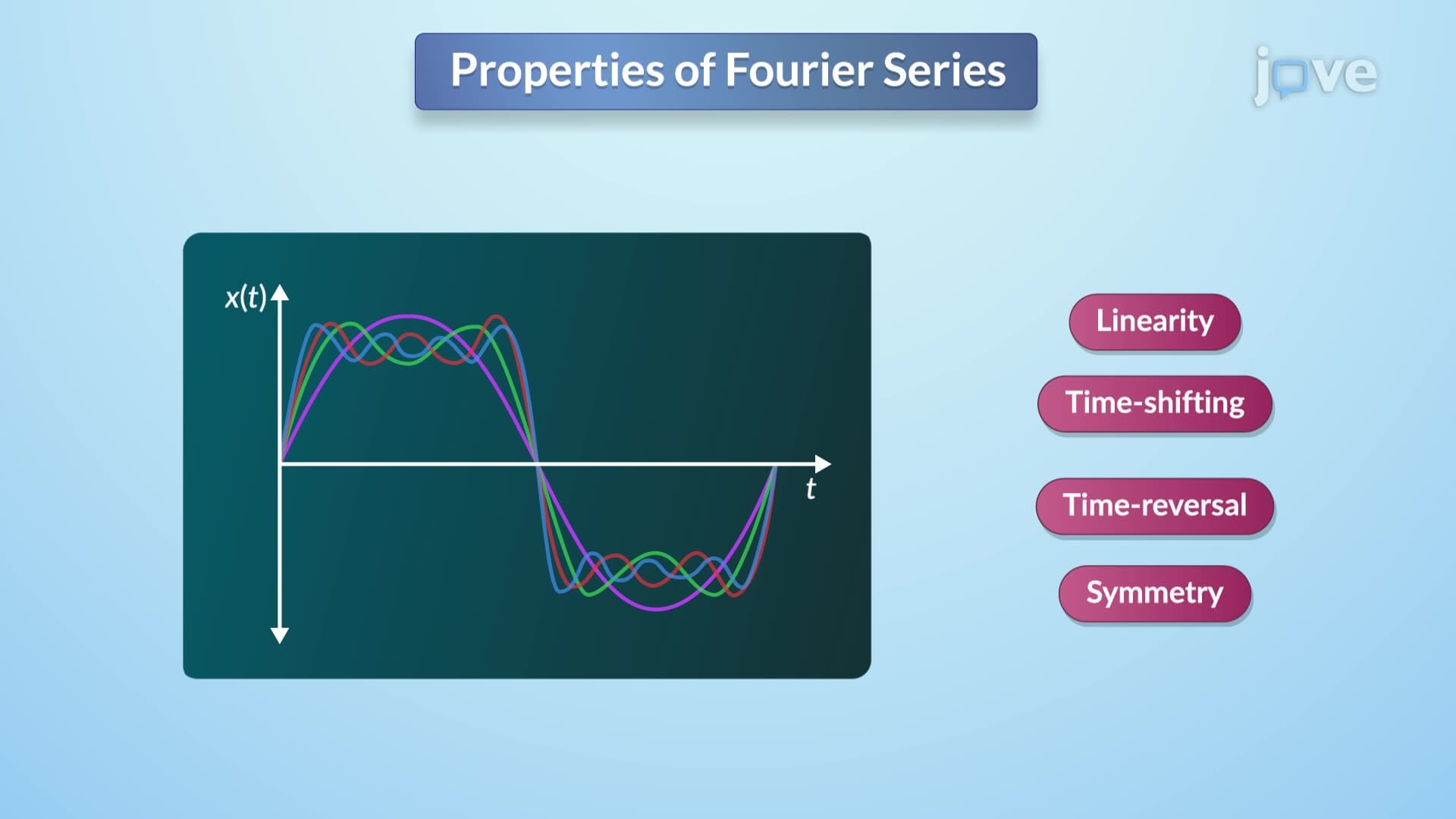
The convergence of fourier series plays a crucial role in validating this theorem. When a periodic function can be expressed as a convergent Fourier series, Parseval's Theorem guarantees that no energy is lost or gained during the transformation process. This conservation principle becomes particularly important in digital signal processing applications where accuracy and energy preservation are paramount.
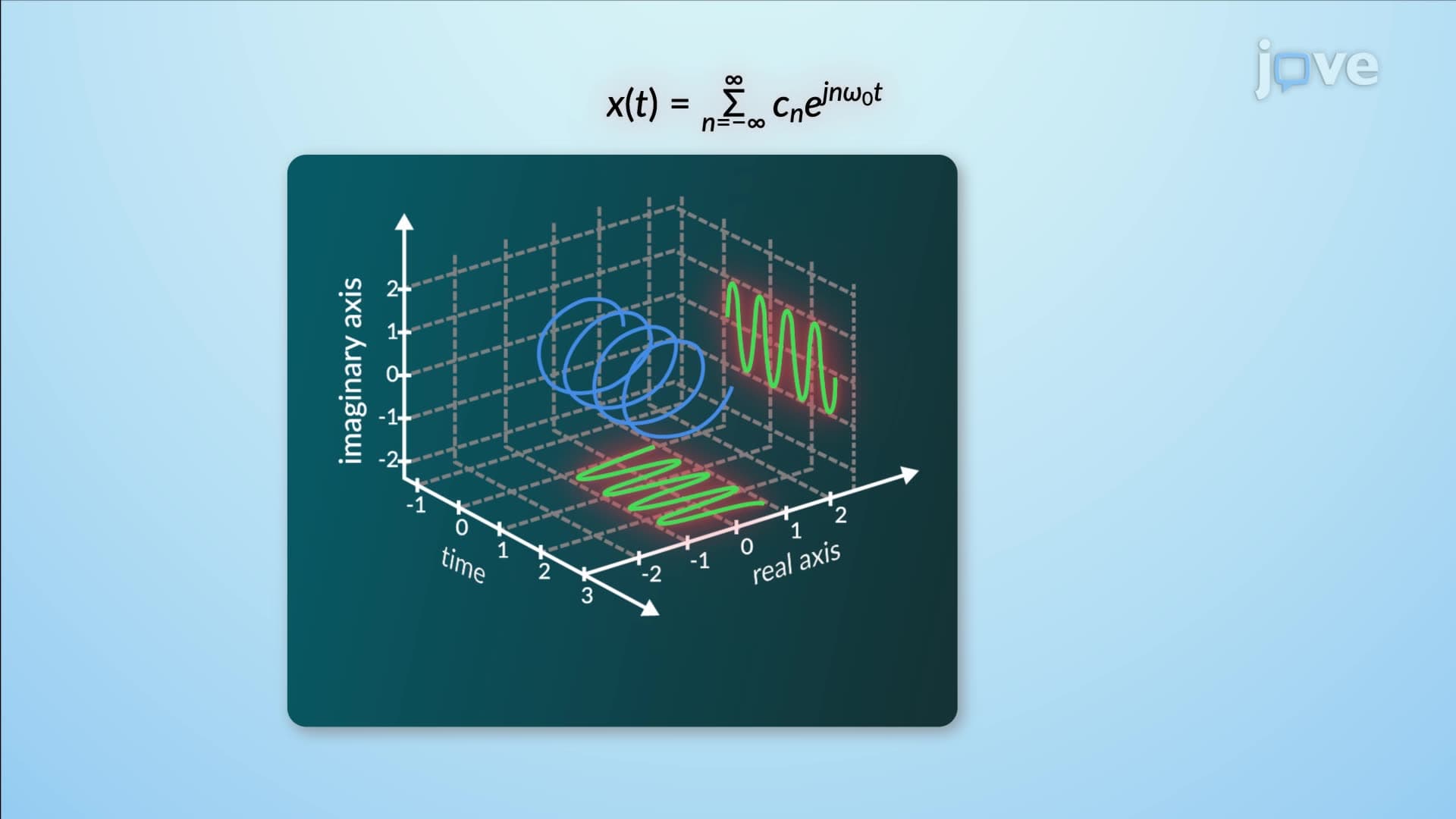
The types of convergence of fourier series directly impact how Parseval's Theorem applies to different signals. For a periodic function f(t) with period T, the theorem can be expressed in multiple equivalent forms. In terms of complex Fourier coefficients, the average power equals (1/T) times the sum of |cn|² for all harmonics n. When using trigonometric Fourier series, the theorem takes the form involving a0²/2 plus the sum of (an² + bn²)/2 for all positive harmonics.
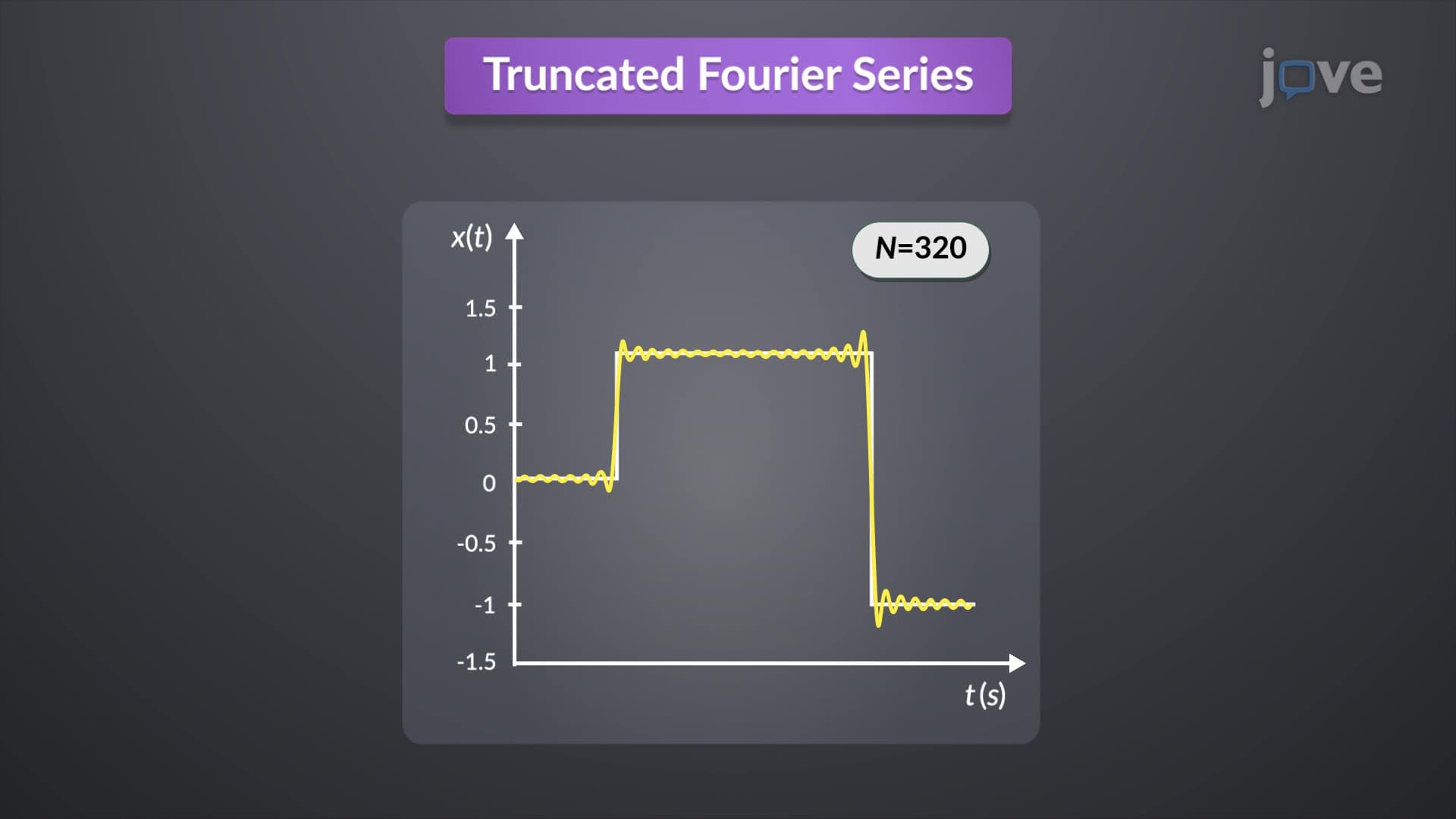
Understanding convergence of fourier series becomes essential when dealing with discontinuous functions or signals with finite energy. The Dirichlet conditions ensure that most practical engineering signals satisfy the convergence requirements, making Parseval's Theorem applicable to real-world scenarios from MIT's electrical engineering labs to Stanford's signal processing research.
In electrical engineering contexts, what are convergence of fourier series overview reveals practical implications for power calculations. When f(t) represents current or voltage in a circuit, f(t)² corresponds to instantaneous power dissipated in a 1-ohm resistor. Parseval's Theorem then provides two equivalent methods for calculating average power: direct time-domain integration or frequency-domain summation of harmonic contributions.
This dual approach proves invaluable in AC circuit analysis taught in courses at institutions like Carnegie Mellon and UC Berkeley. Students preparing for the AP Physics C exam or college-level circuits courses encounter problems where Parseval's Theorem simplifies complex power calculations, especially when dealing with non-sinusoidal periodic waveforms common in power electronics and renewable energy systems.
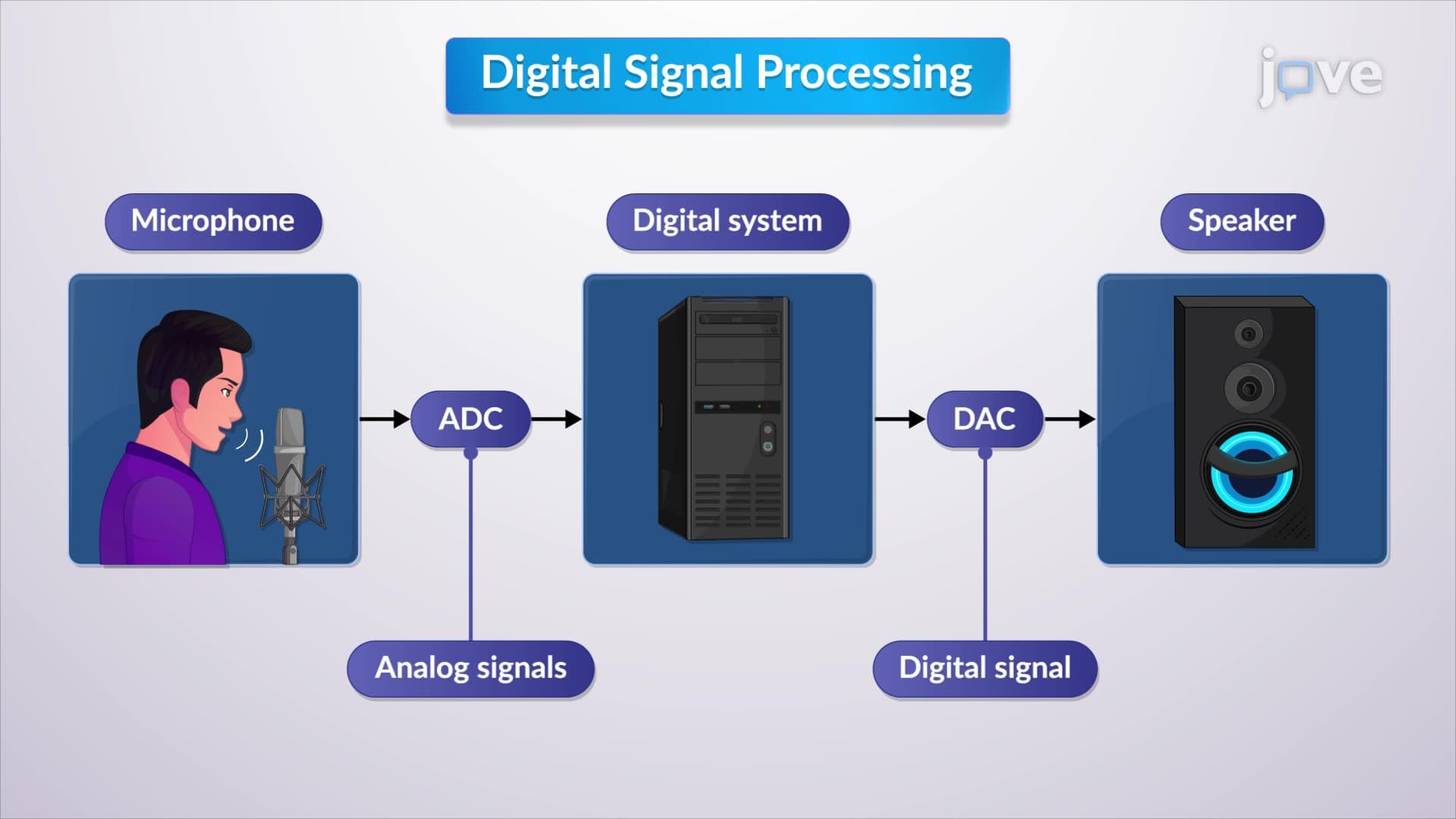
The convergence of fourier series concept extends beyond theoretical mathematics into practical applications that shape our daily lives. Audio compression algorithms used by Spotify, Apple Music, and other streaming services rely on Parseval's Theorem to ensure that compressed files maintain energy levels comparable to original recordings. This principle helps engineers at companies like Dolby Laboratories validate that their compression techniques preserve the perceptual quality of music and speech.
In telecommunications, understanding convergence of fourier series enables engineers to design efficient modulation schemes for 5G networks and satellite communications. The theorem ensures that signal power remains consistent across different mathematical representations, critical for maintaining communication reliability and meeting FCC regulations for broadcast power limits.
Frequently Asked Questions
Parseval's Theorem proves that the average power of a periodic signal equals the sum of squared magnitudes of its Fourier coefficients. This fundamental principle ensures energy conservation when transforming between time-domain and frequency-domain representations. It's crucial for audio processing, circuit analysis, and validating that digital signal processing algorithms preserve signal energy, making it essential for engineers at companies like Apple, Google, and telecommunications firms.
The convergence of fourier series provides the mathematical foundation that makes Parseval's Theorem valid for practical signals. When a periodic function satisfies convergence conditions like the Dirichlet criteria, its Fourier series representation accurately captures all the signal's energy. This convergence ensures that the theorem's energy equality holds true, enabling reliable calculations in engineering applications from audio compression to power system analysis.
Parseval's Theorem appears frequently on electrical engineering midterms and finals at universities like MIT, Stanford, and Carnegie Mellon. Students encounter it in signals and systems courses, Fourier analysis classes, and advanced calculus exams. The AP Calculus BC exam occasionally includes related concepts, while graduate-level qualifying exams in electrical engineering programs consistently feature problems requiring application of this theorem for power calculations and spectral analysis.
Audio engineers at streaming companies use Parseval's Theorem to verify that compressed music files maintain energy levels comparable to original recordings. The theorem allows them to calculate total signal energy in both time domain (original audio) and frequency domain (compressed coefficients). This ensures that lossy compression algorithms preserve perceptual audio quality while reducing file sizes, maintaining the listening experience across millions of songs in digital libraries.
Start with pointwise convergence, which means the Fourier series approaches the original function at individual points. Then explore uniform convergence, where the series approximates the entire function equally well everywhere. Focus on the Dirichlet conditions: functions must be bounded, have finite discontinuities, and finite variation over each period. These criteria ensure convergence for most practical engineering signals, making Parseval's Theorem applicable to real-world problems you'll encounter in college coursework.
While calculus knowledge helps, you can grasp the essential concepts with solid algebra and trigonometry skills typical of high school AP courses. Focus on understanding periodic functions, basic integration, and the idea that complex signals decompose into simple sinusoidal components. Many successful engineering students at schools like Georgia Tech and Purdue build intuition through practical examples before diving into rigorous mathematical proofs, making the concepts accessible to motivated learners.
Practice calculating average power using both time-domain integration and frequency-domain summation methods to build confidence with the theorem's dual nature. Work through problems involving square wave, sawtooth, and triangular periodic functions commonly found on MIT and Stanford exams. Create summary sheets connecting Parseval's Theorem to energy conservation principles, and solve past exam problems from electrical engineering courses to recognize common problem patterns and solution techniques.
Progress to studying the Fourier Transform and its continuous-domain applications in signal processing and communications systems. Explore Plancherel's Theorem, which extends Parseval's result to non-periodic functions, and investigate applications in quantum mechanics and digital signal processing. Advanced courses at universities like UC Berkeley and Caltech cover topics like wavelet analysis, spectral density functions, and modern signal processing techniques that build upon these foundational convergence concepts.
Related Micro-courses
Related Subjects
 Civil Engineering 30 micro-courses›Mechanical Engineering 28 micro-courses›