Loading…
Loading video…

8,255 views
Ever wonder how NASA engineers predict whether a spacecraft's control system will remain stable during re-entry? Bode plots construction provides the mathematical framework to analyze system stability and frequency response in control systems. This technique helps engineers at companies like Boeing and SpaceX design reliable autopilot systems for aircraft and rockets. Transfer Function And Bode Plots II Explained demonstrates how to construct these critical plots using poles and zeros analysis. Watch the full video on JoVE Coach to master this concept with expert-led visuals and step-by-step explanations.
Bode plots construction represents a cornerstone technique in control systems engineering, providing engineers with a powerful graphical method to analyze system frequency response. These logarithmic plots display both magnitude (in decibels) and phase (in degrees) as functions of frequency, enabling rapid assessment of system stability and performance characteristics.
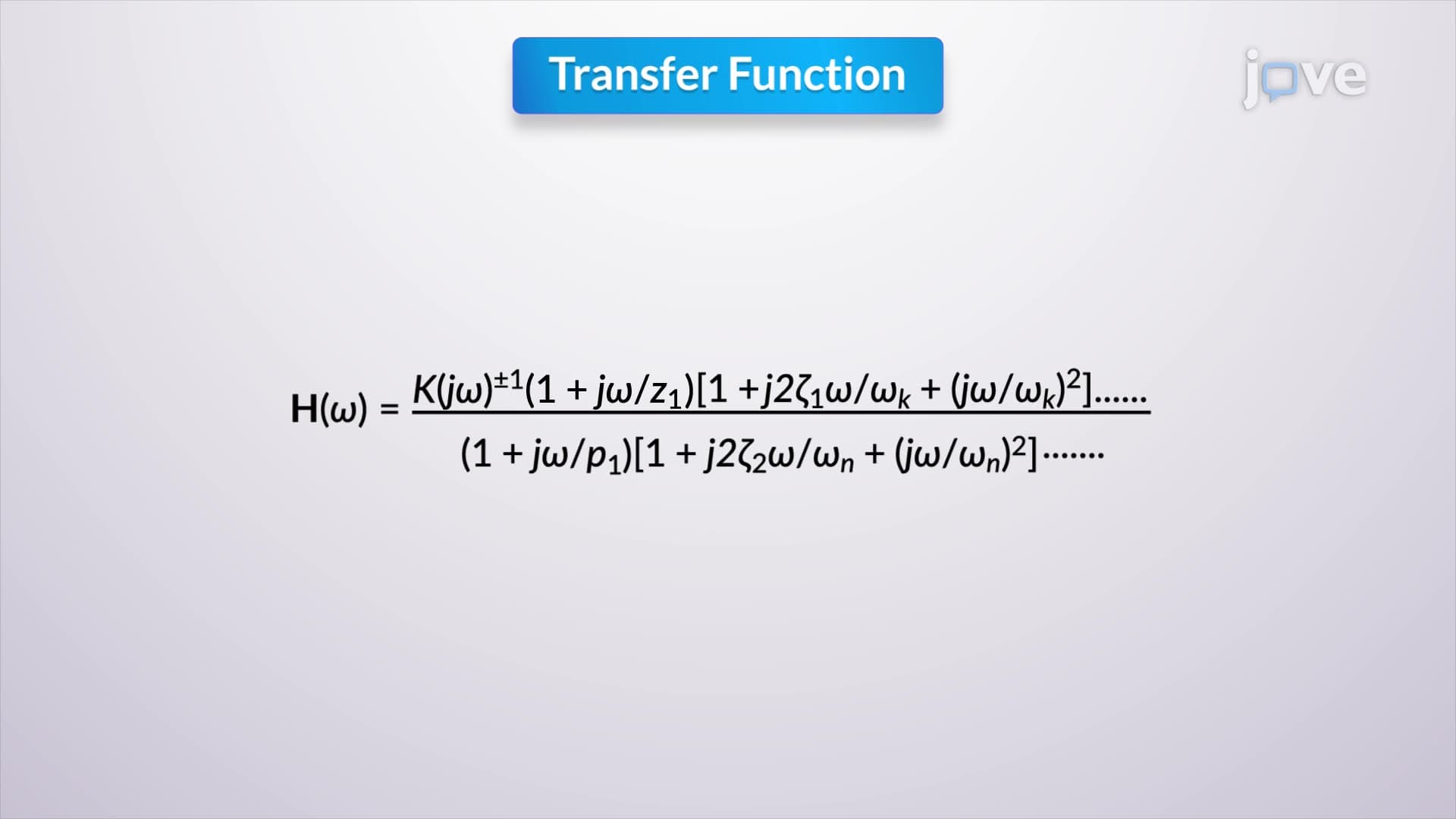
When constructing Bode plots for systems with simple zeros, engineers observe three distinct frequency regions. At low frequencies, the magnitude plot maintains a horizontal line with zero slope, while the phase approaches zero degrees. This flat response indicates that low-frequency signals pass through essentially unchanged. As frequency increases toward the corner frequency (also called the break frequency), the asymptotic magnitude begins deviating upward, and the phase shifts toward 45 degrees. Beyond the corner frequency, the magnitude plot exhibits a +20 dB/decade slope, with the phase stabilizing at 90 degrees. This behavior explains why zeros can improve system stability by adding phase lead.
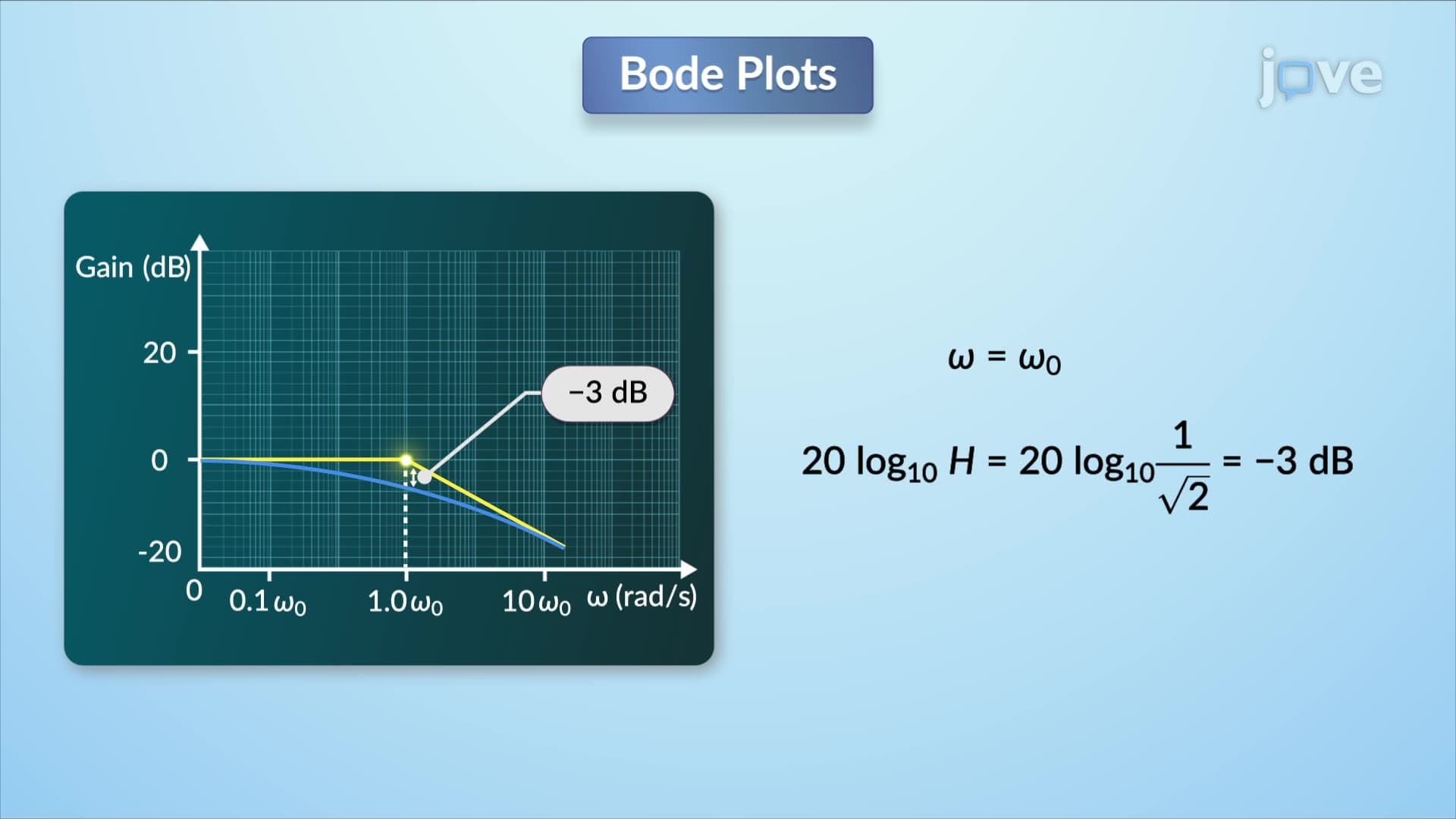
Simple poles exhibit behavior that directly mirrors simple zero characteristics, but reflected about the horizontal axis. This reciprocal relationship means that where zeros provide positive slopes and phase lead, poles contribute negative slopes and phase lag. At low frequencies, both magnitude and phase approach zero. However, at the corner frequency, the magnitude begins dropping with a -20 dB/decade slope, while the phase shifts toward -90 degrees. This fundamental difference between poles and zeros helps explain why excessive poles can destabilize control systems—a critical consideration for AP Physics C students studying oscillatory motion and engineers designing servo systems for manufacturing equipment.
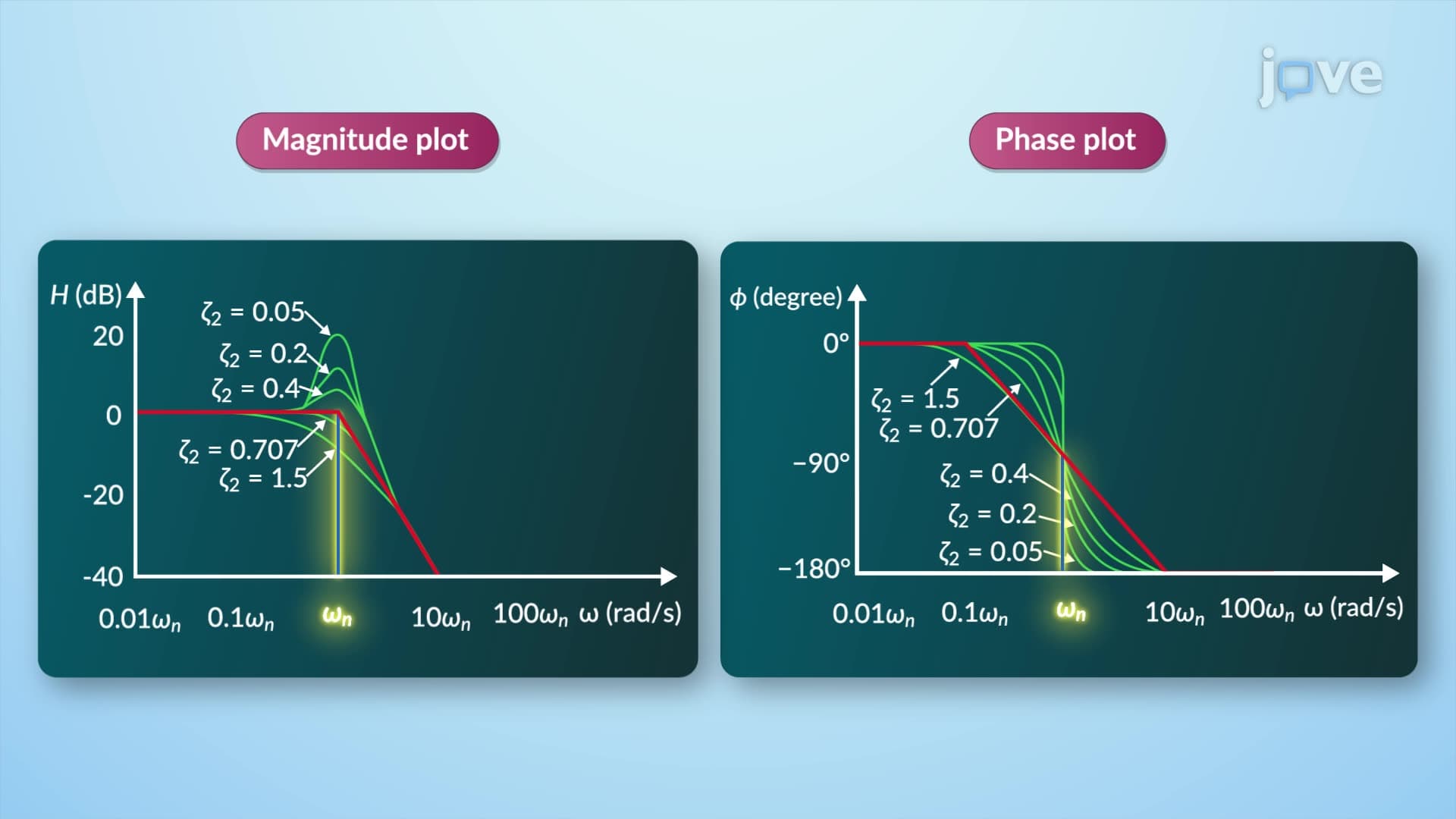
Quadratic pole systems introduce additional complexity through damping factor dependencies. Unlike simple poles, quadratic poles produce -40 dB/decade magnitude slopes and -180-degree phase shifts at high frequencies. The damping factor (zeta) significantly influences the magnitude plot's behavior near the corner frequency, creating either gentle curves for overdamped systems or pronounced peaks for underdamped systems. Students preparing for electrical engineering coursework at institutions like MIT or Stanford must master these concepts, as they appear frequently in control systems exams and practical circuit design projects. Multiple quadratic poles multiply these effects—two quadratic poles create -80 dB/decade slopes and -360-degree phase shifts, illustrating why high-order systems require careful stability analysis.
Frequently Asked Questions
Bode plots construction is a graphical technique for analyzing system frequency response using logarithmic magnitude and linear phase plots. It involves plotting transfer function behavior across different frequency ranges, identifying poles and zeros, and constructing asymptotic approximations. This method enables engineers to quickly assess system stability, bandwidth, and performance characteristics without complex mathematical calculations.
AP Physics C exams may include qualitative questions about frequency response, while college engineering courses test quantitative Bode plot construction. Students typically encounter problems asking them to sketch magnitude and phase plots given pole-zero locations, determine corner frequencies, or analyze system stability margins. ABET-accredited programs require mastery of these concepts for electrical and mechanical engineering degrees.
Quadratic poles introduce damping factor dependencies that don't exist with simple poles, creating variable magnitude responses near corner frequencies. Students must calculate damping ratios and understand how underdamped systems create resonant peaks while overdamped systems produce gradual roll-offs. This complexity appears frequently in junior-level courses at schools like UC Berkeley and Georgia Tech.
Aerospace engineers use Bode plots to design autopilot systems, ensuring aircraft remain stable across all flight conditions. They analyze how control surface actuators respond to pilot inputs and environmental disturbances, designing compensators to achieve desired handling characteristics. Flight control computers in modern aircraft like the Boeing 787 rely on controllers designed using these frequency-domain techniques.
No, bode plots construction primarily requires understanding logarithms, basic trigonometry, and algebraic manipulation of rational functions. While transfer function derivation may involve calculus, the actual plot construction uses pattern recognition and asymptotic approximation techniques. High school students with strong algebra skills can master the fundamental concepts before advancing to more complex analysis.
Practice constructing plots by hand for simple pole-zero combinations before using software tools like MATLAB. Start with first-order systems, then progress to second-order and higher-order combinations. Create flashcards for standard responses (+20 dB/decade for zeros, -20 dB/decade for poles) and practice identifying corner frequencies quickly. Work through past exam problems from your specific university's course archives.
Root locus analysis provides complementary time-domain insight into how poles move with changing system parameters, making it a natural next step. Nyquist plots offer alternative stability analysis methods particularly useful for systems with delays. Most control systems courses at universities like Purdue and Texas A&M teach these three techniques together, as each provides unique perspectives on system behavior and design trade-offs.
Related Micro-courses
Related Subjects
 Civil Engineering 30 micro-courses›Mechanical Engineering 28 micro-courses›