Loading…
Loading video…

3,974 views
Did you know that every digital audio filter in Spotify and Apple Music relies on the same mathematical relationship used in NASA's spacecraft communication systems? Control systems engineers use the Relation of DFT to Z Transform to convert between time and frequency domains, enabling precise signal analysis in everything from Tesla's autopilot sensors to iPhone's noise cancellation technology. Watch the full video on JoVE Coach to master this concept with expert-led visuals and step-by-step explanations.
The Relation of DFT to Z Transform represents one of the most elegant connections in digital signal processing and control systems. This relationship bridges the gap between two fundamental mathematical tools used extensively in engineering applications, from designing anti-lock braking systems in Ford vehicles to developing noise reduction algorithms for Bose headphones.
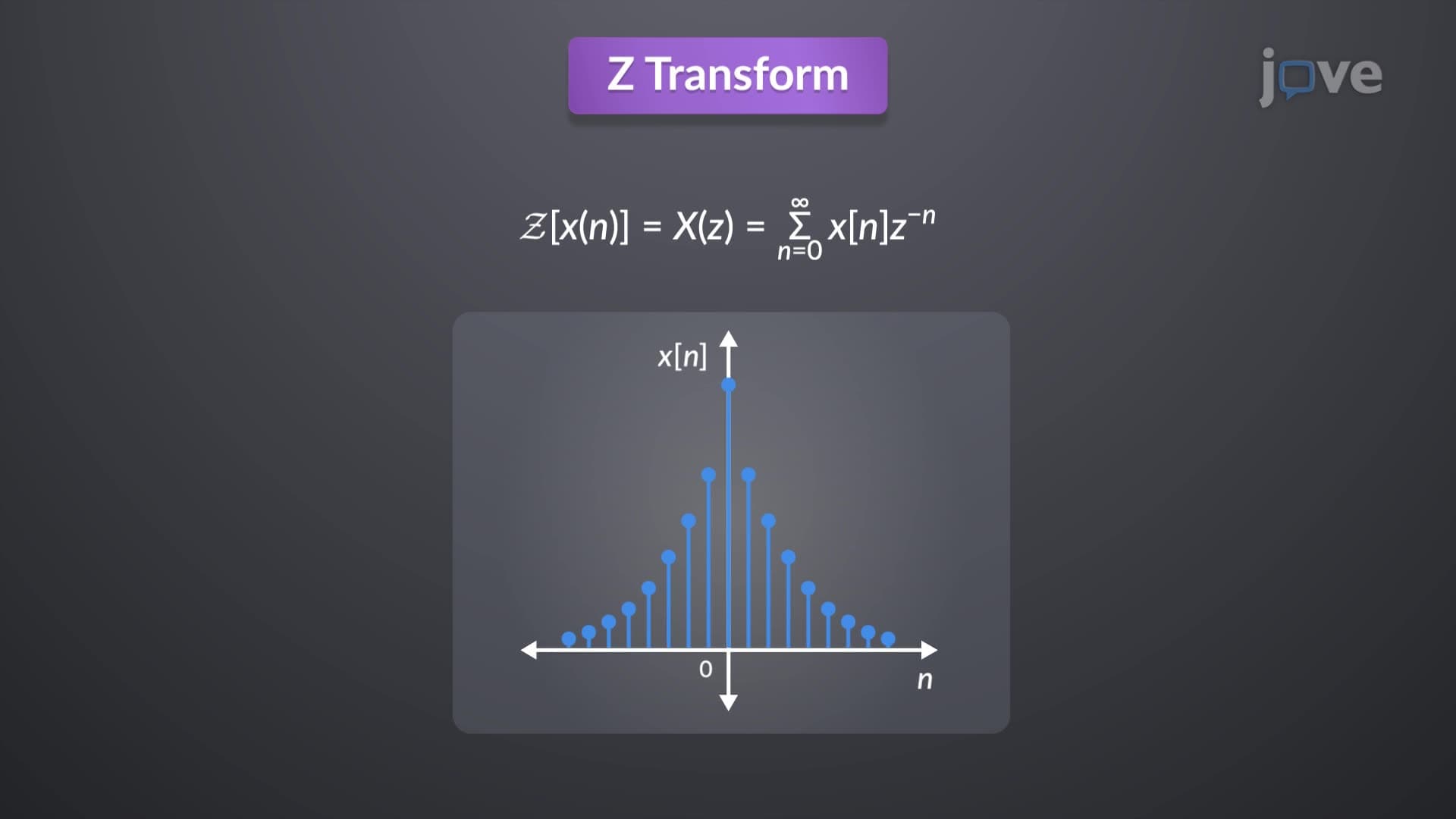
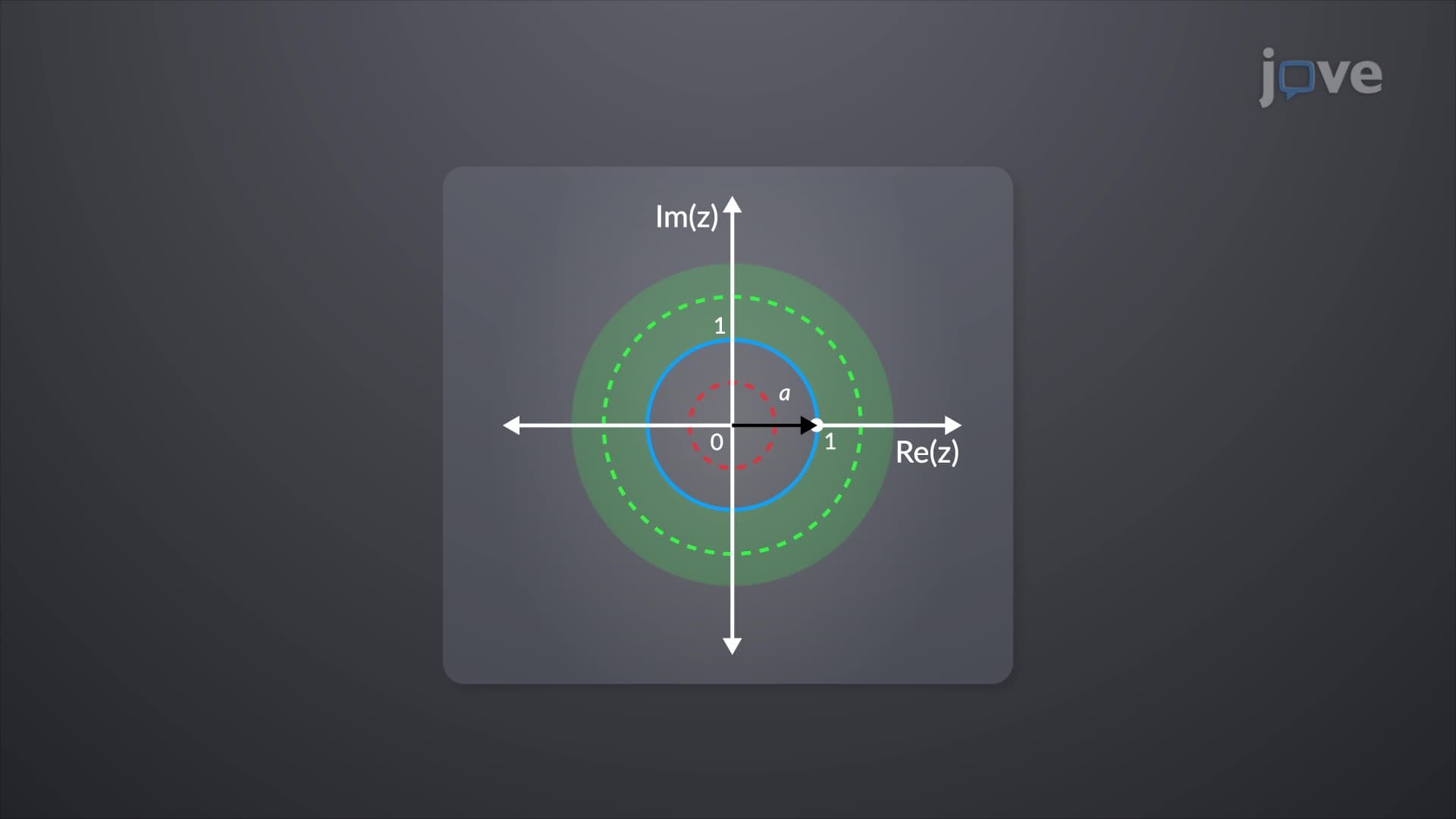
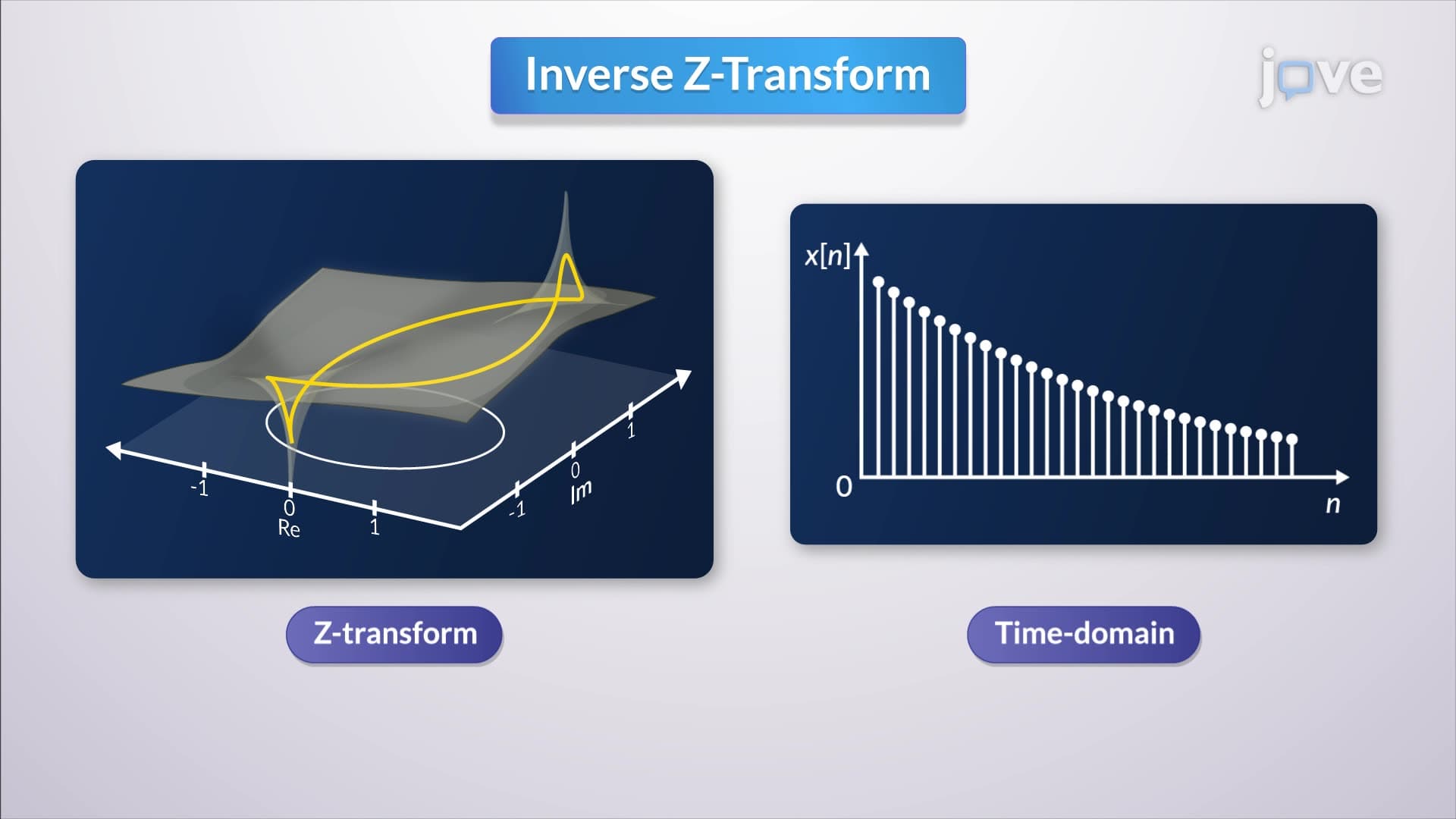
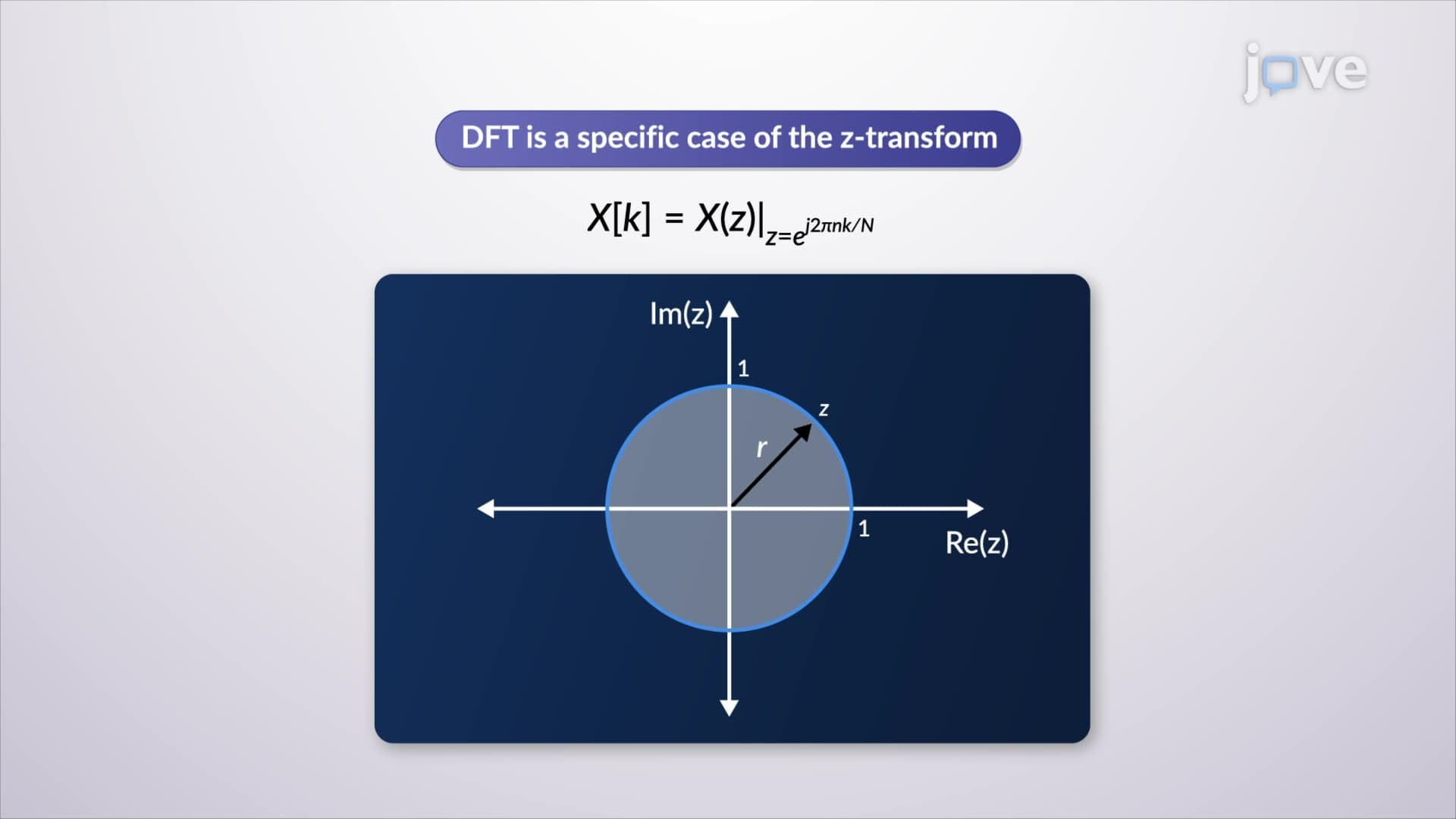
In control systems definition, engineers need to analyze how systems respond to different input frequencies. The z-transform provides a comprehensive frequency domain representation of discrete-time signals, while the DFT offers a computationally efficient method for practical implementation. The key insight is that the DFT samples the z-transform at N equally spaced points around the unit circle in the complex plane.
When we substitute z = e^(j2πk/N) into the z-transform equation, where k ranges from 0 to N-1, we obtain exactly the DFT formula. This mathematical relationship explains why DFT algorithms can efficiently compute frequency responses that would otherwise require complex z-transform calculations.
What is control systems in detail becomes clearer when we examine real applications. Boeing uses this DFT-z transform relationship in their flight control computers to analyze sensor data and maintain aircraft stability. Similarly, Tesla's autopilot system processes camera and radar signals using these same principles to detect obstacles and navigate safely.
The relationship proves crucial for students preparing for AP Physics exams, college-level signals and systems courses, and engineering fundamentals tests. Understanding this connection helps solve problems involving system stability, filter design, and frequency response analysis.
Modern control systems basics rely heavily on digital signal processors that implement DFT algorithms to achieve real-time z-transform analysis. This approach enables everything from smartphone touchscreen responsiveness to industrial robot precision control. The mathematical elegance of this relationship allows engineers to switch seamlessly between time and frequency domain analysis, optimizing system performance across diverse applications.
Frequently Asked Questions
The DFT is essentially a sampled version of the z-transform evaluated at equally spaced points on the unit circle in the complex plane. This relationship is crucial because it allows engineers to efficiently analyze frequency content of digital signals using computationally fast DFT algorithms instead of complex z-transform calculations. It forms the mathematical foundation for digital signal processing in everything from cell phone communications to medical imaging systems.
This concept frequently appears in AP Physics C: Mechanics problems involving oscillations and waves, as well as college-level electrical engineering and signals courses. Exam questions often ask students to identify frequency components of discrete signals or design digital filters. Understanding this relationship helps you recognize when to use DFT for computational efficiency versus z-transform for theoretical analysis, giving you strategic advantages on both multiple-choice and free-response questions.
Yes, the Fundamentals of Engineering (FE) exam commonly includes problems requiring knowledge of DFT and z-transform relationships. The National Council of Examiners for Engineering and Surveying specifically includes digital signal processing topics in the electrical engineering FE exam. Understanding this relationship helps solve problems involving system stability, frequency response, and digital filter design that appear regularly on professional engineering examinations.
Major US companies extensively use this relationship in product development and manufacturing. Apple implements it in iPhone audio processing for noise cancellation and voice recognition, while General Motors uses it in engine control systems for optimal fuel efficiency. Boeing applies these principles in aircraft navigation systems, and medical device companies like Medtronic use them in heart rhythm analysis for pacemakers and defibrillators.
You only need solid algebra skills and basic trigonometry to grasp the fundamental concepts. While complex number arithmetic helps with deeper understanding, the core relationship can be understood through geometric visualization on the unit circle. Most high school students who have completed Algebra II and are comfortable with exponential functions can successfully learn this material with proper guidance and practice.
Focus on understanding the geometric interpretation first - visualize how sampling the z-transform on the unit circle produces DFT values. Practice converting between time-domain sequences and their frequency representations using both methods. Work through problems that ask you to identify when DFT provides sufficient information versus when full z-transform analysis is needed, as this distinction frequently appears on engineering exams.
Build on this foundation by exploring Fast Fourier Transform (FFT) algorithms, which provide efficient computational methods for implementing DFT calculations. Study digital filter design techniques that leverage this DFT-z transform relationship, and investigate applications in adaptive signal processing used in modern communication systems and control engineering applications.
Related Micro-courses


Related Subjects
 Civil Engineering 30 micro-courses›Mechanical Engineering 28 micro-courses›