Loading…
Loading video…

3,974 views
Ever wondered how Netflix's recommendation algorithm processes millions of user interactions in real-time? The inverse z transform by partial fractions method is a crucial technique that breaks down complex digital signals into manageable components. This approach is essential for analyzing systems like those used by streaming giants such as Spotify and YouTube to filter and process audio signals. Understanding What are Properties Z Transform II concepts, including accumulation, convolution, and value theorems, provides the foundation for mastering signal processing applications in modern technology. Watch the full video on JoVE Coach to master this concept with expert-led visuals and step-by-step explanations.
The inverse z transform by partial fractions method relies heavily on understanding advanced Z-transform properties that extend beyond basic transformation rules. These properties form the backbone of digital signal processing applications used in everything from Apple's AirPods noise cancellation to Tesla's autopilot sensor fusion systems.
The accumulation property demonstrates that when you sum a discrete-time signal x[n] from negative infinity to n, the resulting Z-transform becomes X(z) × z/(z-1). This inverse z transform by partial concept proves invaluable when analyzing systems like digital integrators used in financial trading algorithms on Wall Street. Students preparing for AP Physics C or college-level Digital Signal Processing courses should recognize this as analogous to integration in continuous-time systems, but with discrete mathematical precision required for computer implementation.
The convolution property reveals that multiplying two Z-transforms in the frequency domain equals convolving their corresponding time-domain signals. This principle drives the inverse z transform by partial tutorial approach used in designing digital filters for medical devices approved by the FDA, such as digital hearing aids manufactured by companies like Phonak and ReSound. When you apply this property, you're essentially using the same mathematical framework that enables Shazam to identify songs from brief audio clips.
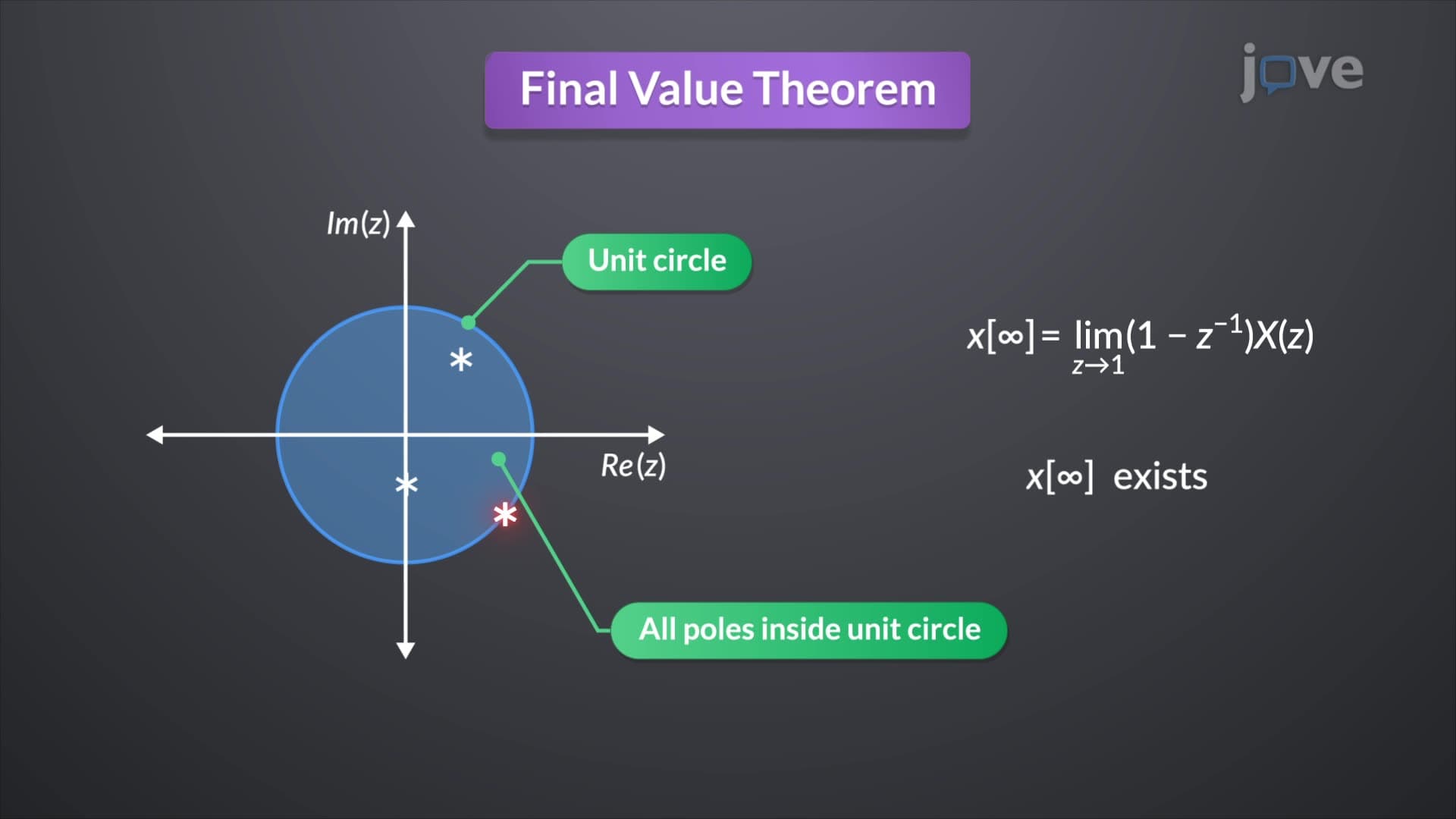
The initial value theorem states that x[0] = limit of X(z) as z approaches infinity, while the final value theorem calculates steady-state behavior using limit of (1-z^(-1))X(z) as z approaches one. These theorems are crucial for understanding inverse z transform by partial stability analysis in control systems. Engineering students at institutions like MIT and Stanford use these theorems to predict how systems behave during startup and steady-state operation, similar to how Google's data centers manage server load balancing during peak usage periods.
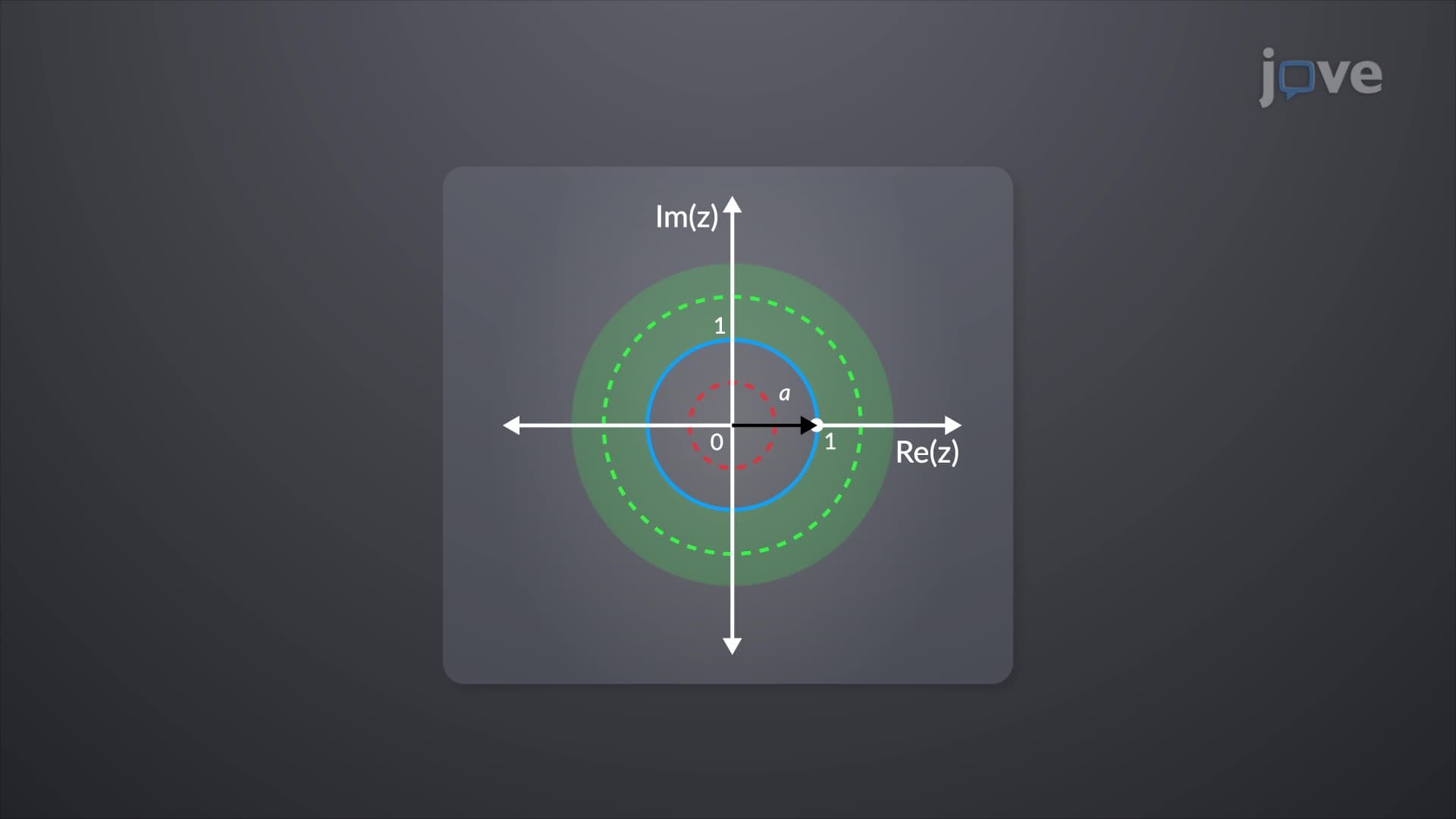
The final value theorem requires careful attention to pole locations—all poles must lie inside the unit circle except potentially at z=1. This constraint ensures system stability, a critical requirement for safety systems in applications ranging from Boeing 737 flight controls to Ford's adaptive cruise control systems.
Frequently Asked Questions
Properties Z Transform II covers advanced Z-transform characteristics including accumulation, convolution, and value theorems essential for digital signal analysis. These properties enable engineers to design everything from smartphone audio processors to medical imaging systems. Students encounter these concepts in AP Physics, college calculus-based physics, and electrical engineering coursework where they form the foundation for understanding how digital systems process real-world signals.
Most electrical engineering midterms and finals at universities like UC Berkeley and Georgia Tech include inverse Z-transform problems requiring partial fraction decomposition. Expect 2-3 problems worth 15-20% of your exam grade, typically involving second or third-order systems. Practice problems often mirror real applications like designing digital filters for audio equipment or control systems, making this a high-yield topic for exam preparation.
You should be comfortable with complex numbers, polynomial long division, and basic calculus limits before tackling these concepts. High school students taking AP Calculus BC have sufficient mathematical background, while college students benefit from completing Calculus II and basic differential equations. The mathematical complexity is similar to Laplace transforms, so prior exposure to frequency-domain analysis helps significantly.
Spotify and Apple Music use convolution-based digital filters to enhance audio quality and implement equalization effects that adapt to different headphone types. The convolution property allows these systems to apply complex audio processing in the frequency domain, which is computationally more efficient than time-domain operations. This same principle enables noise-canceling headphones to create destructive interference patterns that eliminate unwanted ambient sounds.
AP Physics C students encounter basic concepts, while comprehensive coverage appears in college courses like Digital Signal Processing, Control Systems, and Communications Theory at universities nationwide. Engineering majors at schools like Purdue and Texas A&M typically study this in sophomore or junior year coursework. The MCAT occasionally includes related concepts in physics sections focusing on wave behavior and frequency analysis.
Focus on pattern recognition by working through 10-15 partial fraction decomposition problems daily, emphasizing different pole configurations. Create a formula sheet linking time-domain operations to their Z-transform counterparts, and practice applying initial/final value theorems to system stability problems. Form study groups to work through complex problems, as explaining these concepts to peers reinforces understanding and reveals knowledge gaps before high-stakes exams.
Progress to discrete Fourier transforms (DFT), digital filter design using window methods, and multirate signal processing techniques used in modern telecommunications. These concepts build directly on Z-transform properties and appear in graduate-level courses at top engineering programs. Understanding these foundations prepares you for specialized fields like biomedical signal processing or wireless communications engineering.
Related Micro-courses


Related Subjects
 Civil Engineering 30 micro-courses›Mechanical Engineering 28 micro-courses›