Loading subject page…

- Electrical Engineering
- Z Transform
- Region of Convergence
Micro-course: z-Transform
3,974 views
Learn key concepts and earn your certificate.

Region of Convergence

00:00
01:17
Video Summary: What Is Region of Convergence
The properties z transform i become meaningful only when we understand where they actually work-surprisingly, Netflix's audio compression algorithms rely on these same convergence principles! The Region of Convergence defines exactly where z-transform calculations remain mathematically valid, determining whether digital signal processing systems like those in smartphones and streaming services will function stably. This fundamental concept connects abstract mathematics to real-world engineering applications at companies like Texas Instruments and Qualcomm. Watch the full video on JoVE Coach to master this concept with expert-led visuals and step-by-step explanations.
- Understand what Region of Convergence means and how it defines where z-transform properties remain mathematically valid
- Identify the three main ROC shapes: inside a circle, outside a circle, and within an annulus (ring-shaped region)
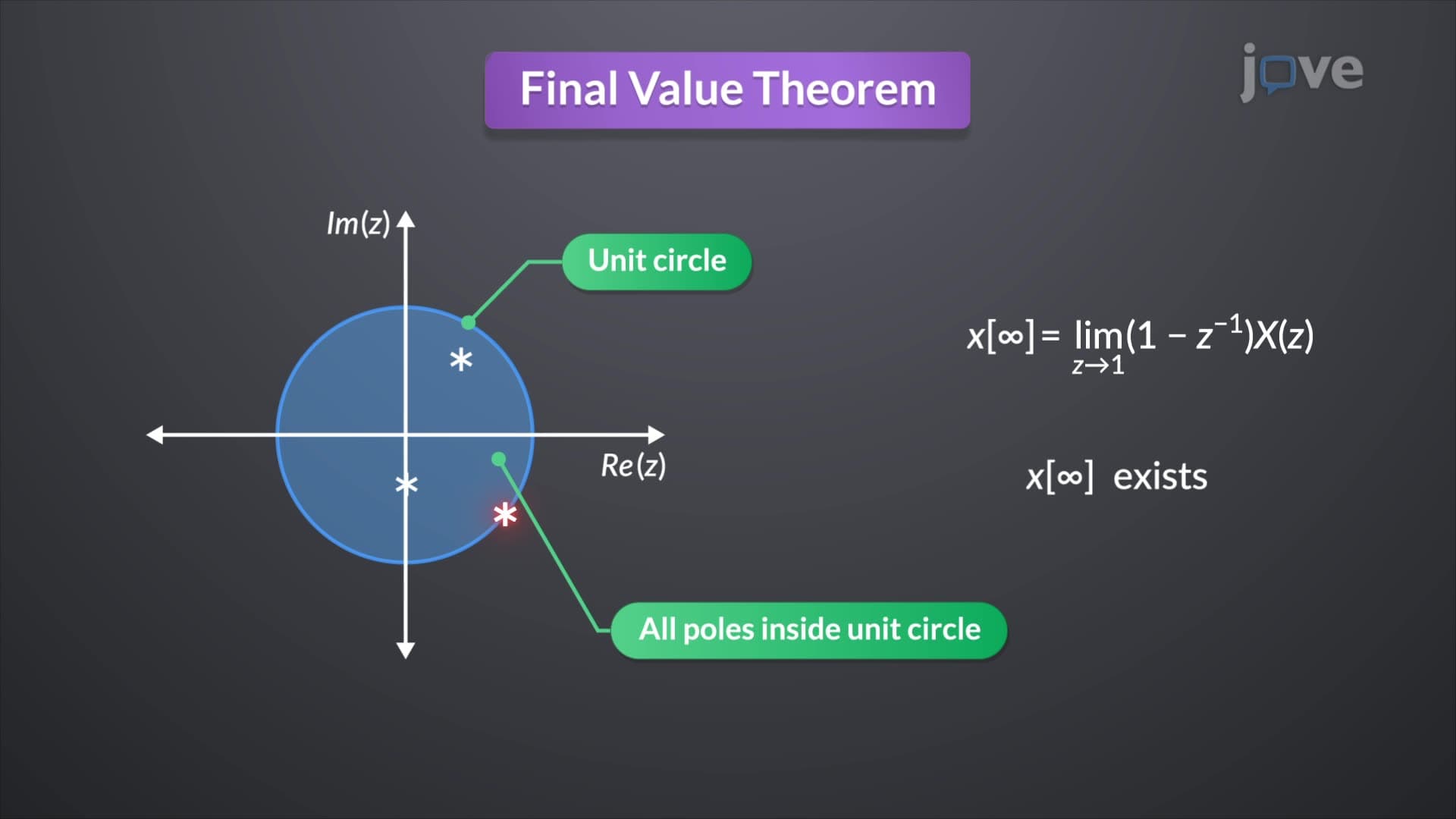
- Analyze system stability by examining whether the ROC includes, excludes, or coincides with the unit circle
- Compare stable, unstable, and marginally stable systems based on their ROC characteristics
- Evaluate the relationship between ROC location and the existence of the Discrete-Time Fourier Transform (DTFT)
- Apply ROC concepts to determine convergence conditions for exponential discrete-time signals
- Recognize why poles cannot exist within the ROC and how this affects z-transform calculations
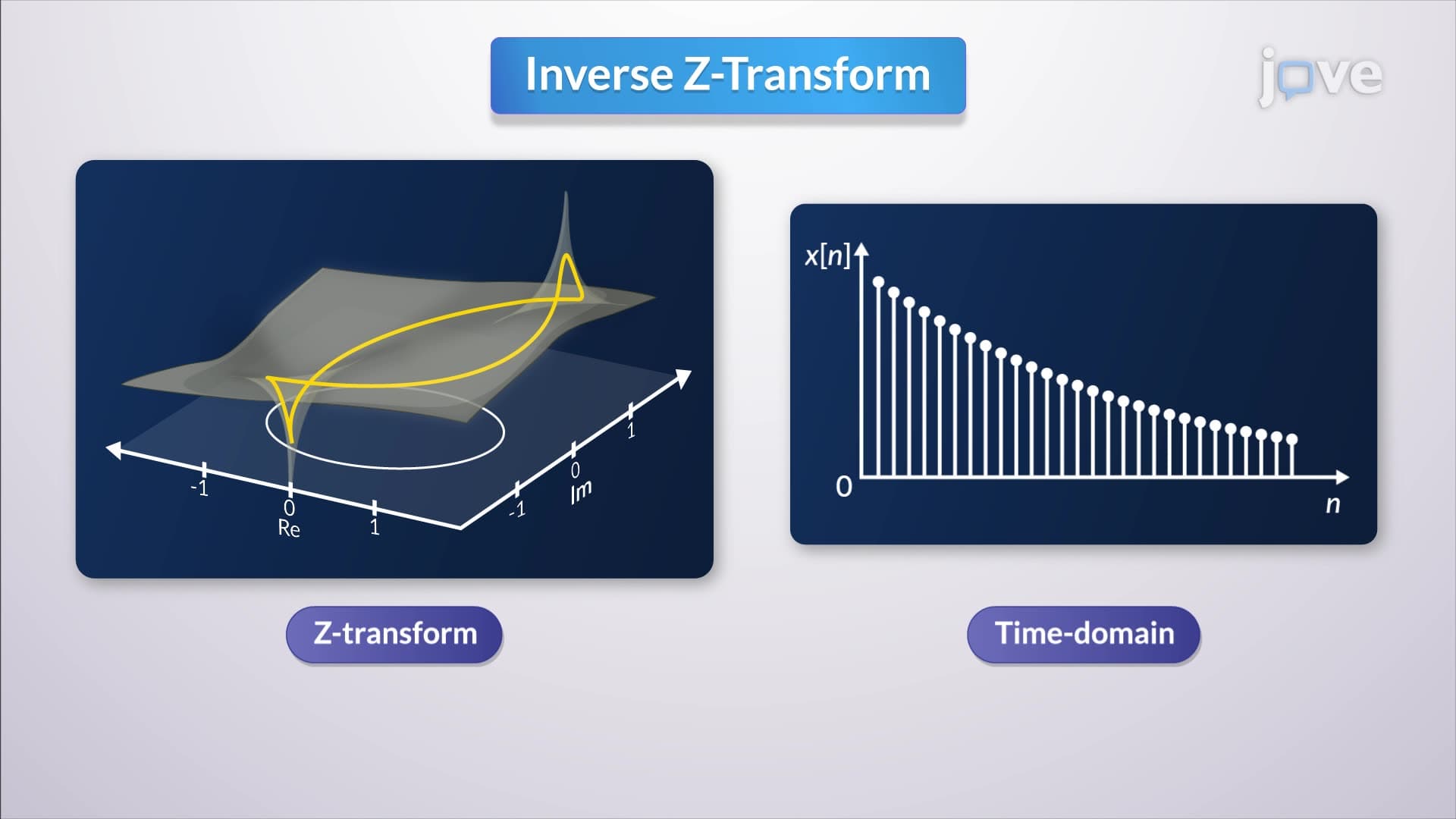
- Explore how ROC properties influence inverse z-transform computations in signal recovery applications
Understanding the Region of Convergence Fundamentals
The Region of Convergence represents one of the most critical properties z transform i concepts in digital signal processing. Unlike continuous-time transforms, the z-transform doesn't converge everywhere in the complex plane-it only works within specific regions. Think of ROC as a "safe zone" where mathematical operations remain valid and produce meaningful results.
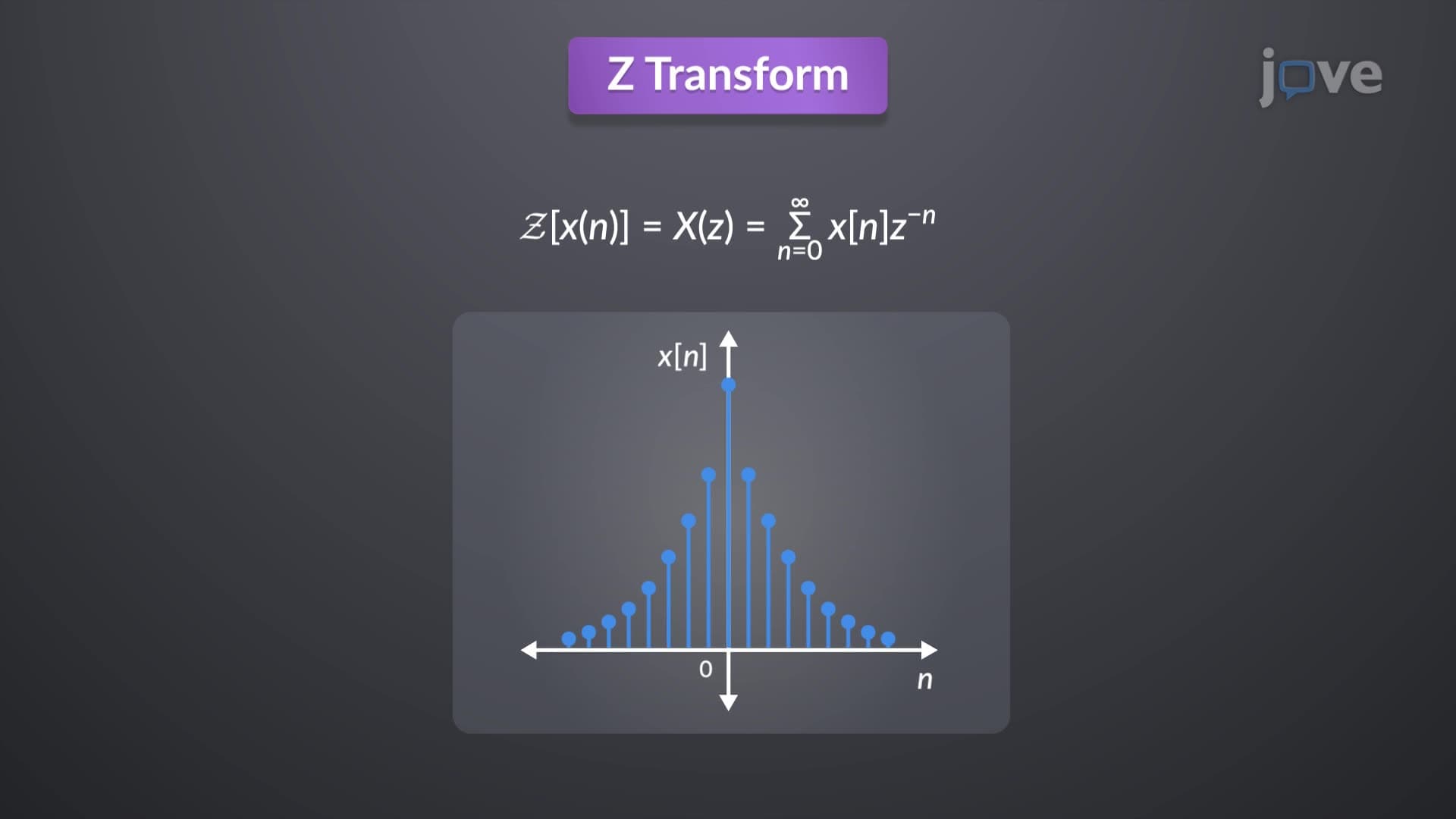
The z-transform essentially converts time-domain sequences into frequency-domain representations, but this conversion only succeeds when the infinite series converges. For students preparing for AP Calculus BC or college-level Signals and Systems courses, understanding convergence parallels learning about power series convergence in complex analysis.
Types of ROC Configurations and Their Significance
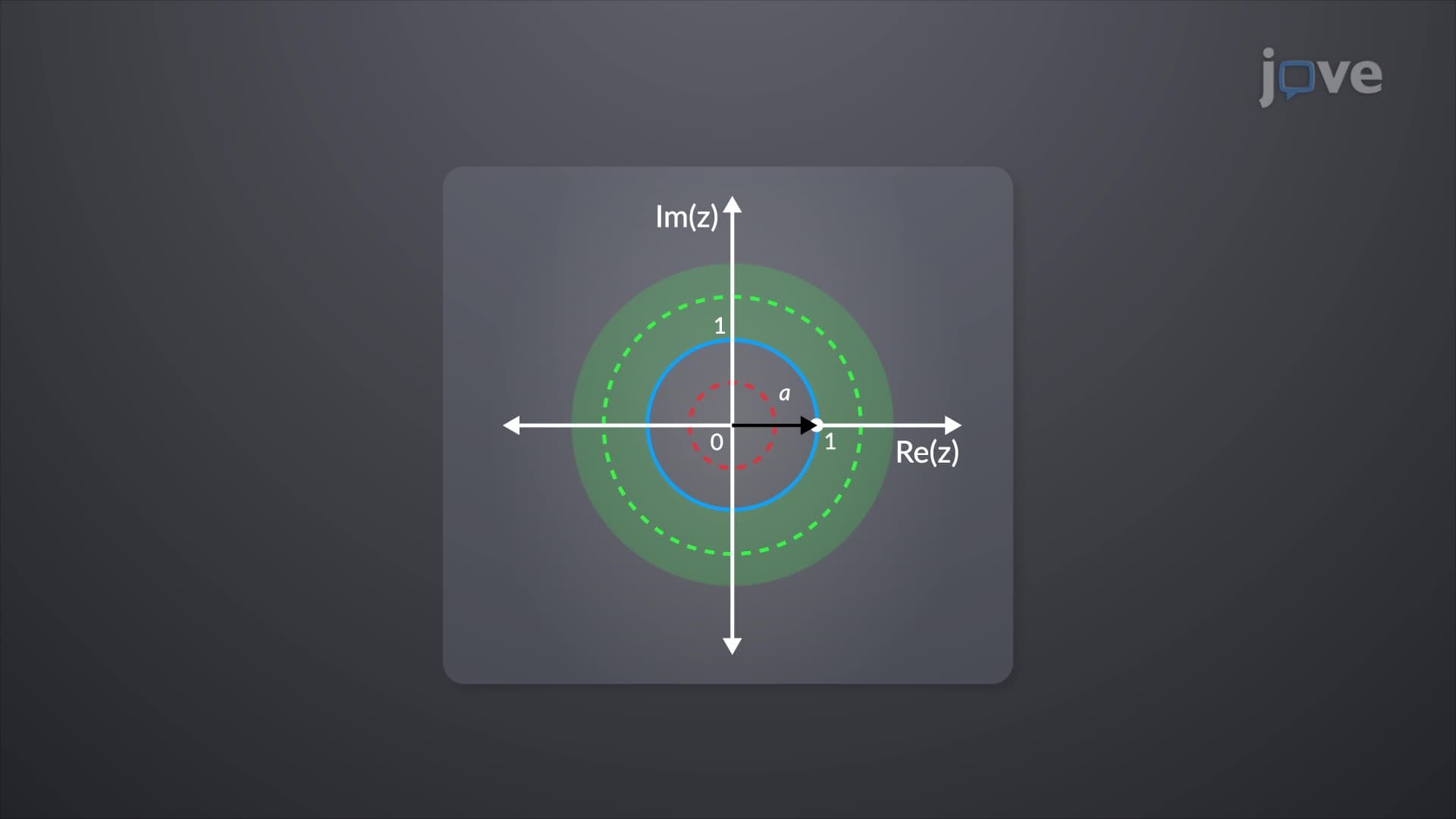
The types of properties z transform i manifest through three distinct ROC shapes. First, regions outside a circle (|z| > R) typically occur with right-sided sequences-signals that exist from some point forward in time. Second, regions inside a circle (|z| < R) correspond to left-sided sequences extending backward in time. Third, annular regions (R1 < |z| < R2) arise from two-sided sequences extending infinitely in both directions.
These configurations aren't just mathematical curiosities. Digital filter designers at companies like Analog Devices use ROC analysis to ensure their products work reliably. When designing audio equalizers for car stereo systems, engineers must verify that filter poles lie outside the unit circle to prevent oscillations that could damage speakers.
System Stability Through ROC Analysis
What are properties z transform i overview questions often focus on stability determination. The unit circle (|z| = 1) serves as the stability boundary. When the ROC includes the unit circle, the system responds predictably to inputs-this represents stable operation. If the ROC lies entirely outside the unit circle, the system becomes unstable and may produce unbounded outputs.
Consider smartphone voice recognition systems: they require stable digital filters to process speech signals accurately. Engineers at Apple and Google design these systems with ROCs that encompass the unit circle, ensuring reliable performance across millions of devices.
Practical Applications in Engineering and Mathematics
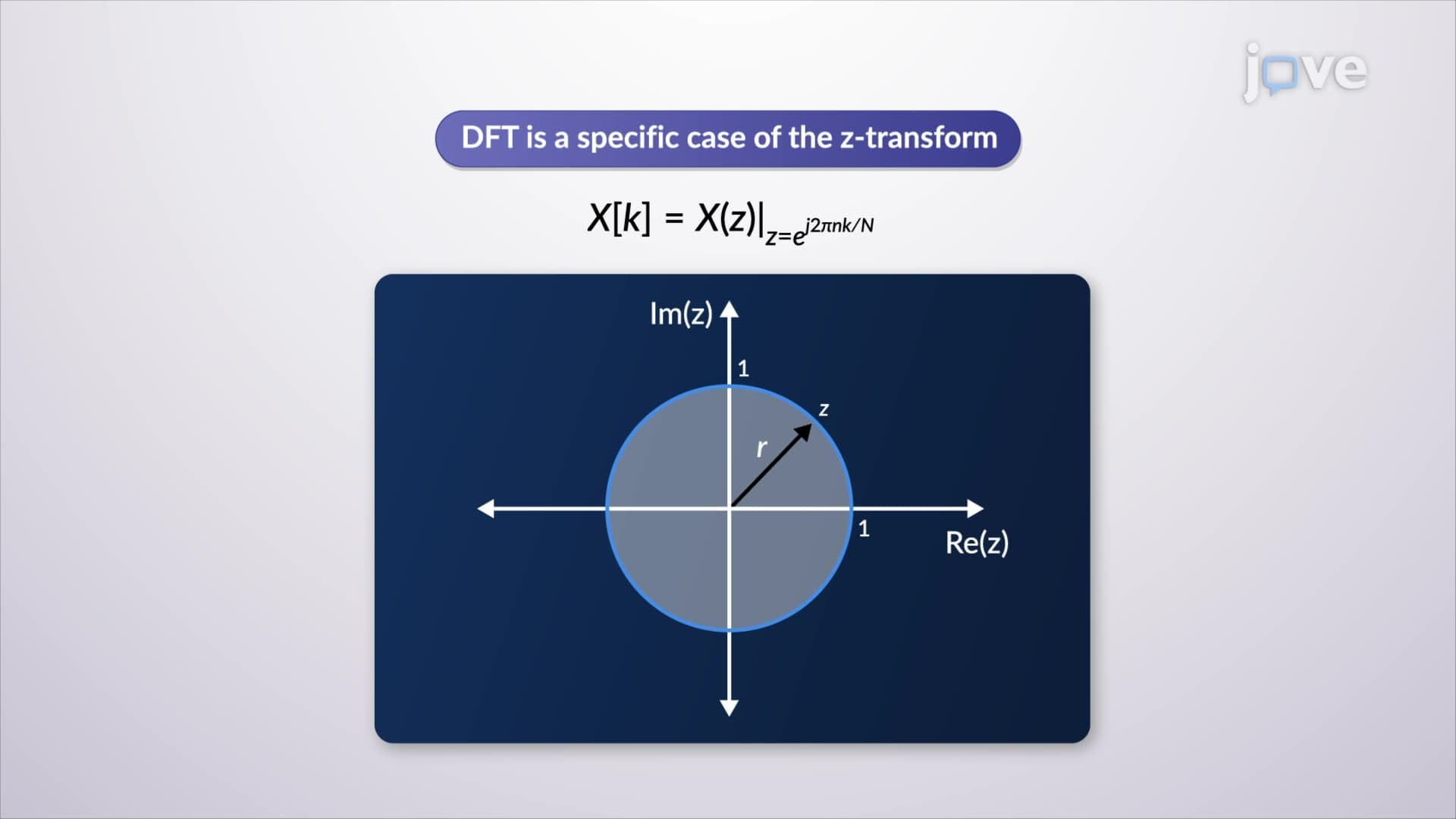
The connection between ROC and the Discrete-Time Fourier Transform (DTFT) proves crucial for students advancing to graduate-level coursework. The DTFT exists only when the ROC includes the unit circle, linking frequency analysis capabilities directly to convergence properties. This relationship appears frequently in electrical engineering qualifying exams and forms the foundation for advanced topics like multirate signal processing and adaptive filtering.
Frequently Asked Questions
Region of Convergence defines the complex plane area where z-transform calculations produce valid, finite results. It matters because it determines system stability, filter performance, and whether frequency analysis tools like DTFT can be applied. Understanding ROC helps engineers design reliable digital systems and students solve complex signal processing problems on exams.
ROC concepts typically appear as stability analysis problems or convergence verification questions. Students might need to determine if a given z-transform converges, identify stable system parameters, or sketch ROC boundaries. These problems often connect to series convergence tests learned in calculus courses, making the mathematical foundation crucial for success.
Concentrate on identifying ROC shapes for different signal types, relating ROC position to system stability, and understanding the unit circle significance. Practice determining when DTFT exists based on ROC properties and memorize the key rule that poles cannot lie within the ROC. Many exam problems combine these concepts in system analysis scenarios.
TI engineers use ROC analysis when designing digital signal processors (DSPs) for applications like automotive radar systems and medical imaging equipment. They verify that filter designs have appropriate ROC characteristics to ensure stable operation, prevent signal distortion, and meet performance specifications. ROC analysis helps optimize processor architecture for specific applications.
Basic complex number knowledge and series convergence understanding provide sufficient foundation for ROC concepts. Students comfortable with Algebra 2 and introductory calculus can grasp ROC fundamentals. The visual nature of complex plane representations actually makes ROC more intuitive than many advanced mathematical topics.
Create visual aids showing different ROC shapes and their corresponding signal types, then practice sketching ROC boundaries for various z-transforms. Work through stability determination problems systematically and connect ROC properties to real system behaviors. Focus on the unit circle relationship since it appears frequently in exam questions.
Progress to inverse z-transform techniques, partial fraction expansion methods, and digital filter design principles. These topics build directly on ROC understanding and prepare you for advanced courses in digital signal processing, control systems theory, and communication systems engineering.
ROC principles extend to multidimensional transforms, stability analysis in nonlinear systems, and advanced filter synthesis techniques. Graduate coursework in adaptive signal processing and machine learning relies heavily on convergence concepts, making solid ROC understanding essential for success in advanced engineering programs.
Related Micro-courses

5 Concepts
9 Concepts

7 Concepts