Loading video…


 7 Concepts
 4K views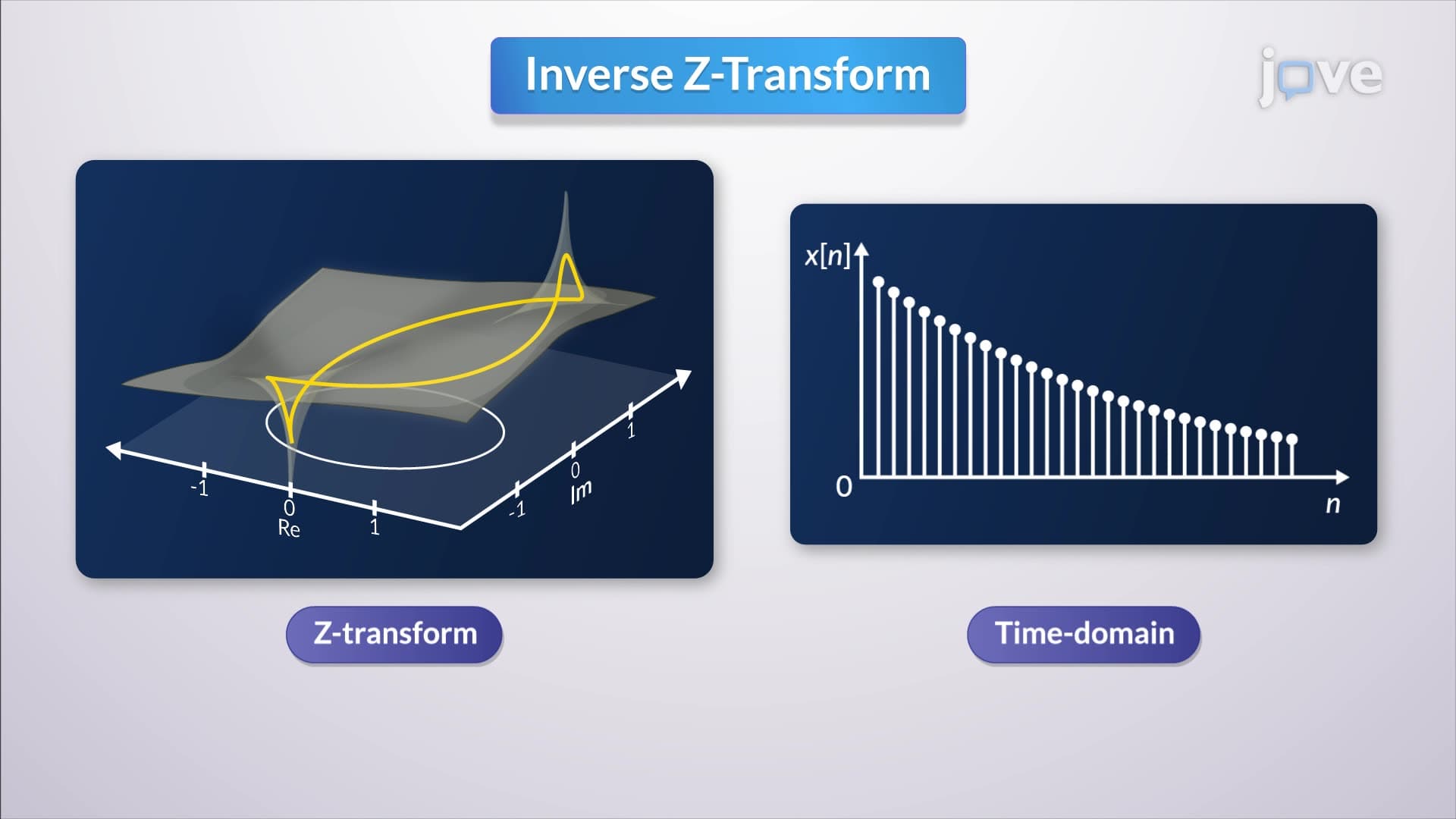

Video Summary: Inverse Z Transform by Partial Explained
Ever wondered how NASA engineers reverse-engineer control signals from spacecraft telemetry data? The difference equation solution using z transform relies heavily on the Inverse Z Transform By Partial method to convert frequency-domain functions back to time-domain sequences. This technique uses partial fraction decomposition to break down complex Z-transforms into simpler, manageable components that correspond to known transform pairs. For example, when designing digital filters for audio processing in companies like Dolby Labs, engineers routinely apply this method to ensure accurate signal reconstruction. Watch the full video on JoVE Coach to master this concept with expert-led visuals and step-by-step explanations.
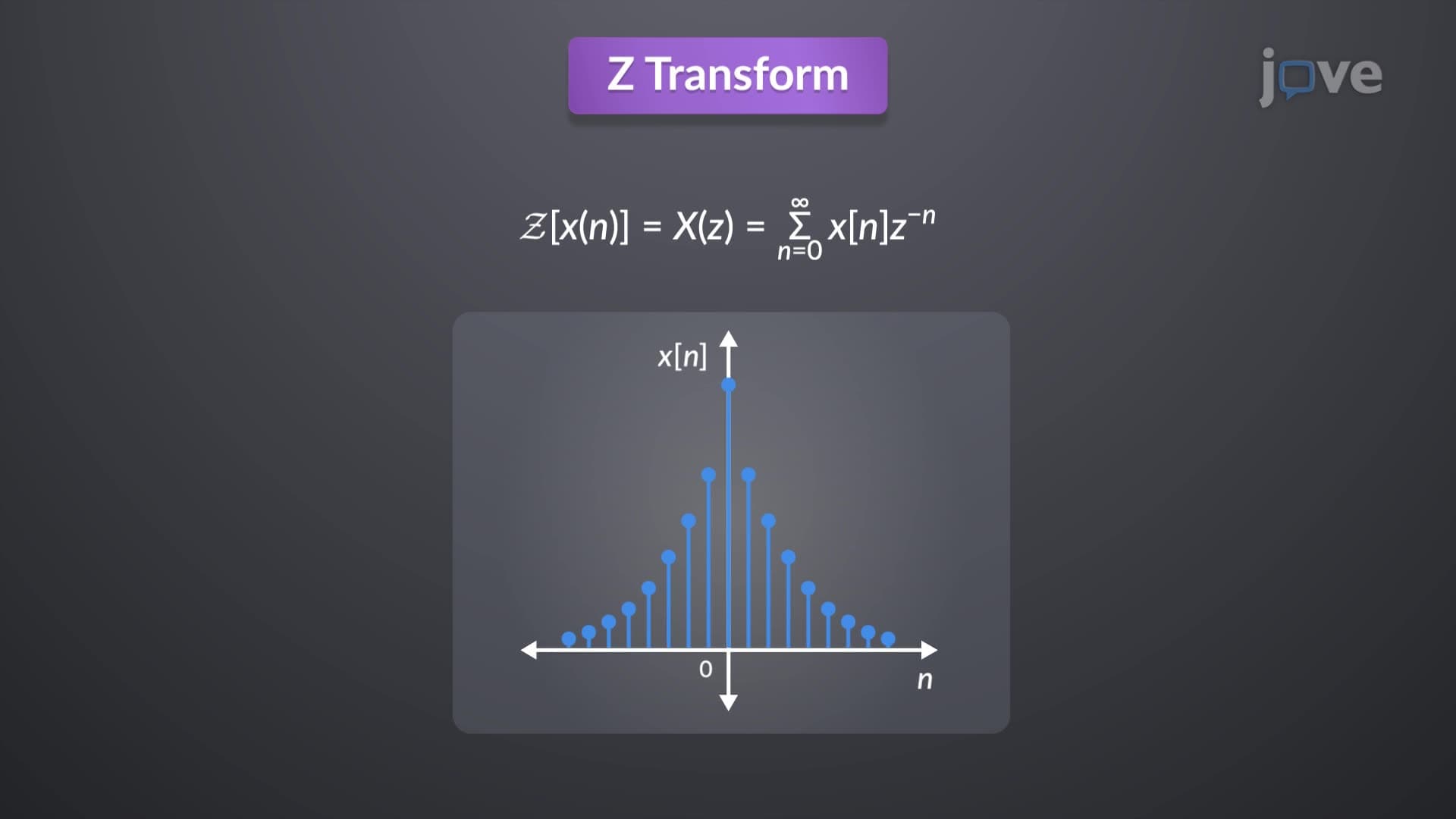
The Inverse Z Transform By Partial method serves as a cornerstone technique in digital signal processing and control systems engineering. When dealing with difference equation solution using z transform problems, this approach provides a systematic way to convert complex frequency-domain representations back to their original time-domain sequences. Unlike direct inversion methods that can be mathematically intensive, partial fraction decomposition breaks the problem into manageable pieces.
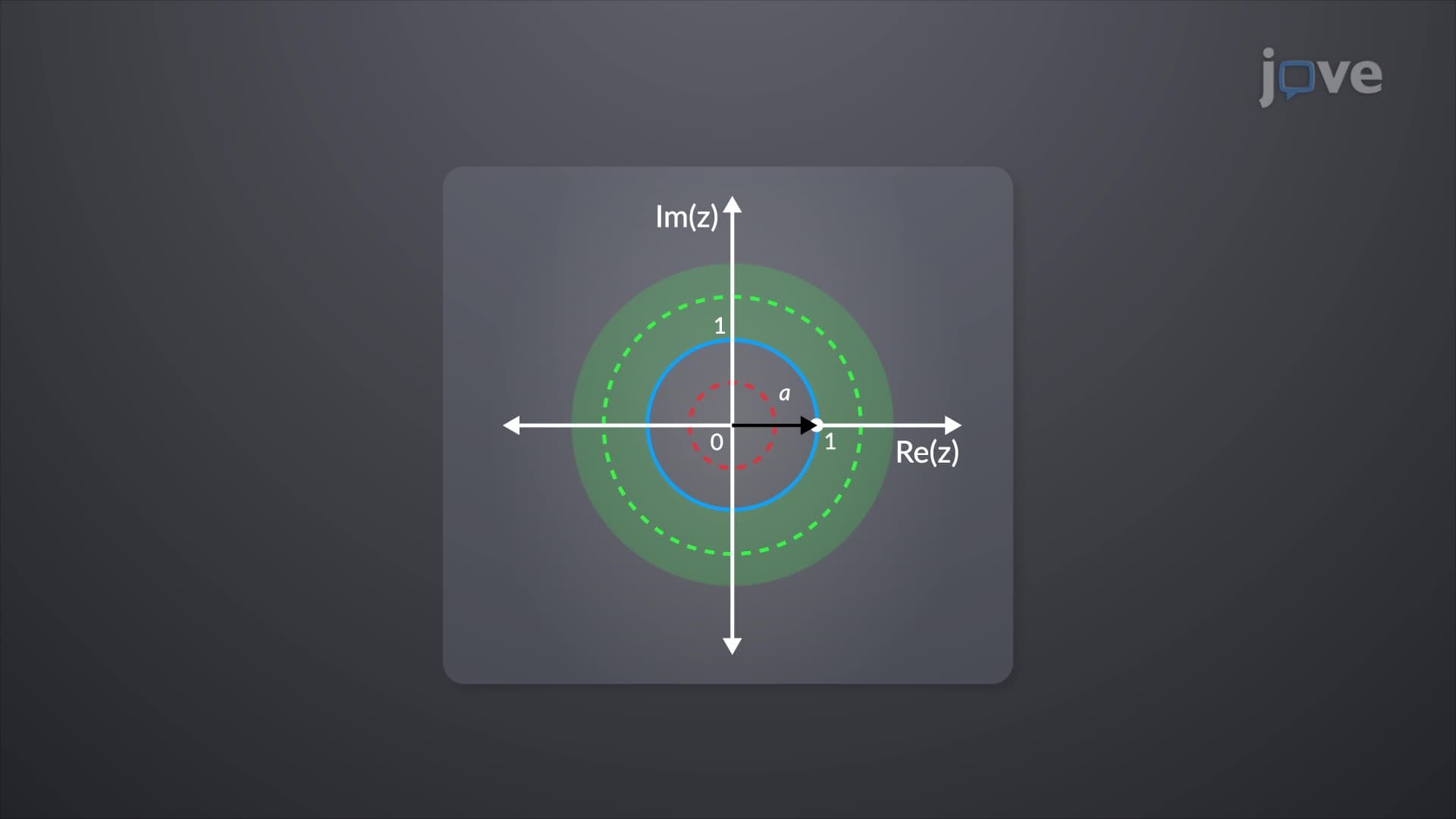
The foundation of this difference equation solution using z transform tutorial lies in identifying the poles of the Z-transform function X(z). These poles represent the values of z that make the denominator equal to zero, creating singularities in the function. Once identified, the rational function is expressed as a sum of simpler fractions, each containing one of these poles. This decomposition follows the same principles taught in AP Calculus BC courses when dealing with rational function integration.
For students preparing for engineering entrance exams or college-level signals and systems courses, understanding this process is crucial. The method typically involves setting up a system of equations to solve for unknown coefficients. These coefficients are determined by multiplying both sides of the equation by appropriate terms and substituting strategic values of z, often including the poles themselves and sometimes z = 0 or z = ∞.
The power of how difference equation solution using z transform works becomes evident when each partial fraction corresponds to a known Z-transform pair. Common pairs include the unit step function (1/(1-z^(-1))), exponential sequences (1/(1-az^(-1))), and delta functions (constant terms). This correspondence allows engineers at companies like Texas Instruments and Intel to quickly reconstruct time-domain signals from their Z-domain representations.
In college-level electrical engineering programs, students encounter this method when analyzing digital filters, designing control systems, and solving linear time-invariant system problems. The technique proves especially valuable in MATLAB-based coursework where students must implement digital signal processing algorithms.
Modern applications of this difference equation solution using z transform concept span multiple industries. Telecommunications companies use these methods to design equalizers that compensate for channel distortions in data transmission. Audio processing companies like Bose and Harman apply inverse Z-transforms to create sophisticated noise cancellation algorithms. Even biomedical engineering applications, such as analyzing ECG signals or designing pacemaker control systems, rely on these mathematical tools for accurate signal reconstruction and system stability analysis.
Related Micro-courses