Loading video…


 7 Concepts
 4K views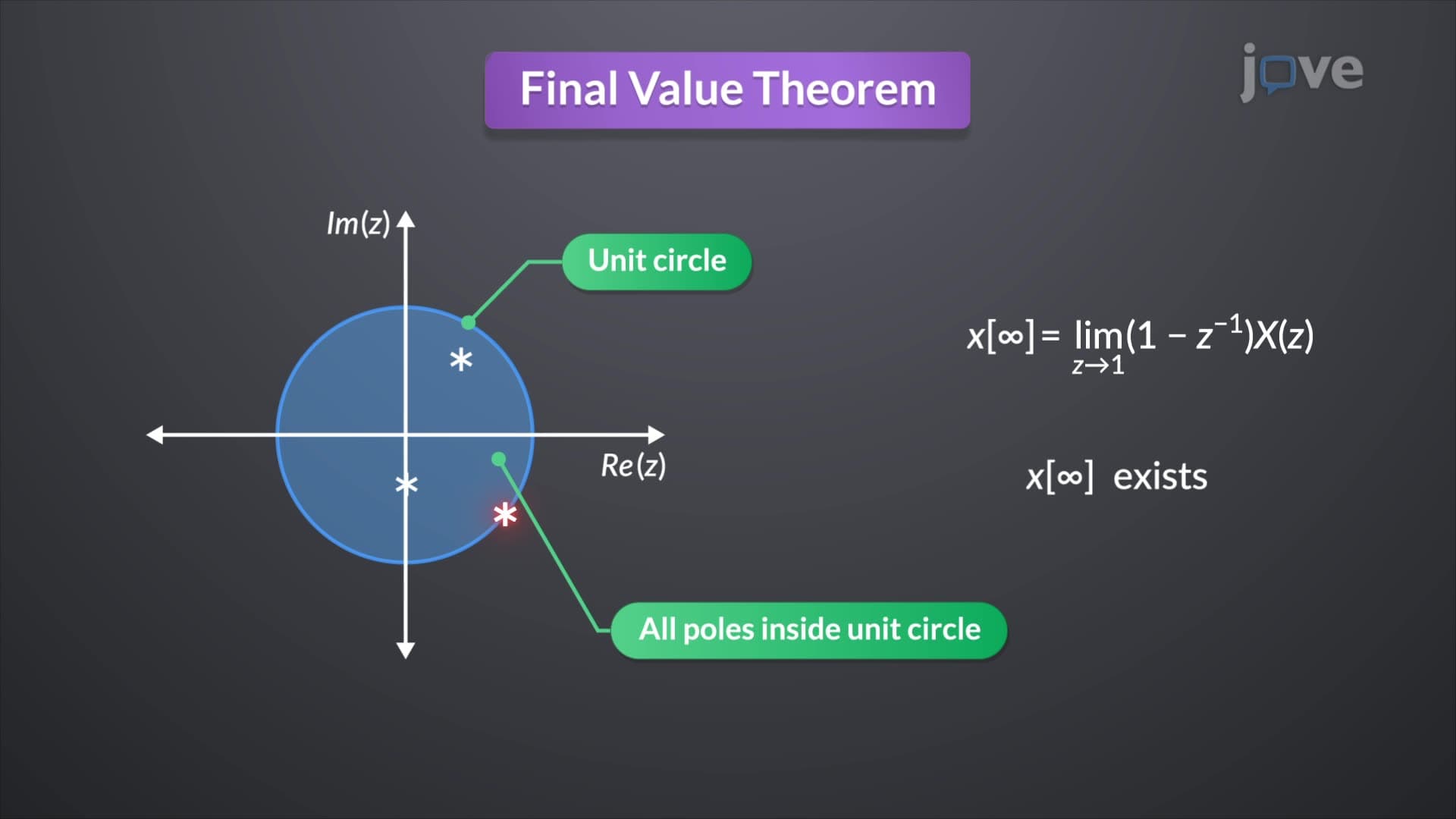

Video Summary: What are Properties Z Transform Ii
Ever wondered how Netflix's recommendation algorithm processes millions of user interactions in real-time? The inverse z transform by partial fractions method is a crucial technique that breaks down complex digital signals into manageable components. This approach is essential for analyzing systems like those used by streaming giants such as Spotify and YouTube to filter and process audio signals. Understanding What are Properties Z Transform II concepts, including accumulation, convolution, and value theorems, provides the foundation for mastering signal processing applications in modern technology. Watch the full video on JoVE Coach to master this concept with expert-led visuals and step-by-step explanations.
The inverse z transform by partial fractions method relies heavily on understanding advanced Z-transform properties that extend beyond basic transformation rules. These properties form the backbone of digital signal processing applications used in everything from Apple's AirPods noise cancellation to Tesla's autopilot sensor fusion systems.
The accumulation property demonstrates that when you sum a discrete-time signal x[n] from negative infinity to n, the resulting Z-transform becomes X(z) × z/(z-1). This inverse z transform by partial concept proves invaluable when analyzing systems like digital integrators used in financial trading algorithms on Wall Street. Students preparing for AP Physics C or college-level Digital Signal Processing courses should recognize this as analogous to integration in continuous-time systems, but with discrete mathematical precision required for computer implementation.
The convolution property reveals that multiplying two Z-transforms in the frequency domain equals convolving their corresponding time-domain signals. This principle drives the inverse z transform by partial tutorial approach used in designing digital filters for medical devices approved by the FDA, such as digital hearing aids manufactured by companies like Phonak and ReSound. When you apply this property, you're essentially using the same mathematical framework that enables Shazam to identify songs from brief audio clips.
The initial value theorem states that x[0] = limit of X(z) as z approaches infinity, while the final value theorem calculates steady-state behavior using limit of (1-z^(-1))X(z) as z approaches one. These theorems are crucial for understanding inverse z transform by partial stability analysis in control systems. Engineering students at institutions like MIT and Stanford use these theorems to predict how systems behave during startup and steady-state operation, similar to how Google's data centers manage server load balancing during peak usage periods.
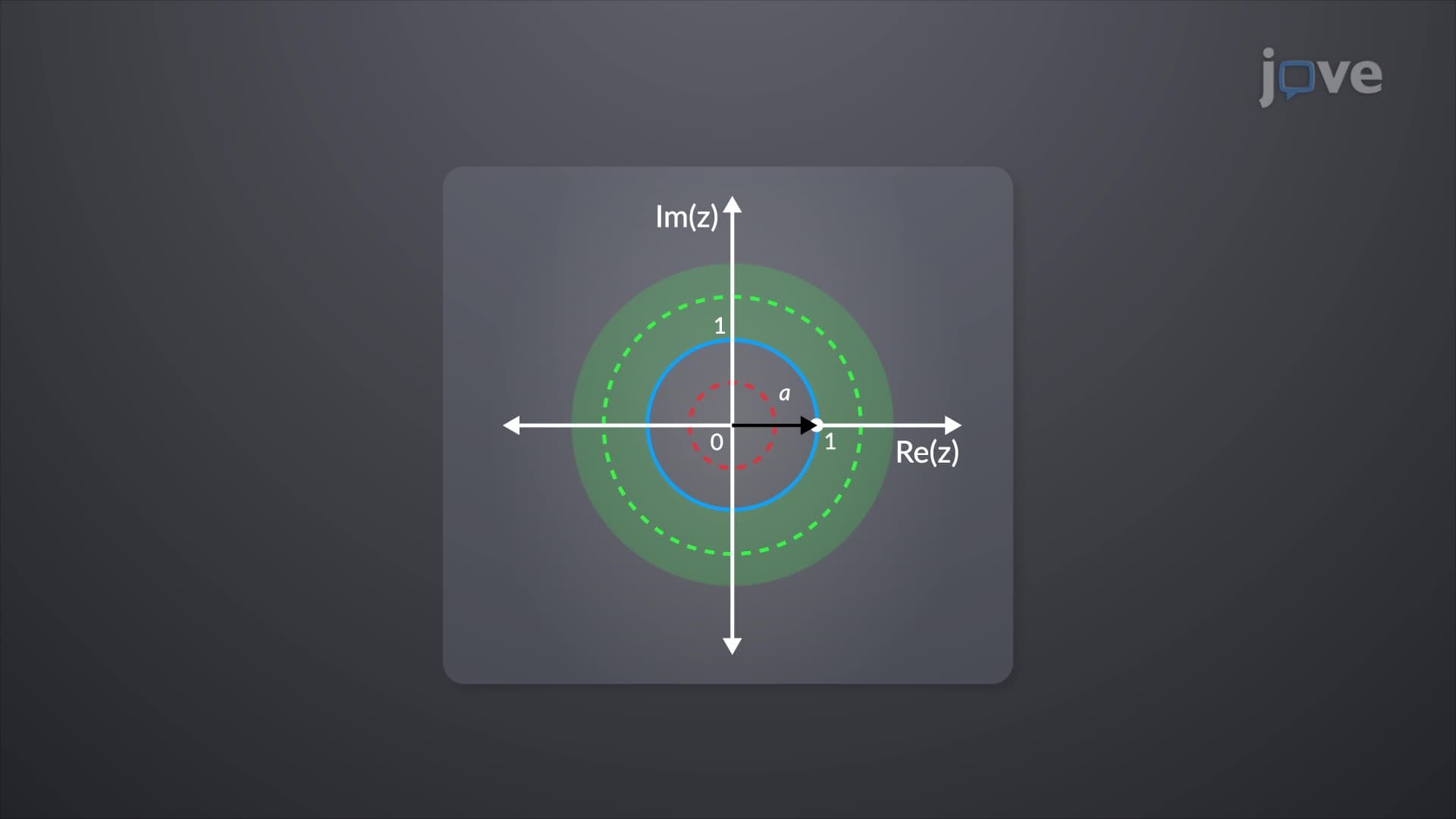
The final value theorem requires careful attention to pole locations-all poles must lie inside the unit circle except potentially at z=1. This constraint ensures system stability, a critical requirement for safety systems in applications ranging from Boeing 737 flight controls to Ford's adaptive cruise control systems.
Related Micro-courses