Loading subject page…


7,907 views

Video Summary: What Is Price and Exchange
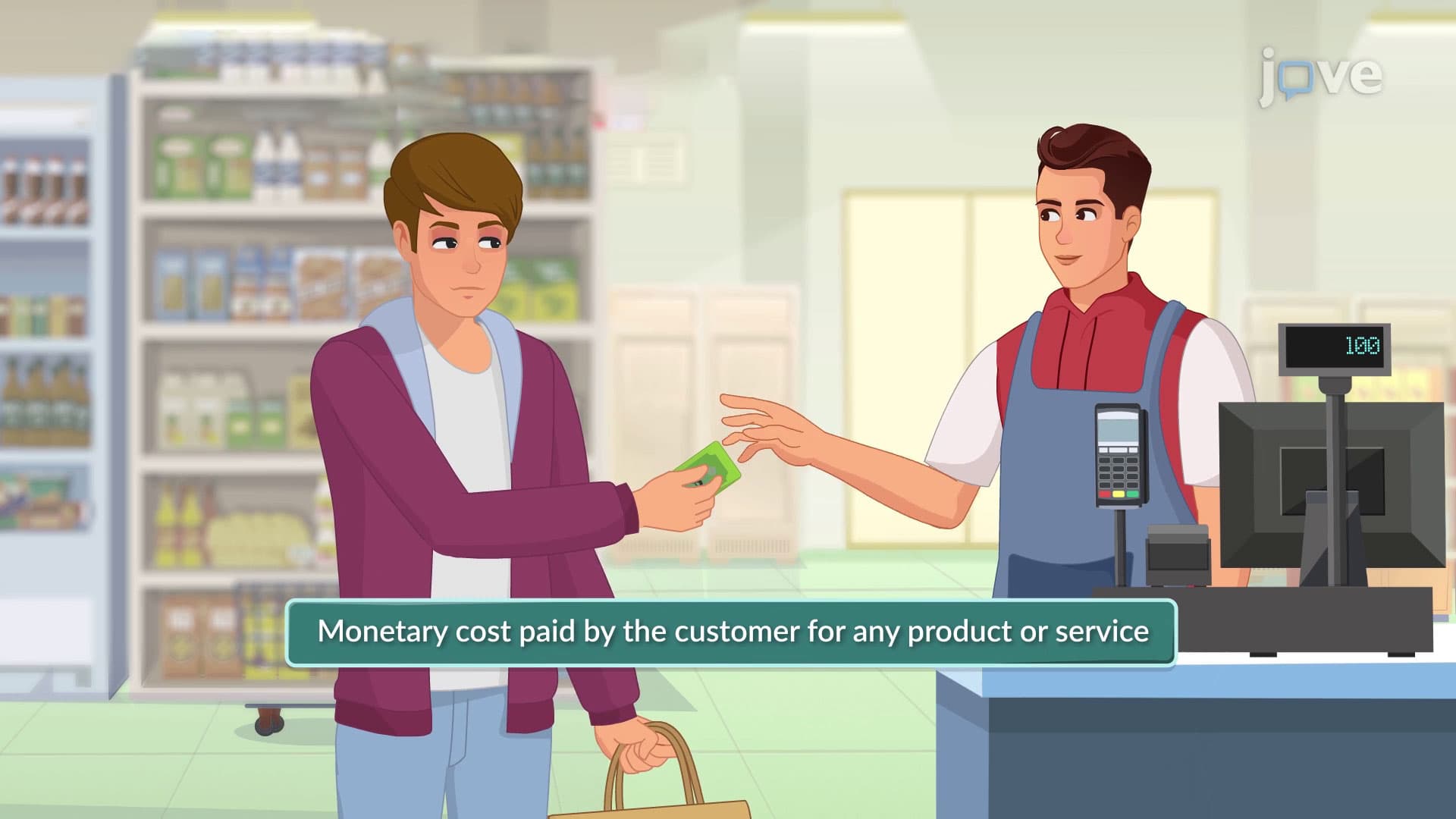
Modern pricing decisions require executives to move beyond simple cost-plus models, as price exchange encompasses the total customer sacrifice-monetary and non-monetary costs combined. When Amazon Prime members pay $139 annually, they're exchanging money for convenience, speed, and ecosystem benefits that extend far beyond product access. Smart pricing strategies recognize that customers evaluate time, effort, and perceived status alongside dollar costs. Successful companies like Apple have mastered this concept, creating premium pricing power through ecosystem lock-in and brand perception. Watch the full video on JoVE Coach to master this concept with expert-led visuals and step-by-step explanations.
Price exchange fundamentals challenge traditional cost-based thinking that dominates many corporate pricing committees. While CFOs focus on margin calculations, today's market leaders recognize that customer decision-making involves complex tradeoffs between monetary payments and non-monetary sacrifices including time, effort, risk, and opportunity costs. This expanded definition directly impacts competitive positioning, customer retention, and revenue optimization strategies.
Modern pricing excellence requires analyzing what customers truly sacrifice during the entire purchase journey. Consider Starbucks' pricing strategy: customers pay premium prices not just for coffee, but for consistent quality, convenient locations, mobile ordering efficiency, and social signaling benefits. The company's location strategy explicitly recognizes that proximity reduces customer time costs, justifying higher prices than competitors positioned in less convenient locations. Similarly, enterprise software companies like Salesforce succeed by reducing implementation effort and training time, allowing them to command premium prices despite lower-cost alternatives.
Companies that master price exchange dynamics create sustainable competitive moats. Tesla's Supercharger network exemplifies this principle-the convenience and reliability of proprietary charging infrastructure justifies premium vehicle pricing by reducing customer range anxiety and time costs. This infrastructure investment creates switching costs that protect market share even as competitors offer lower-priced electric vehicles. The lesson for executives: sustainable pricing power often comes from optimizing the complete customer experience rather than just product features.
Different sectors require tailored approaches to price exchange optimization. In B2B markets, procurement teams increasingly evaluate total cost of ownership including training, integration, and support costs. Technology vendors that simplify deployment and reduce learning curves can command higher prices than feature-rich competitors with complex implementations. In consumer markets, subscription services like Netflix succeed by eliminating choice friction-customers pay monthly fees to avoid the time and mental effort required to evaluate individual content purchases. Financial services firms similarly leverage this principle through robo-advisors that reduce investment research effort while charging management fees.
Related Micro-courses