Loading subject page…


7,907 views

Video Summary: What Is Public Policy and Pricing
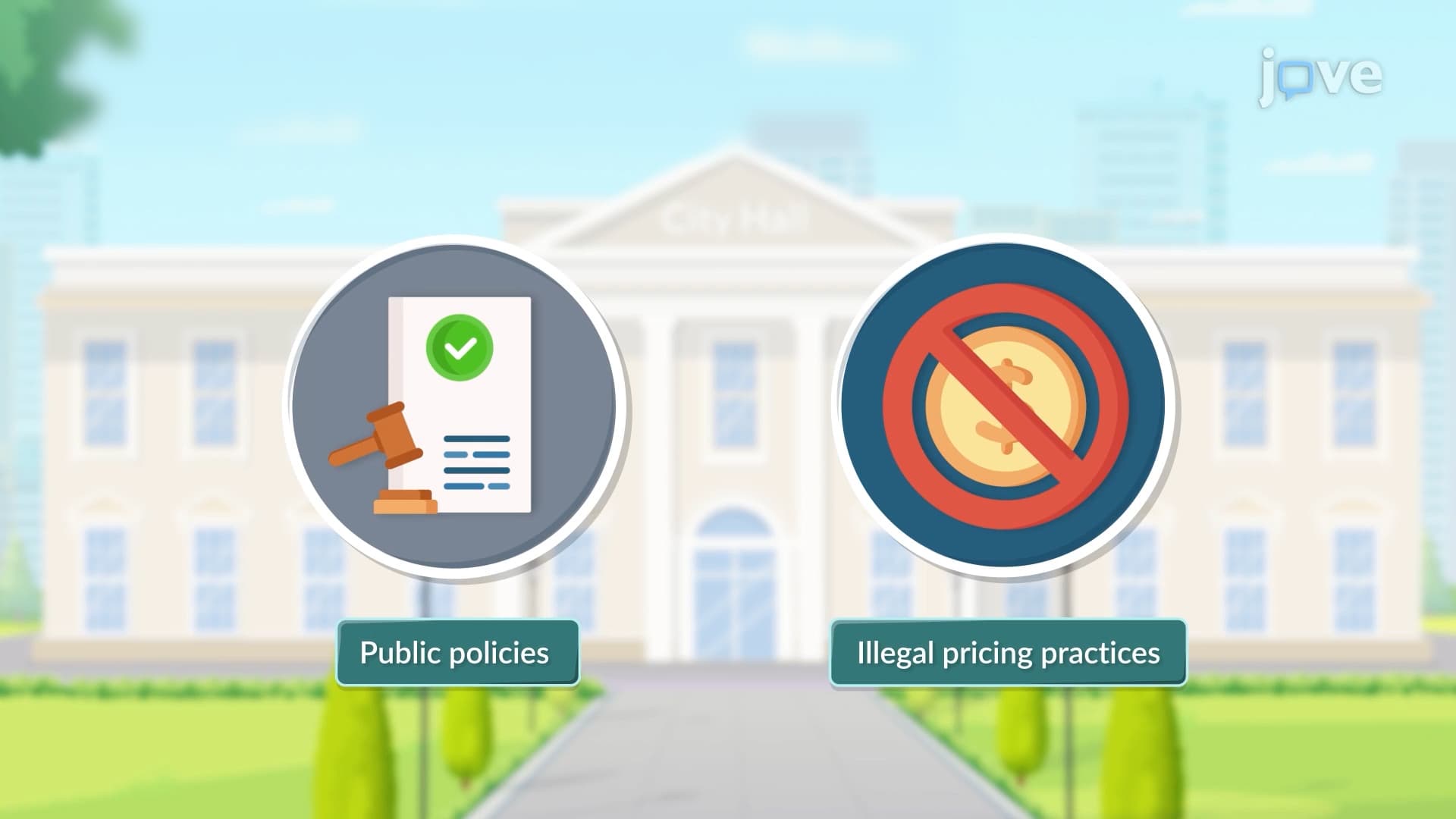
Public policy pricing regulations directly impact your company's competitive strategy and profit margins, as seen when the FTC blocked Amazon's alleged price-fixing schemes with third-party sellers. Government-imposed policies target illegal pricing practices across two critical levels: within distribution channels (price-fixing, predatory pricing) and across channels (price discrimination, retail price maintenance, deceptive pricing). Understanding What is Public Policy And Pricing helps executives navigate compliance while maintaining competitive advantage. Watch the full video on JoVE Coach to master this concept with expert-led visuals and step-by-step explanations.
When Walmart faces scrutiny over its pricing practices or when pharmaceutical companies defend their drug pricing models before Congress, they're navigating the complex landscape of public policy pricing regulations. These government-imposed frameworks don't just establish legal boundaries-they fundamentally shape competitive strategy, market entry decisions, and profit optimization approaches across every industry.
Price-fixing represents one of the most severe regulatory risks facing business leaders today. When competitors coordinate pricing strategies, they're not just violating antitrust laws-they're exposing their organizations to massive financial penalties and reputational damage. The 2019 case against major tuna companies, including Bumble Bee Foods, resulted in $25 million in fines and demonstrated how industry collaboration can cross into illegal territory.
Predatory pricing poses different strategic challenges. While selling below cost might seem like sound competitive strategy, regulators scrutinize whether these practices aim to eliminate competition rather than serve consumers. Amazon has faced repeated investigations over allegedly using predatory pricing to dominate specific product categories, forcing executives to carefully document legitimate business justifications for aggressive pricing decisions.
Price discrimination regulations create particular challenges for portfolio managers and sales leaders. While charging different prices to different customers can optimize revenue, the Robinson-Patman Act requires cost-based justifications for price variations. Successful implementation requires sophisticated data analytics and legal oversight to ensure discriminatory practices serve legitimate business purposes.
Retail price maintenance policies affect manufacturer-dealer relationships across industries from automotive to consumer electronics. When Apple controls iPad pricing across retailers, they must navigate complex legal frameworks that balance brand protection with competitive market dynamics.
Deceptive pricing encompasses everything from misleading discount claims to bait-and-switch tactics. Major retailers like JCPenney have restructured entire pricing strategies to avoid regulatory challenges while maintaining customer appeal and profit margins.
Related Micro-courses