Loading subject page…
- Math Fundamentals
- Analytic Geometry
- Eccentricity of an Ellipse
Micro-course: Analytic Geometry
382 views
Learn key concepts and earn your certificate.




Eccentricity of an Ellipse

00:00
01:27
Video Summary: What Is Eccentricity of an Ellipse
Ever wondered why Halley's Comet takes 76 years to orbit the Sun while Earth completes its journey in just one year? The answer lies in the eccentricity of an ellipse, which determines how stretched or circular an orbital path appears. Halley's Comet has an eccentricity of 0.967, making its orbit extremely elongated compared to Earth's nearly circular path with an eccentricity of just 0.017. Watch the full video on JoVE Coach to master this concept with expert-led visuals and step-by-step explanations.
- Understand what is eccentricity of an ellipse and how it quantifies the shape of elliptical curves
- Identify the mathematical relationship between eccentricity, focal distance, and semi-major axis length
- Analyze how eccentricity values between 0 and 1 determine whether a shape is circular or highly elongated
- Compare different orbital eccentricities using real astronomical examples like planets and comets
- Apply the Pythagorean theorem to calculate semi-minor axis lengths from eccentricity values
- Evaluate how eccentricity affects the standard form equation of an ellipse
- Recognize the practical applications of eccentricity in orbital mechanics and satellite trajectories
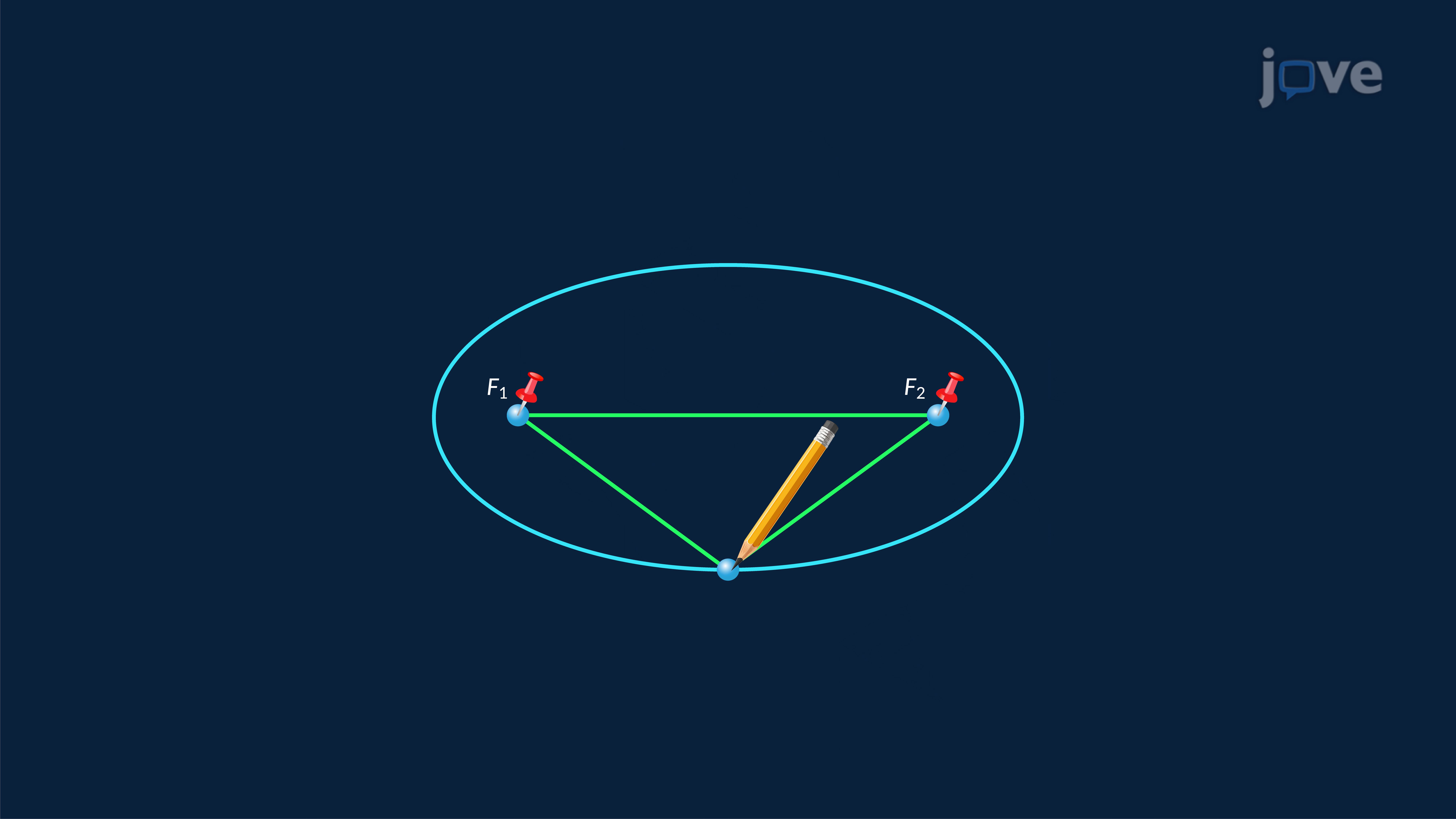
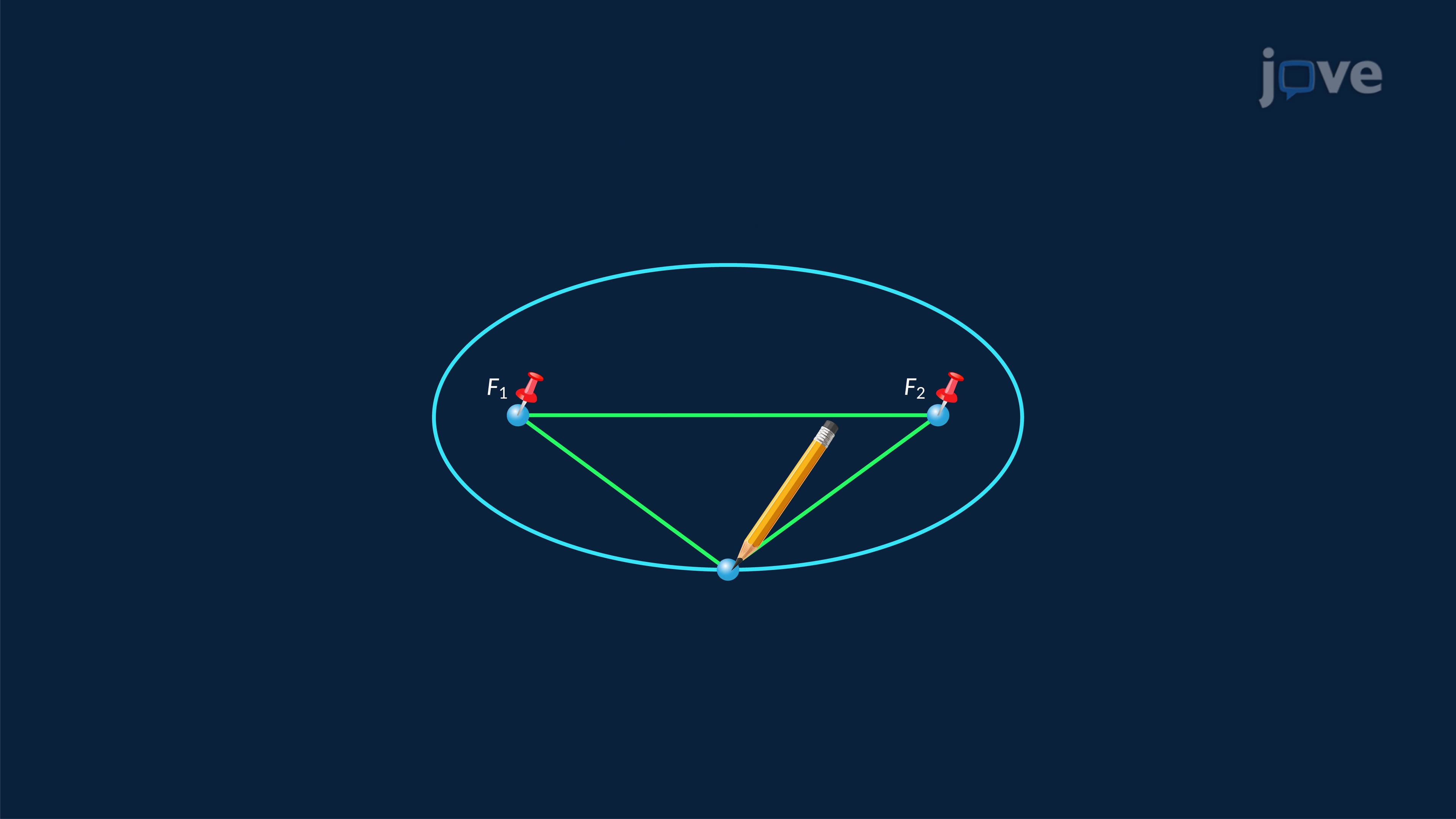
- Explore the geometric construction of ellipses using the two-foci definition with string and pins
Understanding What is Eccentricity of An Ellipse
The eccentricity of an ellipse serves as a fundamental measure that describes how much an elliptical shape deviates from being perfectly circular. Mathematically defined as e = c/a, where c represents the focal distance (distance from center to focus) and a represents the semi-major axis length, eccentricity provides a standardized way to quantify elliptical shapes across disciplines from astronomy to engineering.
The Mathematical Foundation of Elliptical Eccentricity
Eccentricity values always fall between 0 and 1 for ellipses, creating a precise classification system. When e = 0, the two foci coincide at the center, producing a perfect circle. As eccentricity approaches 1, the ellipse becomes increasingly elongated, with the foci moving farther apart along the major axis. This mathematical relationship proves essential for students preparing for AP Calculus BC exams, where conic sections frequently appear in both multiple-choice and free-response questions.
The geometric relationship connecting the semi-major axis (a), semi-minor axis (b), and focal distance (c) follows the Pythagorean theorem: a² = b² + c². Combined with the eccentricity formula e = c/a, students can solve for any unknown parameter given the other values. This interconnected system appears regularly in SAT Math Level 2 subject tests and college precalculus courses.
Real-World Applications in Orbital Mechanics
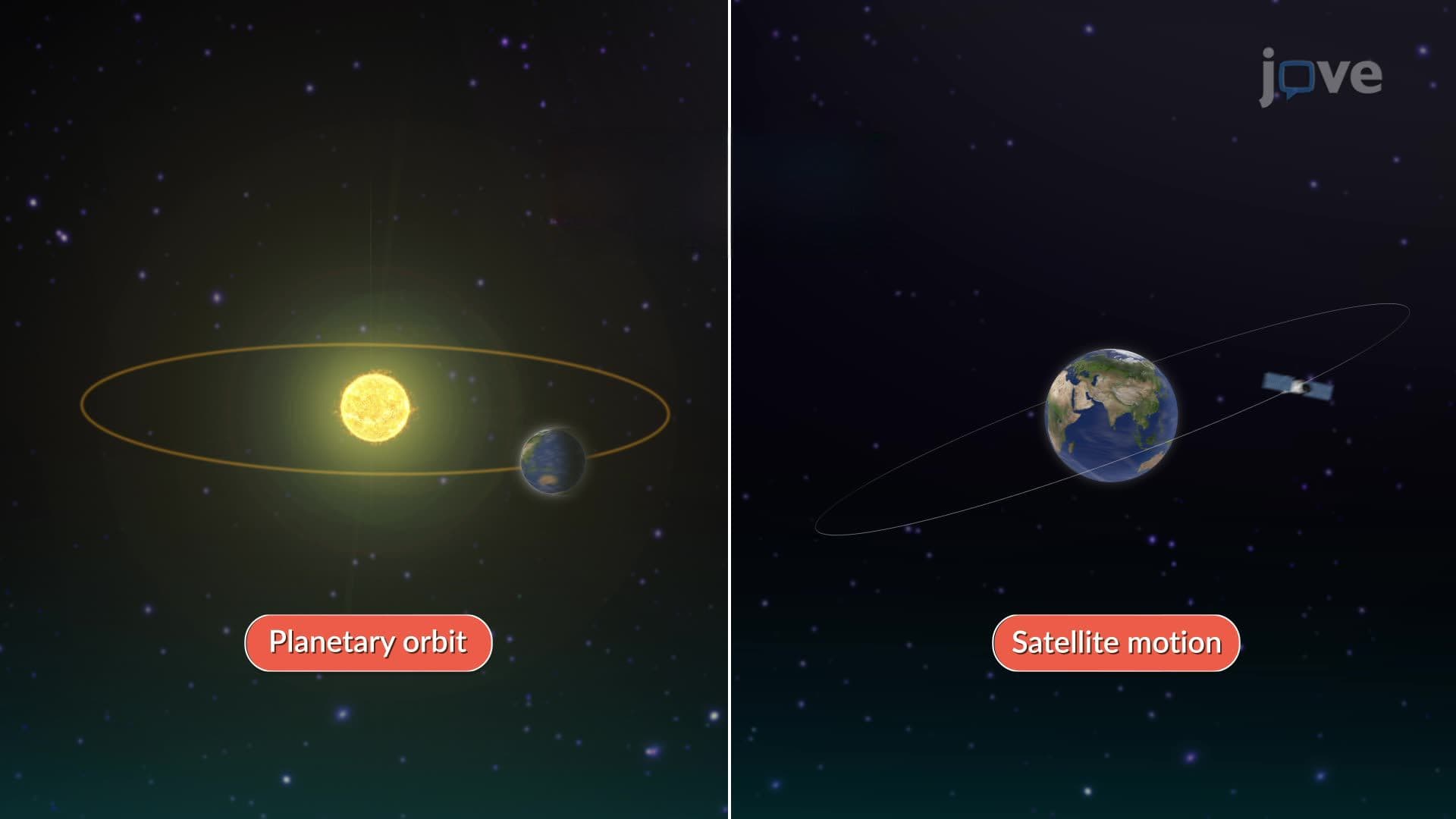
Planetary orbits demonstrate eccentricity's practical significance in astronomy and space science. Earth's orbit maintains an eccentricity of approximately 0.017, explaining our relatively stable seasonal patterns and consistent solar energy reception. In contrast, Mercury's eccentricity of 0.206 creates significant variations in its orbital speed and distance from the Sun throughout its 88-day year.
Comet orbits provide even more dramatic examples, with many exhibiting eccentricities exceeding 0.9. These highly eccentric orbits explain why comets like Hale-Bopp spend most of their orbital periods in the outer solar system's frigid regions, only becoming visible when their elongated paths bring them closer to the Sun's warming influence.
Applications in Engineering and Technology
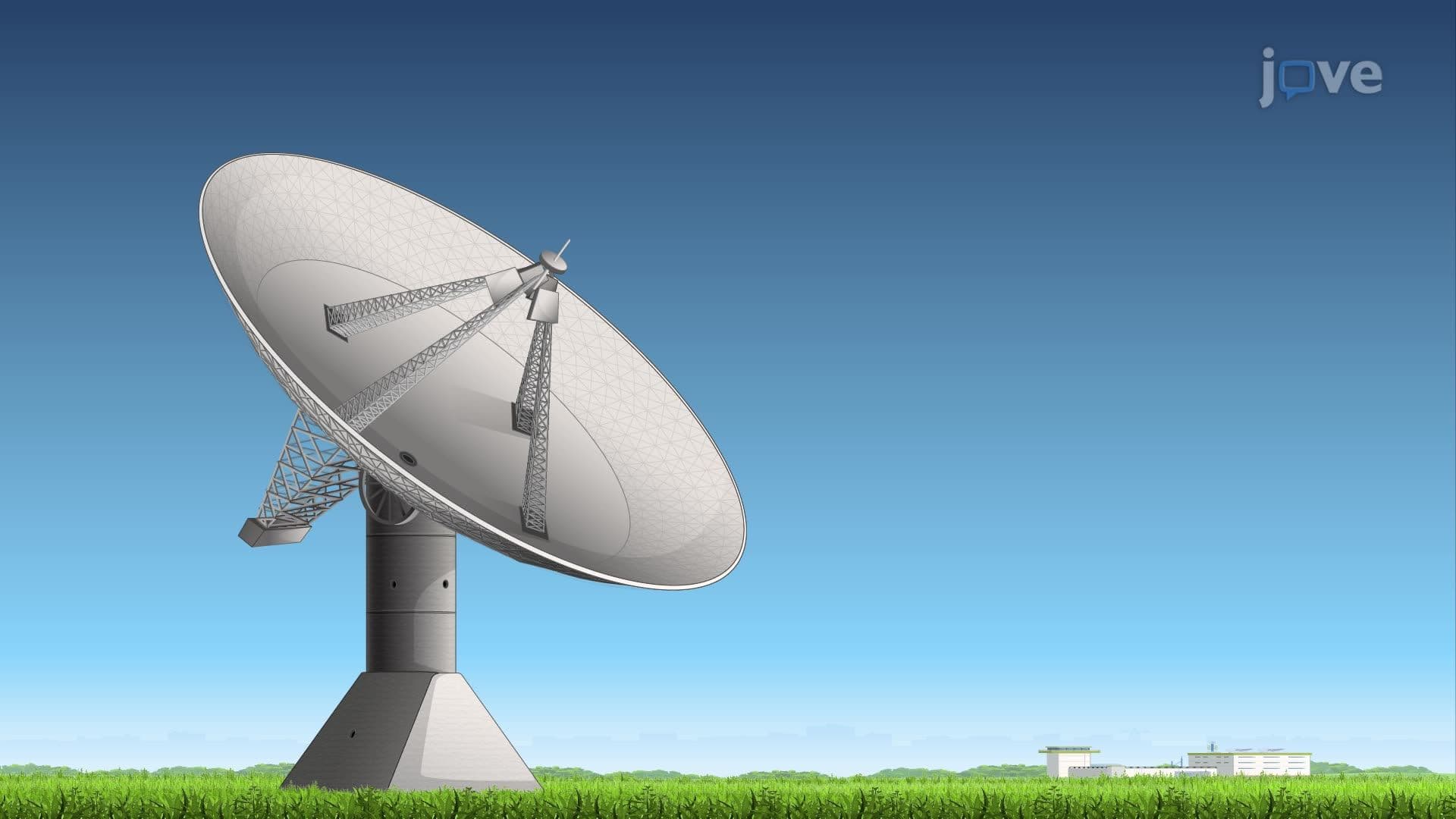
Beyond astronomy, eccentricity calculations prove crucial in satellite mission planning and GPS system design. Communications satellites in elliptical orbits use controlled eccentricity to maximize coverage time over specific geographic regions, particularly important for serving remote areas of Alaska and northern Canada where traditional geostationary satellites provide poor coverage angles.
Frequently Asked Questions
Eccentricity of an ellipse is a number between 0 and 1 that tells you how "stretched out" the ellipse is compared to a perfect circle. An eccentricity of 0 means you have a circle, while values closer to 1 create increasingly elongated elliptical shapes. It's calculated by dividing the distance between the center and focus by the length of the semi-major axis.
AP Calculus BC frequently tests eccentricity through conic sections problems involving parametric equations and polar coordinates. Students typically encounter questions asking them to find eccentricity given an ellipse's equation, or to write standard form equations when given eccentricity values. These problems often combine with related rates or optimization scenarios in free-response questions.
Focus on understanding that e = 0 produces circles, while e approaching 1 creates highly elongated ellipses. Memorize that Earth's eccentricity is approximately 0.017 (nearly circular) and that values like 0.5 represent moderately stretched ellipses. The College Board emphasizes conceptual understanding over memorizing specific planetary values.
Satellite engineers use controlled eccentricity to optimize coverage patterns and mission objectives. Highly eccentric orbits allow satellites to spend more time over specific regions, crucial for military reconnaissance or communication services in polar regions where traditional geostationary satellites cannot provide adequate coverage angles.
Basic algebra and geometry knowledge suffices for understanding eccentricity concepts. You'll need familiarity with the Pythagorean theorem, ratios, and coordinate geometry, all typically covered by Algebra II. The calculations involve straightforward substitution into formulas rather than complex mathematical manipulations.
Practice converting between different forms of ellipse equations and identifying key parameters like semi-major axis, semi-minor axis, and focal distance. Create a reference sheet connecting the geometric relationships: a² = b² + c² and e = c/a. Work through problems involving real astronomical examples to build intuition about reasonable eccentricity values.
Eccentricity knowledge prepares you for advanced orbital mechanics, Kepler's laws of planetary motion, and satellite trajectory analysis in aerospace engineering programs. It also provides foundation for studying hyperbolas and parabolas in analytic geometry, where eccentricity values exceed 1 or equal 1 respectively.
Related Micro-courses
7 Concepts
15 Concepts

14 Concepts