Loading subject page…

494 views

Video Summary: What are Long Division of Polynomials
Ever wondered how Netflix calculates profit per subscriber when both revenue and costs involve complex polynomial expressions? Long division of polynomials uses the same systematic approach as dividing regular numbers, making it essential for solving real-world business problems. For instance, when Boeing engineers model aircraft fuel efficiency using polynomial equations, they rely on this division method to isolate specific variables. Understanding what are long division of polynomials helps students tackle everything from AP Calculus problems to college algebra coursework. Watch the full video on JoVE Coach to master this concept with expert-led visuals and step-by-step explanations.
Long division of polynomials represents a fundamental algebraic technique that extends the familiar process of numerical long division to polynomial expressions. This method proves indispensable when simplifying rational expressions, finding asymptotes in calculus, or solving complex equations that appear frequently on the SAT Math Level 2 and AP Calculus exams.
The types of long division of polynomials vary primarily based on the degree relationships between dividend and divisor. When dividing polynomials of equal degree, the quotient becomes a constant. Higher-degree dividends yield polynomial quotients, while attempting to divide by a higher-degree polynomial results in a quotient of zero with the original dividend as the remainder.
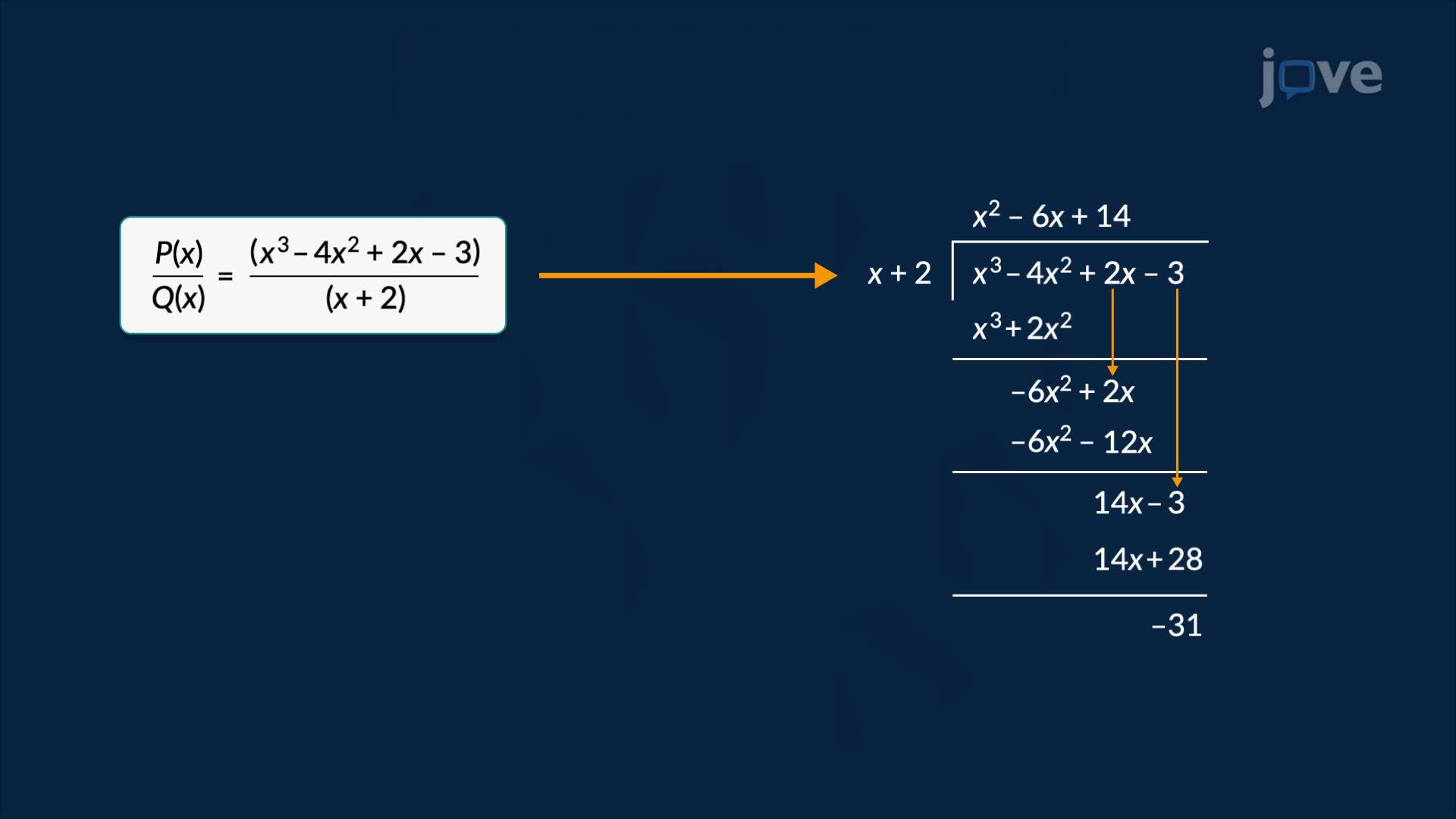
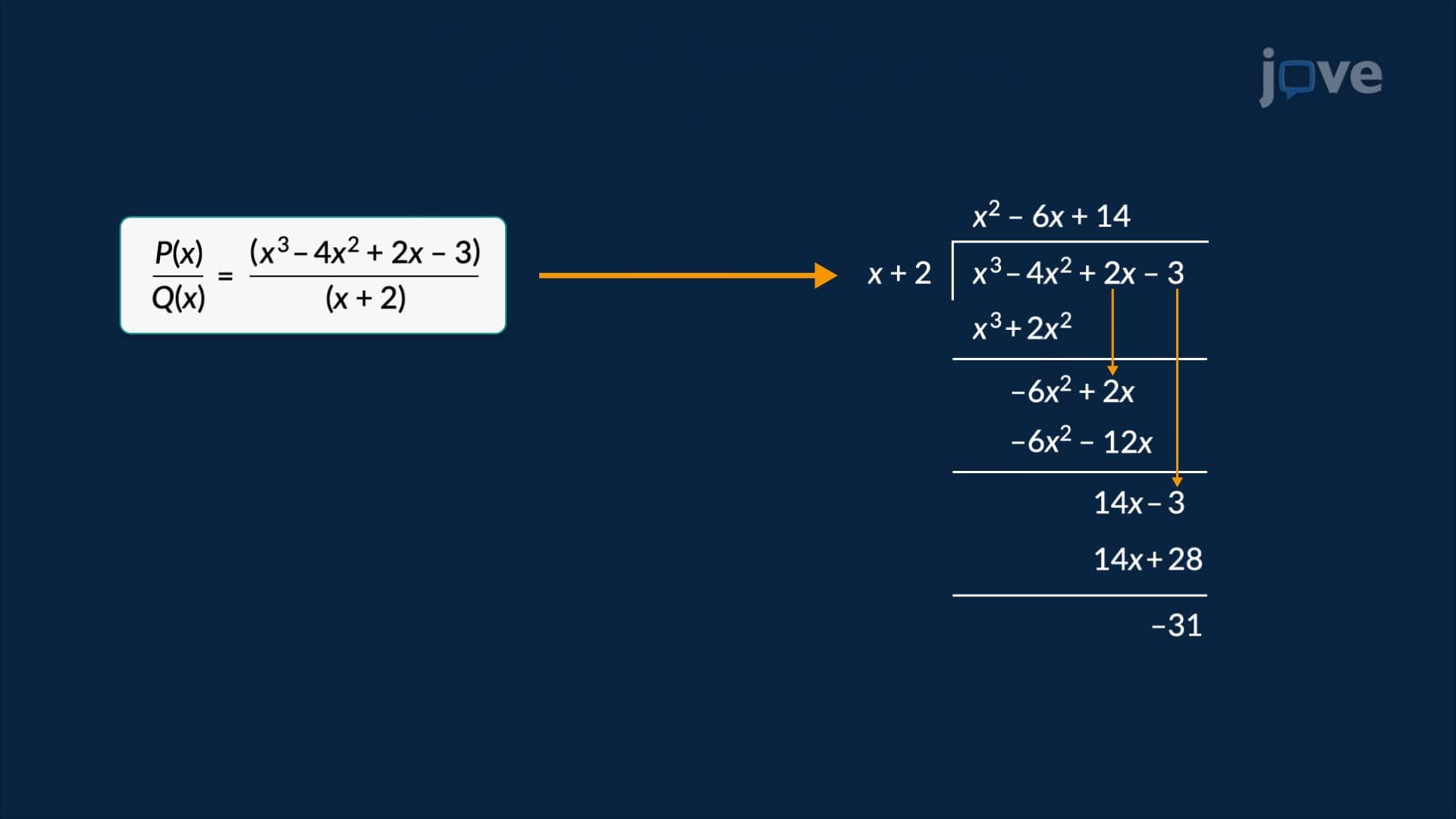
The process begins by ensuring both polynomials are in standard form-terms arranged in descending powers. Consider dividing x³ + 2x² - 5x + 6 by x + 3. First, divide the leading term x³ by x to get x². Multiply this by the entire divisor (x + 3), yielding x³ + 3x². Subtract this from the dividend, bringing down the next term to continue the process.
American pharmaceutical companies like Pfizer use polynomial division when modeling drug concentration over time. If the total drug amount follows one polynomial function and the distribution rate follows another, long division helps determine concentration per unit volume. Similarly, Tesla's engineers apply these techniques when optimizing battery efficiency curves, where power output and consumption rates are modeled as polynomials.
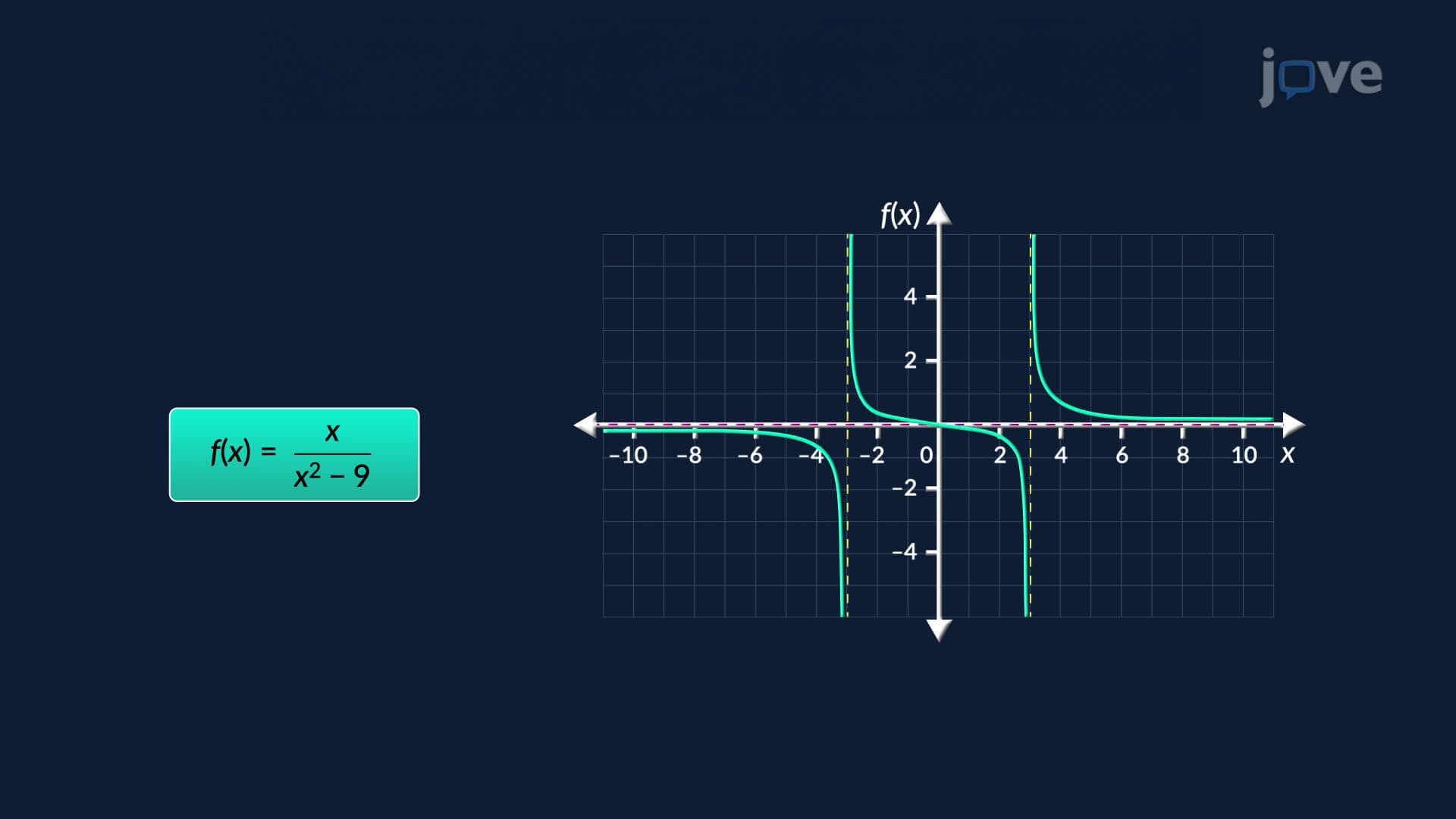
On college algebra midterms and AP Calculus AB exams, polynomial long division often appears in rational function analysis. Students must recognize when division produces clean factorizations versus when remainders indicate non-factors. This skill directly connects to finding vertical asymptotes, holes in graphs, and solving higher-degree equations that resist simpler factoring methods. Mastering this long division of polynomials concept creates a foundation for advanced topics like partial fraction decomposition in calculus courses.
Related Micro-courses