Loading subject page…
- Math Fundamentals
- Polynomial and Rational Functions
- Quadratic Models
Micro-course: Polynomial and Rational Functions
494 views
Learn key concepts and earn your certificate.


Quadratic Models

00:00
01:23
Video Summary: What are Quadratic Models
Ever wonder why a basketball follows that perfect arc when shooting a three-pointer? Quadratic models are mathematical functions that describe these curved relationships, where one variable depends on the square of another. From NASA calculating spacecraft trajectories to engineers designing roller coasters at Six Flags, what are quadratic models becomes crucial for predicting motion under constant acceleration like gravity. Watch the full video on JoVE Coach to master this concept with expert-led visuals and step-by-step explanations.
- Understand what are quadratic models and identify their characteristic U-shaped or inverted U-shaped parabolic graphs
- Analyze the three components of quadratic functions: the squared term, linear term, and constant term
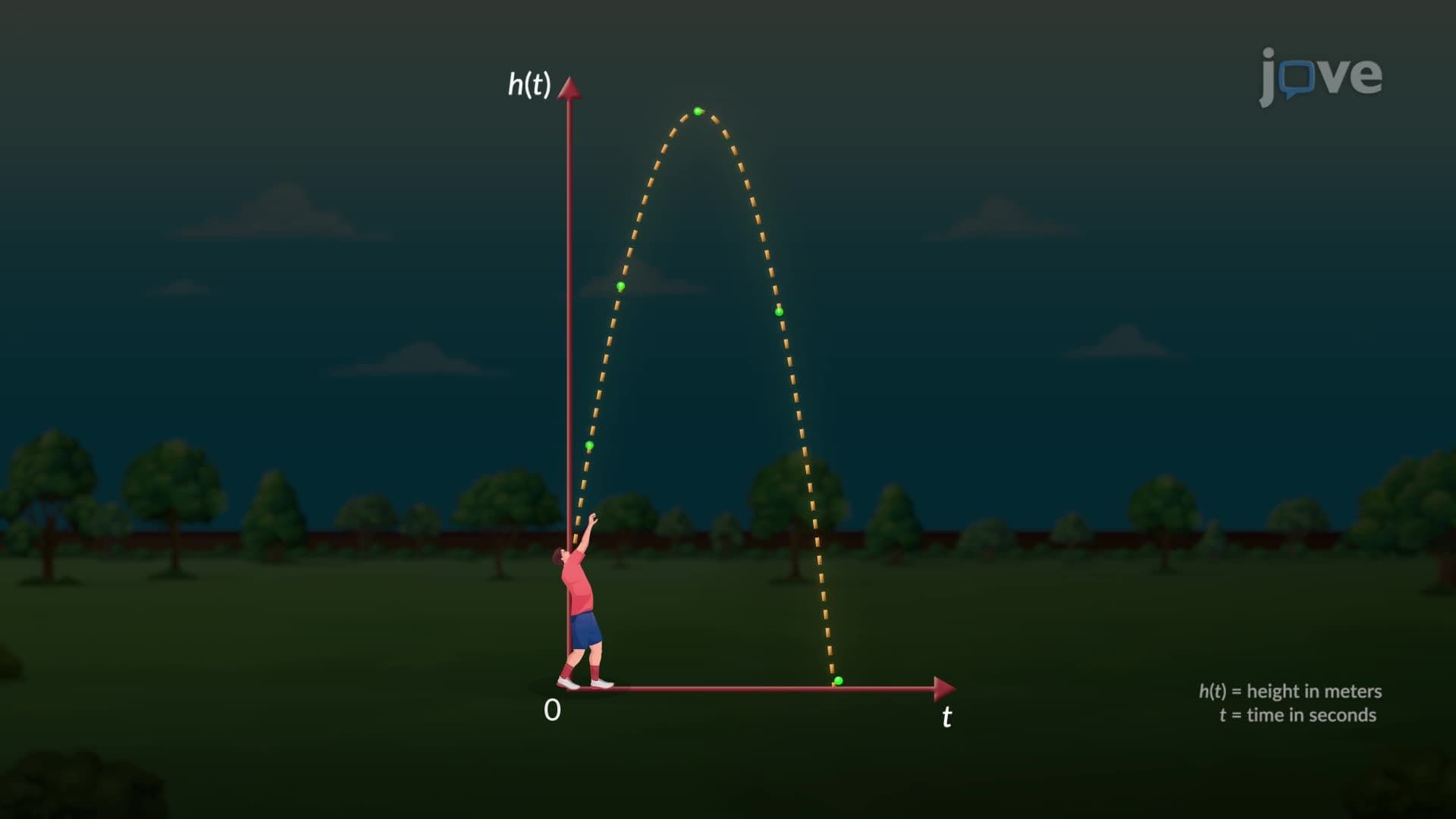
- Apply quadratic models to real-world scenarios involving projectile motion, such as sports trajectories and falling objects
- Identify the vertex of a parabola as the maximum or minimum point using the formula t = -b/(2a)
- Recognize how each coefficient in a quadratic equation represents physical quantities like initial velocity, acceleration, and starting position
- Evaluate quadratic models through completing the square to convert to vertex form
- Compare upward-opening versus downward-opening parabolas based on the sign of the leading coefficient
- Explore practical applications of quadratic modeling in physics, engineering, and business optimization problems
Understanding What Are Quadratic Models
Quadratic models represent one of the most fundamental mathematical relationships in algebra and applied sciences. These models describe situations where the rate of change itself is changing at a constant rate, creating the characteristic curved shape we call a parabola. Unlike linear models that show constant rates of change, quadratic models capture acceleration, deceleration, and optimization scenarios that appear throughout natural phenomena and human-designed systems.
Types of Quadratic Models in Standard Form
The general form of a quadratic model is f(x) = ax² + bx + c, where each coefficient serves a specific purpose. The types of quadratic models vary based on the sign and magnitude of the leading coefficient 'a'. When a > 0, the parabola opens upward, representing situations like profit maximization in business or the shape of suspension cables on bridges like San Francisco's Golden Gate Bridge. When a < 0, the parabola opens downward, modeling projectile motion or revenue functions that eventually decline due to market saturation.
Real-World Applications and Physical Interpretation
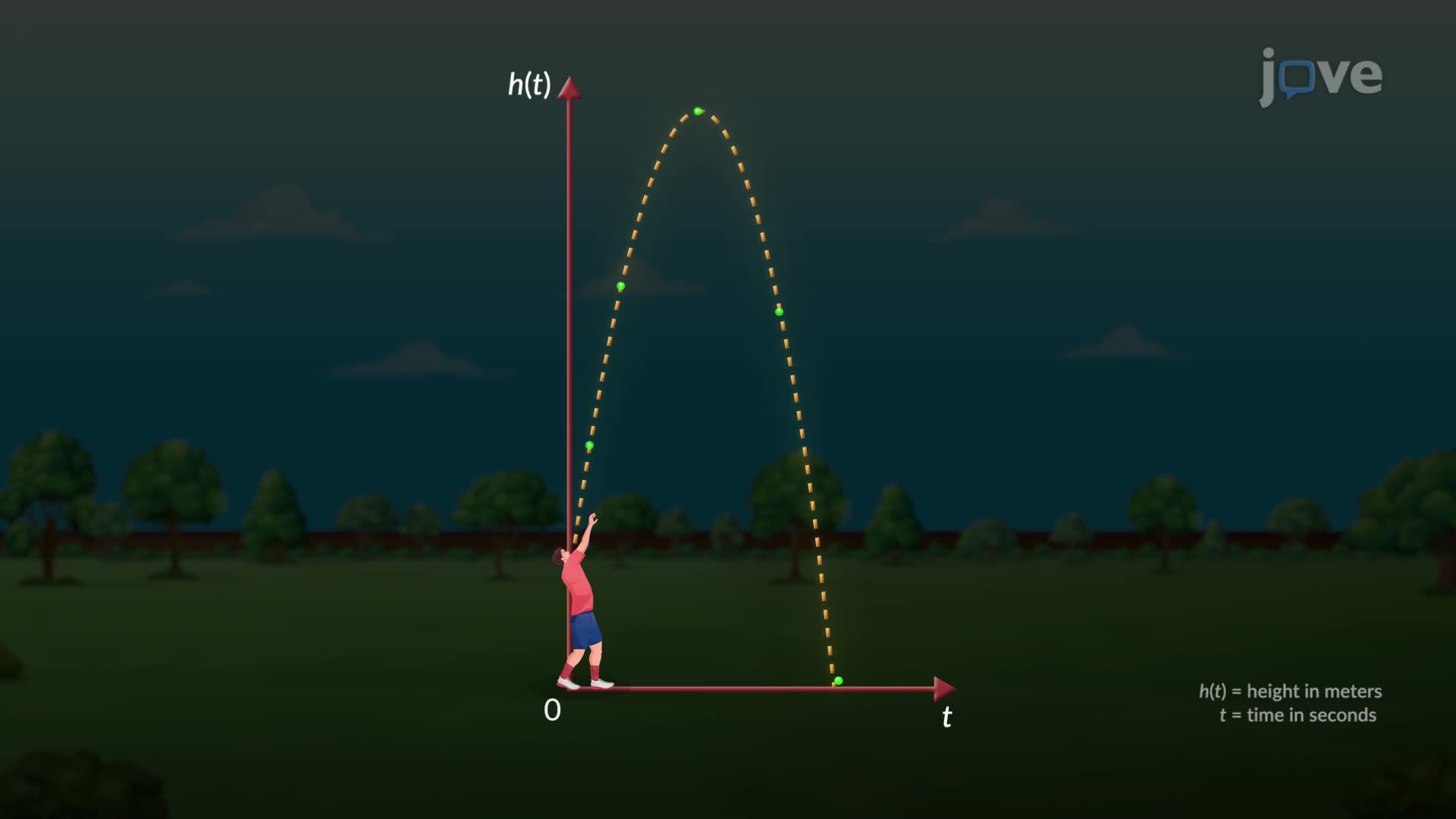
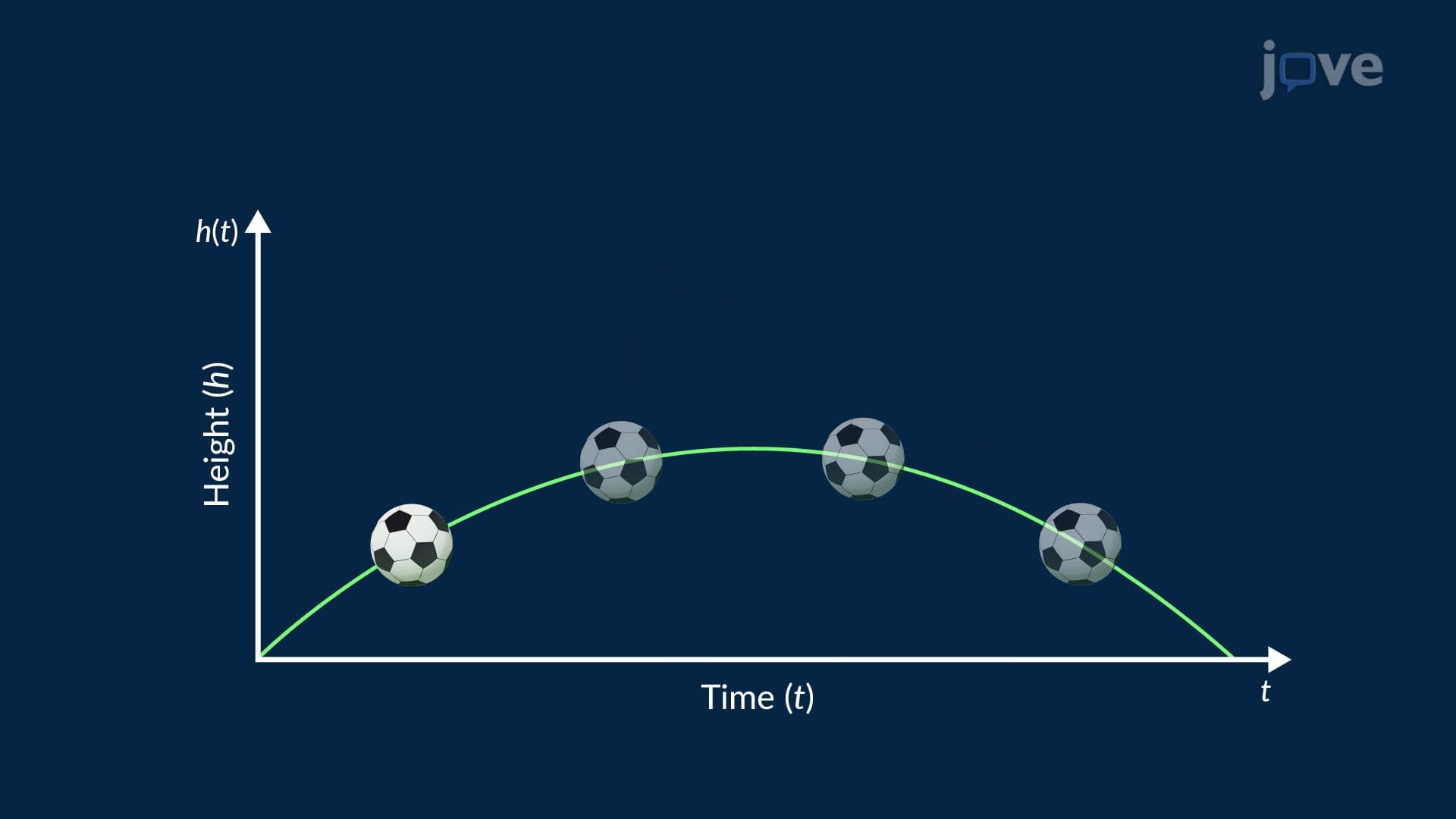
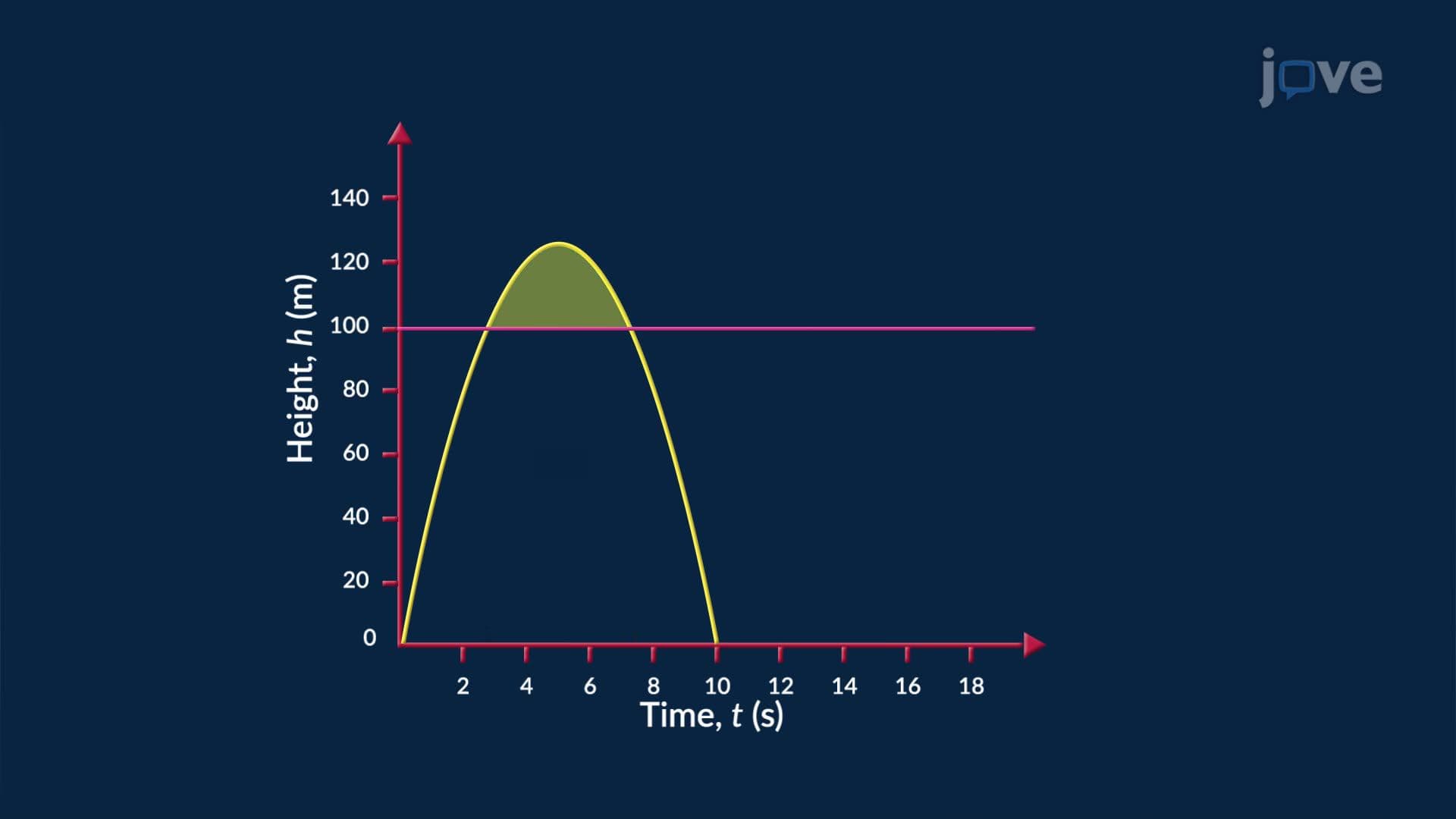
Consider a quarterback throwing a pass during an NFL game. The football's height follows h(t) = -16t² + 32t + 6, where -16 represents half the gravitational acceleration (in ft/s²), 32 represents the initial upward velocity (ft/s), and 6 represents the release height (feet). This quadratic models overview demonstrates how each term has physical meaning: the squared term always involves acceleration, the linear term represents initial rate of change, and the constant represents the starting value.
Vertex Form and Optimization
Converting to vertex form h(t) = a(t - h)² + k reveals the optimization point directly. The vertex (h, k) represents either the maximum or minimum value, crucial for solving problems like determining when the football reaches its peak height or finding the optimal price point for maximum revenue. This transformation, achieved through completing the square, is essential for AP Calculus, SAT Math Level 2, and college algebra courses where students must identify key features of parabolic functions quickly and accurately.
Frequently Asked Questions
A quadratic model is a mathematical function where the highest power of the variable is 2, creating a U-shaped or inverted U-shaped graph called a parabola. These models describe relationships involving constant acceleration, like a ball's flight path or profit curves in business. They're essential for understanding motion, optimization, and many real-world phenomena.
SAT Math frequently tests quadratic models through vertex identification, solving quadratic equations, and interpreting parabolic graphs in context. You'll encounter problems about projectile motion, profit maximization, and geometric optimization. Focus on recognizing the vertex formula x = -b/(2a) and understanding how coefficients relate to real-world scenarios.
AP Physics emphasizes kinematic equations like h(t) = h₀ + v₀t - (1/2)gt², where position depends quadratically on time under constant acceleration. You'll analyze projectile motion, free fall, and oscillatory systems. Understanding how the squared term represents acceleration effects is crucial for both the multiple-choice and free-response sections.
Disney uses quadratic models to design safe roller coaster loops, while Ford engineers apply them to optimize fuel efficiency curves. Netflix analyzes subscriber growth patterns using quadratic regression, and agricultural companies model crop yields based on fertilizer application rates. These models help predict optimal conditions and maximize desired outcomes.
Not at all! You only need solid algebra skills including solving linear equations, basic graphing, and working with exponents. If you're comfortable with y = mx + b linear functions, quadratic models are the natural next step. The key is recognizing patterns and connecting mathematical symbols to real-world meanings.
Practice identifying key features: vertex, y-intercept, and zeros (x-intercepts). Create a formula sheet linking a, b, and c coefficients to their physical meanings in different contexts. Work through diverse application problems from sports trajectories to business optimization, as this builds pattern recognition essential for timed exams.
Advance to systems of quadratic equations, quadratic inequalities, and conic sections (circles, ellipses, hyperbolas). In calculus, you'll use derivatives to analyze quadratic models more deeply, while statistics courses apply quadratic regression to real data sets. These concepts build naturally toward advanced STEM coursework.
Related Micro-courses
8 Concepts
5 Concepts

12 Concepts