Loading subject page…


494 views


Video Summary: What Is Fundamental Theorem of Algebra
Did you know that every polynomial equation, no matter how complex, is guaranteed to have at least one solution in the complex number system? The fundamental theorem of algebra proves this remarkable mathematical truth, stating that any polynomial of degree one or higher with complex coefficients must have at least one complex zero. From designing car suspension systems at Ford Motor Company to solving quadratic equations on the SAT Math section, this theorem underlies countless real-world applications in engineering and mathematics. Watch the full video on JoVE Coach to master this concept with expert-led visuals and step-by-step explanations.
The fundamental theorem of algebra represents one of mathematics' most elegant guarantees: every non-constant polynomial with complex coefficients has at least one complex root. This means that if you have a polynomial like P(x) = x² + 1, which has no real solutions, it still has complex solutions (in this case, x = i and x = -i). For high school students preparing for AP Calculus or college algebra courses, this theorem provides the mathematical foundation that ensures polynomial equations always have solutions, even when they're not immediately obvious.
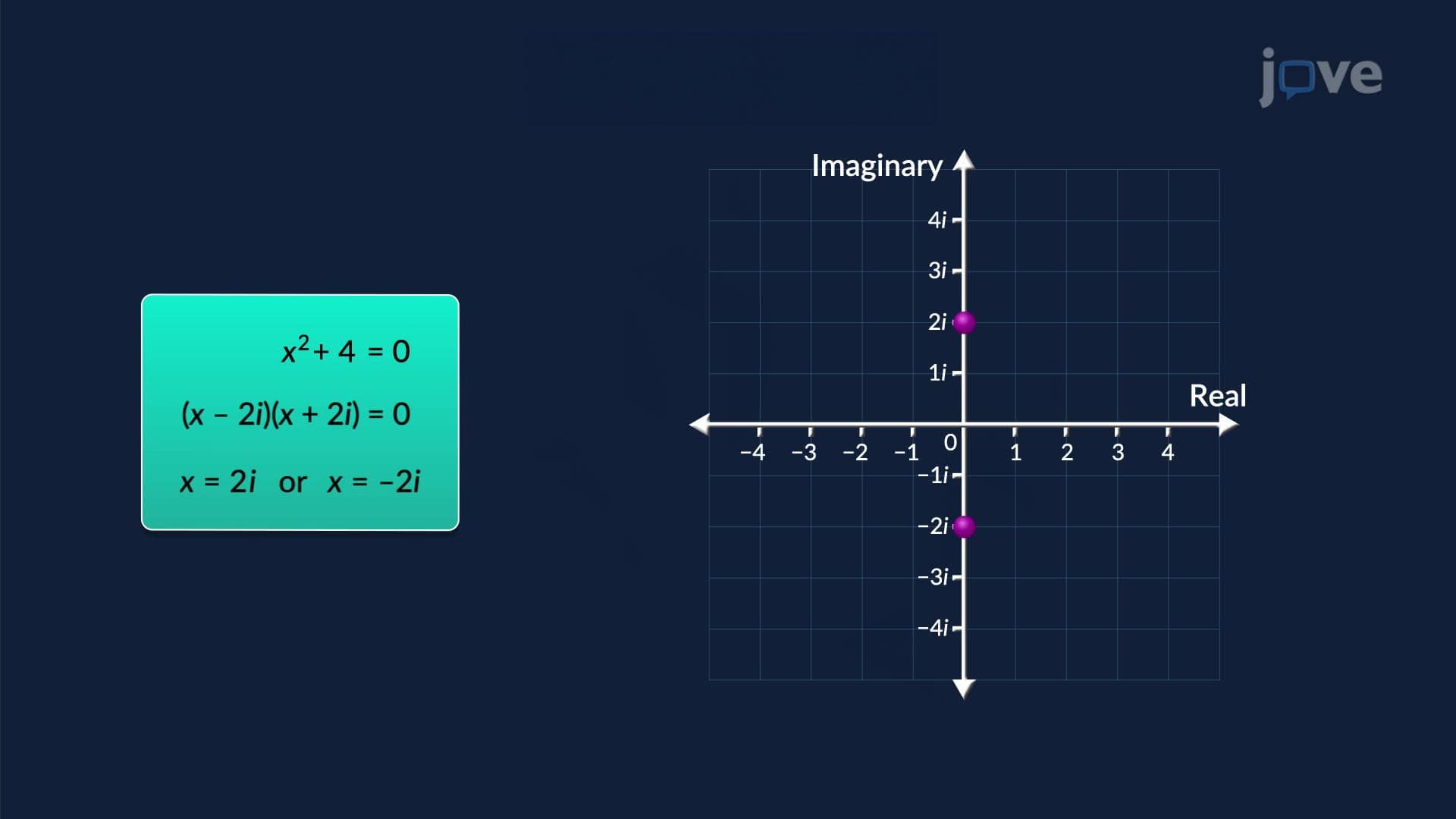
When solving polynomials that yield square roots of negative numbers, the imaginary unit i (where i² = -1) becomes essential. Consider the equation x² + 4 = 0. Using traditional real number methods, this equation appears unsolvable since x² = -4 requires taking the square root of a negative number. However, the fundamental theorem of algebra guarantees solutions exist: x = 2i and x = -2i. This concept frequently appears on SAT Math Level 2 subject tests and college placement exams, where students must demonstrate comfort working with complex solutions.
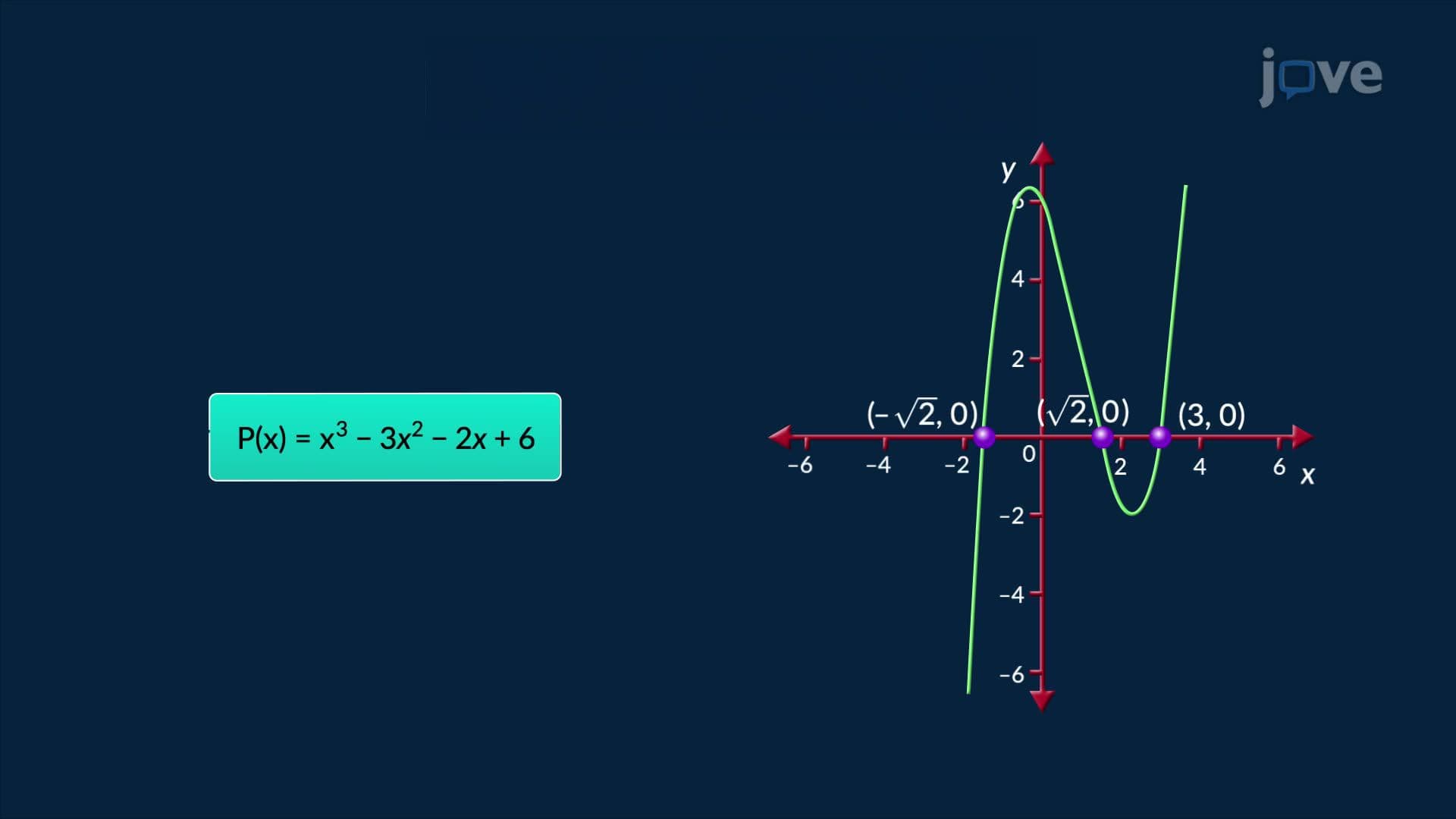
The Complete Factorization Theorem works hand-in-hand with the fundamental theorem of algebra. It states that any polynomial with complex coefficients can be factored completely into linear terms. For a polynomial of degree n, this means exactly n linear factors (counting multiplicities). For example, the polynomial P(x) = x³ - 6x² + 11x - 6 factors as P(x) = (x - 1)(x - 2)(x - 3), revealing three real roots. This factorization process is crucial for AP Calculus students analyzing polynomial behavior and for engineering students studying system dynamics.
The fundamental theorem of algebra extends far beyond academic exercises. In automotive engineering, companies like General Motors and Tesla use characteristic polynomials to analyze suspension systems. The roots of these polynomials-whether real or complex-determine if a car's suspension is overdamped (sluggish response), underdamped (oscillatory), or critically damped (optimal response). Complex roots typically indicate oscillatory behavior, which engineers must carefully control to ensure passenger comfort and vehicle stability. This application demonstrates how abstract mathematical theorems directly influence the cars Americans drive daily.
Related Micro-courses