Loading subject page…

- Mechanical Engineering
- Transformations of Stress and Strain
- Principal Stresses
Micro-course: Transformations of Stress and Strain
6,613 views
Learn key concepts and earn your certificate.



Principal Stresses

00:00
01:24
Video Summary: Principal Stresses Theory and Determination
Did you know that when the Tacoma Narrows Bridge collapsed in 1940, engineers discovered the failure occurred along specific planes where stress concentrated? Principal stresses: theory and determination explains how stress transforms at different orientations within materials, revealing critical failure points that structural engineers must identify. This graphical method uses Mohr's circle to visualize how normal and shearing stresses change with orientation, helping predict where materials like steel beams in US skyscrapers will experience maximum stress. Watch the full video on JoVE Coach to master this concept with expert-led visuals and step-by-step explanations.
- Understand the fundamental concepts of principal stresses: theory and determination and how they relate to material failure analysis
- Identify the relationship between normal stress, shearing stress, and angular orientation using Mohr's circle representation
- Analyze how maximum and minimum normal stresses occur at principal planes where shearing stress equals zero
- Recognize that principal planes and maximum shearing stress planes are oriented 45 degrees apart from each other
- Apply graphical methods to determine stress values at any orientation within a loaded structural element
- Evaluate the significance of average normal stress as the center point of stress transformation circles
- Compare stress states at different orientations to identify critical loading conditions in engineering applications
- Explore how stress transformation principles guide safe design practices in US construction and manufacturing industries
Understanding Principal Stresses: Theory and Determination Fundamentals
The study of principal stresses: theory and determination forms a cornerstone of mechanical engineering and materials science, particularly crucial for students preparing for AP Physics, college-level statics courses, and professional engineering examinations. When materials experience complex loading conditions, understanding how stresses transform with orientation becomes essential for predicting failure and ensuring structural safety.
Mohr's Circle: The Graphical Foundation
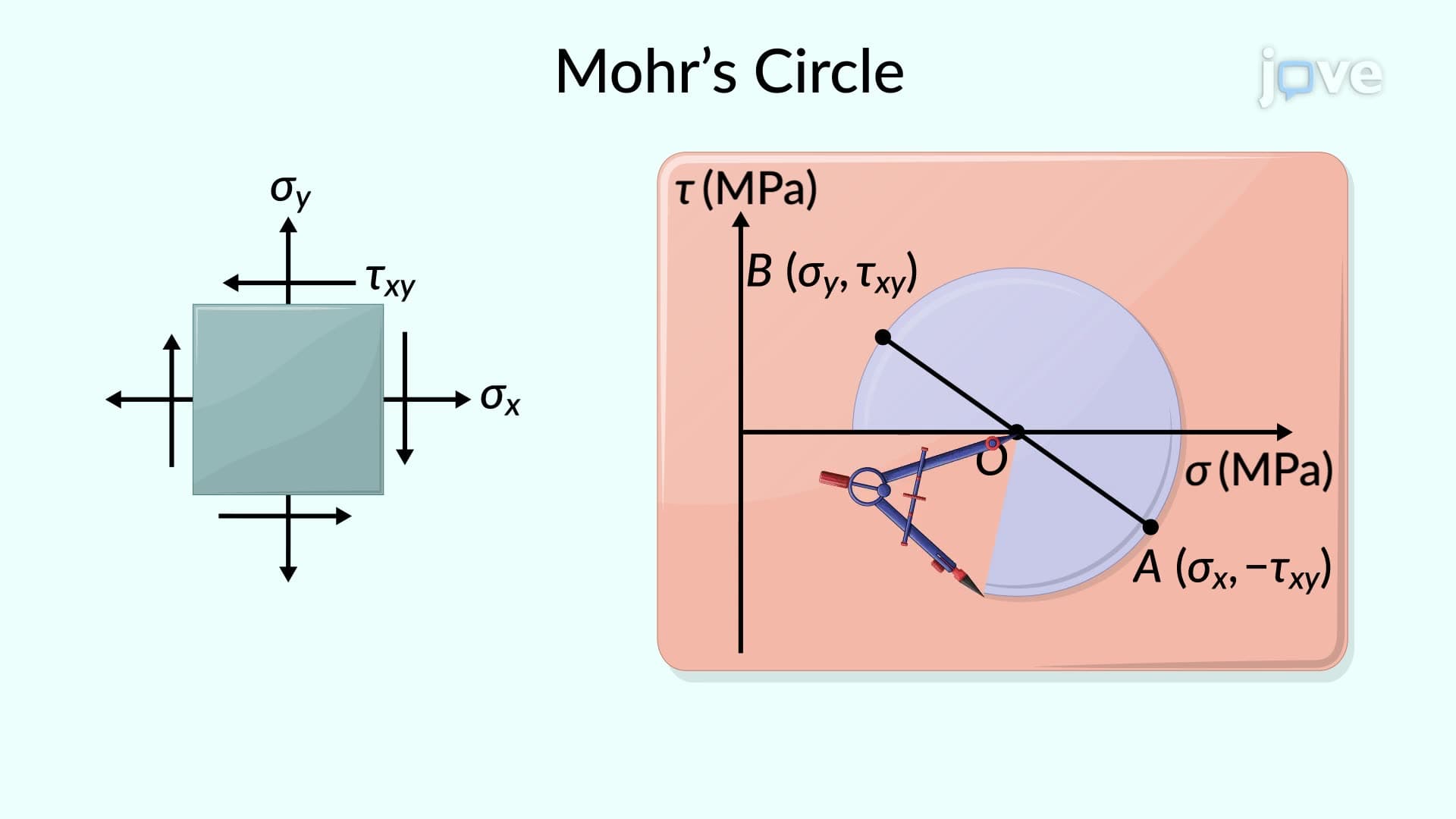
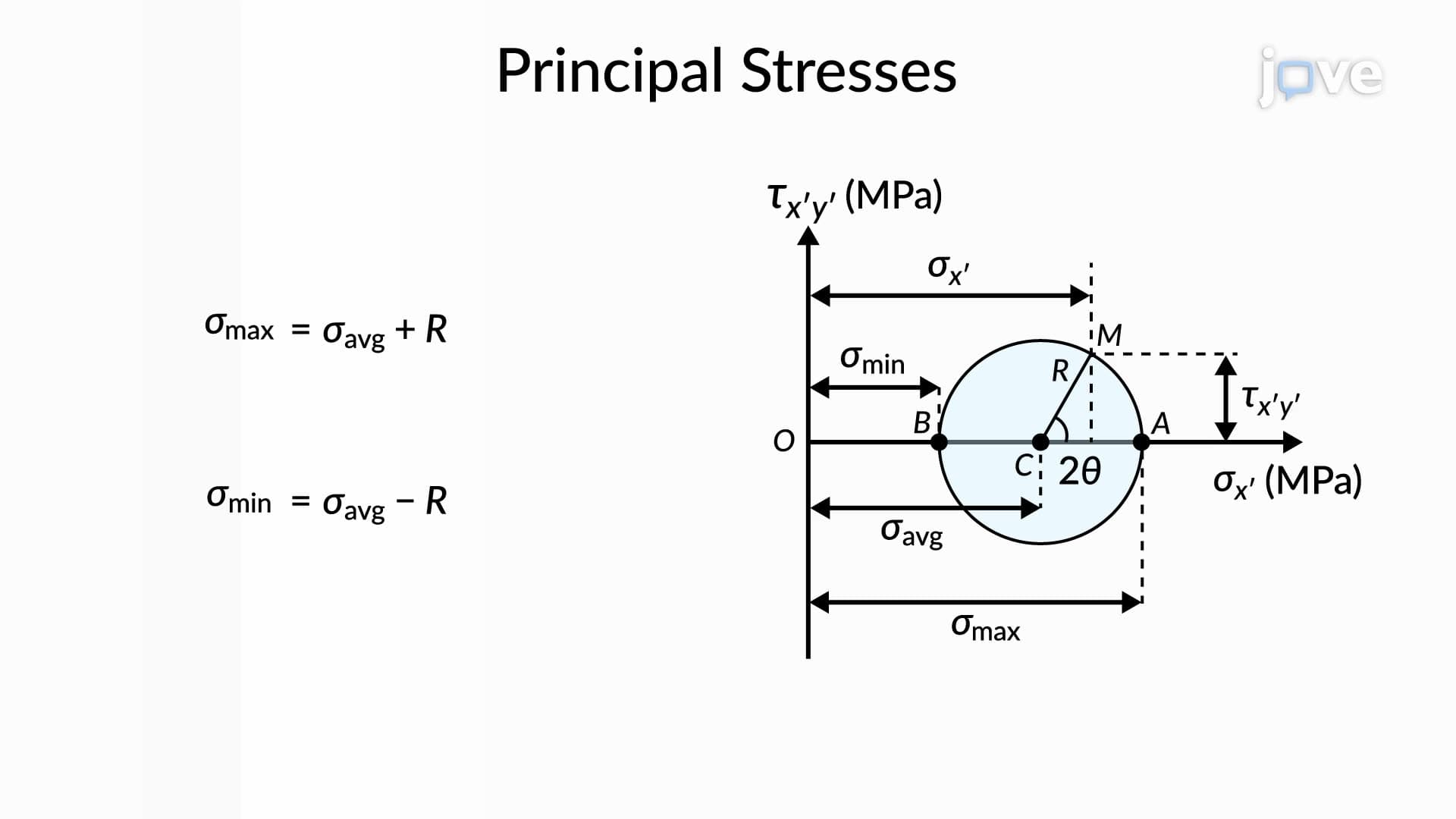
Mohr's circle provides an elegant graphical representation of stress transformation, where normal stress appears on the horizontal axis and shearing stress on the vertical axis. This circular relationship emerges because normal and shearing stress equations, when plotted against angular parameters, naturally form a circle. The circle's center represents the average normal stress: (sigma max + sigma min)/2, while its radius indicates the range of stress variation.
Consider the analysis of a steel beam in a US high-rise building. Engineers use Mohr's circle to visualize how stresses change as they examine different orientations within the beam's cross-section. The circle intersects the horizontal axis at two critical points representing maximum and minimum normal stresses-these define the principal stresses where shearing stress vanishes completely.
Principal Planes and Maximum Shearing Stress Relationships
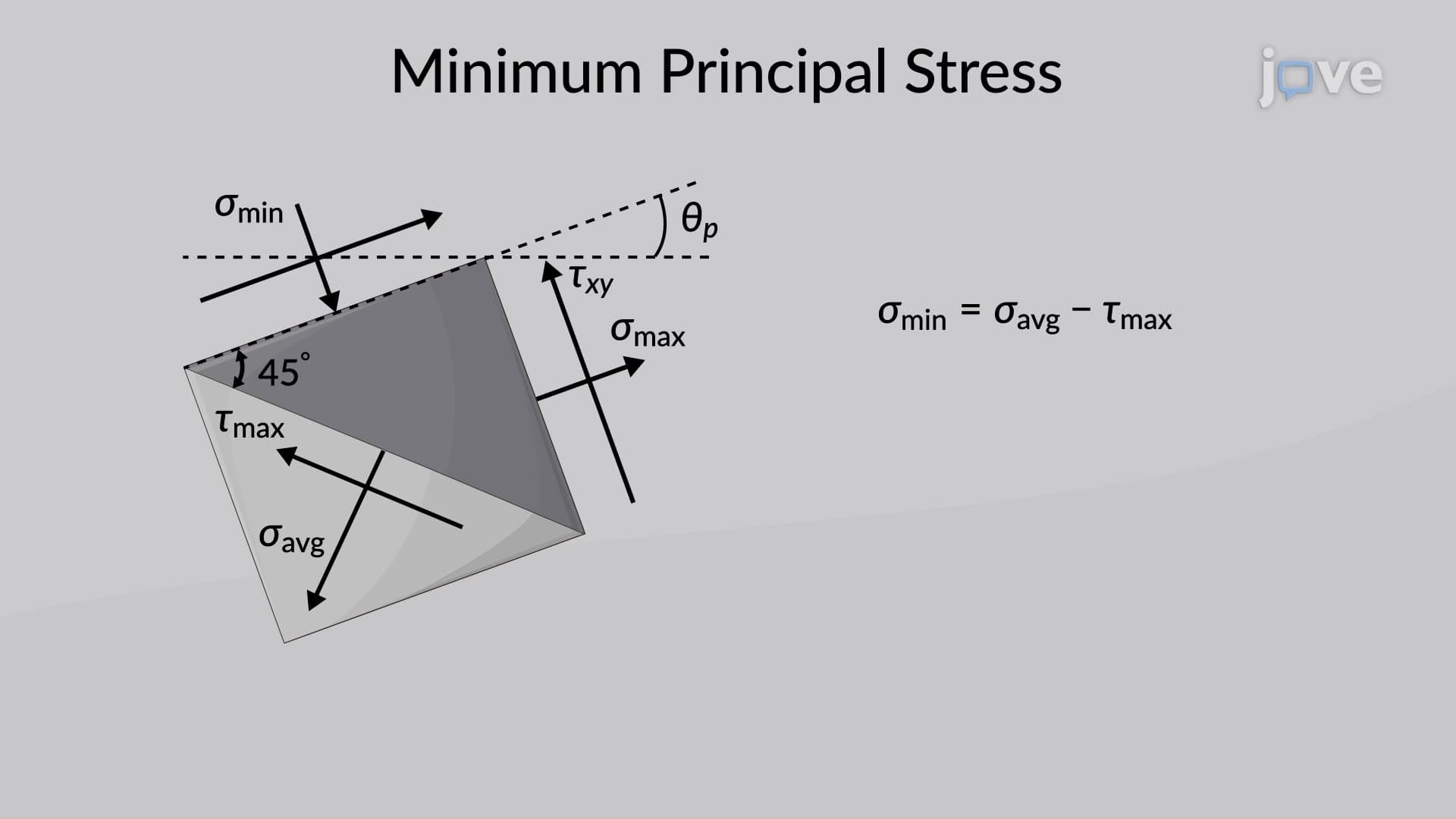
Principal planes occur where only normal stresses act, with zero shearing stress present. These orientations represent either maximum or minimum normal stress conditions within the material. Mathematically, principal stresses equal the average stress plus or minus the circle's radius: sigma principal = sigma average ± radius.
The maximum shearing stress occurs along planes oriented 45 degrees from the principal planes. This relationship proves crucial in failure analysis since many materials, particularly ductile metals used in US infrastructure, fail primarily due to excessive shearing stress rather than normal stress.
Engineering Applications and Exam Relevance
For students taking AP Physics C: Mechanics or college-level mechanics of materials courses, principal stresses: theory and determination frequently appears in problem-solving scenarios. The MCAT occasionally includes related questions in its physics sections, while professional engineering (PE) examinations extensively test these concepts.
Real-world applications span from analyzing pressure vessels in chemical plants to evaluating stress concentrations around bolt holes in aircraft structures manufactured by companies like Boeing. Understanding these principles enables engineers to optimize designs, select appropriate safety factors, and prevent catastrophic failures that could endanger public safety.
Frequently Asked Questions
Principal stresses represent the maximum and minimum normal stress values that occur at specific orientations within a loaded material, where shearing stress equals zero. These critical stress values help engineers identify potential failure points and design safer structures. Understanding principal stress theory enables prediction of material behavior under complex loading conditions.
AP Physics C: Mechanics exams often include stress transformation problems requiring Mohr's circle analysis or mathematical stress calculations. College mechanics of materials courses extensively test principal stress determination through numerical problems and conceptual questions. MCAT physics sections occasionally feature related stress analysis scenarios in biological contexts.
Students frequently struggle with visualizing three-dimensional stress states and correctly applying sign conventions for normal and shearing stresses. The mathematical relationship between stress components and angular orientations requires strong trigonometric skills. Practice with Mohr's circle construction and interpretation significantly improves comprehension and exam performance.
Structural engineers analyze principal stresses when designing bridges like the Golden Gate Bridge renovations, evaluating earthquake resistance in California buildings, and assessing fatigue life of highway overpasses. Aerospace engineers use these principles for aircraft component analysis at facilities like NASA's Johnson Space Center. Mechanical engineers apply principal stress theory in pressure vessel design for refineries and power plants.
Basic trigonometry and algebra provide sufficient mathematical foundation for most principal stress problems encountered in introductory courses. While advanced applications involve differential equations and tensor analysis, high school and early college students can master fundamental concepts using graphical methods. Strong algebra skills and geometric visualization abilities prove most beneficial.
Focus on constructing Mohr's circles systematically, practice identifying principal planes geometrically, and work numerous numerical examples involving stress transformation. Create step-by-step solution templates for common problem types, emphasizing sign conventions and angle measurements. Visual learners benefit from drawing stress elements and transformation diagrams repeatedly.
Principal stress values directly relate to failure criteria like maximum normal stress theory and Tresca yield criterion used in materials testing. Understanding principal stresses enables prediction of crack initiation and propagation directions in brittle materials. This knowledge forms the foundation for advanced topics in fracture mechanics and fatigue analysis studied in upper-level engineering courses.
Students typically progress to three-dimensional stress analysis, strain transformation theory, and combined loading scenarios in advanced mechanics courses. Graduate-level studies include tensor analysis, finite element methods, and computational stress analysis. Professional development leads to specialized areas like earthquake engineering, aerospace structural analysis, or biomedical device design.
Related Micro-courses


