Loading subject page…


6,613 views

Video Summary: What Is Transformation of Plane Strain
Ever wondered why suspension bridges like San Francisco's Golden Gate Bridge can withstand massive loads without catastrophic failure? The transformation of plane strain reveals how materials deform under stress when analyzed from different coordinate perspectives. Engineers studying structural components-from bridge beams to aircraft wings-must understand how strain components change when coordinate axes rotate, ensuring designs can handle real-world loading conditions. Watch the full video on JoVE Coach to master this concept with expert-led visuals and step-by-step explanations.
Transformation of plane strain represents a critical concept in mechanics of materials where engineers analyze how strain components change when viewed from different coordinate systems. This mathematical framework becomes essential when designing everything from skyscraper frames to automotive components, where understanding material behavior under various loading conditions can mean the difference between structural success and catastrophic failure.
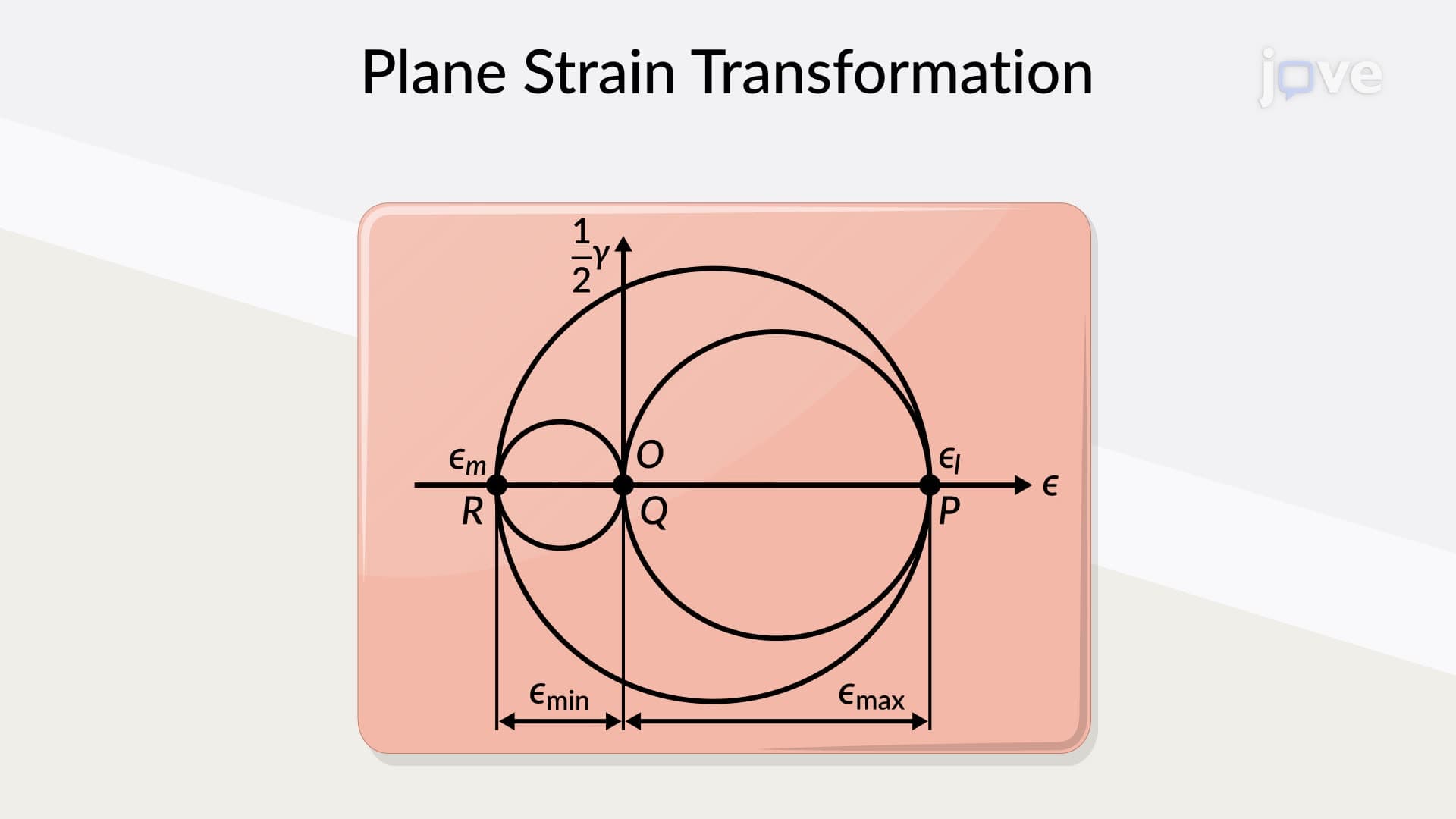
Plane strain conditions occur in long structural elements-like the steel beams in New York's One World Trade Center-where deformation is constrained in one direction. When engineers rotate their coordinate reference frame, the measured strain values change, but the actual physical deformation remains identical. This transformation process follows precise mathematical relationships that allow engineers to find the most critical strain conditions.
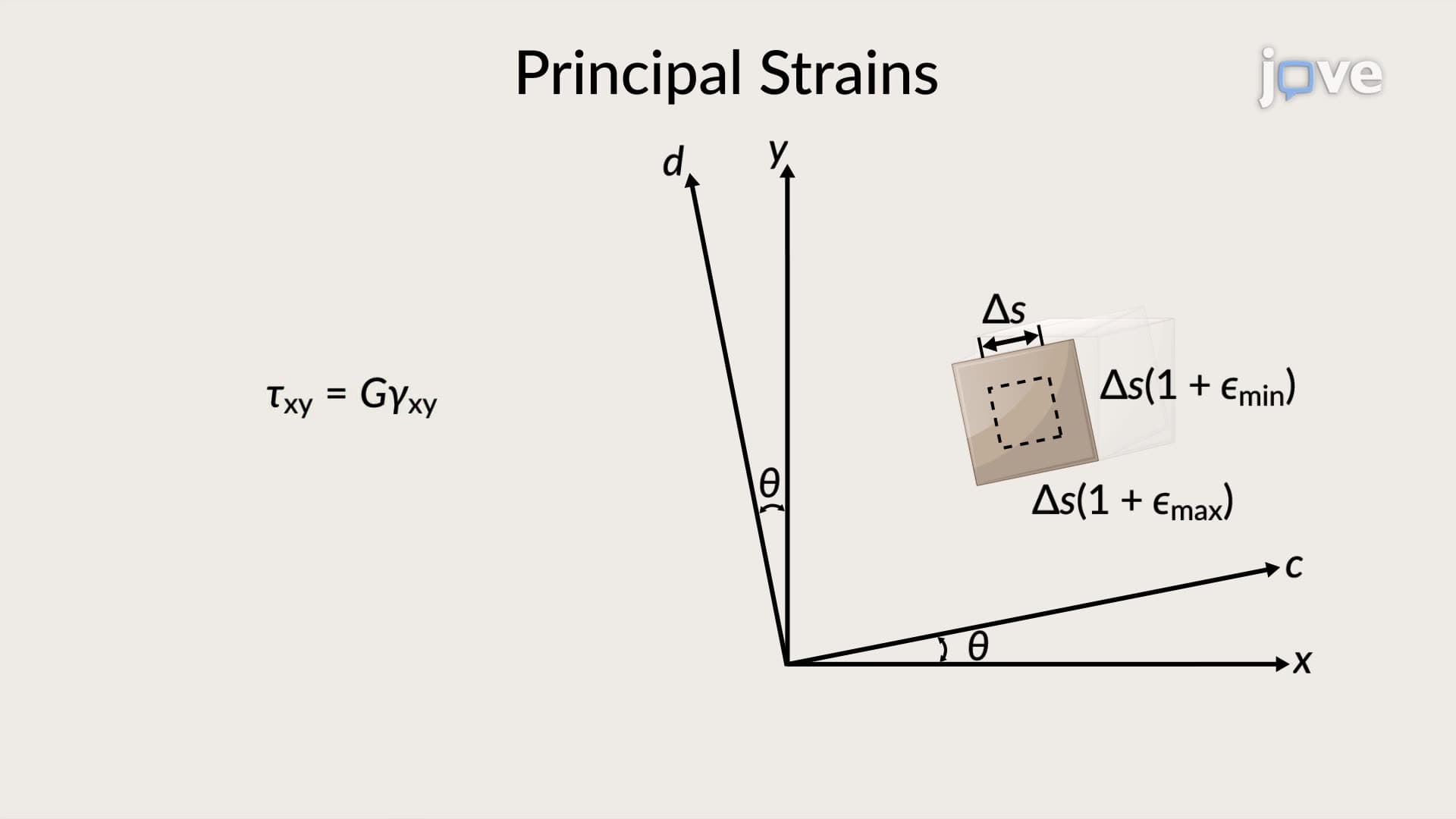
The transformation equations emerge from fundamental trigonometric relationships. When coordinate axes rotate by angle θ, normal strain components transform according to specific mathematical rules. The normal strain along any arbitrary direction can be expressed in terms of the original strain components and the rotation angle. This mathematical foundation proves crucial for AP Physics students and college engineering majors tackling mechanics courses.
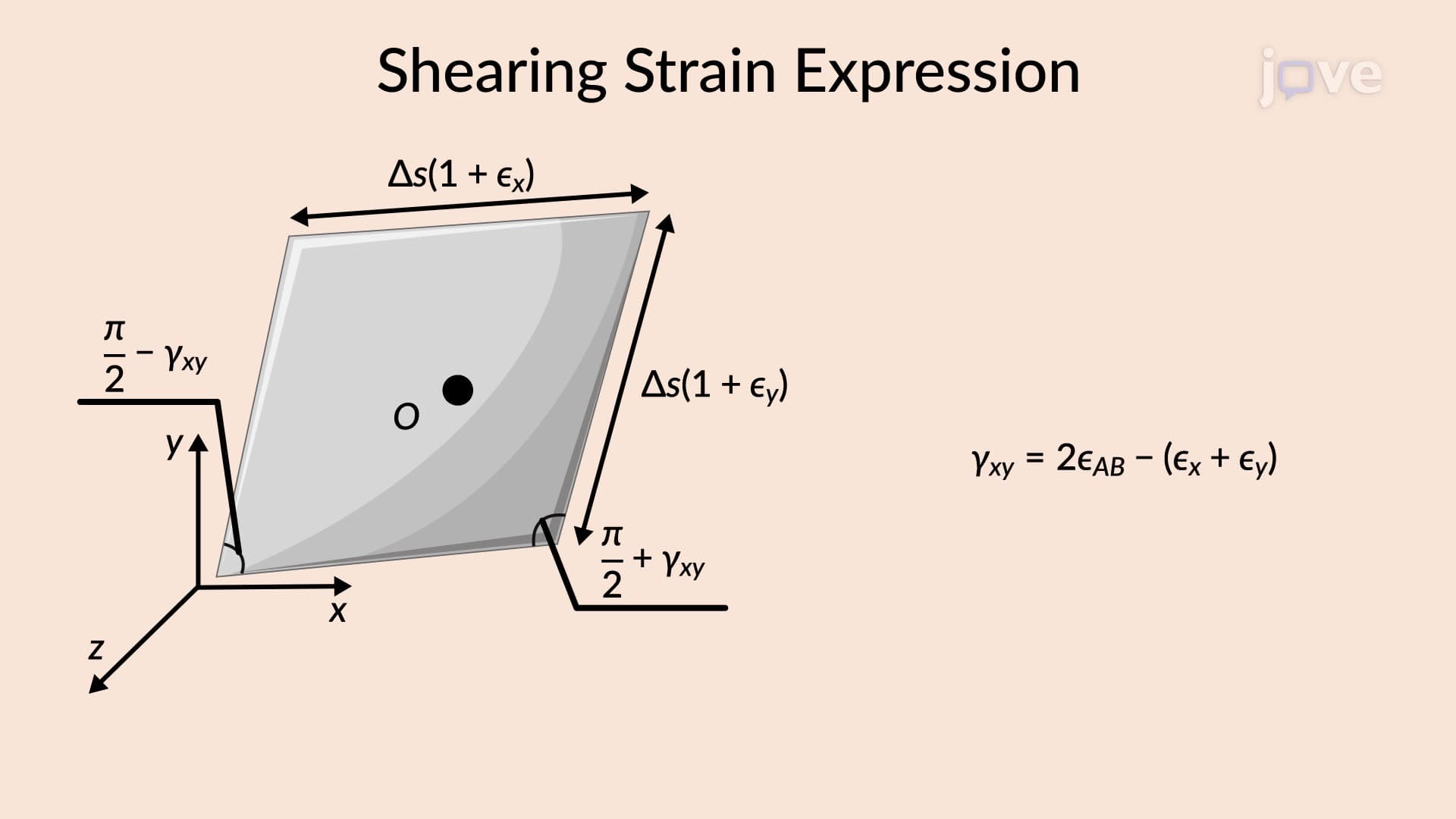
The transformation process involves calculating normal strain along the bisector of coordinate axes, then expressing shearing strain in terms of these normal strain values. These relationships form the backbone of advanced structural analysis methods used by practicing engineers at companies like Boeing and General Electric.
In practical engineering, transformation of plane strain analysis helps determine critical failure points in materials. Consider the landing gear of a commercial aircraft manufactured by companies like Lockheed Martin-engineers must analyze strain from multiple coordinate perspectives to ensure components can handle landing forces from any approach angle.
College students preparing for the Fundamentals of Engineering (FE) exam frequently encounter plane strain transformation problems. The concept appears regularly in mechanical engineering coursework at institutions like MIT and Stanford, where students learn to identify maximum normal strains and principal stress directions that guide optimal material orientation in design applications.
Related Micro-courses