Loading subject page…


6,613 views


Video Summary: What Is Transformation of Plane Stress
When engineers design the Golden Gate Bridge's steel cables, they must understand how stress changes when structural elements rotate under load. The transformation of plane stress reveals how stress components shift as an element's orientation changes, using trigonometric relationships to predict new stress values. This fundamental concept explains why the sum of normal stresses remains constant regardless of rotation angle. Watch the full video on JoVE Coach to master this concept with expert-led visuals and step-by-step explanations.
The transformation of plane stress describes how stress components change when we rotate our reference coordinate system. This concept is crucial for understanding material behavior under complex loading conditions. When a structural element experiences plane stress-meaning stress acts only in two dimensions with no out-of-plane components-engineers need to determine how these stresses appear from different viewpoints or orientations.
The transformation process relies on fundamental trigonometric relationships. When we rotate a stress element by angle θ, the new stress components depend on the cosine and sine of that angle. For a prismatic element with an oblique face, the areas of perpendicular faces relate through trigonometric functions. If the oblique face has area A, the vertical face area becomes A cos(θ) and the horizontal face area becomes A sin(θ).
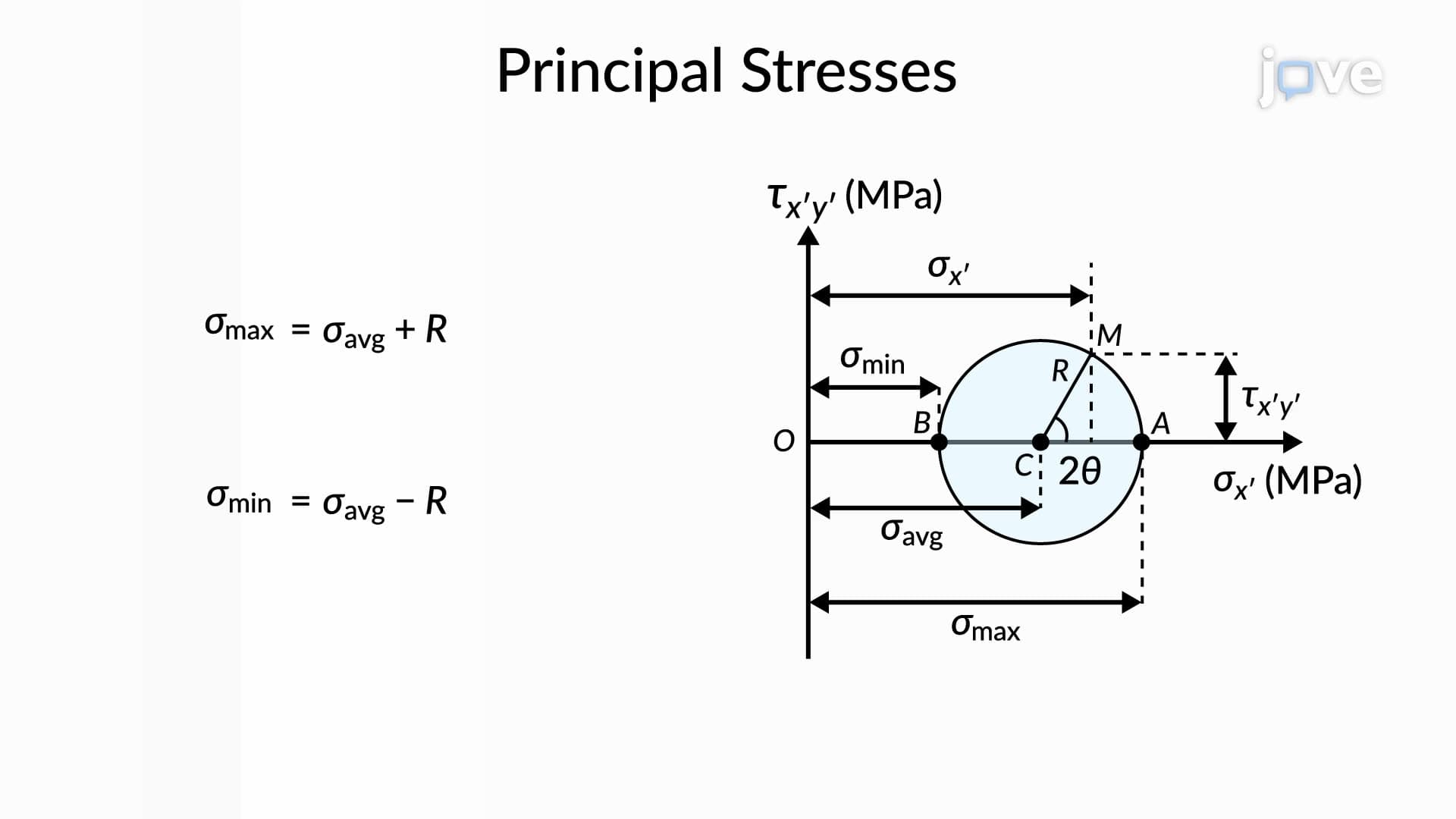
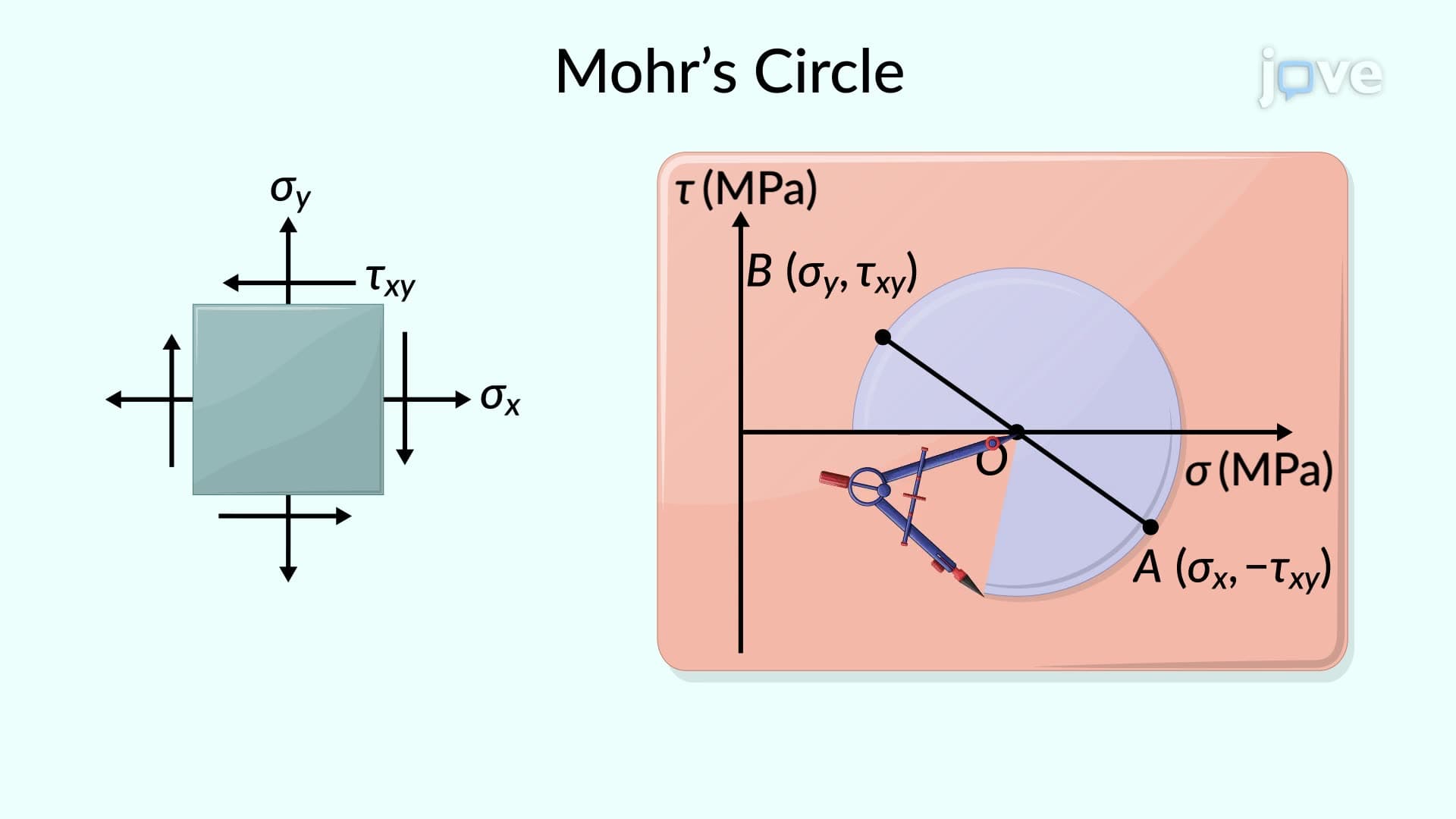
The equilibrium equations for the rotated element yield the transformation equations. The normal stress σ'x on a face rotated by angle θ from the original x-axis equals: σ'x = (σx + σy)/2 + (σx - σy)/2 cos(2θ) + τxy sin(2θ). Similarly, the shear stress transforms according to: τ'xy = -(σx - σy)/2 sin(2θ) + τxy cos(2θ).
One remarkable property emerges from these transformations: the sum of normal stresses (σ'x + σ'y) remains constant regardless of rotation angle. This invariant quantity equals σx + σy, providing engineers with a valuable check for their calculations. This principle applies whether analyzing bridge trusses, aircraft wing structures, or pressure vessel designs.
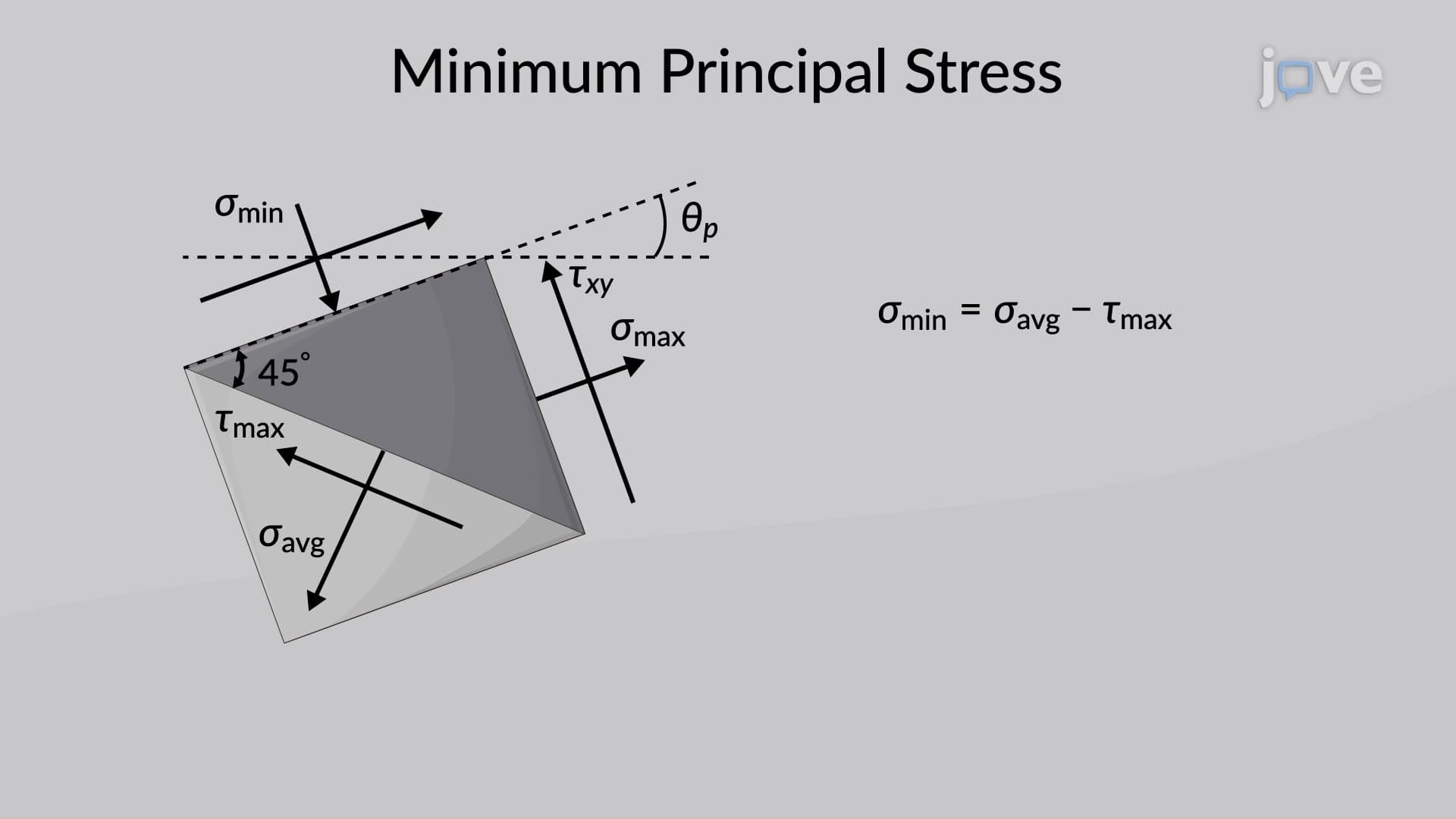
Civil engineers use stress transformation when designing earthquake-resistant buildings in California, where ground motion creates complex stress states in structural members. Aerospace engineers at companies like Boeing apply these concepts when analyzing wing structures under combined bending and torsional loads. The transformation equations help determine the most critical orientations where maximum stresses occur, informing material selection and safety factor calculations.
Students preparing for AP Physics C, college-level statics courses, or engineering fundamentals exams will encounter this concept frequently. The mathematical relationships appear on exams like the Fundamentals of Engineering (FE) exam, where understanding both the theory and application proves essential for professional licensure.
Related Micro-courses