Loading subject page…


4,004 views

Video Summary: What are Price Mechanism Subsidies
Ever wonder why your flu shot costs only $20 when it could prevent thousands of others from getting sick? Price mechanism subsidies are government payments that reduce costs for goods with social benefits beyond individual use. When the CDC subsidizes vaccines, it lowers consumer prices while ensuring producers remain profitable. This creates a win-win: individuals access affordable healthcare while society gains herd immunity. Watch the full video on JoVE Coach to master this concept with expert-led visuals and step-by-step explanations.
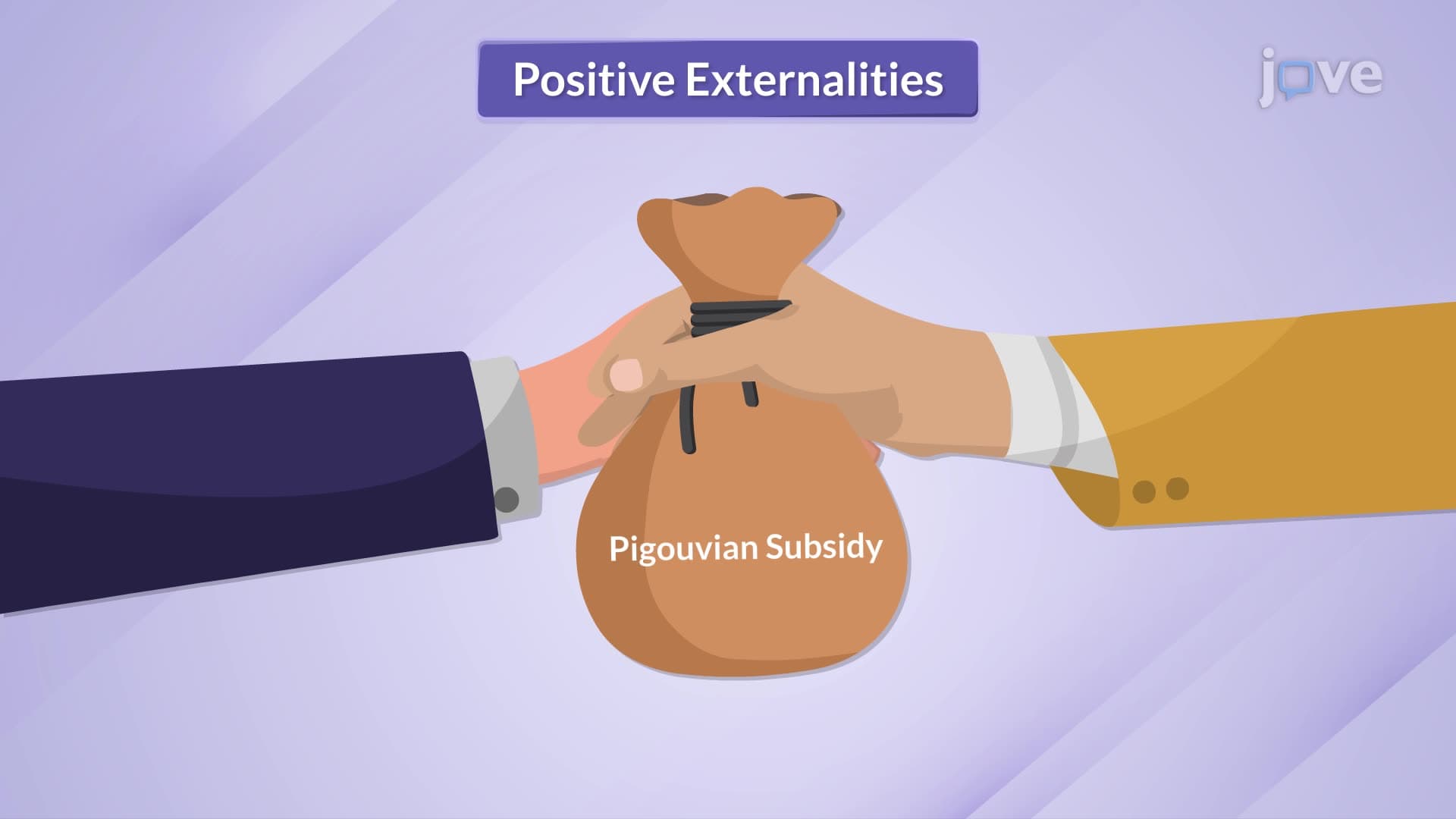
Price mechanism subsidies represent a fundamental government intervention tool designed to correct market failures. Unlike direct cash transfers, these subsidies work through the price system itself, reducing consumer costs while maintaining producer incentives. The mechanism operates on a simple principle: when markets underproduce goods with positive externalities, subsidies bridge the gap between private and social benefits.
Named after economist Arthur Pigou, these subsidies target the root cause of market inefficiency. Consider education: a college degree benefits the individual through higher earning potential (private benefit) but also creates a more skilled workforce benefiting society (external benefit). Without intervention, students might underinvest in education because they only consider private benefits. Federal Pell Grants exemplify this principle, reducing college costs and increasing enrollment nationwide.
The subsidy amount should theoretically equal the external marginal benefit. For vaccines, if preventing one case of measles saves society $500 in healthcare costs, the optimal subsidy approaches $500 per vaccination. This calculation ensures resources flow toward their most socially valuable uses.
American policy extensively uses price mechanism subsidies. The federal electric vehicle tax credit (up to $7,500) reduces pollution and energy dependence. SNAP benefits subsidize nutritious food, improving public health outcomes. The mortgage interest deduction encourages homeownership, stabilizing communities.
State-level examples include California's solar panel rebates and New York's subway fare subsidies. These programs demonstrate how different government levels address various externalities through targeted price mechanisms.
Understanding subsidies proves crucial for AP Economics, SAT Subject Tests, and college microeconomics courses. Students should master graphical analysis showing demand curve shifts and deadweight loss elimination. Practice problems often involve calculating optimal subsidy levels or identifying goods suitable for subsidization.
Common exam scenarios include analyzing environmental subsidies, education funding, or healthcare policies. Students must distinguish between subsidies (reducing consumer prices) and regulations (mandating behavior) when addressing positive externalities.
Related Micro-courses