Loading subject page…

- Microeconomics
- Externalities and Public Goods
- Free Rider Problem
Micro-course: Externalities and Public Goods
4,004 views
Learn key concepts and earn your certificate.

Free Rider Problem

00:00
01:27
Video Summary: What Is Free Rider Problem
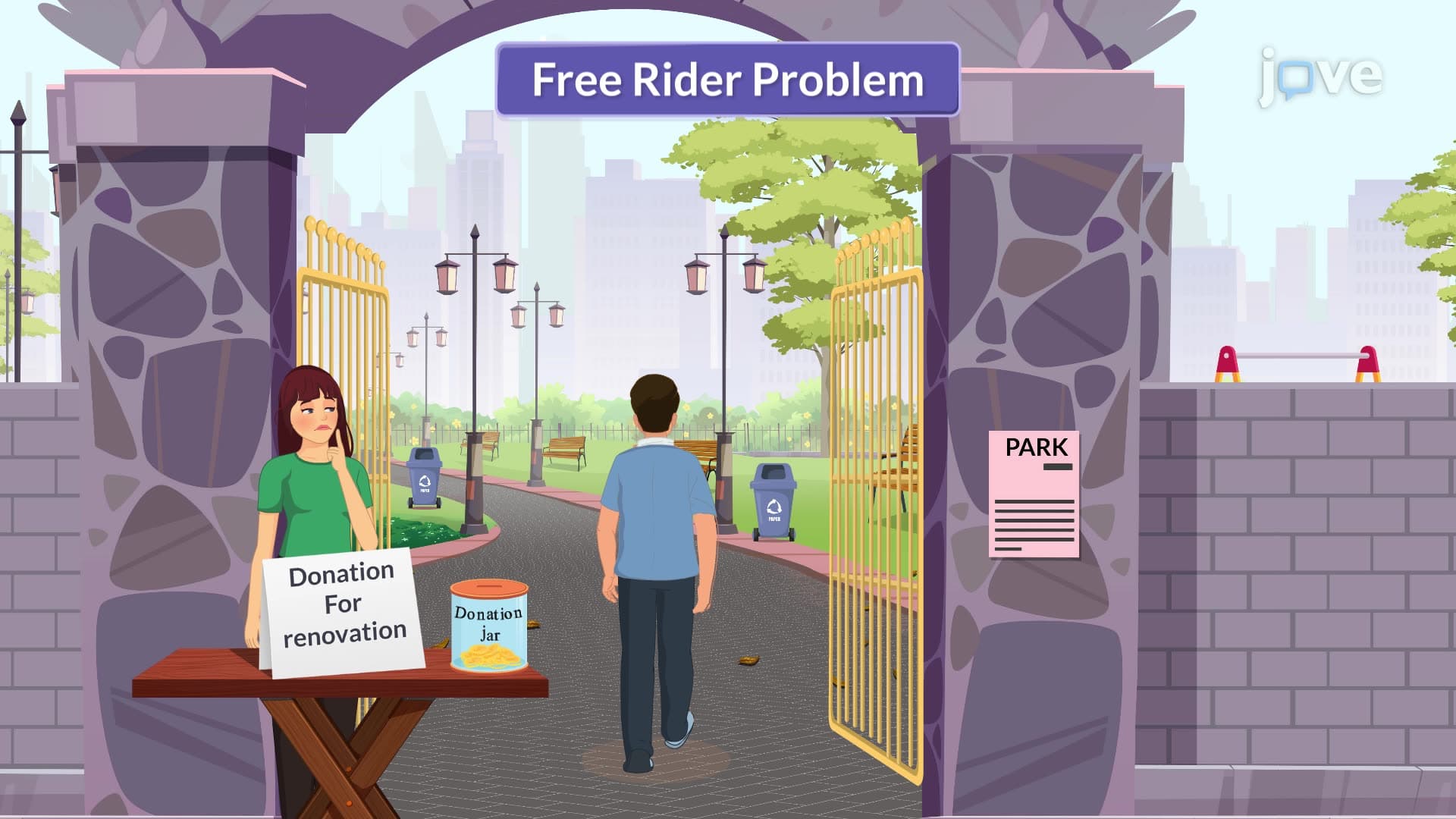
Why do some Americans skip voting yet still enjoy democratic freedoms? The free rider problem occurs when individuals benefit from shared resources without contributing their fair share. Picture a local PBS station funded by viewer donations-many watch quality programming while only some donate, creating funding shortfalls. This economic concept explains how public goods become underfunded when people rely on others to pay. Watch the full video on JoVE Coach to master this concept with expert-led visuals and step-by-step explanations.
- Understand what is free rider problem and why it occurs in markets with public goods
- Identify the characteristics of non-excludable and non-rivalrous goods that enable free riding behavior
- Analyze real-world examples of free riding in American communities and public services
- Compare voluntary versus mandatory contribution systems for solving free rider issues
- Evaluate the economic consequences of widespread free riding on public goods provision
- Apply free rider problem concepts to policy debates about taxation and public funding
- Recognize how individual rational behavior can lead to collectively irrational outcomes
- Explore potential solutions including government intervention, incentive structures, and social pressure mechanisms
Understanding the Free Rider Problem Fundamentals
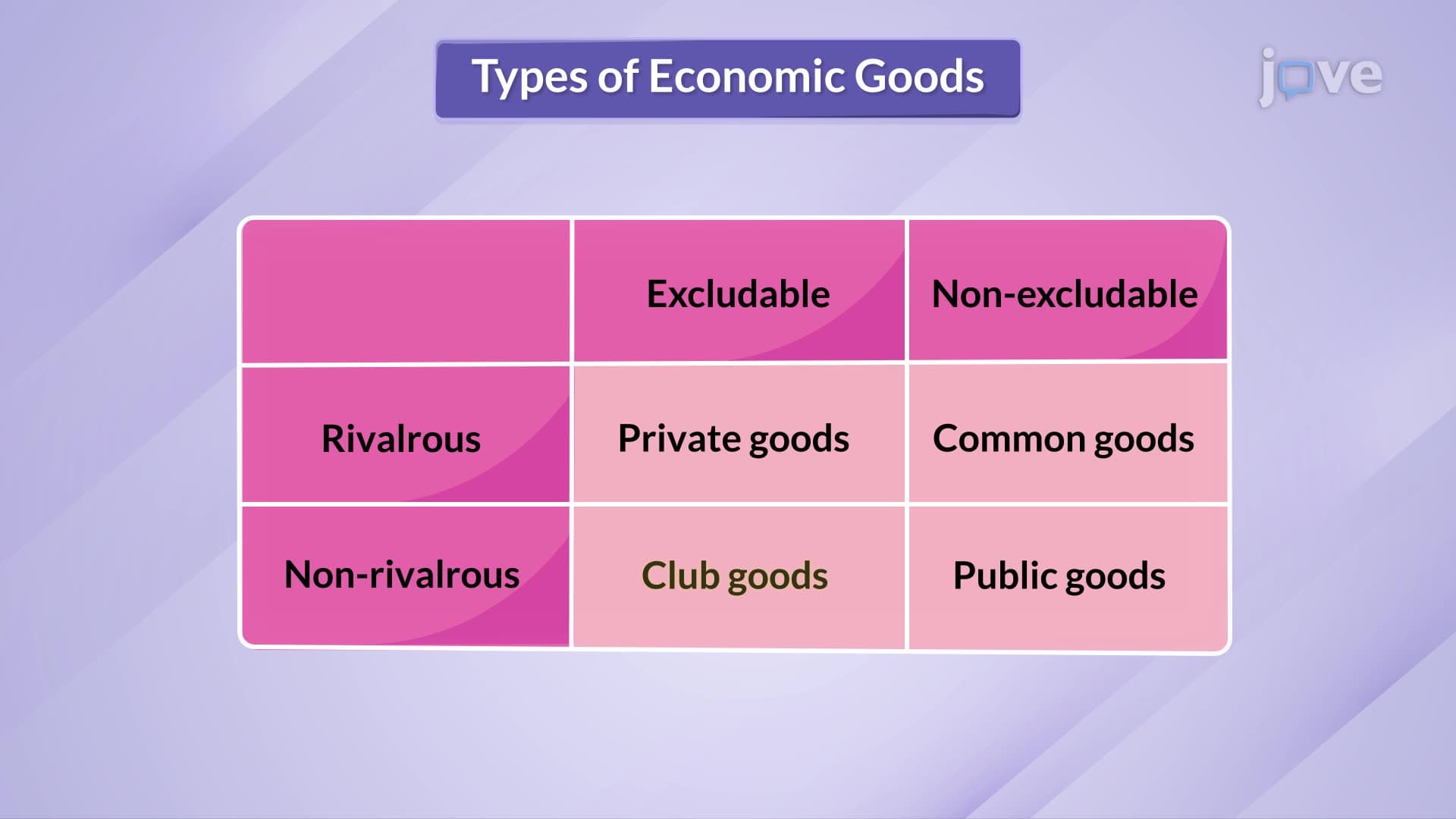
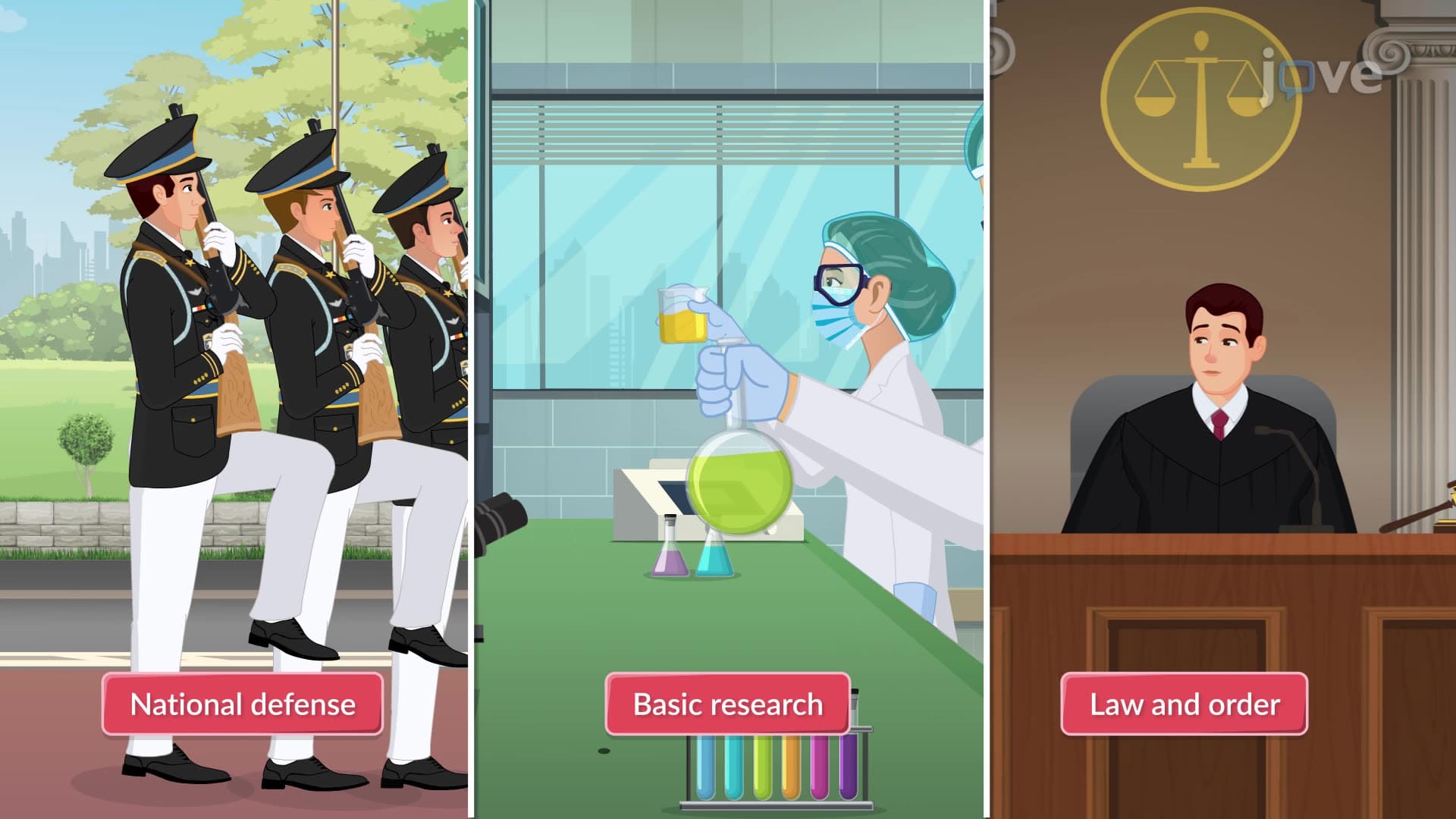
The free rider problem represents a fundamental challenge in economics where individuals consume shared resources without paying proportional costs. This market failure occurs specifically with public goods-resources that are both non-excludable (impossible to prevent access) and non-rivalrous (one person's use doesn't diminish availability for others). Think of national defense: all Americans benefit from military protection regardless of their tax contributions, and one citizen's protection doesn't reduce security for neighbors.
Economic Theory Behind Free Riding Behavior
Economists explain this free rider problem definition through rational choice theory. Individuals make cost-benefit calculations, reasoning that their personal contribution is negligible compared to total costs. A single taxpayer might think, "My $500 won't significantly impact the $4 trillion federal budget." This logic becomes problematic when multiplied across millions of citizens. The tragedy emerges when collectively rational individual decisions create suboptimal group outcomes.
Real-World Applications in American Society
Consider public radio stations like NPR, which depend on listener donations despite serving entire communities. During pledge drives, stations often highlight that only 10-15% of regular listeners contribute financially. Similarly, neighborhood associations maintaining common areas face free riding when residents enjoy landscaped entrances and community events without paying dues. Wikipedia exemplifies digital free riding-millions read articles while relatively few editors create content.
Exam Applications and Academic Context
AP Economics students frequently encounter free rider scenarios in microeconomics units covering market failures. College principles courses explore how free riding leads to underprovision of public goods, requiring government intervention through taxation. MCAT behavioral science sections may include free riding within social psychology contexts, examining how group dynamics influence individual contribution decisions.
Solutions and Policy Implications
Addressing free rider challenges requires converting voluntary systems into mandatory ones. Federal taxes fund national defense, preventing free riding through legal obligation. Local governments use property taxes for parks and libraries, ensuring community-wide participation. Alternative approaches include selective incentives-public television offers tote bags and program guides to donors, creating excludable benefits within non-excludable goods systems.
Frequently Asked Questions
The free rider problem occurs when people benefit from shared resources without paying their fair share. It happens with public goods like parks, national defense, or public broadcasting where it's impossible to exclude non-payers. This leads to underfunding and potential service elimination when too many people free ride.
AP Microeconomics tests frequently include free rider scenarios in market failure questions. Students must identify public goods, explain why free riding occurs, and suggest government solutions like taxation. Multiple choice questions often ask about characteristics of public goods that enable free riding behavior.
Economics principles courses extensively cover free riding in public goods chapters. Political science classes examine free riding in voting and civic participation. Business ethics courses explore corporate social responsibility and free riding in industry self-regulation efforts.
Herd immunity during COVID-19 demonstrates free riding perfectly. When most people get vaccinated, even unvaccinated individuals benefit from reduced community transmission. Those choosing not to vaccinate receive protection benefits without bearing vaccination costs or risks, creating classic free rider dynamics.
No advanced mathematics required for basic free rider problem understanding. High school algebra helps with cost-benefit calculations, but core concepts rely on logical reasoning about incentives. Most exam questions focus on identifying scenarios and solutions rather than complex calculations.
Create comparison charts showing private goods versus public goods characteristics. Practice identifying real-world examples of both free riding and successful solutions. Focus on understanding why rational individual behavior creates irrational group outcomes for comprehensive exam preparation.
While related, these concepts differ importantly. Free rider problem involves under-contribution to public goods, while tragedy of commons involves over-consumption of shared resources. Both represent collective action problems but operate through opposite mechanisms of market failure.
Game theory explores strategic interactions underlying free riding behavior. Public choice theory examines how democratic institutions address collective action problems. Environmental economics applies free riding concepts to climate change and pollution control policy design.
Related Micro-courses

15 Concepts

22 Concepts
9 Concepts