Loading subject page…


141,800 views

Video Summary: Alcohols From Carbonyl Compounds Grignard Reaction Explained
Did you know that the same chemical reaction used to synthesize life-saving pharmaceuticals like ibuprofen also occurs in your body during alcohol metabolism? Alcohols from carbonyl compounds represent one of organic chemistry's most versatile synthetic pathways. The Alcohols From Carbonyl Compounds Grignard Reaction Explained demonstrates how organomagnesium reagents transform simple aldehydes and ketones into complex alcohols used in everything from antifreeze production to drug manufacturing at companies like Pfizer and Johnson & Johnson. Watch the full video on JoVE Coach to master this concept with expert-led visuals and step-by-step explanations.
The synthesis of alcohols from carbonyl compounds through Grignard reactions represents a cornerstone of organic synthesis, enabling chemists to construct complex molecules with precise control. This reaction harnesses the unique properties of organomagnesium halides (RMgX) to create new carbon-carbon bonds while introducing hydroxyl functionality.
Grignard reagents function as powerful carbon nucleophiles due to the polar nature of the C-Mg bond. Carbon's higher electronegativity compared to magnesium creates a carbanionic character, making these reagents exceptionally reactive toward electrophilic centers. When encountering carbonyl compounds, the magnesium atom coordinates with the oxygen lone pairs, simultaneously activating the carbonyl carbon toward nucleophilic attack.
This coordination effect is crucial for understanding reaction selectivity. As magnesium binds to oxygen, electron density shifts away from the carbonyl carbon, enhancing its electrophilic character. The subsequent nucleophilic addition creates a magnesium alkoxide intermediate, which requires protonation with dilute acid or water to yield the final alcohol product.
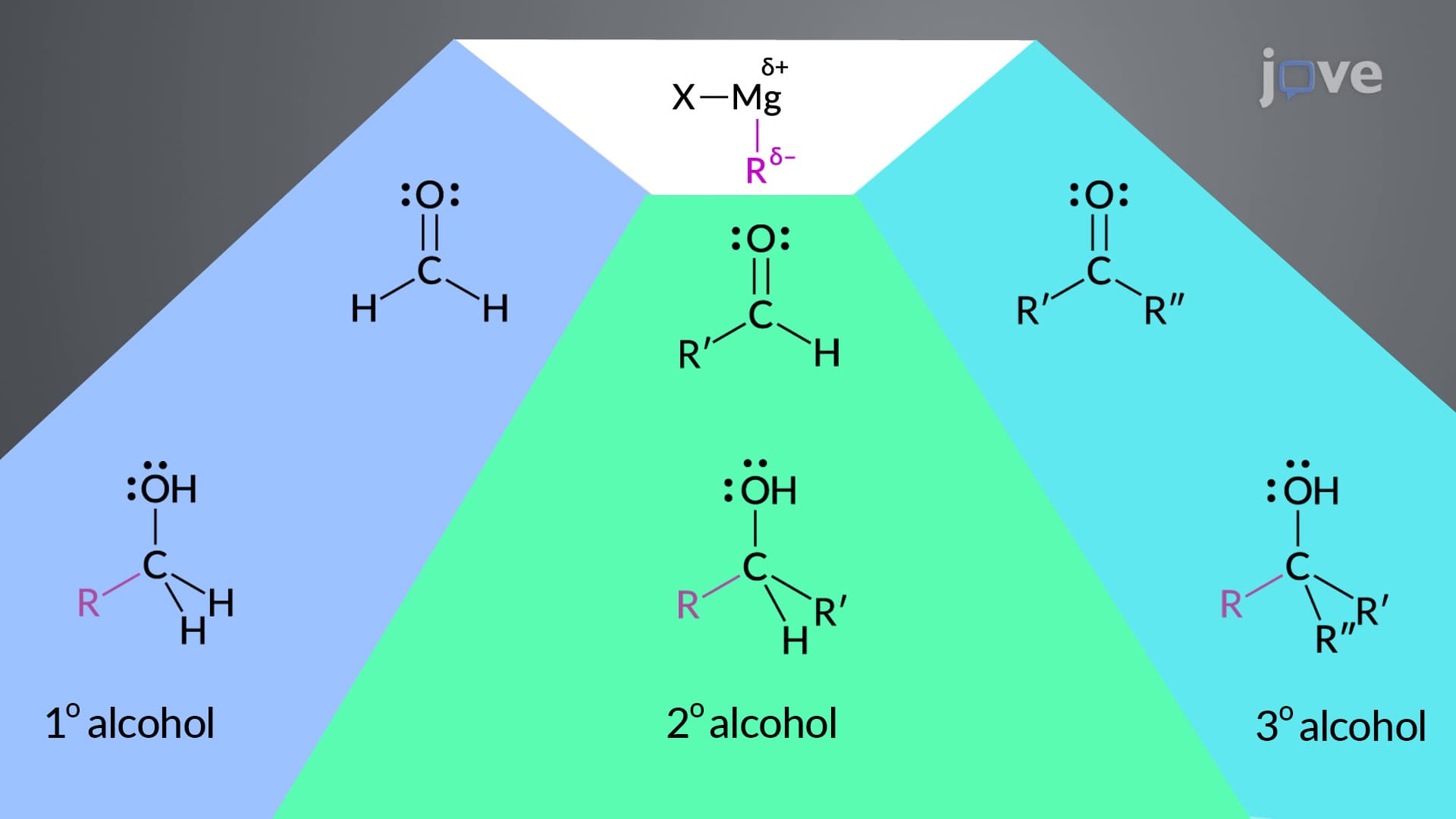
The type of alcohol produced depends entirely on the carbonyl starting material. Formaldehyde, the simplest aldehyde, uniquely produces primary alcohols since it lacks alkyl substitution. All other aldehydes generate secondary alcohols, as the Grignard carbon adds to create a new stereocenter bearing one hydrogen and two carbon substituents.
Ketones consistently produce tertiary alcohols because both carbonyl carbons already carry alkyl groups before Grignard addition. This predictable selectivity makes Grignard chemistry invaluable in pharmaceutical synthesis, where companies like Merck and Bristol Myers Squibb rely on these transformations to construct drug molecules with specific alcohol functionalities.
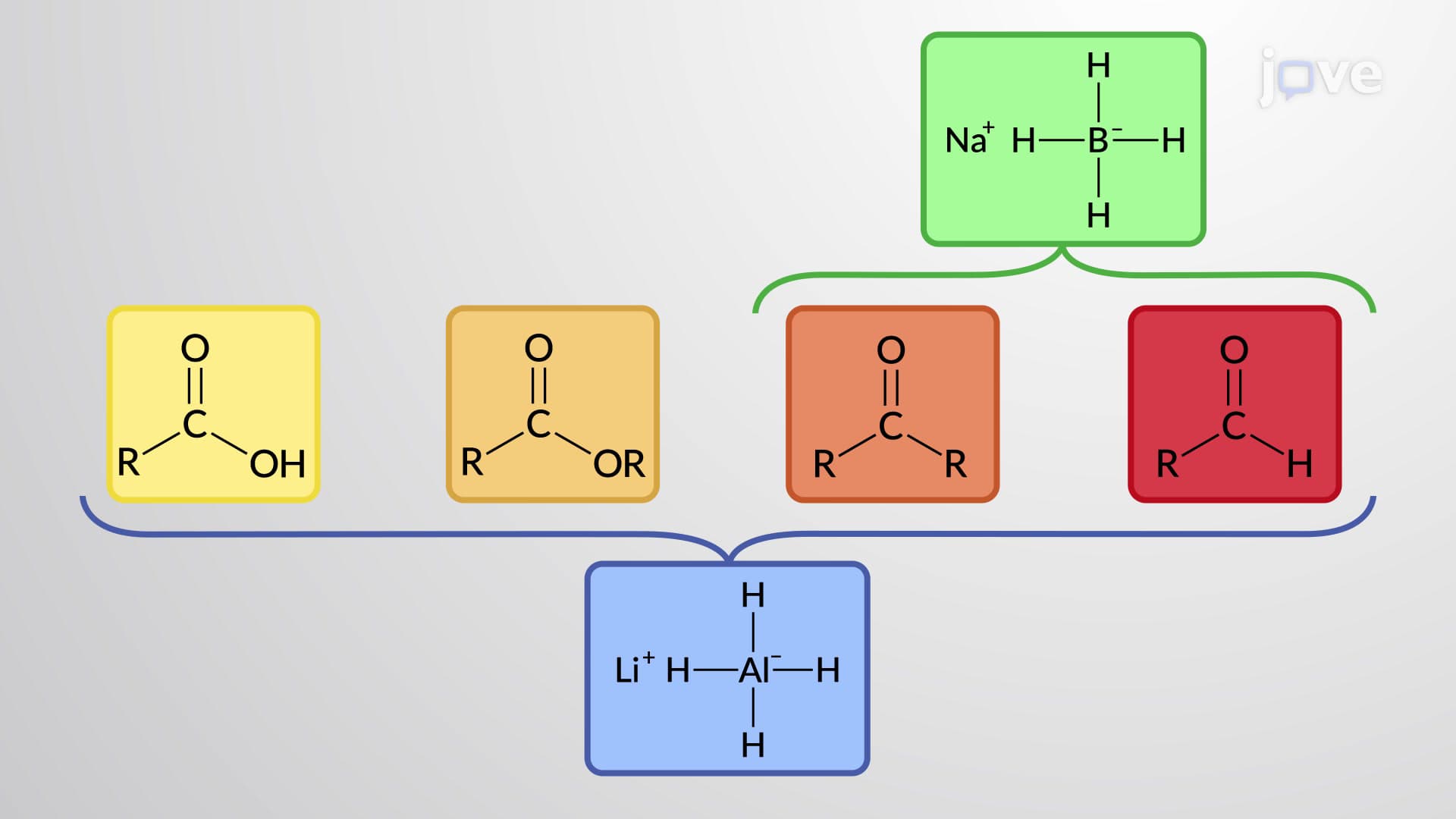
Carboxylic acids present unique challenges in Grignard chemistry. Rather than undergoing nucleophilic addition, these substrates engage in acid-base reactions, with the Grignard reagent abstracting the acidic proton. However, carboxylic acid derivatives like esters and acid chlorides successfully react with two equivalents of Grignard reagent, initially forming ketones that subsequently convert to tertiary alcohols.
Students preparing for the MCAT or AP Chemistry exams should recognize that Grignard reactions require anhydrous conditions and inert atmospheres, as these reagents react violently with protic solvents. Understanding these practical limitations proves essential for laboratory success and explains why pharmaceutical companies invest heavily in specialized equipment for large-scale Grignard processes.
Related Micro-courses