Loading video…


 12 Concepts
 141.8K views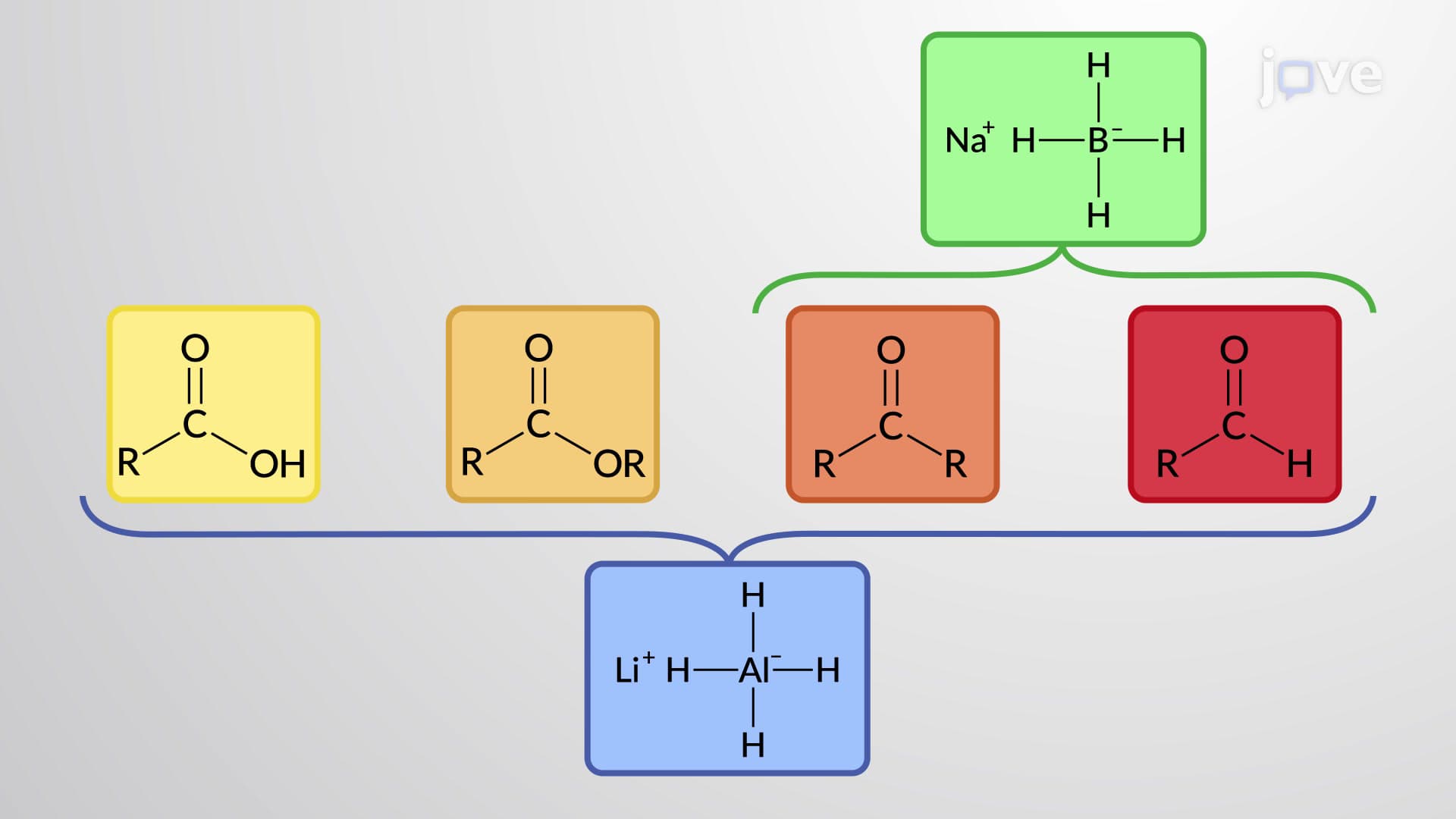

Video Summary: Alcohols From Carbonyl Compounds Reduction Explained
Did you know that the antidepressant Prozac and luxury perfume ingredients like muscone are both created through the same fundamental chemical process? Alcohols from carbonyl compounds reduction involves adding hydrogen atoms across double bonds to transform aldehydes and ketones into alcohols. This essential reaction enables pharmaceutical companies like Pfizer to manufacture life-saving medications. Alcohols from carbonyl compounds reduction explained reveals how different reducing agents create primary or secondary alcohols with remarkable selectivity. Watch the full video on JoVE Coach to master this concept with expert-led visuals and step-by-step explanations.
The transformation of carbonyl compounds into alcohols represents one of organic chemistry's most versatile and important reactions. This process fundamentally changes the oxidation state of carbon by adding hydrogen atoms across the C=O double bond, converting sp2 hybridized carbons to sp3 hybridized alcohols. Students preparing for the AP Chemistry exam or college organic chemistry courses must master this concept, as it frequently appears in synthesis problems and mechanism-based questions.
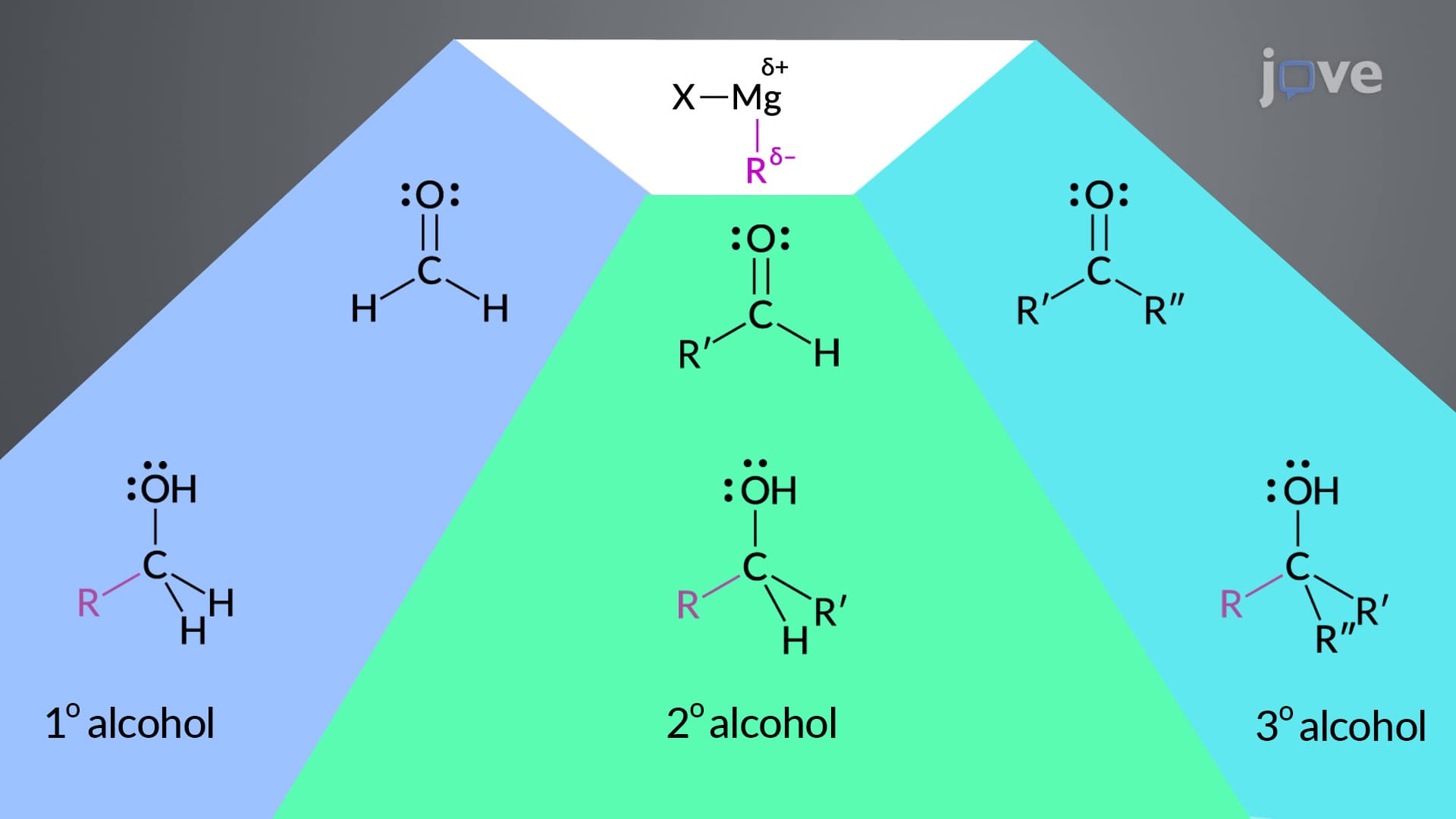
The type of alcohol produced depends entirely on the starting carbonyl compound. Aldehydes, carboxylic acids, and esters all yield primary alcohols because the carbonyl carbon connects to only one carbon substituent. Ketones, however, produce secondary alcohols since the carbonyl carbon links to two carbon groups. This distinction proves crucial when pharmaceutical companies like Johnson & Johnson design synthetic routes for drug molecules, where precise alcohol placement determines biological activity.
Two major reduction approaches exist, each with distinct advantages. Catalytic hydrogenation employs transition metal catalysts (typically palladium or platinum) with hydrogen gas under elevated temperature and pressure. While effective, this method lacks selectivity and reduces all multiple bonds present, including alkenes and alkynes. Industrial applications often favor this approach for large-scale alcohol production.
Laboratory synthesis typically employs hydride reducing agents like sodium borohydride (NaBH4) or lithium aluminum hydride (LiAlH4). These reagents deliver hydride ions (H-) nucleophilically to the electrophilic carbonyl carbon, followed by protonation to form the alcohol. This selectivity proves invaluable when molecules contain multiple functional groups, allowing chemists to target specific carbonyls while preserving other structural features.
When reducing unsymmetrical ketones, the planar carbonyl geometry permits hydride attack from either face with equal probability. This creates a tetrahedral intermediate that generates two enantiomeric alcohol products in a racemic mixture. Understanding this stereochemical outcome helps students solve MCAT organic chemistry problems and explains why pharmaceutical companies often require additional chiral resolution steps.
The choice between NaBH4 and LiAlH4 depends on both reactivity needs and solvent compatibility. LiAlH4's greater reactivity stems from aluminum's lower electronegativity compared to boron, creating more polarized Al-H bonds that readily donate hydride ions. However, LiAlH4 reacts violently with protic solvents, requiring dry conditions with ethers like THF or diethyl ether.
Related Micro-courses