Loading subject page…


141,800 views

Video Summary: Conversion of Alcohols to Alkyl Halides Explained
Ever wonder how pharmaceutical companies transform simple alcohols into active drug compounds? The conversion of alcohols to alkyl halides is a fundamental reaction that powers everything from aspirin synthesis to anesthetic production in US pharmaceutical facilities. This transformation follows predictable pathways-tertiary alcohols favor SN1 mechanisms while primary alcohols prefer SN2 routes, with secondary alcohols adapting based on reaction conditions. Watch the full video on JoVE Coach to master this concept with expert-led visuals and step-by-step explanations.
The transformation of alcohols into alkyl halides represents one of organic chemistry's most versatile and widely-applied reactions. This process is essential in pharmaceutical manufacturing, with companies like Pfizer and Merck regularly employing these reactions to synthesize everything from blood pressure medications to antibiotics. The reaction's success hinges on converting the poor leaving group (hydroxyl) into an excellent one through strategic protonation or derivatization.
The pathway selection depends critically on alcohol structure. Tertiary alcohols, such as tert-butanol, undergo SN1 mechanisms because they form stable tertiary carbocations stabilized by hyperconjugation. This process occurs in two distinct steps: departure of the leaving group creates a carbocation intermediate, followed by nucleophilic attack. Students preparing for the MCAT or AP Chemistry exams frequently encounter questions testing this mechanistic understanding.
Primary alcohols like ethanol follow SN2 pathways, where bond breaking and forming occur simultaneously. The reaction with hydrogen bromide proceeds smoothly, but hydrogen chloride requires zinc chloride catalyst to enhance the leaving group quality. This catalytic requirement appears regularly on college organic chemistry midterms at institutions like UCLA and University of Michigan.
Thionyl chloride (SOCl2) offers superior results for primary alcohol conversions, creating chlorosulfite intermediates with excellent leaving groups. This reagent system, commonly used in industrial settings, inverts stereochemistry at chiral centers-a crucial consideration in pharmaceutical synthesis where drug chirality affects biological activity.
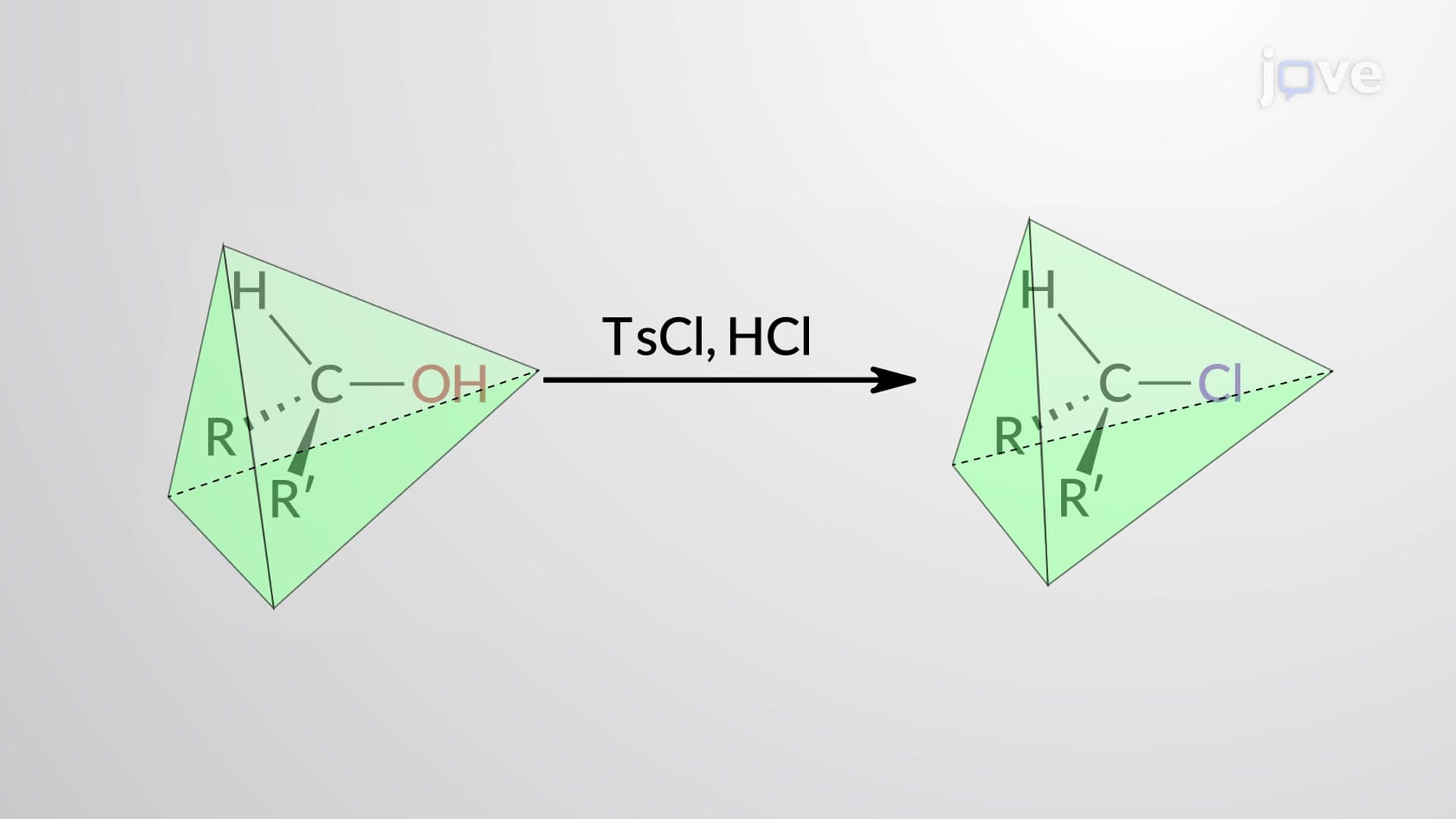
Tosyl chloride provides an alternative approach, first forming tosylate esters that undergo subsequent SN2 displacement. Remarkably, this two-step process results in retention of stereochemistry through double inversion, making it invaluable for synthesizing enantiomerically pure compounds required by FDA drug approval standards.
These reactions appear across standardized tests, from SAT Subject Tests to advanced MCAT passages. Understanding reagent selection-when to use PBr3 versus SOCl2, or recognizing ZnCl2's catalytic role-directly impacts performance on these assessments. Industrial applications span from Dow Chemical's polymer precursor synthesis to specialized pharmaceutical intermediates produced by Bristol Myers Squibb.
Related Micro-courses