Loading video…


 12 Concepts
 141.8K views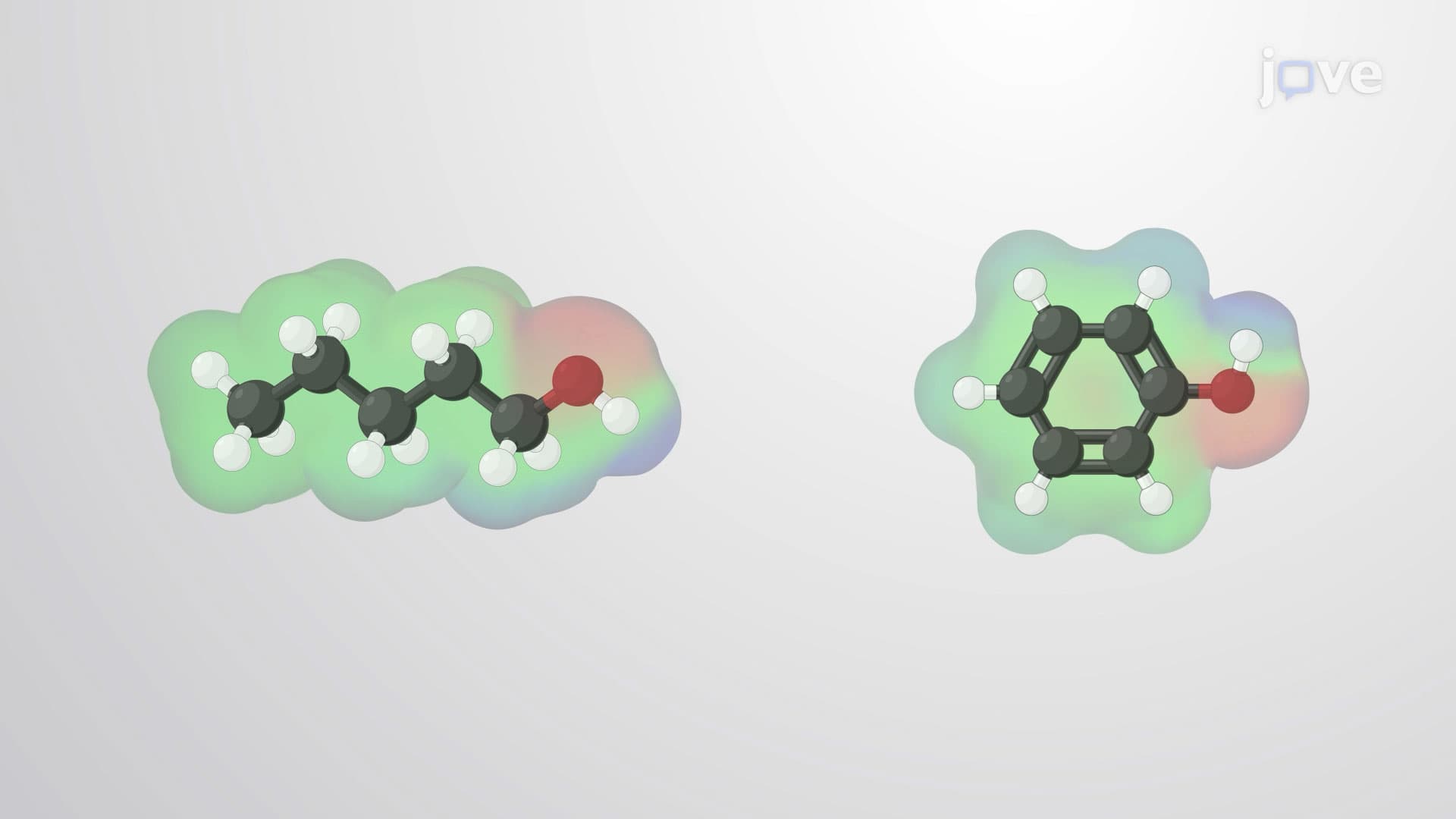

Video Summary: Physical Properties of Alcohols and Phenols Explained
Why do hand sanitizers evaporate more slowly than gasoline, even though both contain carbon chains? The physical properties of alcohols and phenols create unique molecular behaviors that explain everyday phenomena around us. Unlike simple hydrocarbons, alcohols form hydrogen bonds that dramatically increase boiling points and water solubility-which is why ethanol in Purell® stays on your hands longer than petroleum-based solvents. Physical Properties of Alcohols And Phenols Explained reveals how molecular structure determines these practical characteristics. Watch the full video on JoVE Coach to master this concept with expert-led visuals and step-by-step explanations.
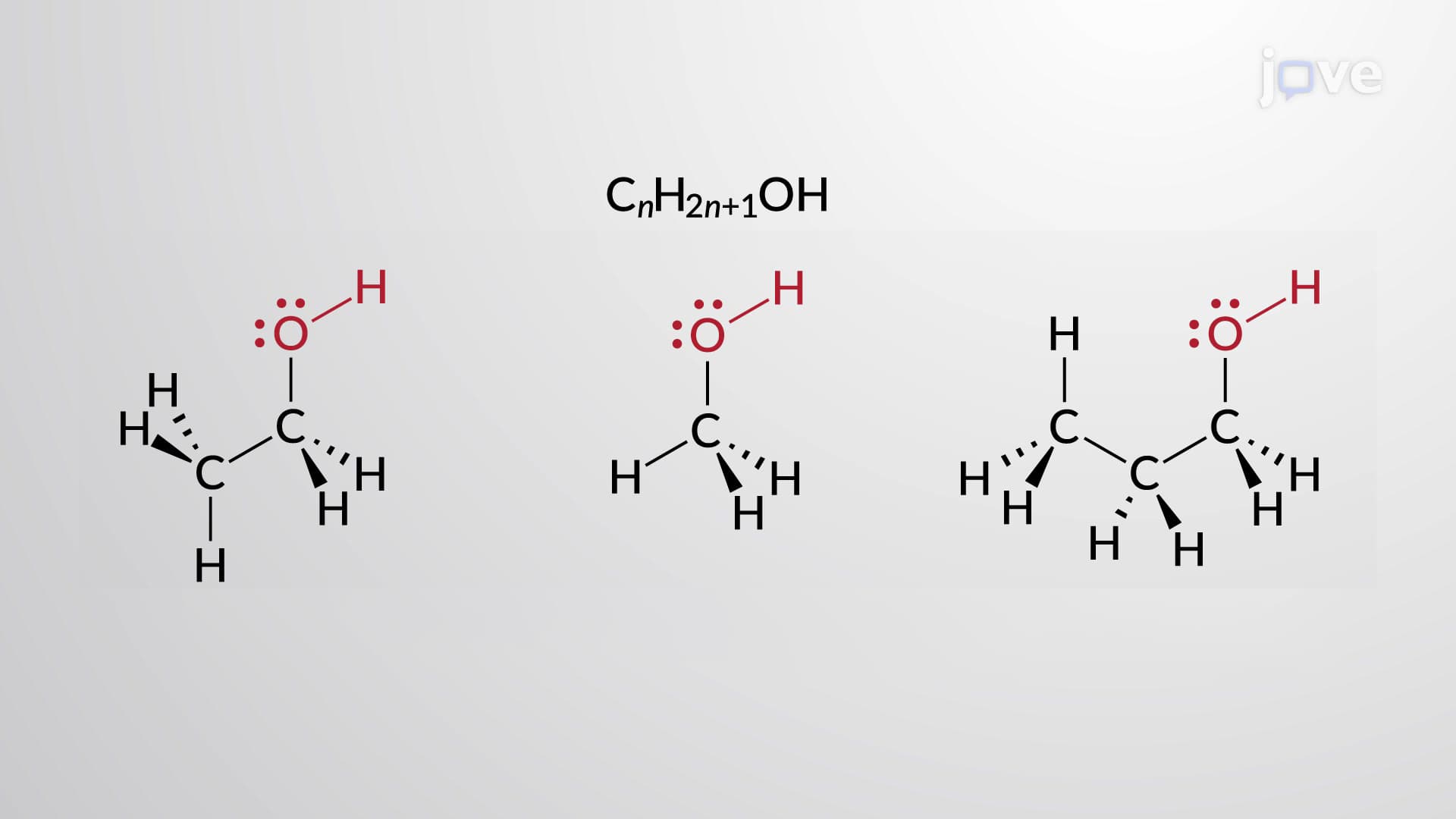
The physical properties of alcohols and phenols stem from fundamental molecular interactions that distinguish these compounds from simple hydrocarbons. When oxygen's high electronegativity creates polar bonds with carbon and hydrogen, the resulting partial charges enable hydrogen bonding-a phenomenon that transforms how these molecules behave in laboratory and real-world applications.
Hydrogen bonding explains why ethanol (drinking alcohol) mixes completely with water while octane (gasoline component) forms separate layers. In alcohols, the partially positive hydrogen on one molecule attracts the partially negative oxygen on another, creating intermolecular networks. This networking requires additional energy to break during phase transitions, dramatically increasing boiling points. For example, ethanol boils at 78°C compared to ethane's -89°C, despite similar molecular weights.
College chemistry students often encounter this concept on AP Chemistry exams and MCAT passages, where understanding these interactions helps predict solubility patterns and explain distillation processes used in pharmaceutical manufacturing.
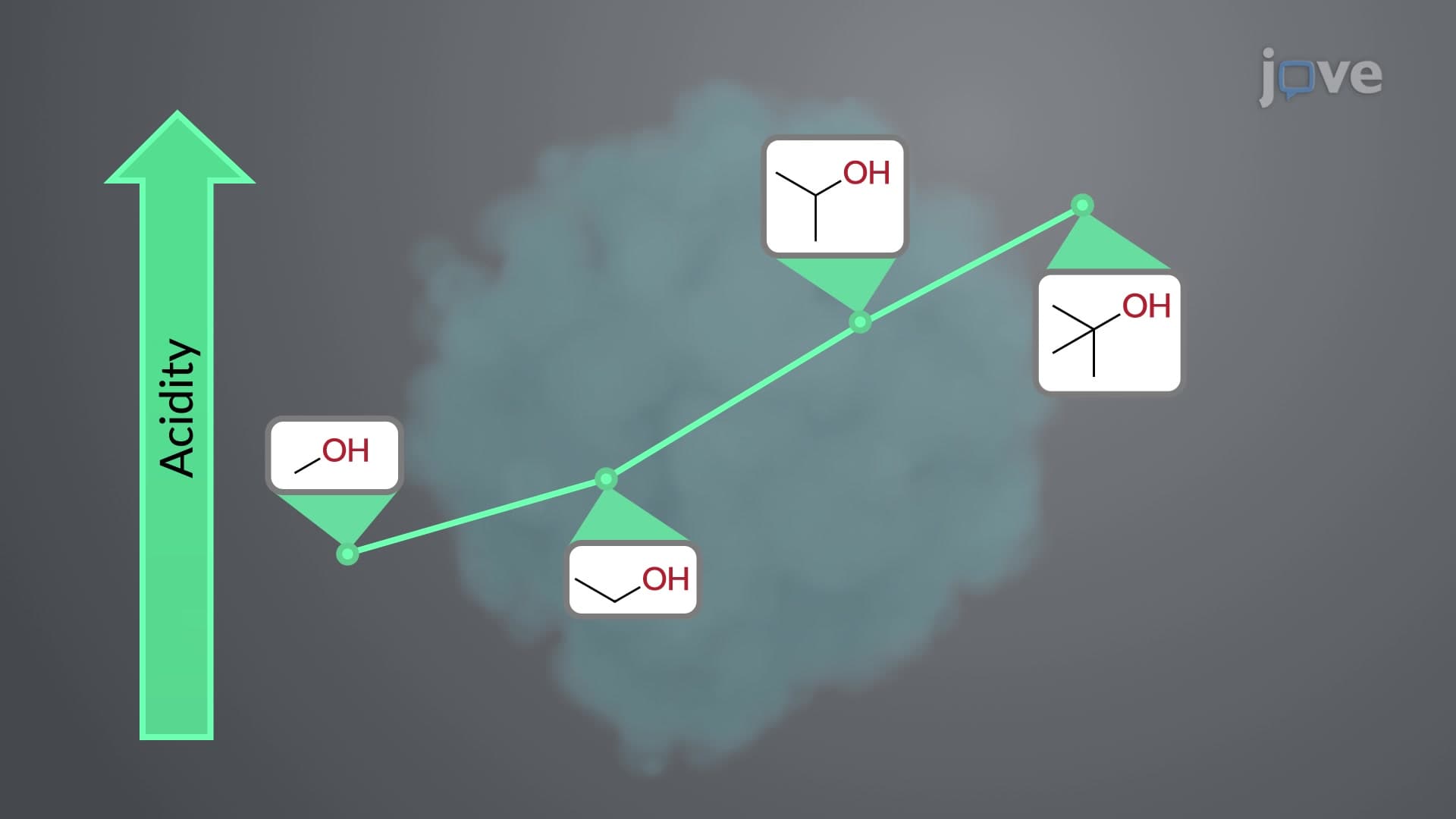
Molecular architecture profoundly impacts alcohol behavior. Linear alcohols like 1-butanol have higher boiling points than branched isomers like 2-methyl-2-propanol because extended chains provide more surface area for dispersion forces. However, branching increases water solubility by reducing the hydrophobic surface area that water molecules must organize around.
Diols (compounds with two -OH groups) like ethylene glycol-the main component in automotive antifreeze-demonstrate how additional hydrogen bonding sites dramatically increase both boiling points and water solubility. This explains why antifreeze prevents freezing while remaining miscible with water in radiator systems.
Phenols exhibit even more extreme property modifications due to their aromatic ring systems. The electron-withdrawing nature of benzene rings increases the polarity of O-H bonds, strengthening hydrogen bonding interactions. Additionally, the planar aromatic rings enable π-π stacking interactions, further elevating boiling points. Phenol itself boils at 182°C-much higher than comparable alcohols.
These enhanced interactions make phenols valuable in polymer chemistry and pharmaceutical applications, topics frequently tested in organic chemistry courses at universities like UCLA and University of Michigan.
Related Micro-courses