Loading video…


 12 Concepts
 141.8K views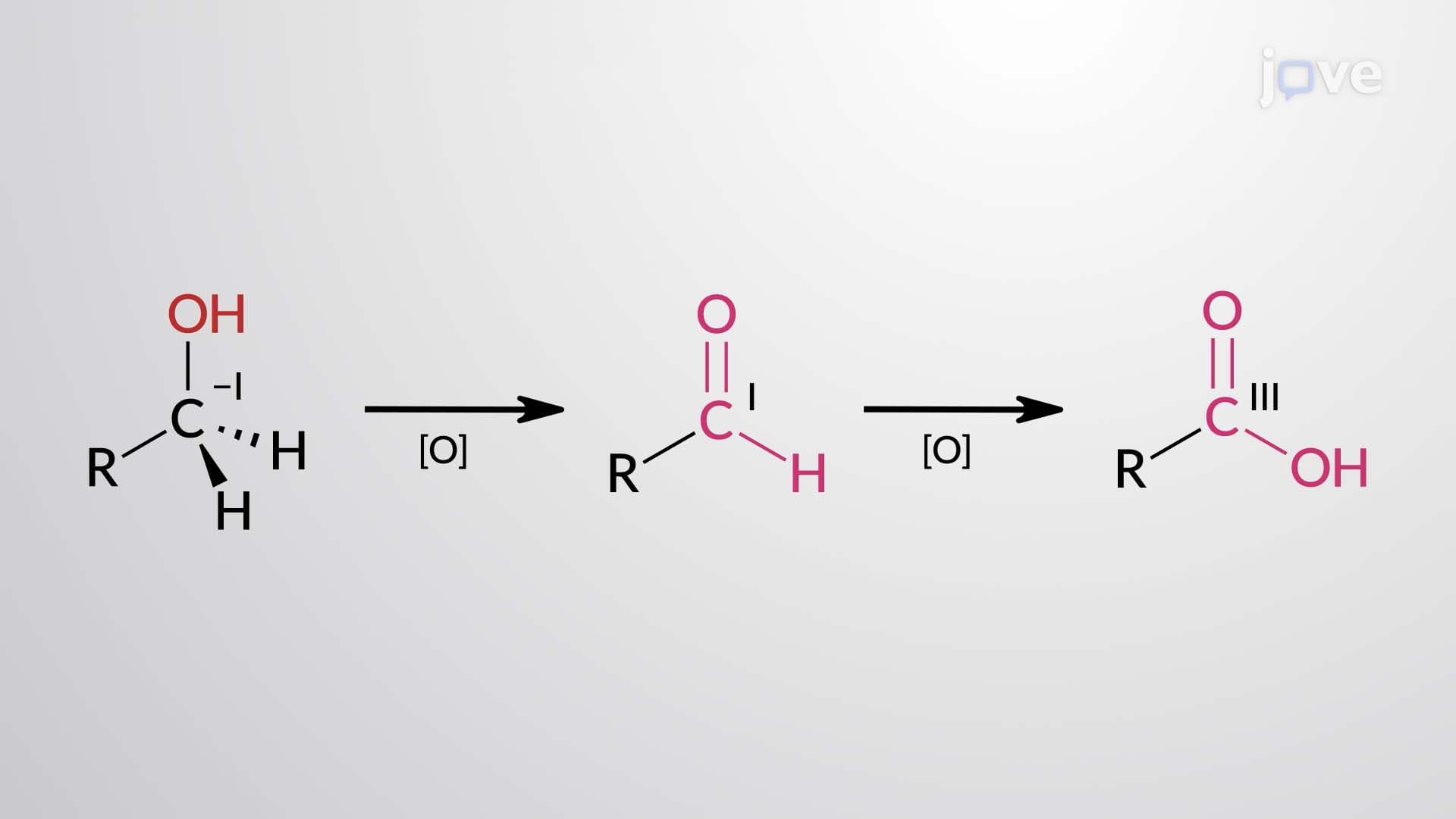

Video Summary: What Is Oxidation of Alcohols
Ever wondered why wine turns to vinegar when left open? The oxidation of alcohols transforms ethanol into acetic acid through the same chemical process used in pharmaceutical manufacturing across the United States. What is oxidation of alcohols involves increasing the oxidation state of carbon atoms bonded to hydroxyl groups, converting primary alcohols to aldehydes and carboxylic acids, while secondary alcohols become ketones. Understanding these transformations is crucial for organic chemistry success in high school and college coursework. Watch the full video on JoVE Coach to master this concept with expert-led visuals and step-by-step explanations.
The oxidation of alcohols represents a fundamental transformation in organic chemistry where the carbon atom bonded to the hydroxyl group increases its oxidation state. This process mirrors the reverse of carbonyl reduction reactions, making it essential for students preparing for AP Chemistry, college organic chemistry courses, and pre-med requirements like the MCAT.
The key principle governing alcohol oxidation lies in the number of alpha hydrogens-hydrogen atoms attached to the carbon bearing the hydroxyl group. This structural feature determines both the extent and products of oxidation reactions, making pattern recognition crucial for exam success.
Primary alcohols contain two alpha hydrogens, enabling a two-stage oxidation process. The first oxidation removes one C-H bond to form an aldehyde, while the second oxidation converts the aldehyde to a carboxylic acid. This double transformation explains why isolating intermediate aldehydes proves challenging with strong oxidizing agents.
Jones reagent (chromium trioxide in aqueous sulfuric acid with acetone) exemplifies non-selective oxidation, pushing primary alcohols directly to carboxylic acids. The mechanism involves chromate ester formation followed by E2 elimination, creating the carbon-oxygen pi bond characteristic of carbonyl compounds.
For controlled aldehyde synthesis, chemists employ pyridinium chlorochromate (PCC), which stops at the aldehyde stage. This selectivity proves invaluable in pharmaceutical synthesis, where companies like Pfizer and Johnson & Johnson require precise functional group transformations.
Secondary alcohols, possessing one alpha hydrogen, undergo single oxidation to form ketones. This transformation finds extensive application in steroid synthesis and pharmaceutical manufacturing throughout the United States biotech industry.
Tertiary alcohols present a unique case-lacking alpha hydrogens entirely, they resist oxidation under normal conditions. This resistance stems from the inability to form the necessary C-H bond breaking that initiates oxidation mechanisms.
Environmental concerns surrounding toxic chromium(VI) compounds have driven development of greener oxidation methods. Swern oxidation utilizes oxalyl chloride and DMSO to generate reactive intermediates, while Dess-Martin oxidation employs hypervalent iodine reagents. These methods align with EPA guidelines and represent the current standard in academic and industrial laboratories across major US research universities like MIT, Stanford, and the University of California system.
Related Micro-courses