Loading subject page…

- Organic Chemistry
- Aromatic Compounds
- Hückel's Rule Diagram of π MOs: Frost Circle
Micro-course: Aromatic Compounds
89,601 views
Learn key concepts and earn your certificate.


Hückel's Rule Diagram of π MOs: Frost Circle

00:00
01:08
Video Summary: H Ckels Rule Diagram Guide
Ever wonder why benzene is remarkably stable while cyclobutadiene is highly reactive? The Hückel's rule diagram reveals the molecular orbital energy patterns that explain this phenomenon. This graphical method, also called the Frost circle, predicts stability in cyclic compounds like those found in pharmaceutical drugs developed by companies such as Pfizer and Merck. Watch the full video on JoVE Coach to master this concept with expert-led visuals and step-by-step explanations.
- Understand how Hückel's rule diagram predicts molecular orbital energies in cyclic conjugated systems using the inscribed polygon method
- Identify bonding, antibonding, and non-bonding molecular orbitals based on their position relative to the central energy line
- Analyze the relationship between polygon vertices and molecular orbital energy levels in planar cyclic compounds
- Apply Hund's rule and Pauli exclusion principle to fill molecular orbitals systematically in aromatic systems
- Evaluate aromatic stability by determining electron configuration in molecular orbital energy diagrams
- Compare energy differences between bonding and antibonding orbitals for different ring sizes
- Recognize how the inscribed polygon orientation affects molecular orbital energy patterns
- Explore connections between molecular orbital theory and experimental observations of aromatic stability
Understanding Hückel's Rule Diagram Fundamentals
Hückel's rule diagram serves as a powerful visual tool for predicting the electronic structure of cyclic, planar, conjugated molecules. This method, developed by German physicist Erich Hückel, transforms complex quantum mechanical calculations into an intuitive graphical approach that chemistry students can master.
The foundation lies in molecular orbital theory, where atomic p-orbitals combine to form molecular orbitals with specific energy levels. In cyclic systems like benzene, cyclohexatriene, or cyclooctatetraene, these energy levels follow predictable patterns that the Frost circle elegantly displays.
Constructing the Frost Circle: Step-by-Step Process
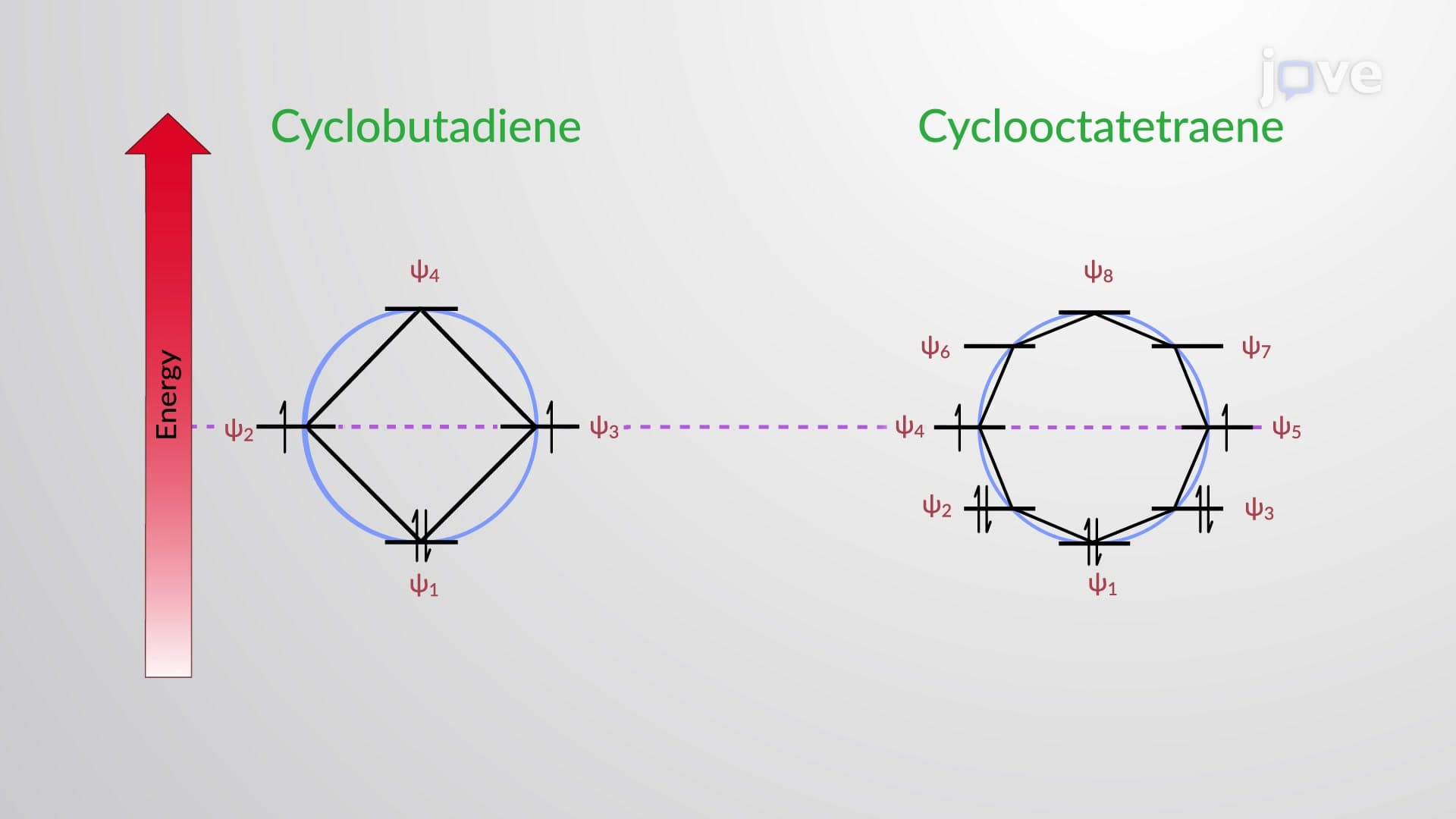
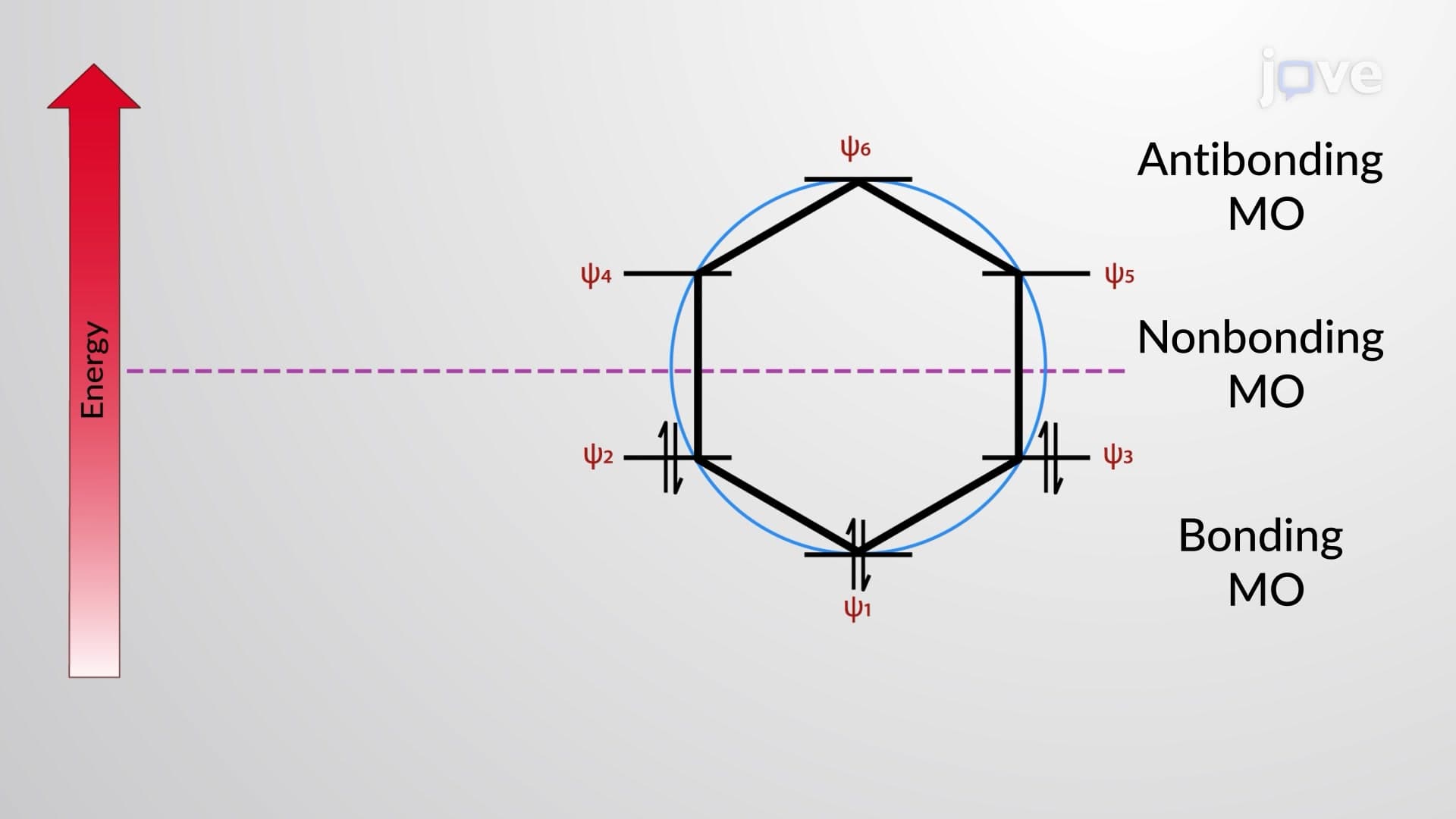
Creating a Hückel's rule diagram begins with drawing a circle and inscribing a polygon that matches the cyclic compound's ring size. For benzene, you inscribe a hexagon; for cyclobutadiene, a square. The crucial detail is positioning one vertex at the bottom of the circle, which corresponds to the lowest energy molecular orbital.
Each intersection where the polygon touches the circle represents a molecular orbital energy level. The horizontal dashed line through the circle's center serves as the reference point, representing the energy of isolated p-orbitals before bonding occurs. This reference line divides orbitals into three categories: bonding (below the line), non-bonding (on the line), and antibonding (above the line).
Energy Level Interpretation and Electron Configuration
The Hückel's rule diagram explained reveals why certain molecules exhibit aromatic stability. Orbitals below the central line are bonding and stabilize the molecule when filled with electrons. Those above are antibonding and destabilize the molecule when occupied. Non-bonding orbitals neither stabilize nor destabilize the system.
Electron filling follows familiar principles from general chemistry: Hund's rule (electrons occupy orbitals singly before pairing) and Pauli exclusion principle (maximum two electrons per orbital with opposite spins). This systematic filling determines whether a cyclic compound achieves the stable, fully-filled bonding orbital configuration characteristic of aromatic compounds.
Applications in Pharmaceutical and Materials Science
Understanding what is Hückel's rule diagram becomes essential when studying drug molecules containing aromatic rings. Many pharmaceuticals, including aspirin, ibuprofen, and antihistamines, rely on aromatic stability for their therapeutic properties. The diagram helps predict which synthetic intermediates will be stable enough to isolate and which might decompose rapidly.
In AP Chemistry courses and college organic chemistry classes, students encounter these diagrams when studying resonance, aromaticity, and molecular stability. The MCAT frequently tests understanding of aromatic systems, making mastery of Hückel's rule diagrams crucial for pre-med students. The visual approach bridges the gap between abstract quantum mechanics and observable chemical behavior, explaining why benzene resists addition reactions while cyclohexene readily undergoes them.
Frequently Asked Questions
A Hückel's rule diagram is a graphical method that predicts molecular orbital energies in cyclic, conjugated compounds by inscribing a polygon inside a circle. Each vertex touching the circle represents a molecular orbital energy level, with a horizontal line dividing bonding (below) from antibonding (above) orbitals. Electrons fill these levels according to standard quantum mechanical principles.
Focus on identifying bonding vs. antibonding orbitals and applying electron-filling rules systematically. AP Chemistry frequently tests aromatic stability predictions, so practice drawing diagrams for common ring sizes (4, 5, 6, 8 atoms). Remember that fully-filled bonding orbitals indicate aromatic stability, which explains reaction patterns and relative energies.
Yes, the MCAT tests aromatic systems and molecular orbital concepts regularly in the Chemical and Physical Foundations section. Understanding these diagrams helps answer questions about drug stability, reaction mechanisms, and molecular properties. Focus on connecting the visual representation to experimental observations of aromatic behavior.
Organic Chemistry I and II courses emphasize these diagrams when teaching aromaticity and molecular orbital theory. Physical Chemistry courses explore the quantum mechanical foundations in greater depth. Some General Chemistry II courses introduce the concept when covering advanced bonding theories and resonance structures.
Many drugs contain aromatic rings that provide stability and specific binding properties. Aspirin's benzene ring, the indole system in tryptophan-based antidepressants, and the aromatic portions of blood pressure medications all follow Hückel's rule. This stability allows these compounds to maintain their structure during manufacturing, storage, and biological activity.
No advanced mathematics is required for basic applications. The graphical method specifically avoids complex calculations, making aromatic system analysis accessible to high school and early college students. Focus on pattern recognition, electron counting, and applying familiar chemistry principles like Hund's rule rather than mathematical derivations.
Practice drawing diagrams for common ring sizes (3-8 atoms) repeatedly until the patterns become automatic. Create flashcards showing the polygon shape on one side and the corresponding energy level diagram on the other. Connect each pattern to specific examples like benzene (6-membered) or cyclobutadiene (4-membered) to reinforce memory through chemical context.
Explore advanced aromatic systems like polycyclic compounds (naphthalene, anthracene), heteroaromatic molecules (pyridine, furan), and non-benzenoid aromatics. Investigate how aromatic character influences reaction mechanisms, particularly electrophilic aromatic substitution patterns. Consider studying computational chemistry methods that extend Hückel theory to more complex molecular systems.
Related Micro-courses