Loading concepts…


15 Concepts
12 Concepts
14 Concepts
12 Concepts
7 Concepts
20 Concepts
7 Concepts
15 Concepts
12 Concepts
12 Concepts
15 Concepts
25 Concepts
17 Concepts
28 Concepts
40 Concepts
27 Concepts
12 Concepts
25 Concepts
29 Concepts
27 Concepts
20 Concepts
 12 Concepts
 89.6K Views
 Popular topics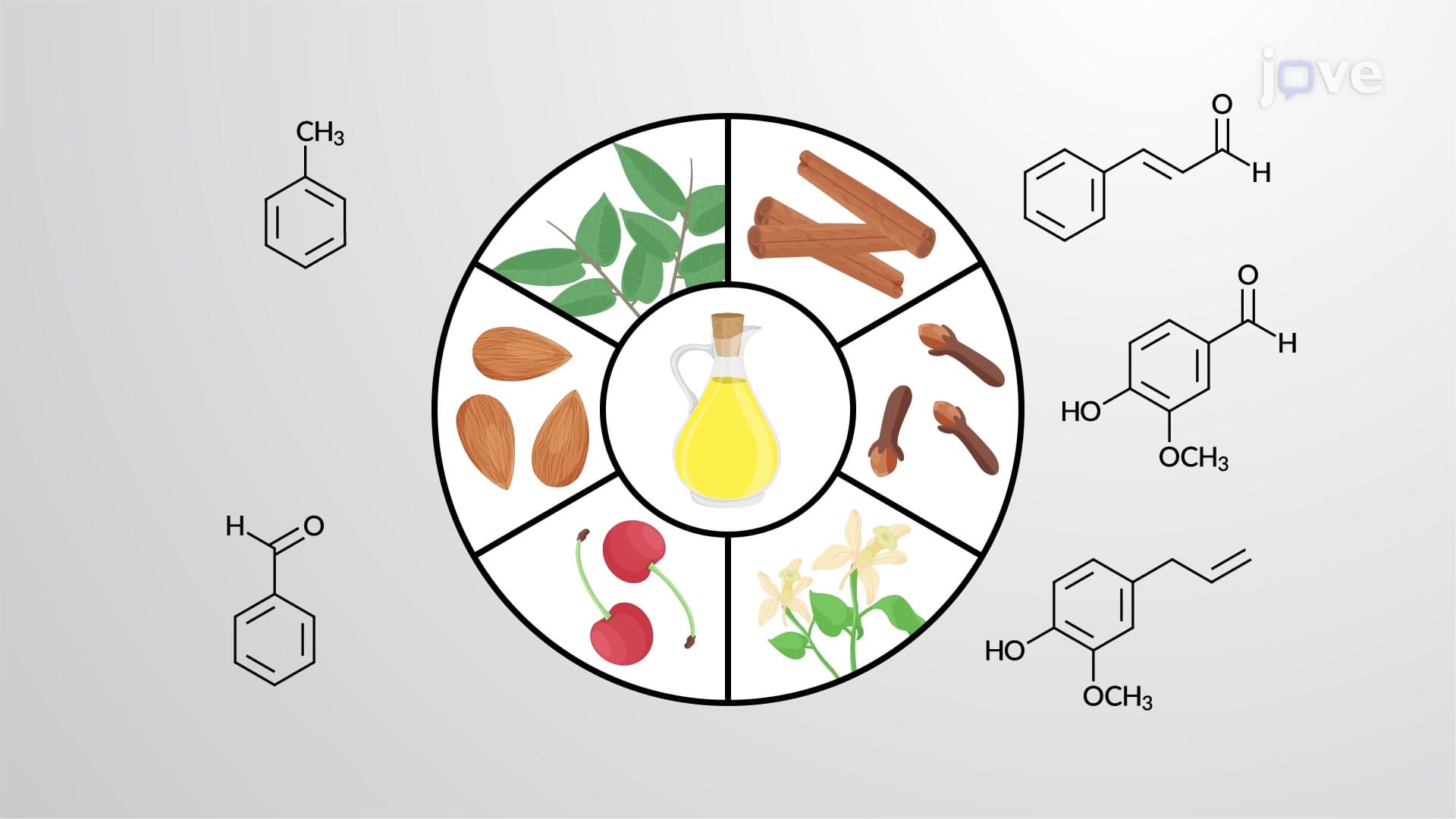
Aromatic compounds are highly stable cyclic hydrocarbons featuring delocalized pi electrons that follow Hückel's 4n+2 rule. Benzene serves as the prototype, demonstrating unique chemical behavior through substitution rather than addition reactions. These compounds are essential in pharmaceuticals like aspirin, industrial chemicals, and organic synthesis. JoVE Coach provides comprehensive coverage from basic nomenclature to advanced molecular orbital theory, preparing students for success in organic chemistry coursework.
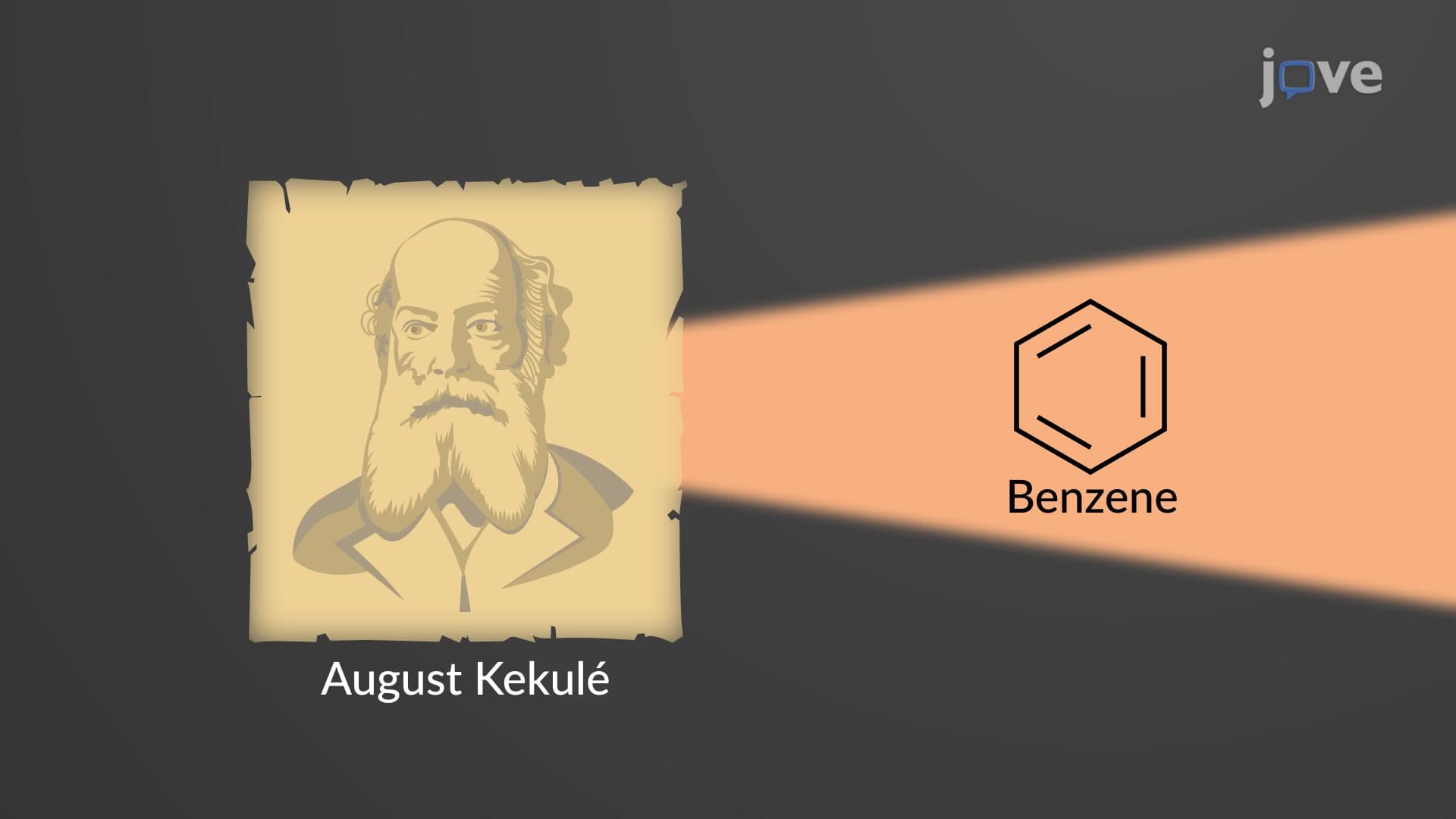
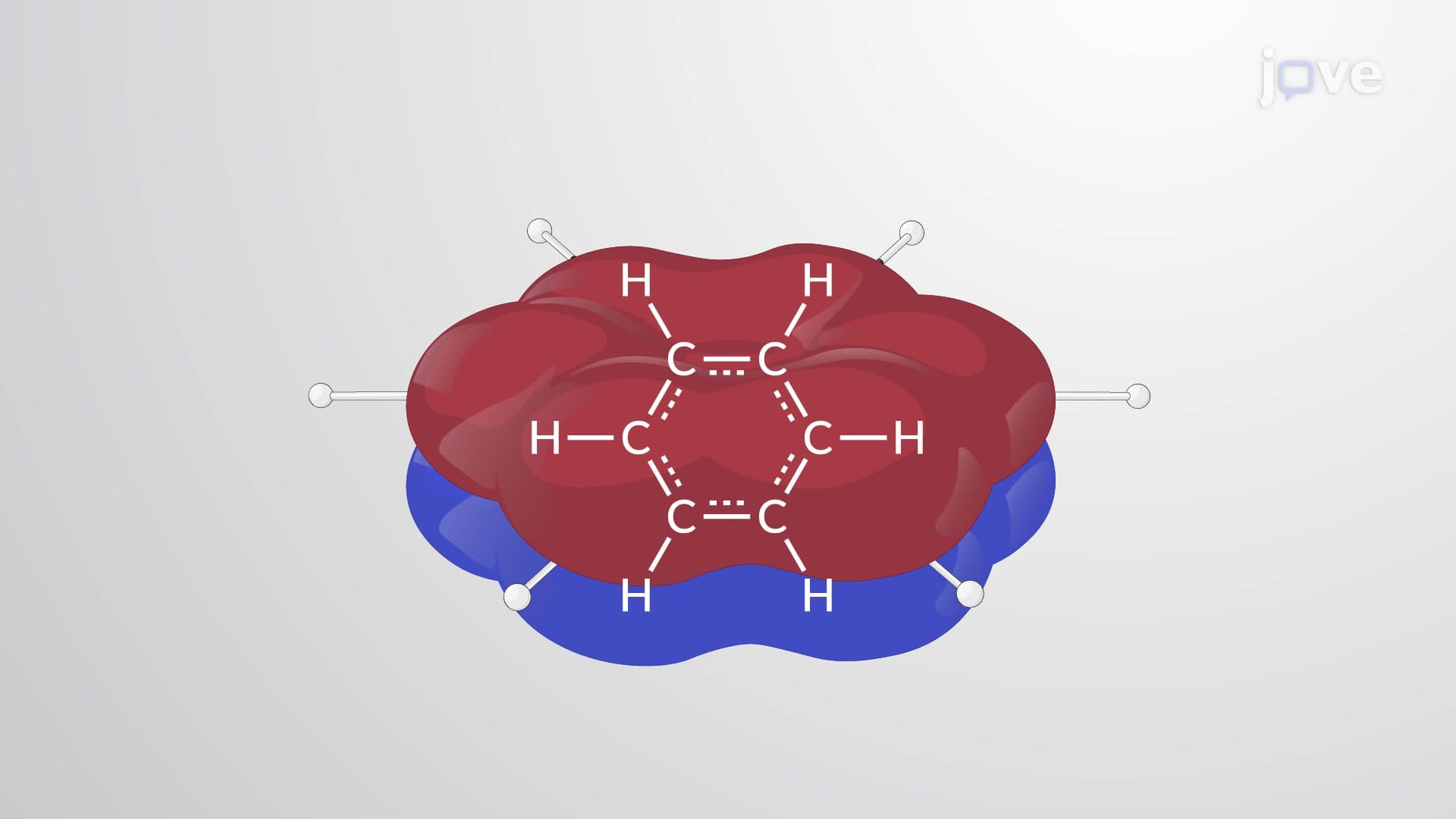
1. Benzene Structure and Bonding Models Historical development from Kekulé's alternating double bond model to modern molecular orbital theory reveals benzene's true nature. The molecular orbital model describes six sp²-hybridized carbons forming a planar hexagon with delocalized pi electrons above and below the ring plane. This delocalization explains benzene's uniform 1.39 Å bond lengths and extraordinary stability. Unlike Kekulé's rapidly equilibrating structures, modern theory shows benzene as a resonance hybrid with electron density distributed equally around the ring, making it resistant to addition reactions typical of alkenes.
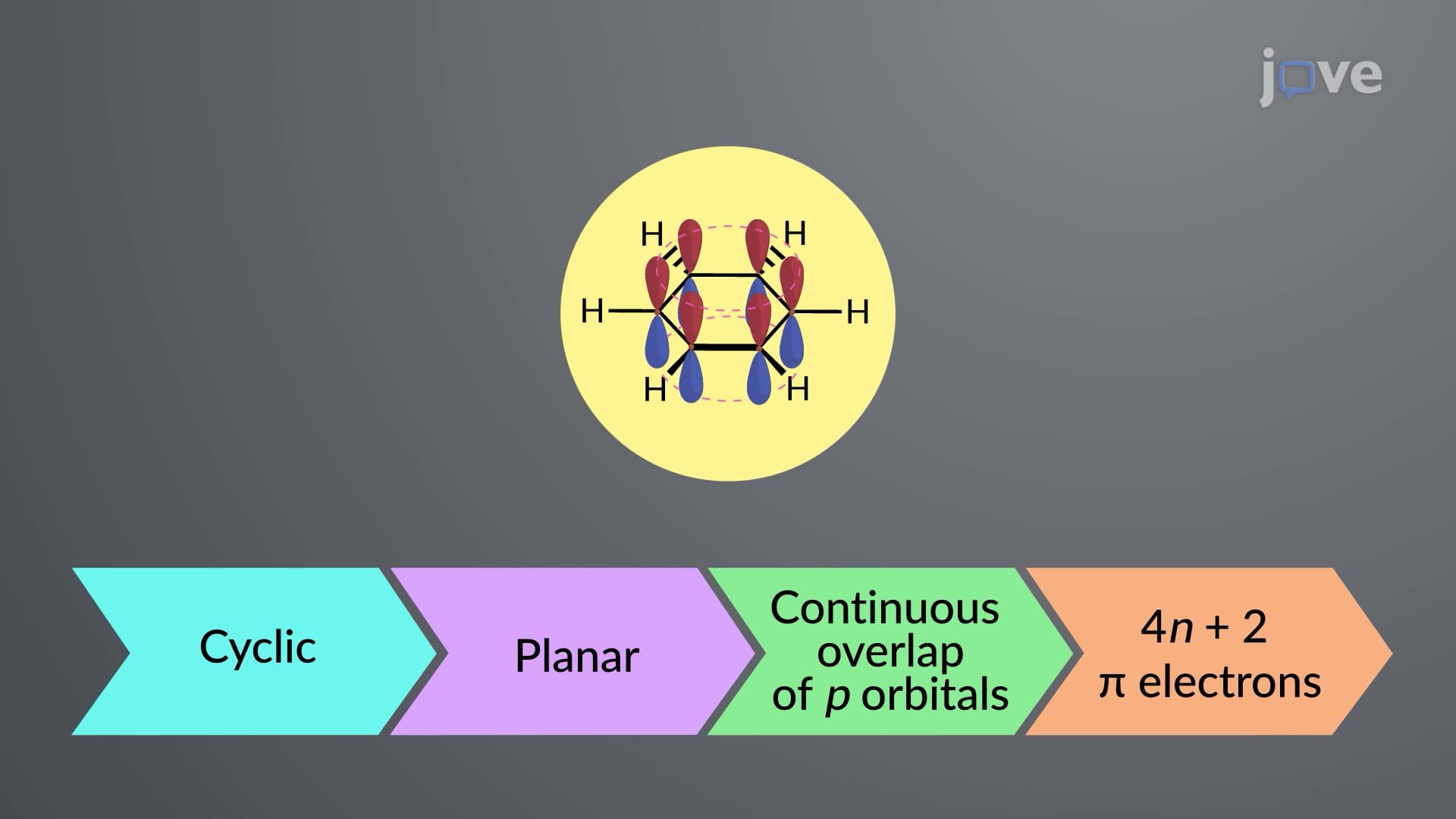
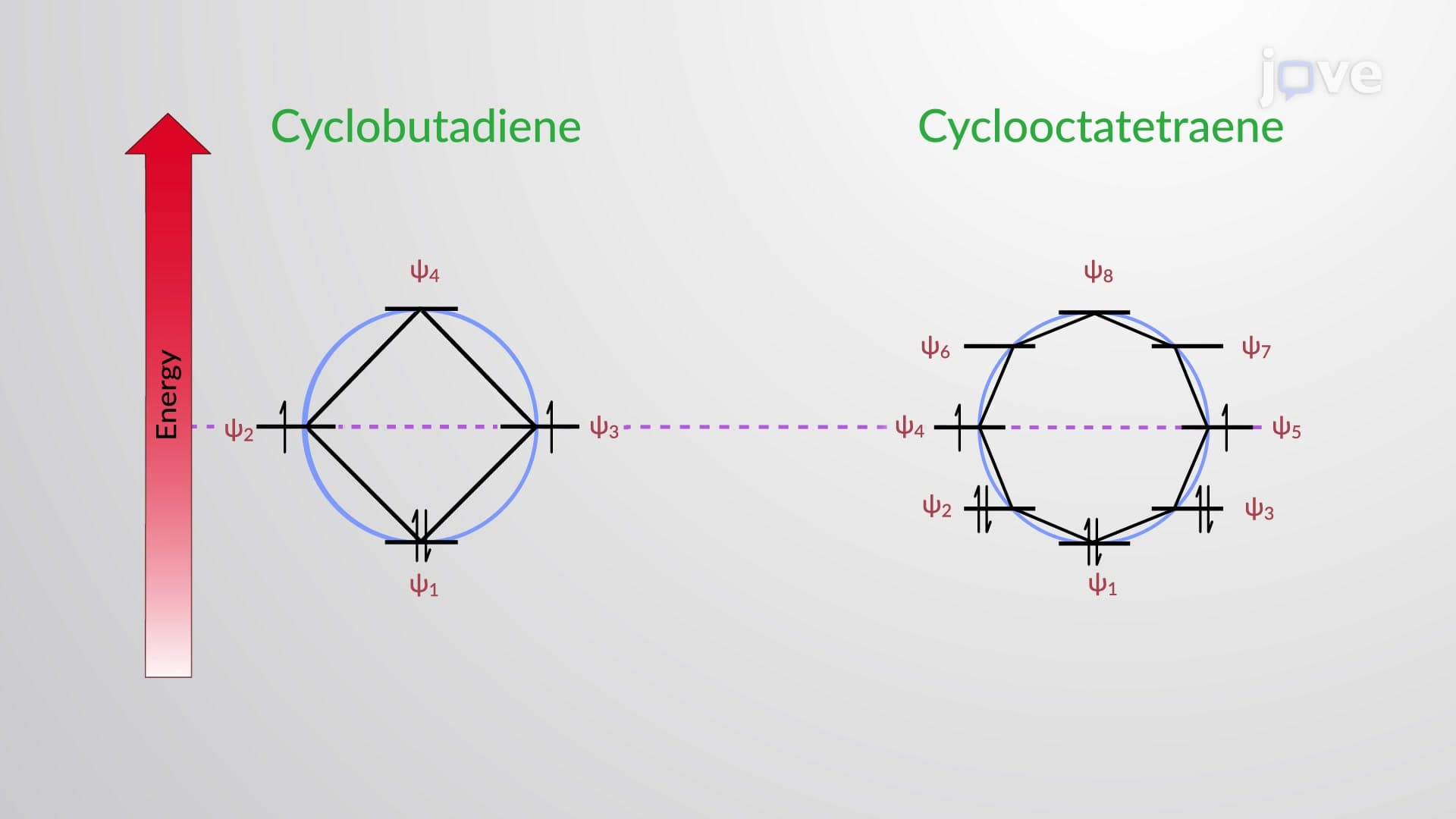
2. Aromaticity Criteria and Hückel's Rule Aromatic compounds must satisfy four essential criteria: cyclic structure, planarity for orbital overlap, complete conjugation throughout the ring, and possession of 4n+2 pi electrons where n is a non-negative integer. Hückel's rule explains why benzene (6 π electrons, n=1) exhibits aromatic stability while cyclobutadiene (4 π electrons) is antiaromatic and highly unstable. This fundamental principle allows chemists to predict molecular behavior and design new aromatic systems. The rule applies to various ring sizes, from three-membered cyclopropenyl cation to larger annulenes.
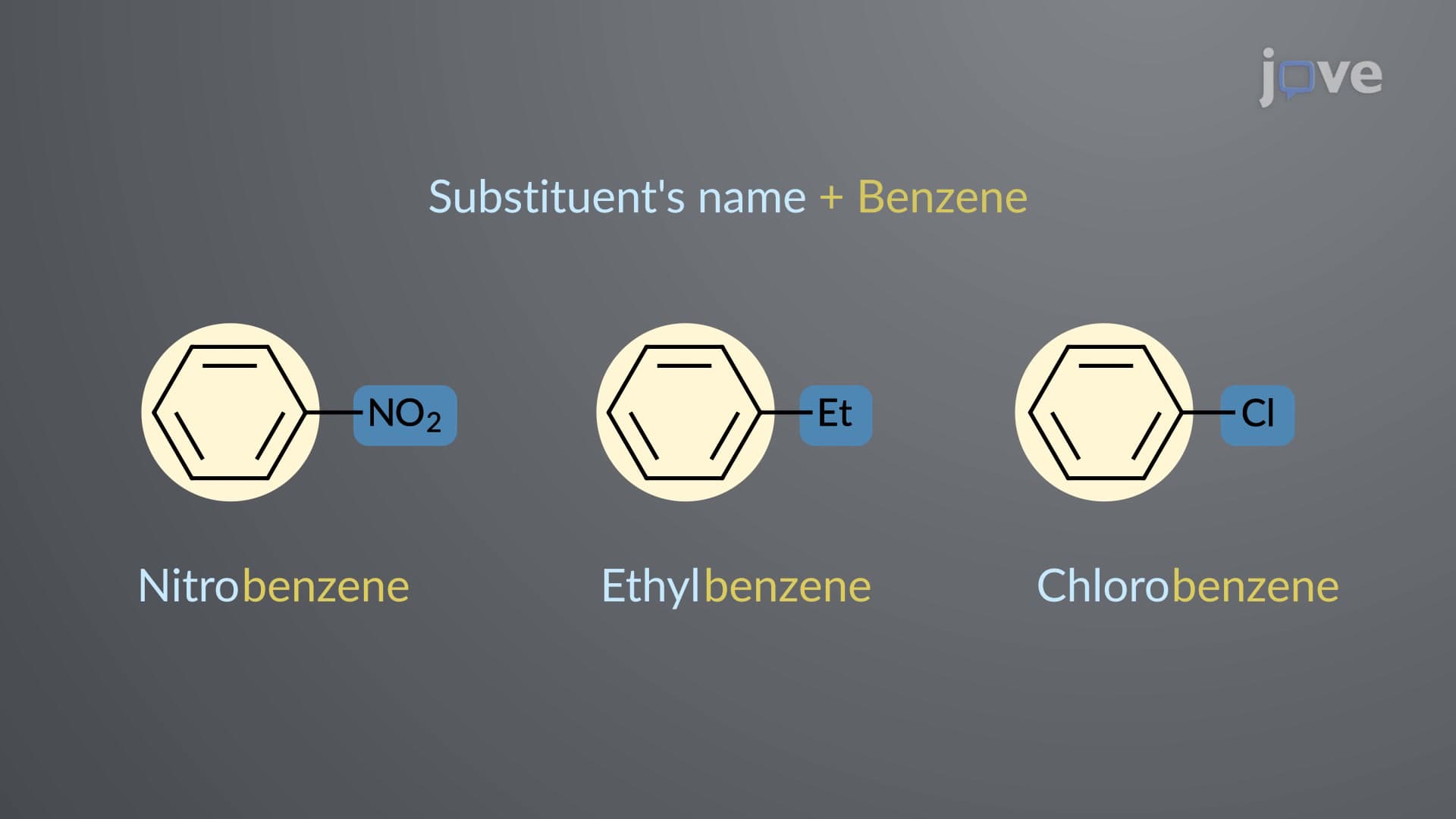
3. Nomenclature Systems for Aromatic Compounds IUPAC nomenclature for aromatic compounds follows systematic rules based on substitution patterns. Monosubstituted benzenes use prefixes before "benzene," though common names like toluene (methylbenzene) and phenol (hydroxybenzene) are accepted. Disubstituted compounds employ ortho- (1,2-), meta- (1,3-), and para- (1,4-) designations or numerical locants. For polysubstituted aromatics, substituents receive the lowest possible numbers and are listed alphabetically. The phenyl group (C₆H₅-) and benzyl group (C₆H₅CH₂-) serve as important substituents in complex molecules, particularly in pharmaceutical compounds.
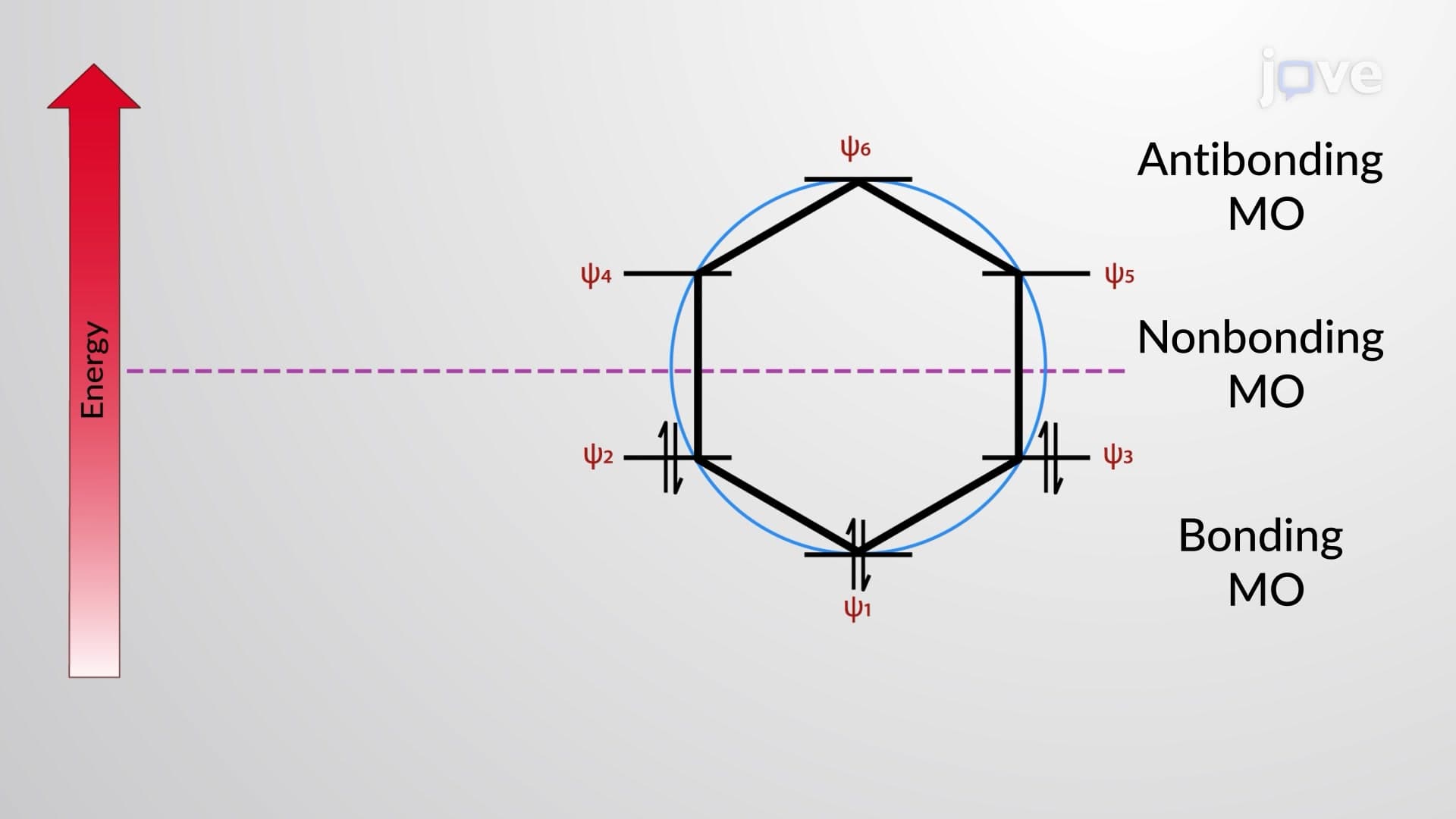
4. Frost Circle Method and Molecular Orbital Energy Levels The Frost circle provides a powerful graphical tool for determining molecular orbital energies in cyclic conjugated systems. By inscribing a polygon (representing the ring) within a circle with one vertex pointing downward, chemists can visualize orbital energy levels and electron occupancy patterns. Horizontal lines mark orbital energies, with bonding orbitals below the central line, antibonding above, and nonbonding at the center. This method correctly predicts benzene's stability (all bonding orbitals filled) and cyclobutadiene's instability (unpaired electrons in nonbonding orbitals).
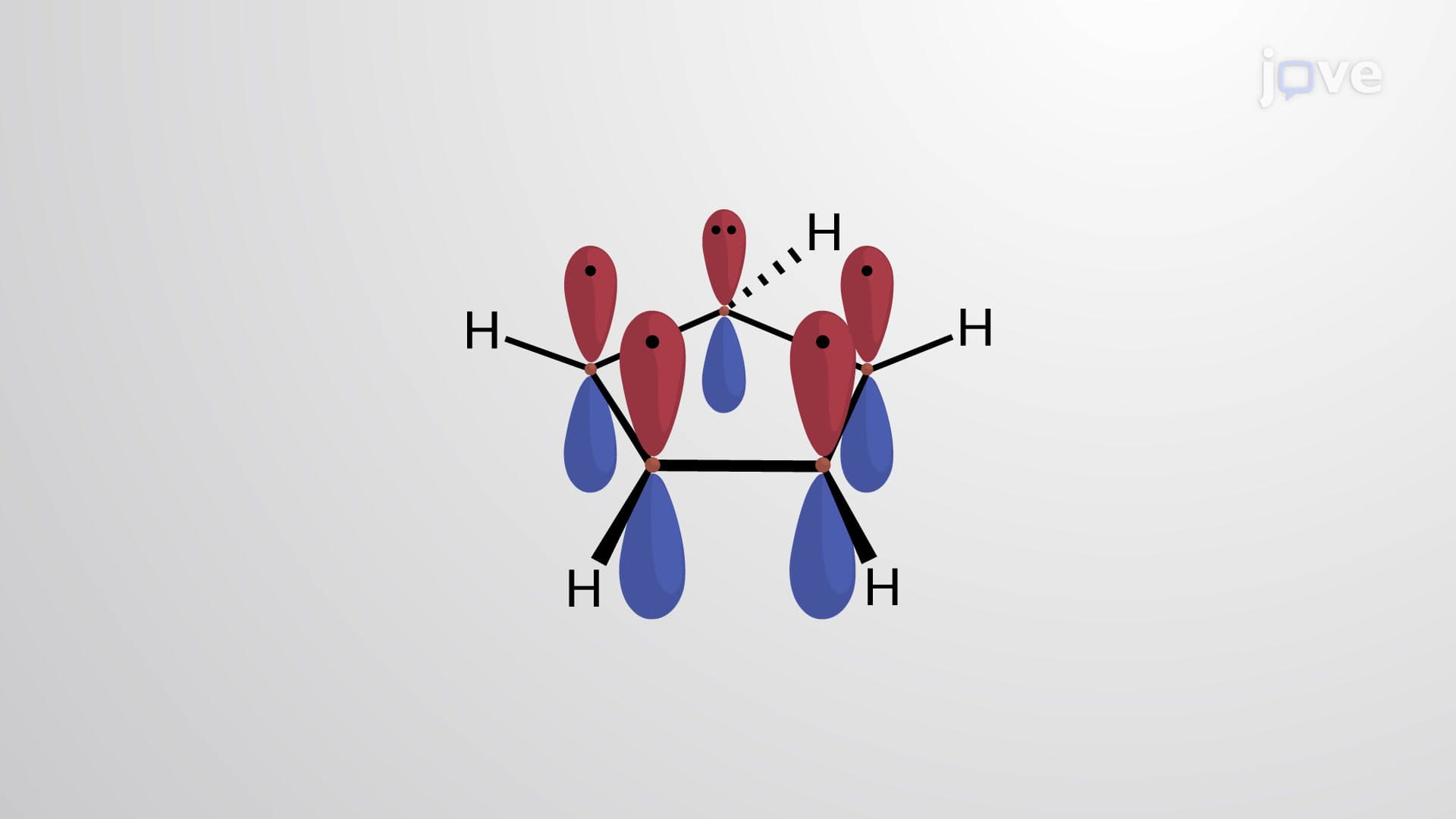
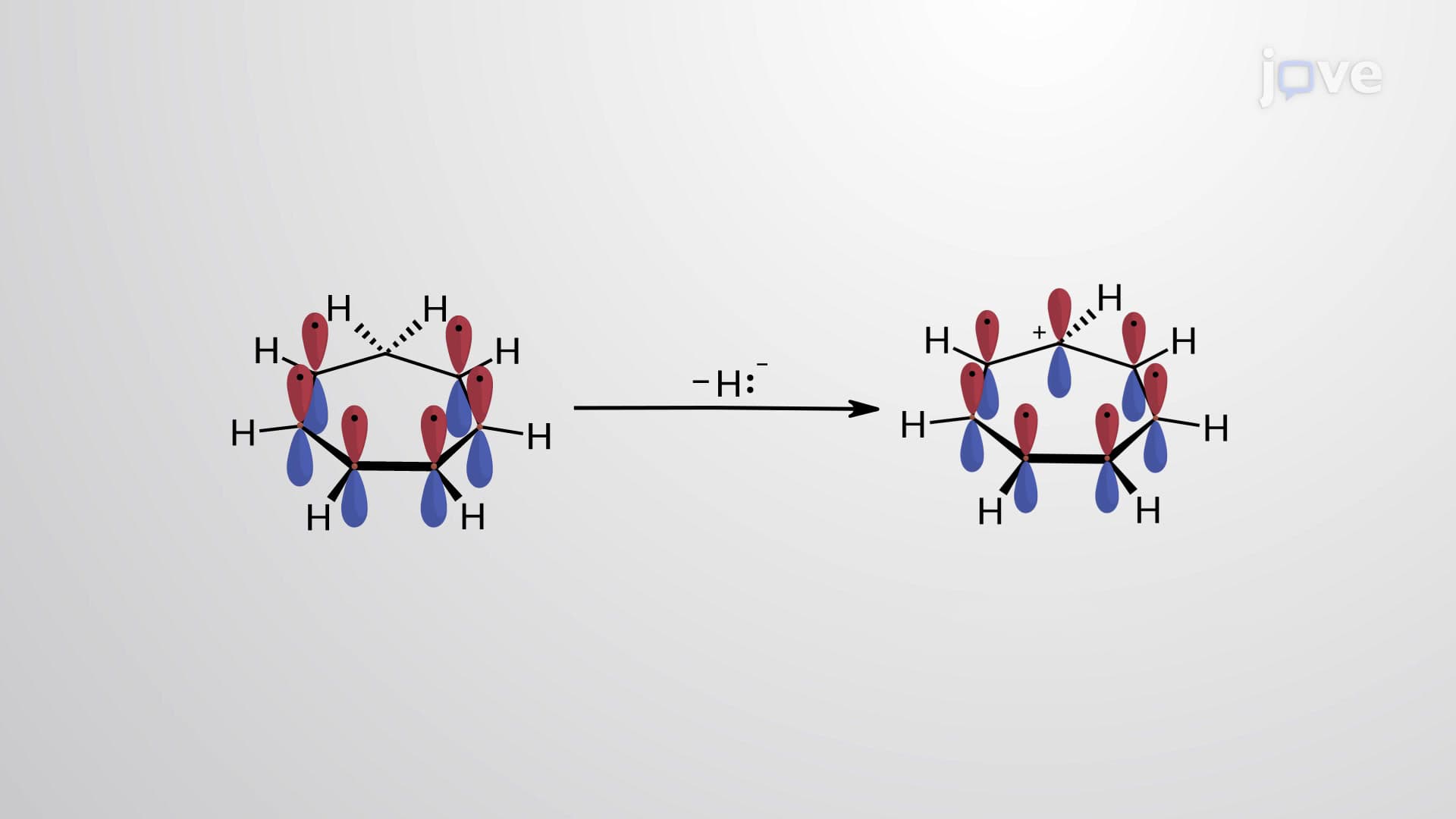
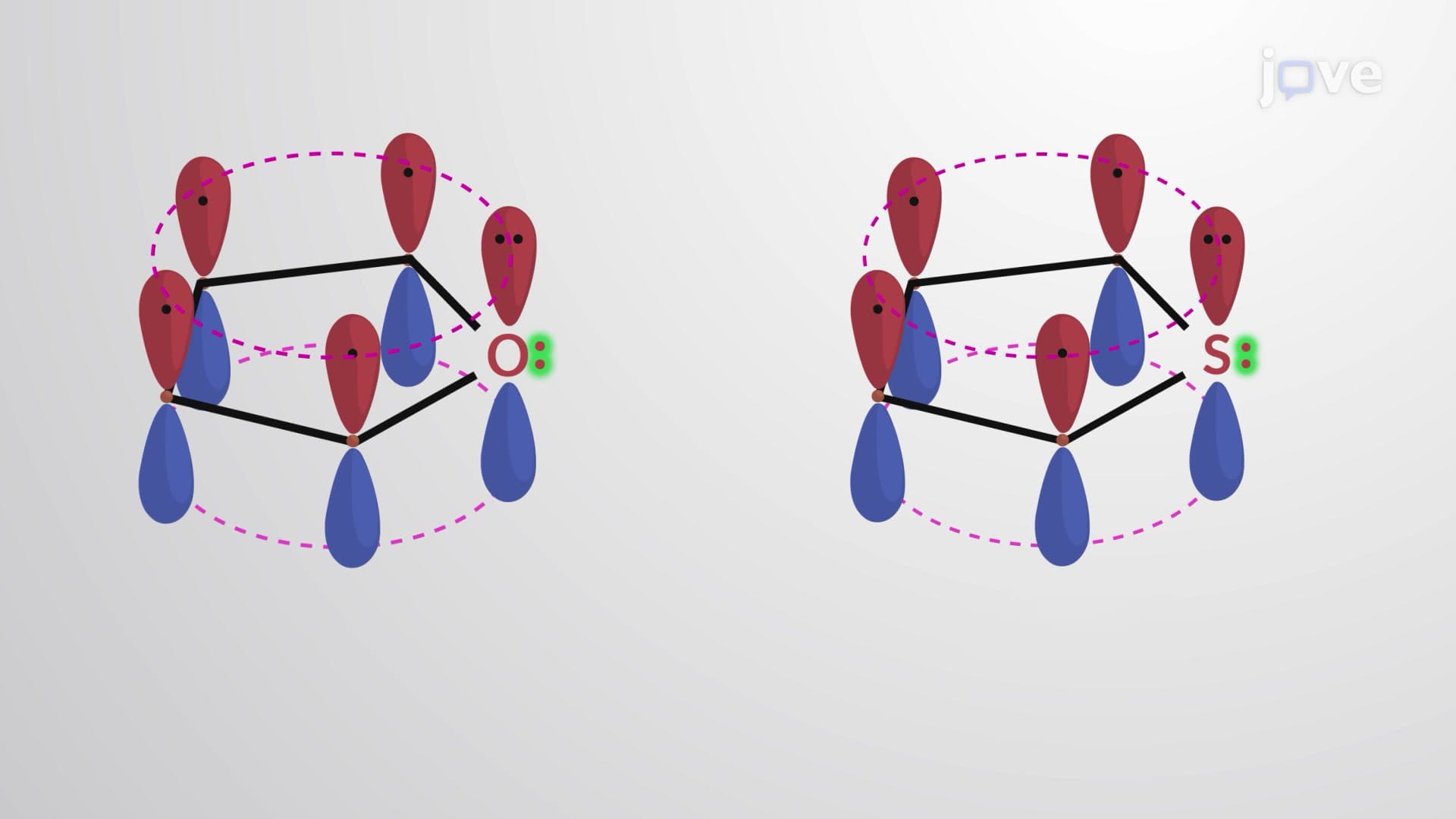
5. Aromatic Ions and Heterocyclic Systems Aromatic character extends beyond neutral hydrocarbons to include charged species and heteroatom-containing rings. The cyclopentadienyl anion (C₅H₅⁻) gains aromatic stability through 6 π electrons, while the cycloheptatrienyl cation (tropylium ion) achieves aromaticity with the same electron count. Five-membered heterocycles like pyrrole, furan, and thiophene contribute lone pair electrons to complete their aromatic sextets. These systems appear frequently in biological molecules, pharmaceuticals, and natural products, making their understanding crucial for biochemistry and medicinal chemistry applications.
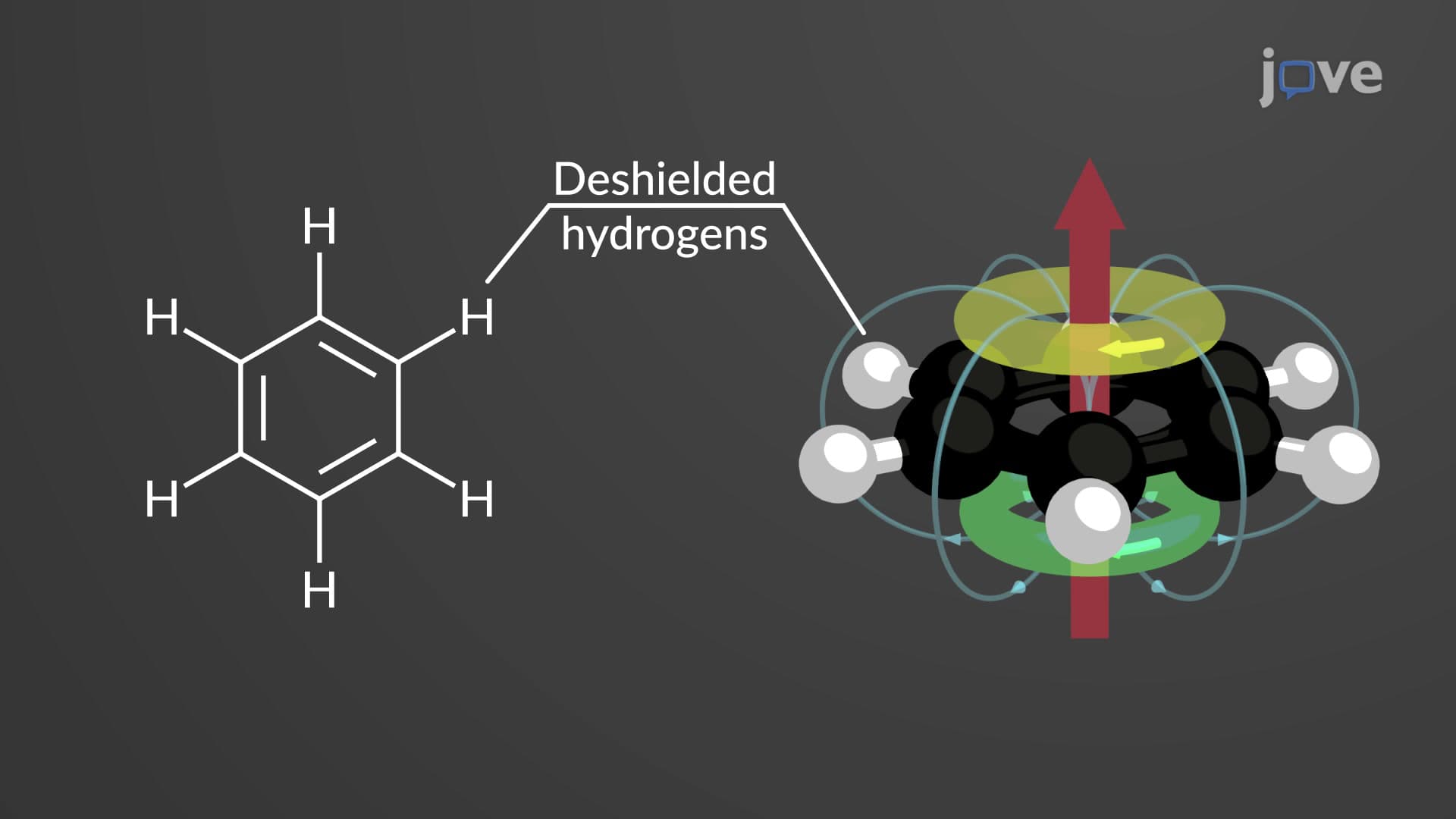
6. NMR Spectroscopic Identification Nuclear magnetic resonance spectroscopy provides definitive identification of aromatic compounds through characteristic chemical shifts. Aromatic protons appear strongly deshielded at 6.5-8.0 ppm in ¹H NMR due to the aromatic ring current effect, while aromatic carbons resonate at 110-150 ppm in ¹³C NMR. The ring current creates a magnetic field that deshields protons on the ring exterior while shielding those inside larger aromatic rings like [18]annulene. These spectroscopic signatures allow rapid identification of aromatic systems in complex organic molecules and natural products.