Loading subject page…


392,707 views

Video Summary: Molecular Geometry and Dipole Moments Explained
Why does water dissolve salt while oil doesn't? The answer lies in molecular geometry dipole moments, the three-dimensional arrangement of atoms and their electrical charge distributions. From predicting the polarity of pharmaceutical compounds at Pfizer to understanding why certain pesticides work effectively in US agriculture, Molecular Geometry And Dipole Moments Explained reveals how VSEPR theory and electronegativity differences determine molecular behavior. Watch the full video on JoVE Coach to master this concept with expert-led visuals and step-by-step explanations.
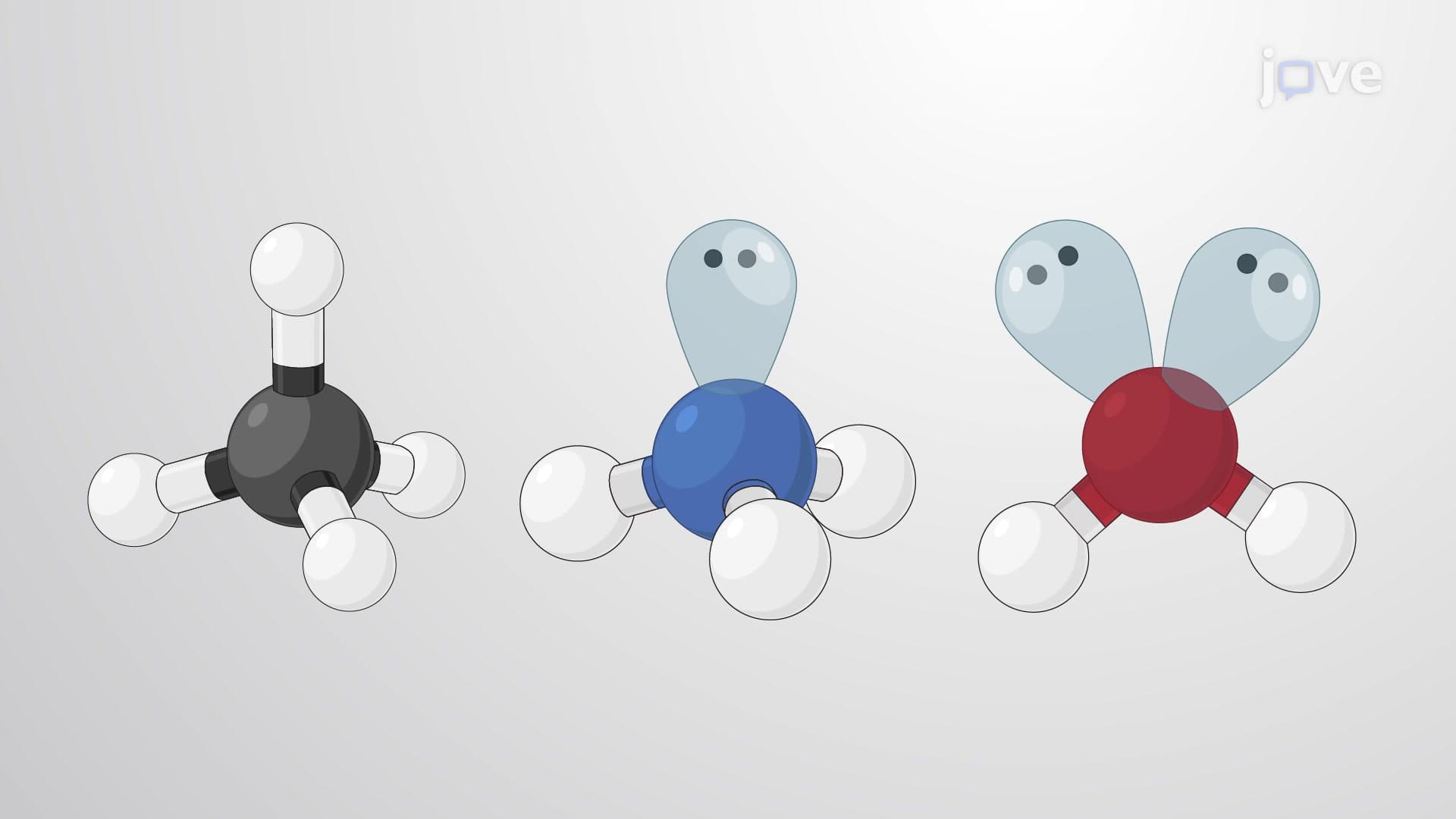
The Valence Shell Electron Pair Repulsion (VSEPR) theory provides the foundation for predicting three-dimensional molecular shapes. This systematic approach begins with drawing Lewis structures, then counting electron groups around the central atom. For instance, phosphorus trichloride (PCl₃) contains four electron groups around phosphorus, three bonding pairs and one lone pair, resulting in a tetrahedral electron-pair geometry but a trigonal pyramidal molecular geometry.
The distinction between electron-pair geometry and molecular geometry proves crucial for understanding molecular behavior. While electron-pair geometry considers all electron groups equally, molecular geometry focuses only on atomic positions. Lone pairs occupy more space than bonding pairs, compressing bond angles below ideal values. In PCl₃, the lone pair reduces the Cl-P-Cl bond angle from the tetrahedral ideal of 109.5° to approximately 107°.
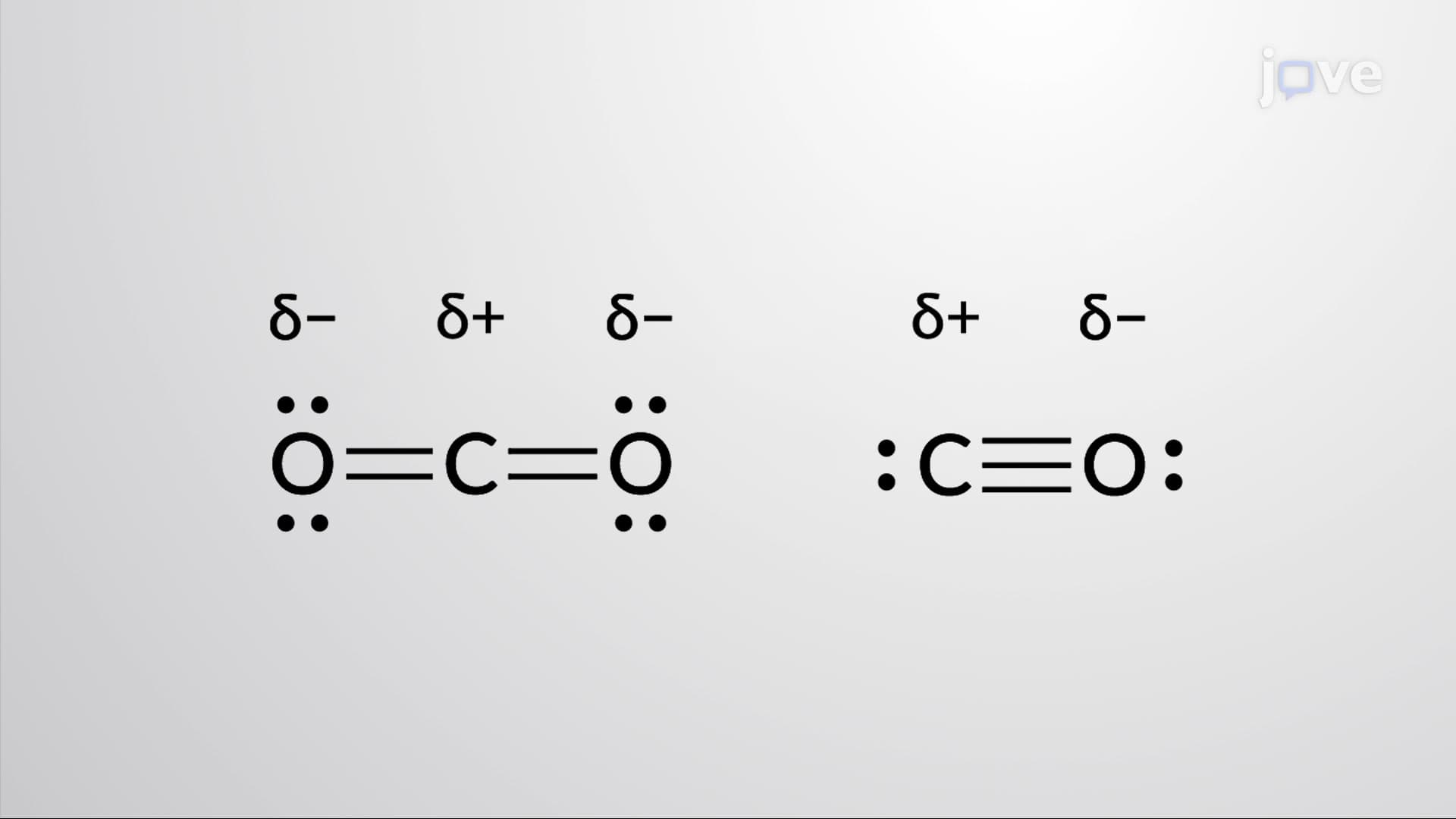
When atoms with different electronegativities form covalent bonds, electrons are pulled toward the more electronegative atom, creating partial charges (δ⁺ and δ⁻). This charge separation generates a bond dipole moment, measured in debyes (D), where 1 D = 3.336 × 10⁻³⁰ coulomb-meters. The dipole moment magnitude equals the partial charge multiplied by the distance between charge centers, with the vector pointing from the less electronegative to the more electronegative atom.
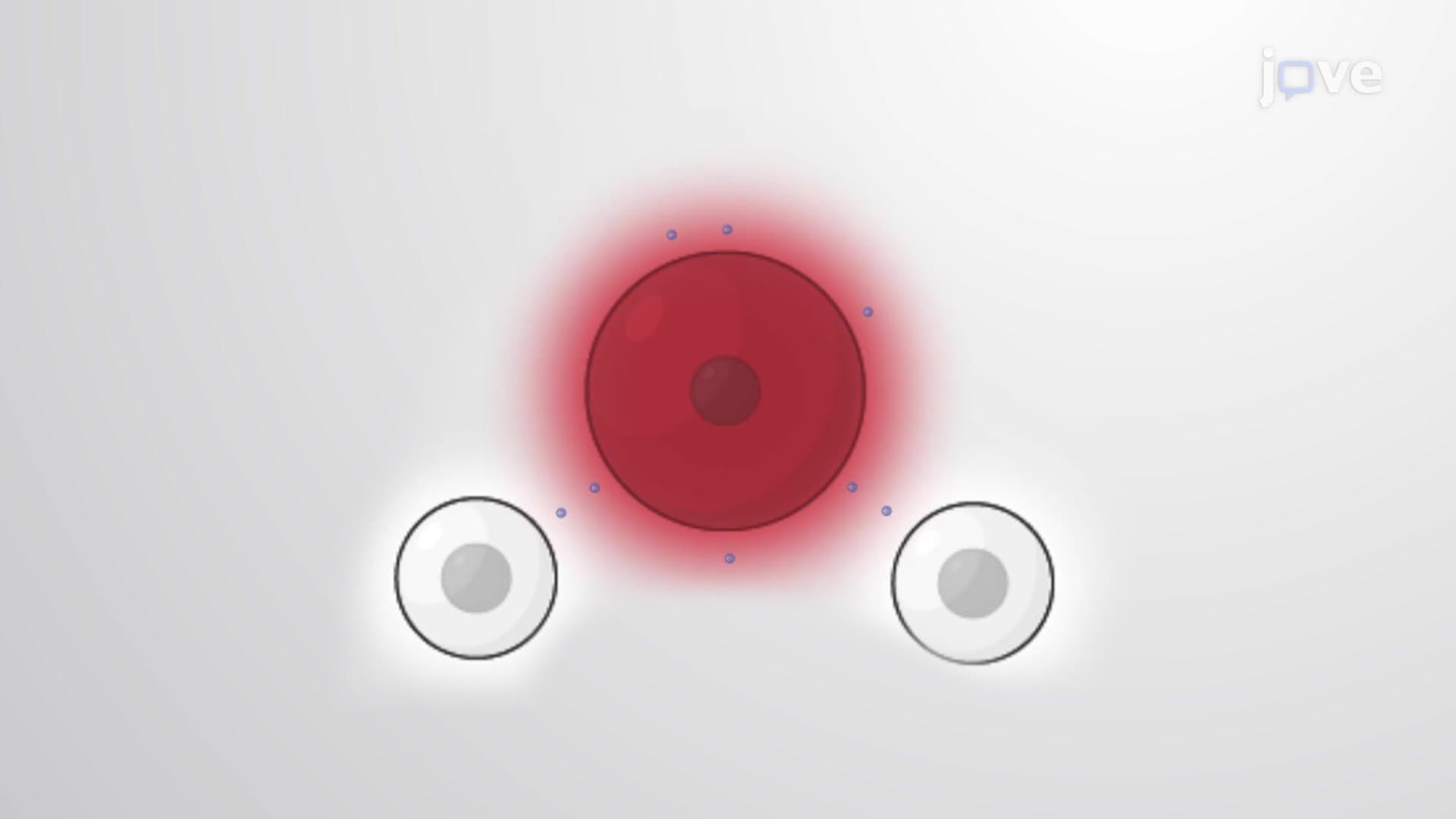
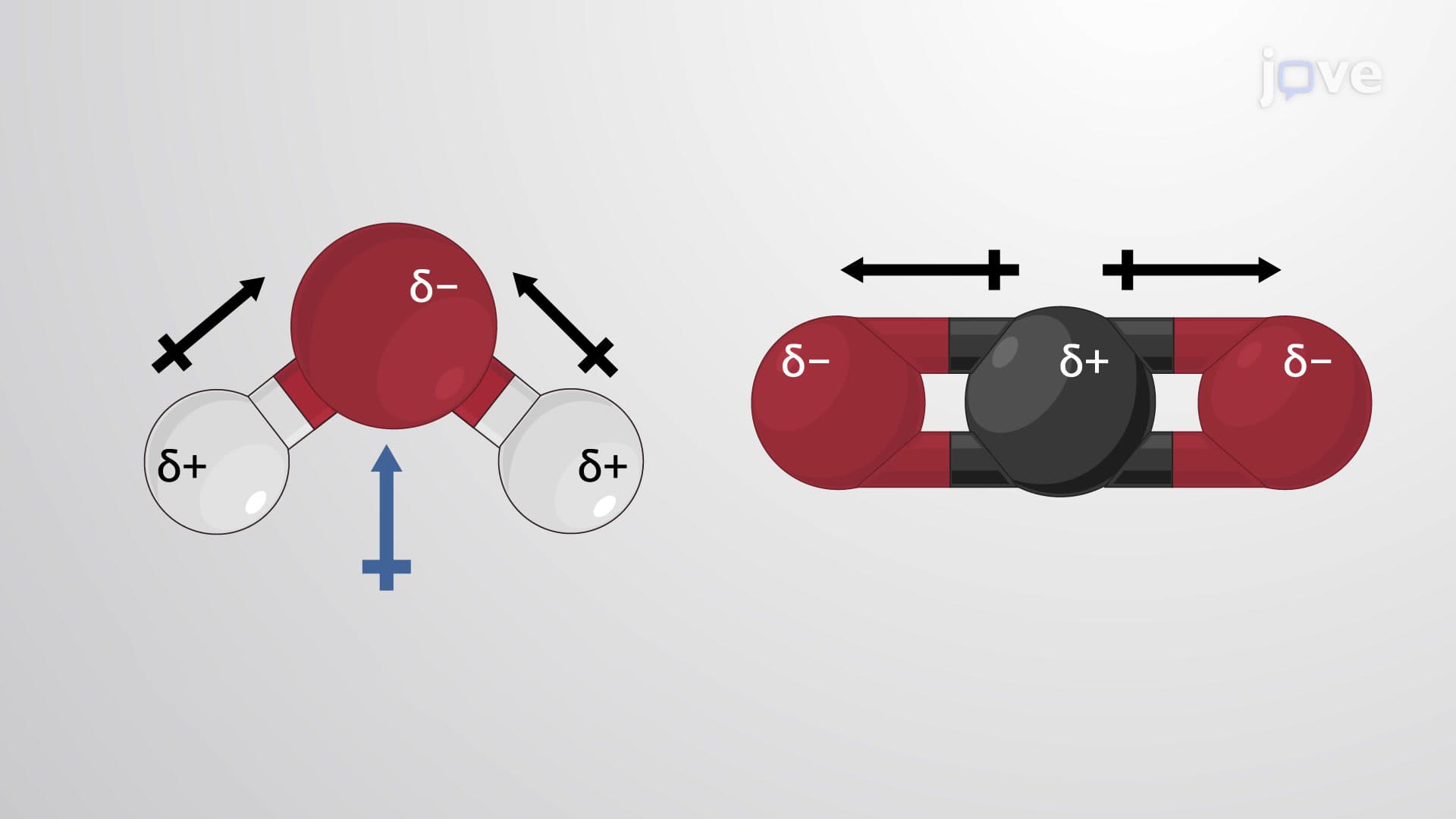
For polyatomic molecules, the net dipole moment results from vector addition of individual bond dipoles. Water (H₂O) exemplifies a polar molecule, despite having two identical O-H bonds, its bent geometry prevents dipole cancellation, yielding a net dipole of 1.85 D. Conversely, carbon dioxide (CO₂) demonstrates how symmetry creates nonpolar molecules: although C=O bonds are polar, the linear geometry positions dipoles in opposite directions, resulting in zero net dipole.
These principles appear extensively in AP Chemistry exams, where students must predict molecular polarity, explain solubility patterns, and connect molecular geometry to physical properties. College general chemistry courses expand these concepts to explain intermolecular forces, phase behaviors, and spectroscopic properties essential for organic chemistry and biochemistry applications.
Related Micro-courses