Loading subject page…


392,708 views

Video Summary: What are Resonance and Hybrid Structures
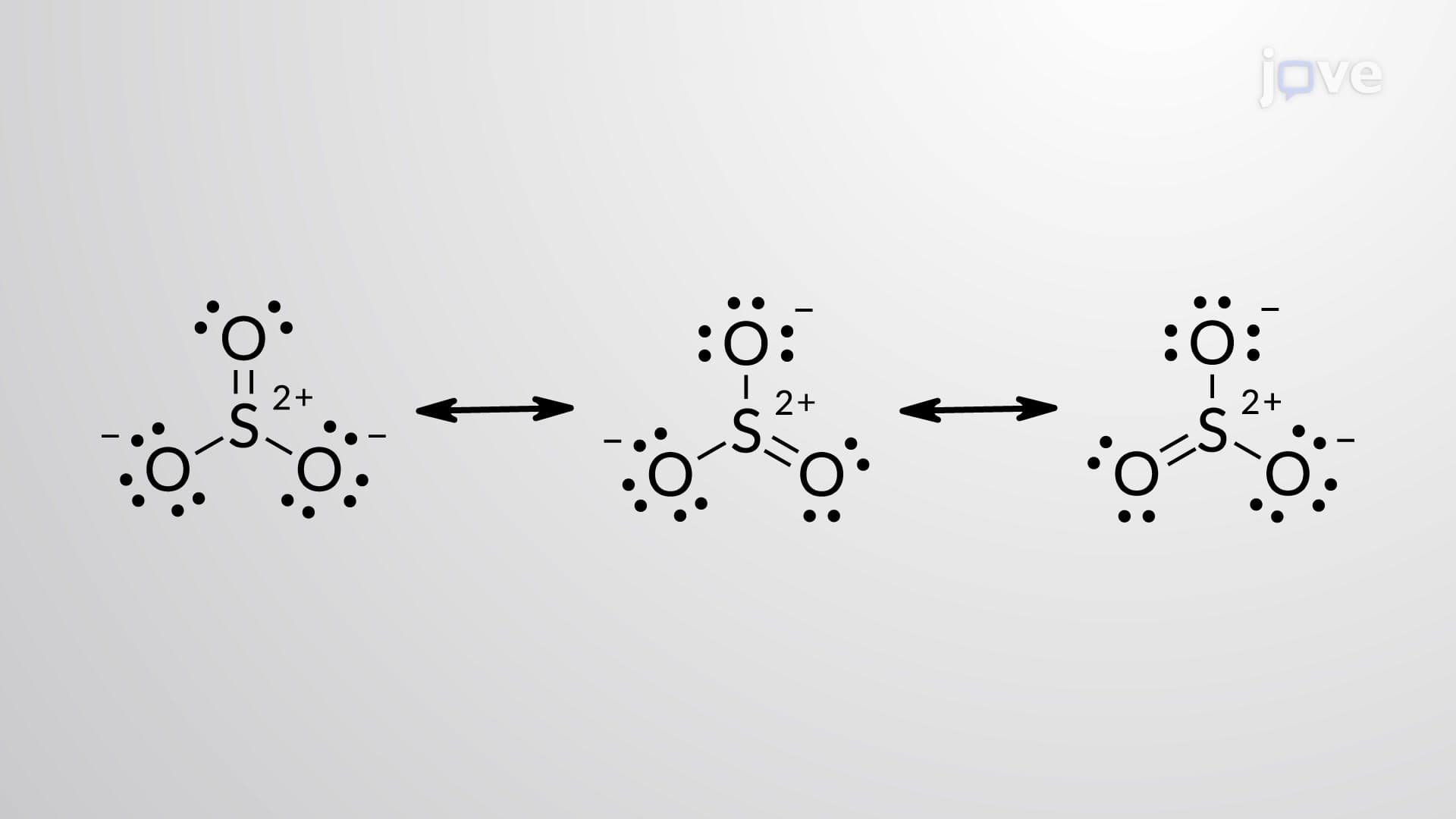
Why do some molecules like ozone protect us from harmful UV radiation while others don't? The answer lies in resonance hybrid structures, a fascinating concept where electrons aren't stuck in one place but spread across multiple bonds. Take sulfur trioxide (SO₃), a compound found in acid rain formation across US industrial areas. Understanding What are Resonance And Hybrid Structures reveals how these molecules achieve greater stability through electron delocalization, creating structures that are actually weighted averages of multiple possible arrangements. Watch the full video on JoVE Coach to master this concept with expert-led visuals and step-by-step explanations.
Resonance hybrid structures represent one of chemistry's most elegant solutions to describing molecules that don't fit neatly into single Lewis structure representations. When electrons become delocalized across multiple bonds or atoms, chemists use resonance theory to capture this complexity. Unlike simple molecules where electrons occupy fixed positions, resonance structures show how electron density spreads across different possible arrangements.
The key insight is that these molecules don't rapidly switch between different structures, instead, the actual molecule exists as a weighted average or hybrid of all possible resonance forms. This concept frequently appears on AP Chemistry exams and college organic chemistry courses, making it essential for students pursuing STEM careers.
Resonance stabilization occurs because delocalized electrons occupy molecular orbitals that span multiple atoms, creating lower-energy configurations than any single Lewis structure could represent. Consider benzene (C₆H₆), widely used in US petrochemical industries. Its six-membered ring with alternating double bonds cannot be accurately represented by just one Lewis structure. The actual molecule is a hybrid where electron density is evenly distributed around the ring.
This delocalization explains why benzene is remarkably stable compared to hypothetical molecules with fixed double bonds. Students preparing for the MCAT or advanced chemistry courses must understand that resonance energy, the difference between the hybrid's actual energy and the most stable contributing structure, directly correlates with molecular stability.
Four key principles help determine which resonance contributors most closely resemble the actual molecular structure. First, structures where all atoms achieve complete octets (or appropriate valence shell filling) carry greater weight. Second, arrangements with more covalent bonds typically contribute more significantly to the hybrid.
Third, minimizing formal charges across the molecule increases stability. Students can calculate formal charge using: Formal Charge = (valence electrons) - (nonbonding electrons) - (1/2 × bonding electrons). Finally, placing negative formal charges on highly electronegative atoms (like oxygen or fluorine) and positive charges on less electronegative atoms (like carbon or hydrogen) creates more stable contributors.
Resonance concepts appear throughout US pharmaceutical and materials industries. Aspirin's active component contains a benzene ring with resonance stabilization, while Kevlar's strength partly derives from resonance in its aromatic rings. Students encountering resonance in college organic chemistry or preparing for professional school entrance exams should recognize these patterns in biological molecules like nucleotide bases in DNA and amino acids in proteins.
Related Micro-courses