Loading subject page…

- Organic Chemistry
- Covalent Bonding and Structure
- Electron Configurations
Micro-course: Covalent Bonding and Structure
392,707 views
Learn key concepts and earn your certificate.


Electron Configurations

00:00
02:46
Video Summary: What Is Electron Configurations
Ever wonder why neon lights glow different colors or why lithium batteries work so efficiently? The answer lies in electron configurations, the precise arrangement of electrons around an atom's nucleus. Think of it like assigned parking spaces in a multi-level garage, where electrons fill specific energy levels following strict rules. Understanding what is electron configurations helps explain everything from the periodic table's structure to how LEDs in your smartphone screen produce light. Watch the full video on JoVE Coach to master this concept with expert-led visuals and step-by-step explanations.
- Understand what is electron configurations and how they represent the distribution of electrons in atomic orbitals
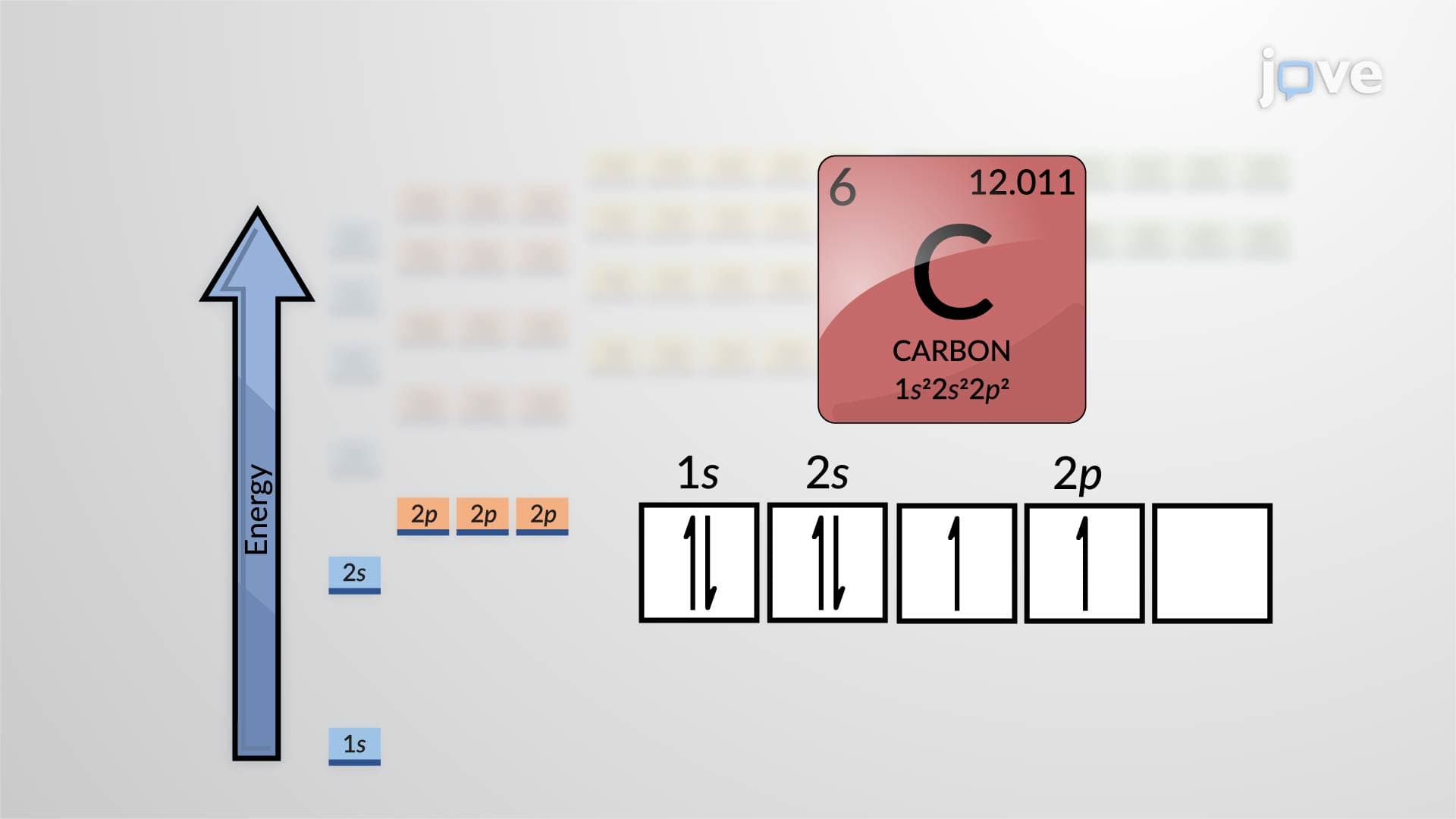
- Identify the three fundamental principles governing electron arrangement: Aufbau principle, Pauli exclusion principle, and Hund's rule
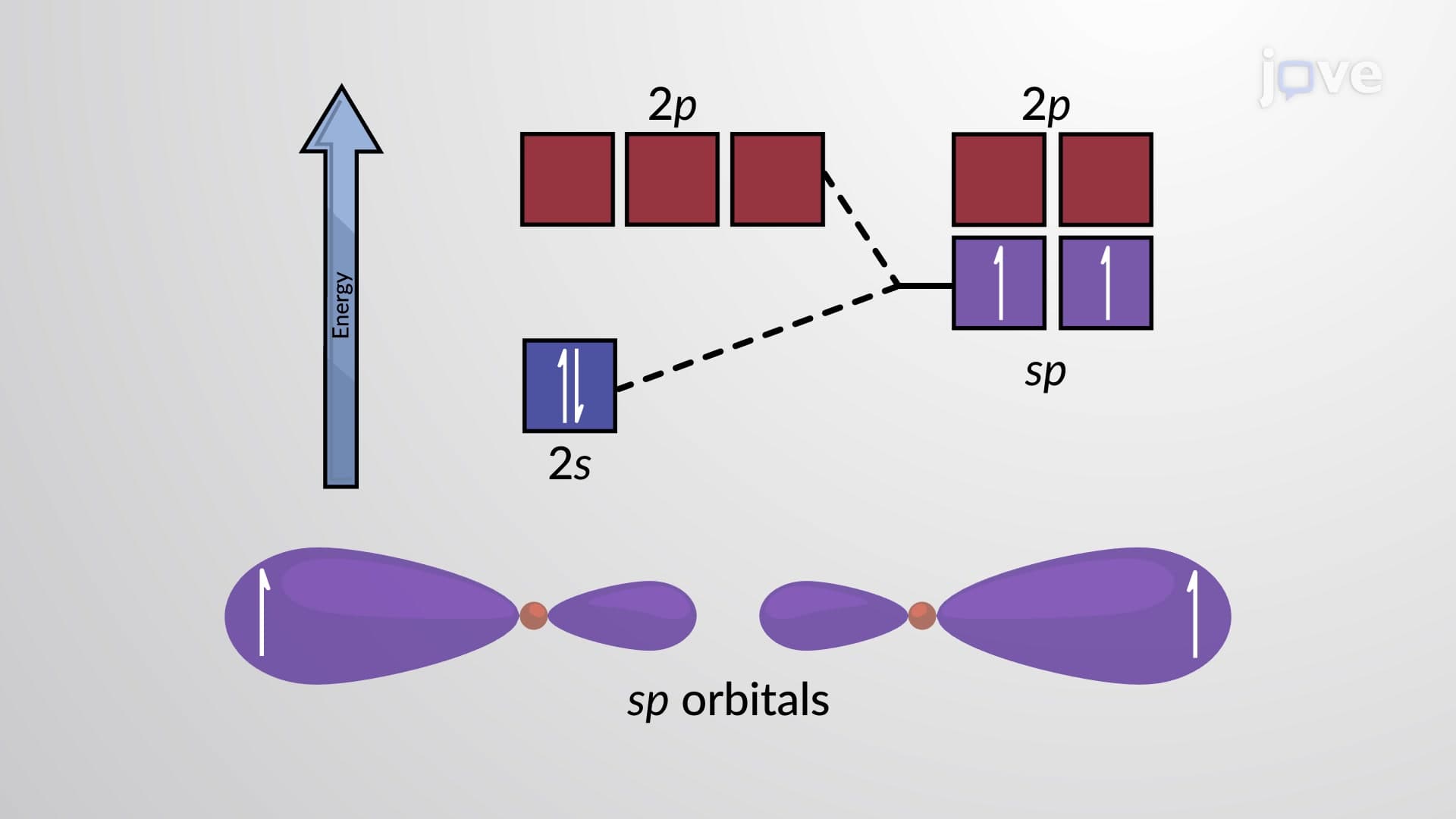
- Analyze how energy levels fill in order from lowest to highest energy orbitals
- Apply quantum number rules to determine why orbitals can hold only two electrons with opposite spins
- Recognize the difference between core electrons and valence electrons in atomic structure
- Compare s, p, d, and f orbital shapes and their relative energy levels
- Evaluate electron configuration diagrams to predict chemical bonding behavior
- Explore how orbital penetration and shielding effects influence electron placement
Understanding What is Electron Configurations
Electron configurations serve as the atomic "address system" that tells us exactly where each electron resides within an atom. Just as every apartment in New York City has a specific address, every electron occupies a designated orbital with unique energy characteristics. This systematic arrangement follows three fundamental rules that govern all atoms in the universe.
The Three Governing Principles
The Aufbau principle acts like a building's elevator system, electrons always fill the lowest available energy floors first before moving to higher levels. This explains why hydrogen's single electron occupies the 1s orbital rather than jumping to the 2s level.
The Pauli exclusion principle functions like a strict dormitory policy: no two electrons can share identical quantum numbers. Since electrons in the same orbital share three quantum numbers, they must have opposite spins, imagine roommates who must sleep on opposite schedules to avoid conflicts.
Hund's rule resembles subway commuters spreading out across empty seats before doubling up. Electrons prefer to occupy separate orbitals within the same energy subshell before pairing, minimizing electron-electron repulsion.
Real-World Applications and Exam Relevance
Understanding electron configurations proves essential for AP Chemistry students tackling periodic trends questions. For example, explaining why fluorine is more electronegative than oxygen requires knowledge of their electron arrangements. On the MCAT, test-takers encounter electron configuration problems when analyzing chemical bonding in biological molecules like hemoglobin.
In industry, semiconductor companies like Intel rely on electron configuration principles when designing microprocessors. The controlled arrangement of electrons in silicon crystals enables the digital devices powering everything from Tesla's autopilot systems to NASA's Mars rovers.
Orbital Energy and Filling Order
The familiar "diagonal rule" diagram helps students remember orbital filling sequences, but real atoms sometimes deviate from this pattern. Chromium and copper, commonly tested exceptions, demonstrate how electron stability can override standard filling rules. These anomalies appear frequently on college general chemistry exams, making thorough understanding crucial for academic success.
Frequently Asked Questions
Electron configurations describe where electrons are located around an atom's nucleus, like a detailed seating chart showing which energy levels and orbitals contain electrons. They follow specific rules that determine the most stable arrangement for each element. This knowledge forms the foundation for understanding chemical bonding and periodic table trends.
AP Chemistry frequently tests electron configurations through multiple-choice questions about orbital diagrams, exceptions like chromium and copper, and free-response problems linking electron arrangements to periodic trends. Students must write configurations for ions, identify valence electrons, and explain bonding behavior. Mastering this topic typically accounts for 10-15% of the exam content.
The MCAT tests electron configurations in general chemistry and organic chemistry contexts, particularly when explaining molecular stability and reaction mechanisms. Understanding these concepts helps with questions about electronegativity, bond formation, and spectroscopy. Strong fundamentals in electron arrangements often determine success on challenging passage-based questions.
MRI machines rely on electron spin properties, while PET scans use radioactive isotopes whose electron configurations determine decay patterns. Pharmaceutical companies design drugs based on electron arrangements that enable specific molecular interactions. Even surgical lasers depend on controlled electron transitions in materials like ruby crystals to produce precise cutting beams.
Most students find electron configurations manageable with consistent practice and pattern recognition. Start with simple elements like hydrogen through neon before tackling transition metals. The rules remain consistent, and visual aids like orbital diagrams make abstract concepts more concrete. Success comes from understanding principles rather than pure memorization.
Create flashcards for the first 36 elements, practice drawing orbital diagrams daily, and focus on common exceptions like chromium ([Ar] 3d5 4s1) and copper ([Ar] 3d10 4s1). Use mnemonics for orbital filling order and work through practice problems from multiple textbooks. Teaching concepts to study partners often reveals knowledge gaps before exam day.
Progress to periodic trends (ionization energy, atomic radius), chemical bonding (ionic, covalent, metallic), and molecular geometry using VSEPR theory. These topics build directly on electron configuration knowledge. Advanced students can explore molecular orbital theory and spectroscopy, which provide deeper insights into electron behavior in molecules and compounds.
Related Micro-courses

12 Concepts

14 Concepts

12 Concepts