Loading subject page…


85,200 views


Video Summary: Alkenes via Reductive Coupling of Explained
Ever wondered how pharmaceutical companies create complex ring structures found in life-saving medications? Alkenes reductive coupling reactions, particularly the McMurry reaction, transform simple carbonyl compounds into sophisticated alkenes using titanium metal as an electron source. This powerful synthetic method enables chemists at companies like Pfizer to construct everything from small cyclic molecules to large ring systems found in natural products like flexibilene. The process involves radical coupling followed by deoxygenation to yield clean alkene products. Watch the full video on JoVE Coach to master this concept with expert-led visuals and step-by-step explanations.
Alkenes via reductive coupling of carbonyl compounds represents one of the most powerful methods for carbon-carbon double bond formation in organic chemistry. This reaction class transforms aldehydes and ketones into alkenes through a metal-mediated process that involves electron transfer and radical chemistry. The most prominent example is the McMurry reaction, which uses low-valent titanium species to facilitate this transformation.
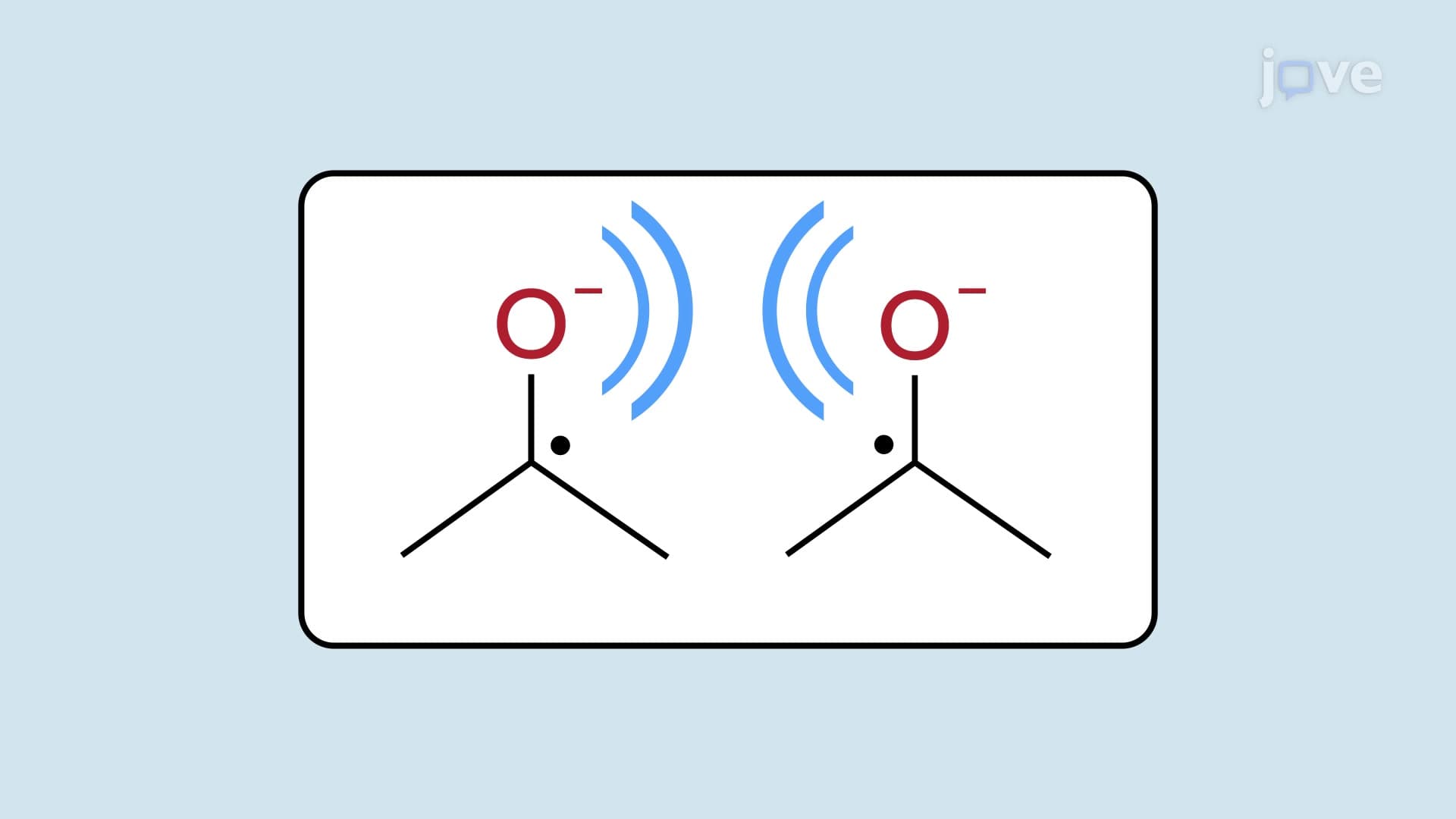
The reductive coupling process begins with single-electron transfer from a reduced metal species (typically titanium) to the carbonyl oxygen atoms. This electron transfer generates radical anions that undergo rapid carbon-carbon bond formation between the carbonyl carbon centers. The resulting intermediate contains a vicinal diol framework similar to that formed in pinacol coupling reactions. However, unlike pinacol coupling, the McMurry reaction proceeds through a second step involving slow deoxygenation, where the titanium metal abstracts the oxygen atoms to yield the final alkene product.
This mechanism explains why temperature control is crucial: at low temperatures, the reaction stops at the diol stage (pinacol coupling), while higher temperatures drive the elimination of oxygen to form alkenes. Students preparing for AP Chemistry or college organic chemistry exams should recognize this temperature dependence as a key factor in reaction selectivity.
The McMurry reaction excels in two distinct applications. Intermolecular reactions typically employ two equivalents of the same carbonyl compound to produce symmetrical, tetrasubstituted alkenes. These reactions often proceed in good yields and find applications in pharmaceutical synthesis where symmetrical alkene motifs are required.
More remarkably, intramolecular McMurry reactions enable the formation of large cycloalkenes that would be difficult to access through other methods. The cyclization of 15-keto-aldehydes to produce flexibilene, a natural product containing a challenging 15-membered ring, demonstrates this methodology's power in natural product synthesis. This application is particularly relevant for students interested in medicinal chemistry or pharmaceutical research careers.
When planning syntheses involving reductive coupling, chemists must consider several factors. The choice of titanium reagent (such as TiCl3/LiAlH4 or TiCl4/Zn) affects both reaction efficiency and selectivity. Additionally, the substitution pattern of starting carbonyl compounds influences product formation and potential side reactions. These considerations frequently appear in MCAT organic chemistry sections and advanced undergraduate exams.
Related Micro-courses