Loading subject page…


85,200 views

Video Summary: What Is Radical Formation Elimination
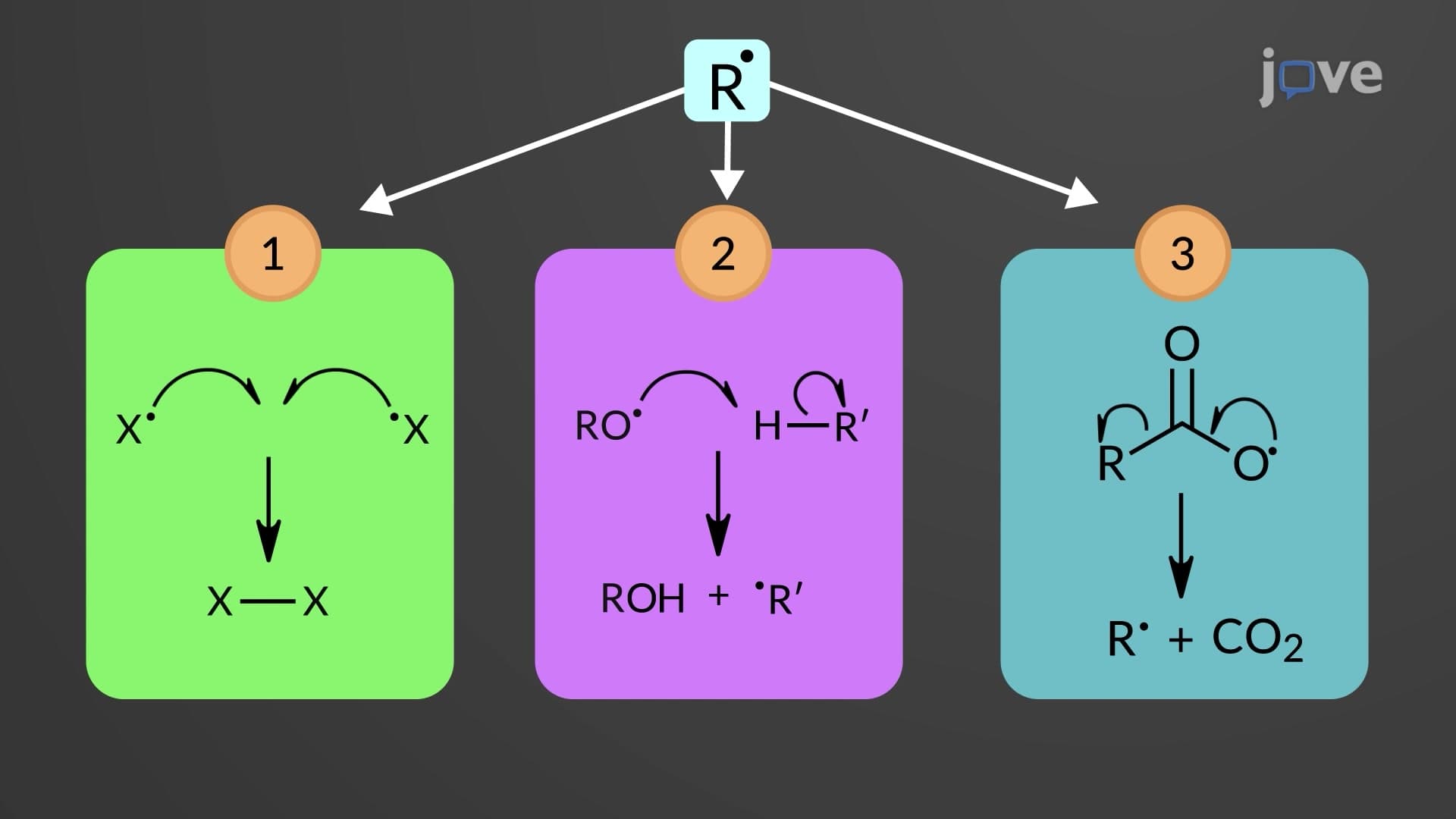
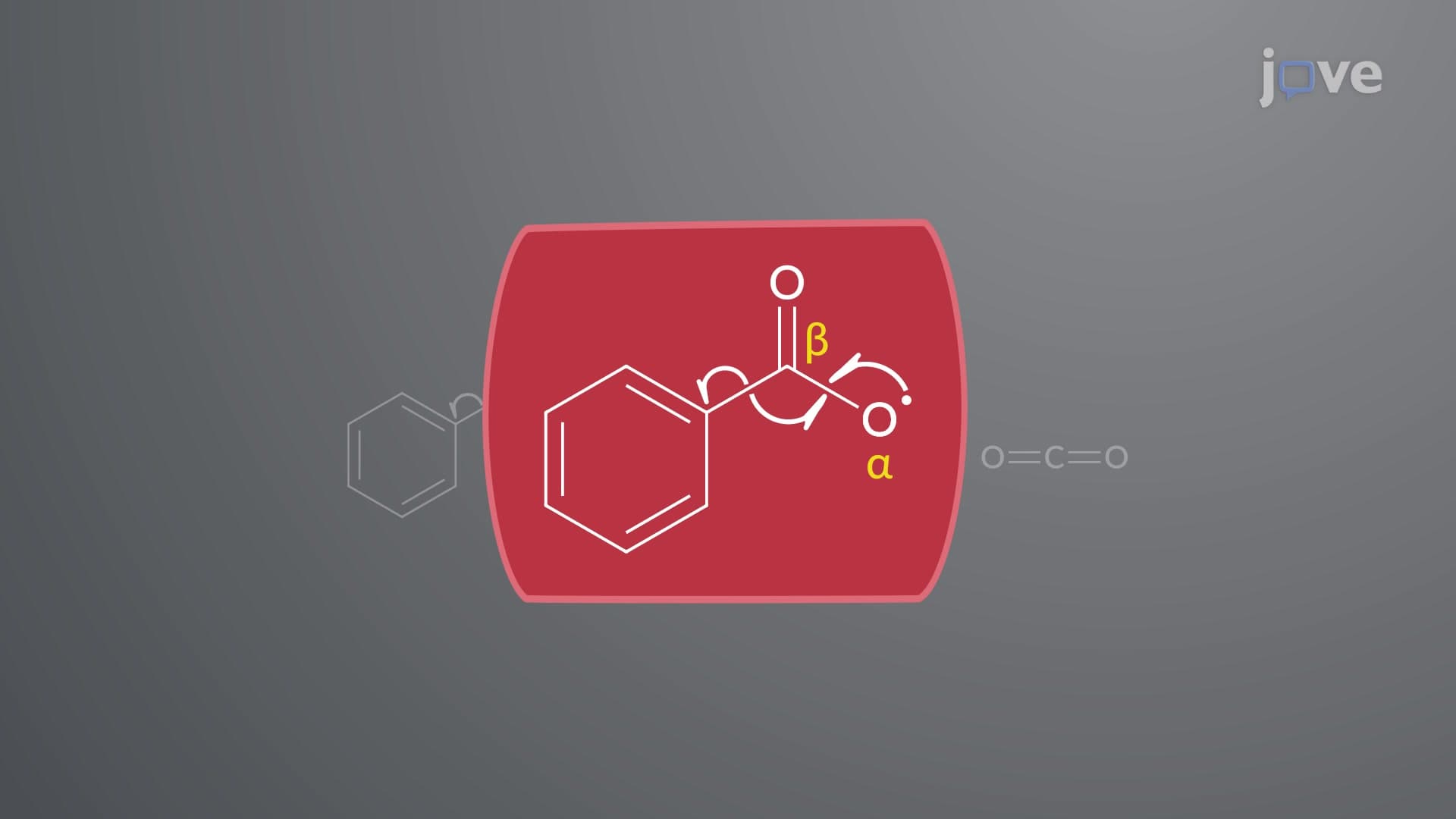
Ever wonder how the breakdown of organic peroxides in plastics manufacturing creates new chemical pathways? Radical formation elimination represents the mechanistic reverse of radical addition, where unstable radicals undergo bond cleavage to form stable products. In pharmaceutical synthesis at companies like Pfizer, dibenzoyl peroxide decomposes through this process, generating phenyl radicals and carbon dioxide. This fundamental organic chemistry mechanism involves β-elimination from unstable radical intermediates, creating double bonds and releasing stable fragments. Watch the full video on JoVE Coach to master this concept with expert-led visuals and step-by-step explanations.
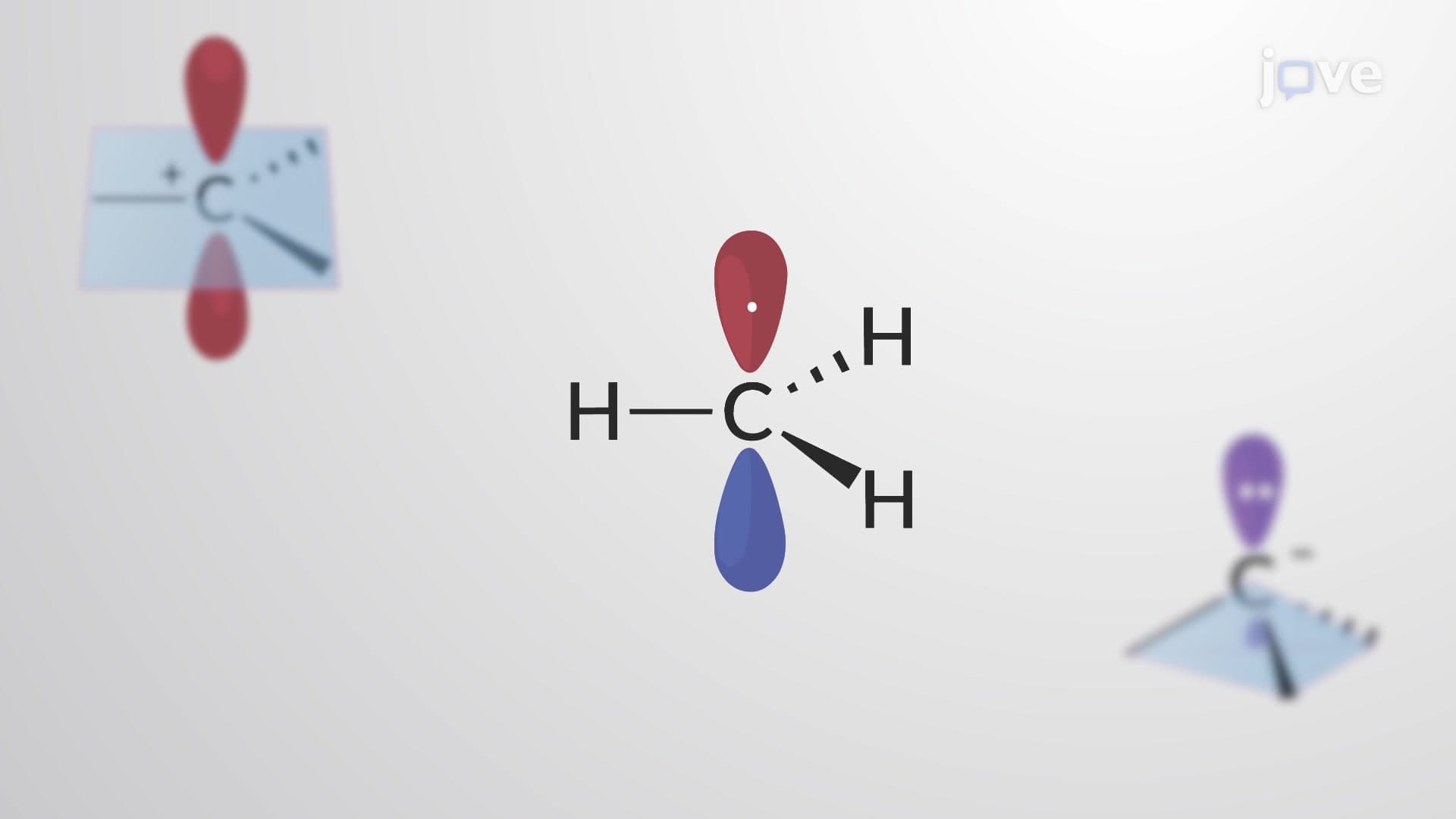
Radical formation elimination occurs when unstable radical intermediates undergo spontaneous bond cleavage to generate more stable products. Unlike ionic elimination reactions taught in introductory organic chemistry, this process involves homolytic bond breaking where electrons are distributed equally between fragments. The driving force stems from the thermodynamic instability of certain radical species, particularly those with unpaired electrons adjacent to electron-withdrawing groups or strained ring systems.
The elimination process specifically targets the β-position relative to the radical center. When an unstable radical forms-often through homolysis of peroxide bonds or thermal decomposition-the unpaired electron seeks stabilization. The β-elimination pathway involves simultaneous breaking of the C-C bond at the β-position while forming a π-bond between the α and β carbons. This concerted process generates two products: a stabilized radical fragment and an alkene molecule.
For students preparing for AP Chemistry or college organic chemistry exams, understanding this selectivity proves crucial. The β-position preference occurs because it maximizes orbital overlap during the transition state, leading to lower activation energy compared to alternative elimination pathways.
Major US chemical companies utilize radical formation elimination in controlled polymer degradation and pharmaceutical intermediate synthesis. Dow Chemical employs these reactions in producing specialty chemicals, while Bristol Myers Squibb leverages radical elimination in drug manufacturing processes. The decomposition of dibenzoyl peroxide-commonly used as a polymerization initiator-exemplifies this mechanism in industrial settings.
Students encounter radical formation elimination on MCAT organic chemistry sections, particularly in passages involving reaction mechanisms and product prediction. College-level courses at institutions like UCLA and MIT emphasize mechanistic understanding over memorization. Focus on identifying radical precursors, predicting stability patterns, and drawing complete electron-pushing mechanisms. Practice problems should emphasize structure-reactivity relationships and thermodynamic driving forces that govern these transformations.
Related Micro-courses