Loading video…


 27 Concepts
 85.2K views

Video Summary: What Is Radical Formation Homolysis
Ever wonder how sunscreen works or why plastic bottles degrade in sunlight? Radical formation homolysis breaks chemical bonds by splitting electrons equally between atoms, creating highly reactive particles called radicals. This process powers everything from the ozone layer's protective reactions to the polymerization of plastics in US manufacturing facilities. Understanding what is radical formation homolysis reveals the fundamental chemistry behind both protective and destructive processes in our environment. Watch the full video on JoVE Coach to master this concept with expert-led visuals and step-by-step explanations.
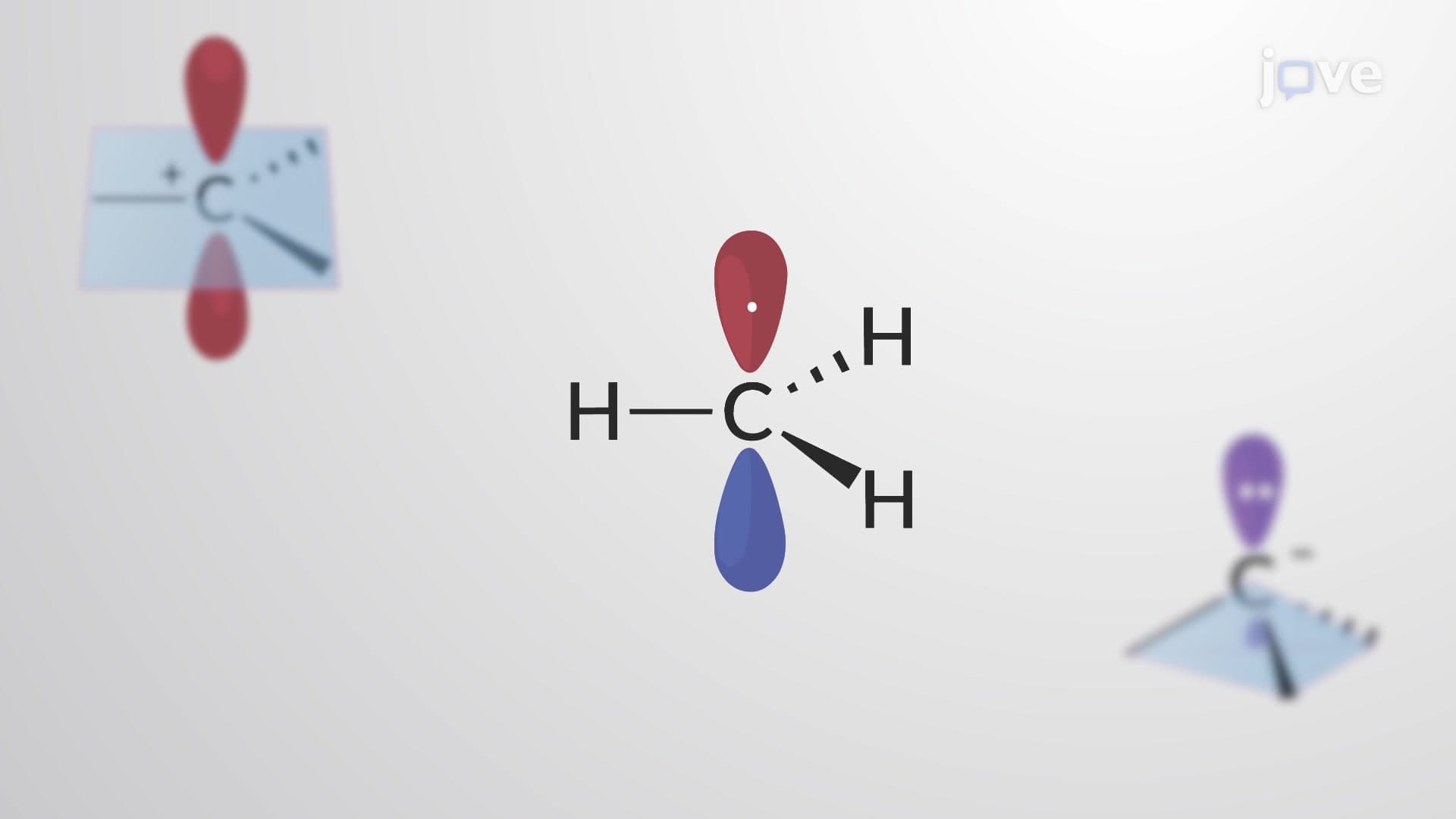
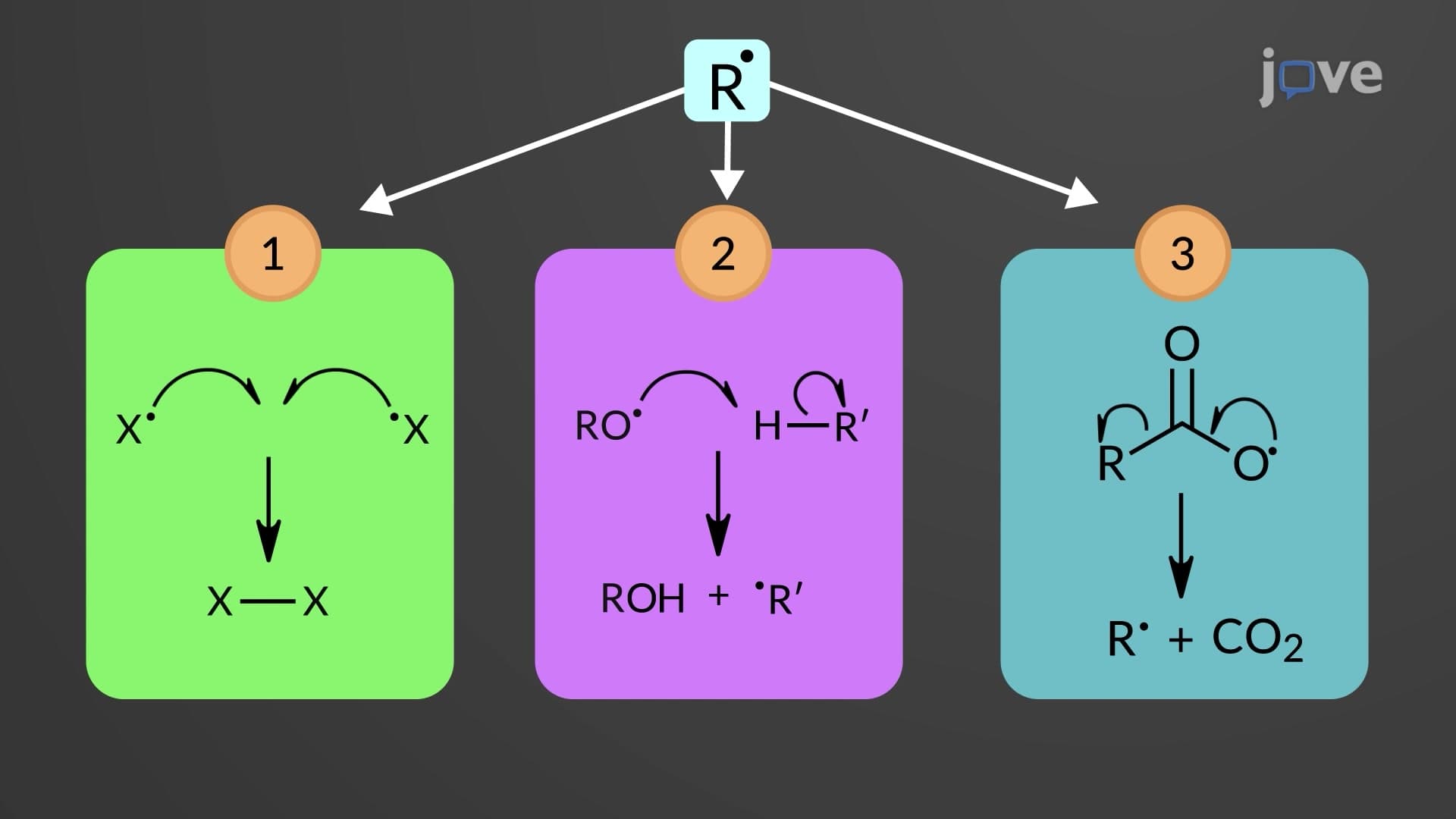
Radical formation homolysis represents one of the two primary mechanisms by which covalent bonds break in chemical reactions. Unlike heterolysis, where both bonding electrons end up on one atom creating charged ions, homolysis distributes the bonding electrons equally-one electron to each atom. This equal distribution creates two neutral species, each containing an unpaired electron, known as free radicals.
The term "homolysis" derives from Greek roots meaning "same splitting," reflecting the symmetric nature of electron distribution. This process requires sufficient energy input to overcome the bond dissociation energy, which varies significantly among different types of chemical bonds.
The energy needed for homolytic cleavage depends on bond strength and molecular structure. Weak bonds, such as the oxygen-oxygen bond in peroxides (typically 35-40 kcal/mol), readily undergo homolysis with moderate heating-often just 50-100°C above room temperature. This property makes peroxides valuable as radical initiators in polymer chemistry, particularly in the production of plastics used throughout US manufacturing.
Stronger bonds require more substantial energy input. For example, carbon-hydrogen bonds (around 100 kcal/mol) need higher temperatures or specific wavelengths of light to achieve homolysis. This principle explains why UV radiation from sunlight can break down polymers and cause material degradation-a significant concern for outdoor infrastructure across the United States.
Photolytic homolysis occurs when molecules absorb light energy matching their bond dissociation energy. Halogen molecules like chlorine and bromine exemplify this process, with relatively weak halogen-halogen bonds (58 kcal/mol for Cl-Cl) that break readily under UV light to form halogen radicals.
This photochemical process drives stratospheric ozone depletion, where chlorofluorocarbons (CFCs) undergo homolysis to release chlorine radicals that catalytically destroy ozone. Understanding these mechanisms proved crucial for environmental policy decisions, including the Montreal Protocol's regulation of ozone-depleting substances.
Students preparing for AP Chemistry, college organic chemistry courses, or graduate-level examinations like the MCAT frequently encounter radical formation homolysis in reaction mechanisms. The concept appears in questions about polymerization, combustion reactions, and atmospheric chemistry. Medical and pharmacy students studying for exams like the PCAT or NAPLEX also benefit from understanding radical processes, as they relate to drug metabolism and oxidative stress in biological systems.
Industrial applications span petroleum refining, where thermal cracking involves homolytic bond breaking, to pharmaceutical synthesis, where controlled radical reactions enable selective transformations. These real-world connections help students appreciate the practical relevance of fundamental chemical principles.
Related Micro-courses