Loading subject page…


85,200 views


Video Summary: What Is Radical Halogenation Thermodynamics
Why does chlorine react explosively with methane while iodine won't react at all? Radical halogenation thermodynamics explains how energy changes determine which halogen reactions are possible and practical. Understanding radical halogenation thermodynamics reveals why pharmaceutical companies use specific halogens when synthesizing medications like the anesthetic halothane at facilities across Texas and New Jersey. Watch the full video on JoVE Coach to master this concept with expert-led visuals and step-by-step explanations.
Radical halogenation thermodynamics governs which halogen substitution reactions are energetically favorable and practically useful. Unlike many organic reactions where both enthalpy and entropy matter, radical halogenation has equal numbers of reactant and product molecules, making entropy changes negligible. This simplification means the Gibbs free energy change (ΔG) equals the enthalpy change (ΔH), allowing chemists to predict reaction outcomes using bond dissociation energies alone.
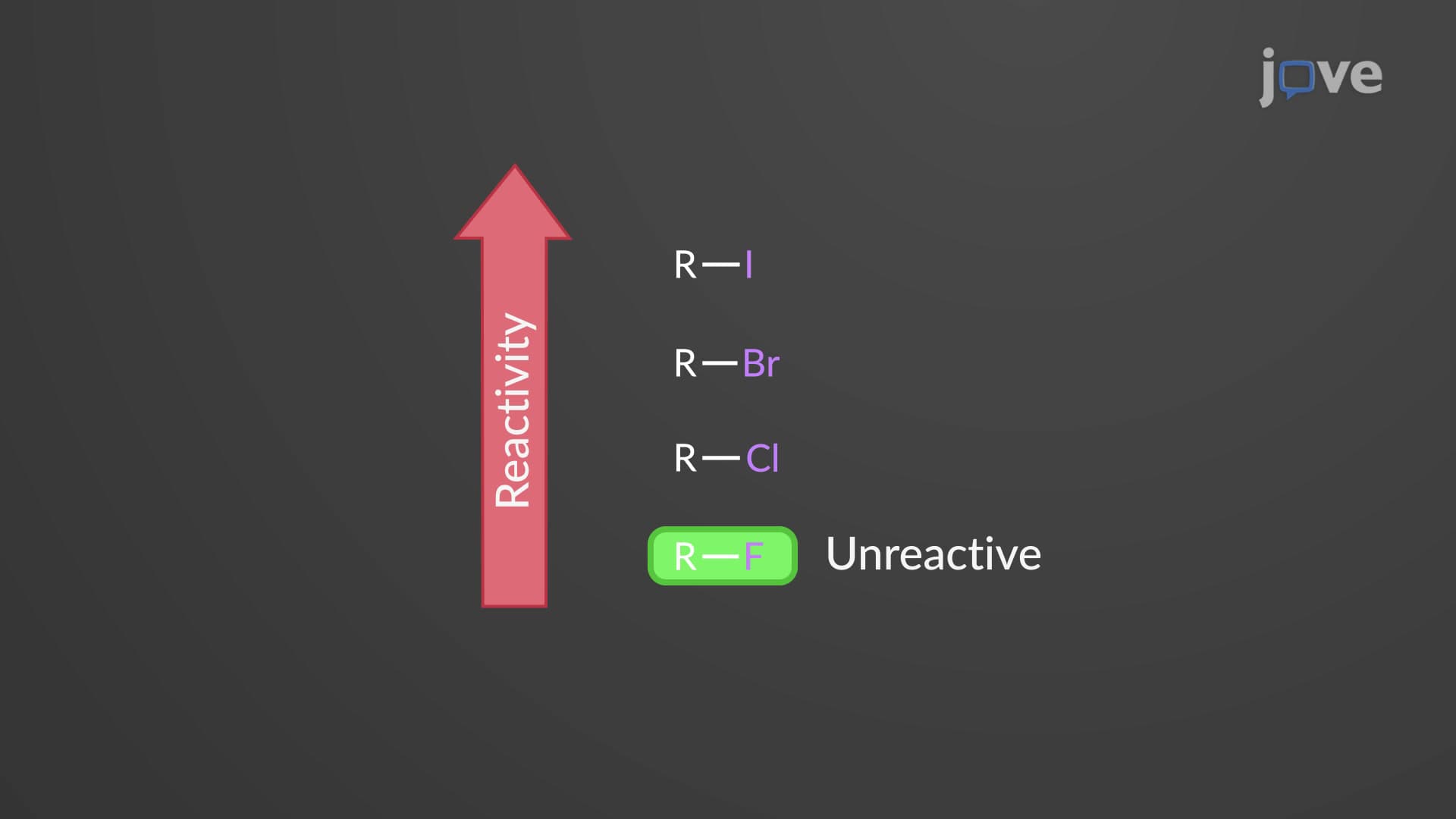
The dramatic differences between halogen reactivity stem from bond strength variations. Fluorination of methane releases approximately 103 kcal/mol, making it violently exothermic and practically dangerous. Major chemical companies like DuPont have developed specialized equipment to control fluorination reactions safely. Chlorination releases about 25 kcal/mol-favorable but manageable-explaining why chlorinated compounds dominate industrial applications from PVC production to water treatment.
Bromination barely releases energy (approximately 7 kcal/mol), proceeding slowly but controllably. This makes bromination ideal for selective synthetic applications, such as producing flame retardants used in electronics manufacturing across Silicon Valley. Iodination requires energy input (positive ΔH), making it thermodynamically impossible under normal conditions.
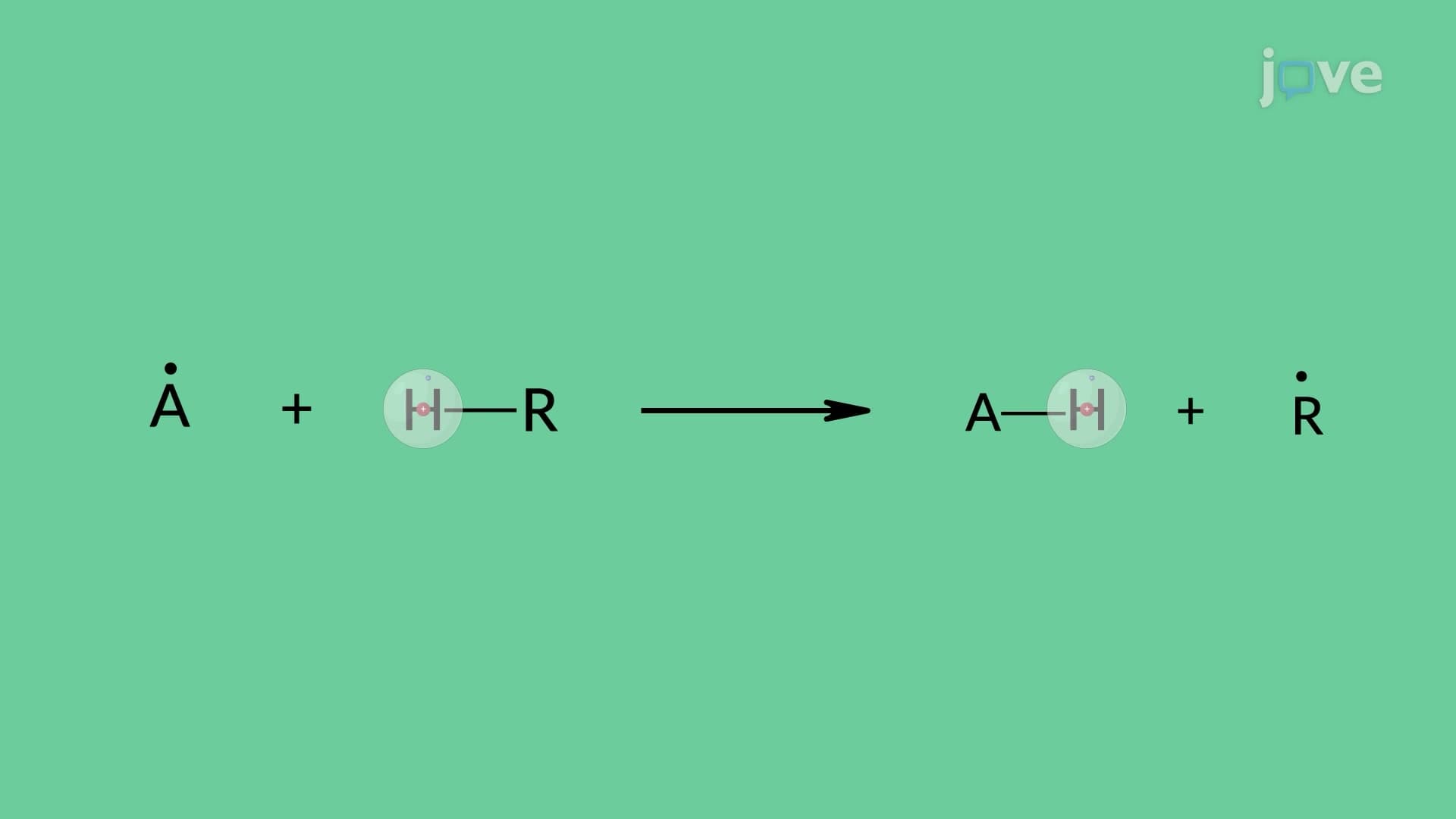
The two-step propagation mechanism reveals why bromination proceeds slower than chlorination despite both being thermodynamically favorable. In bromination's first propagation step (R-H + Br• → R• + HBr), the endothermic nature creates a higher activation energy barrier. Students preparing for AP Chemistry or college organic chemistry exams should remember that thermodynamic favorability (negative ΔH) doesn't guarantee fast kinetics.
Understanding these thermodynamic principles guides real-world synthetic strategies. Pharmaceutical companies synthesizing halogenated drugs must balance thermodynamic favorability with reaction selectivity. For example, Bristol Myers Squibb's manufacturing facilities use controlled bromination for specific drug intermediates, while avoiding fluorination's explosive nature through alternative synthetic routes.
This concept appears regularly on MCAT organic chemistry sections and college midterm exams, typically asking students to rank halogen reactivity or predict reaction outcomes based on bond dissociation energy data.
Related Micro-courses