Loading subject page…


85,200 views

Video Summary: What Is Radical Reactivity Steric Effects
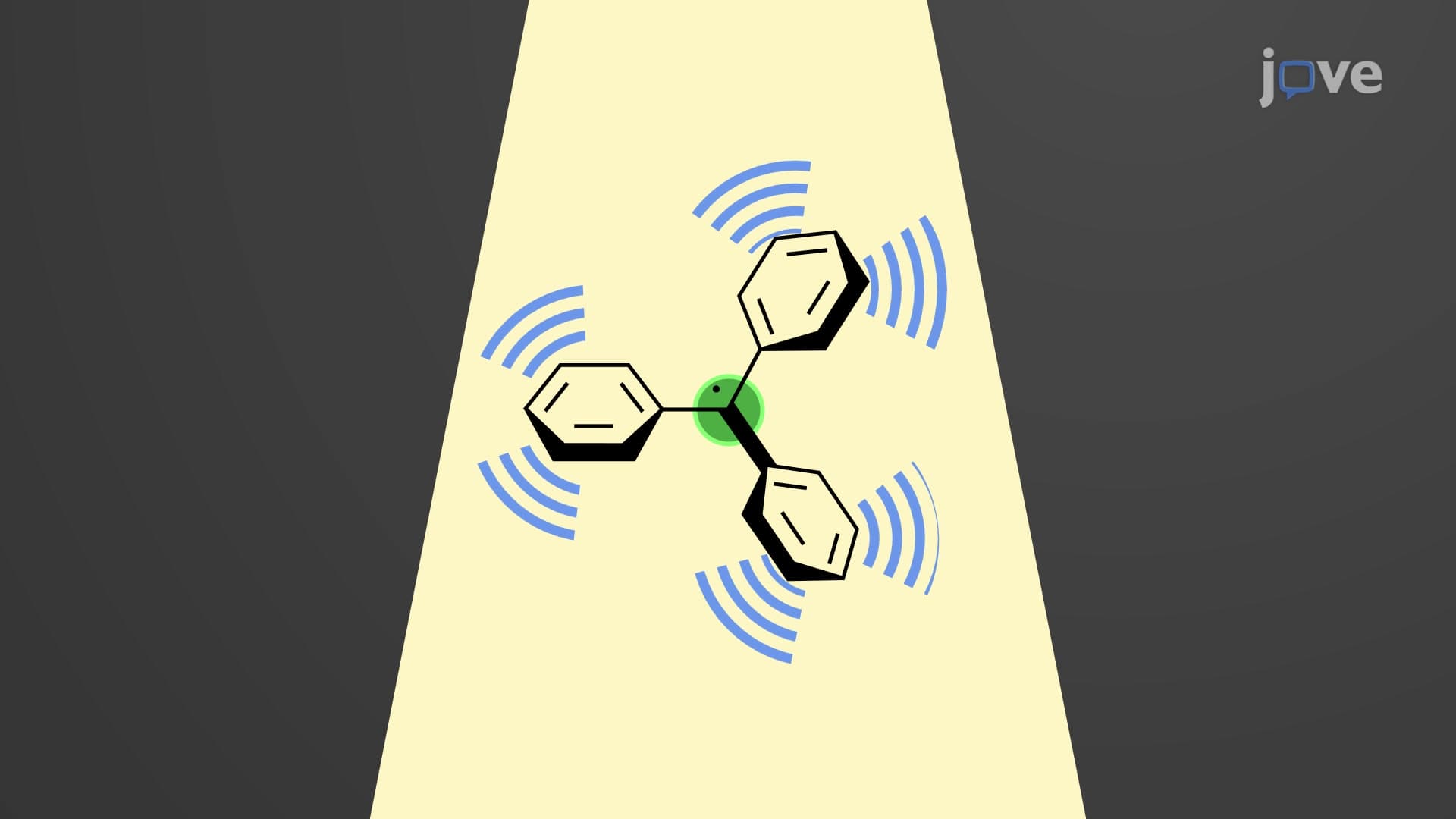
Ever wondered why some chemical radicals can be stored in bottles like ordinary compounds? Radical reactivity steric effects create molecular "shields" that dramatically reduce a radical's tendency to react. The triphenylmethyl radical, first isolated at Harvard University in 1900, remains stable for months due to bulky phenyl groups blocking access to its reactive center. Understanding what is radical reactivity steric effects reveals how molecular geometry controls chemical behavior in ways that seem to defy basic radical chemistry principles. Watch the full video on JoVE Coach to master this concept with expert-led visuals and step-by-step explanations.
Radical reactivity steric effects represent a fundamental principle where bulky groups surrounding a radical center physically block access by other molecules, dramatically reducing the radical's reactivity. Unlike electronic effects that stabilize radicals through resonance or induction, steric effects work purely through spatial hindrance. This concept bridges basic radical chemistry with advanced organic synthesis, appearing frequently on AP Chemistry exams and college organic chemistry courses.
Steric hindrance operates by creating a protective "cage" around the radical center. In the triphenylmethyl radical, three phenyl rings adopt a propeller-like conformation, twisting approximately 30° out of planarity. This geometric arrangement shields the central carbon from approaching reagents, making bond formation energetically unfavorable. The result is a persistent radical that contradicts the typical reactivity patterns students learn in introductory chemistry.
Pharmaceutical companies like Pfizer and Merck exploit steric effects to control radical selectivity in drug synthesis. For example, sterically hindered radicals enable selective C-H activation reactions that would otherwise produce complex mixtures. In polymer chemistry, companies such as DuPont use sterically crowded initiators to control molecular weight distribution in specialty plastics. These applications demonstrate how fundamental concepts translate directly to industrial processes.
On standardized tests like the MCAT and AP Chemistry exam, steric effect questions often involve comparing radical stabilities or predicting reaction outcomes. Students should recognize that steric hindrance typically outweighs electronic effects when extremely bulky groups are present. Practice problems frequently feature triphenylmethyl-type structures or compare different substitution patterns around radical centers. Understanding both the kinetic (reaction rate) and thermodynamic (stability) consequences of steric hindrance proves essential for success.
Steric effects in radicals connect to fundamental concepts like conformational analysis, reaction mechanisms, and molecular orbital theory. Students preparing for advanced courses should recognize how these principles extend to enzyme catalysis, where active site geometry controls substrate selectivity, and to materials science, where steric bulk influences polymer properties.
Related Micro-courses