Loading subject page…


3,980 views


Video Summary: Nonlinear Pharmacokinetics Drug Elimination for Explained
Did you know that some life-saving medications like phenytoin (used for seizures) don't follow predictable elimination patterns in your body? Nonlinear pharmacokinetics drug elimination occurs when enzymes responsible for breaking down drugs become saturated, creating unpredictable concentration changes over time. Unlike linear elimination where doubling the dose doubles the elimination rate, nonlinear systems reach maximum capacity (Vmax) and become limited by enzyme availability. This concept explains why emergency room doctors at Johns Hopkins must carefully monitor certain drug levels to prevent toxicity. Watch the full video on JoVE Coach to master this concept with expert-led visuals and step-by-step explanations.
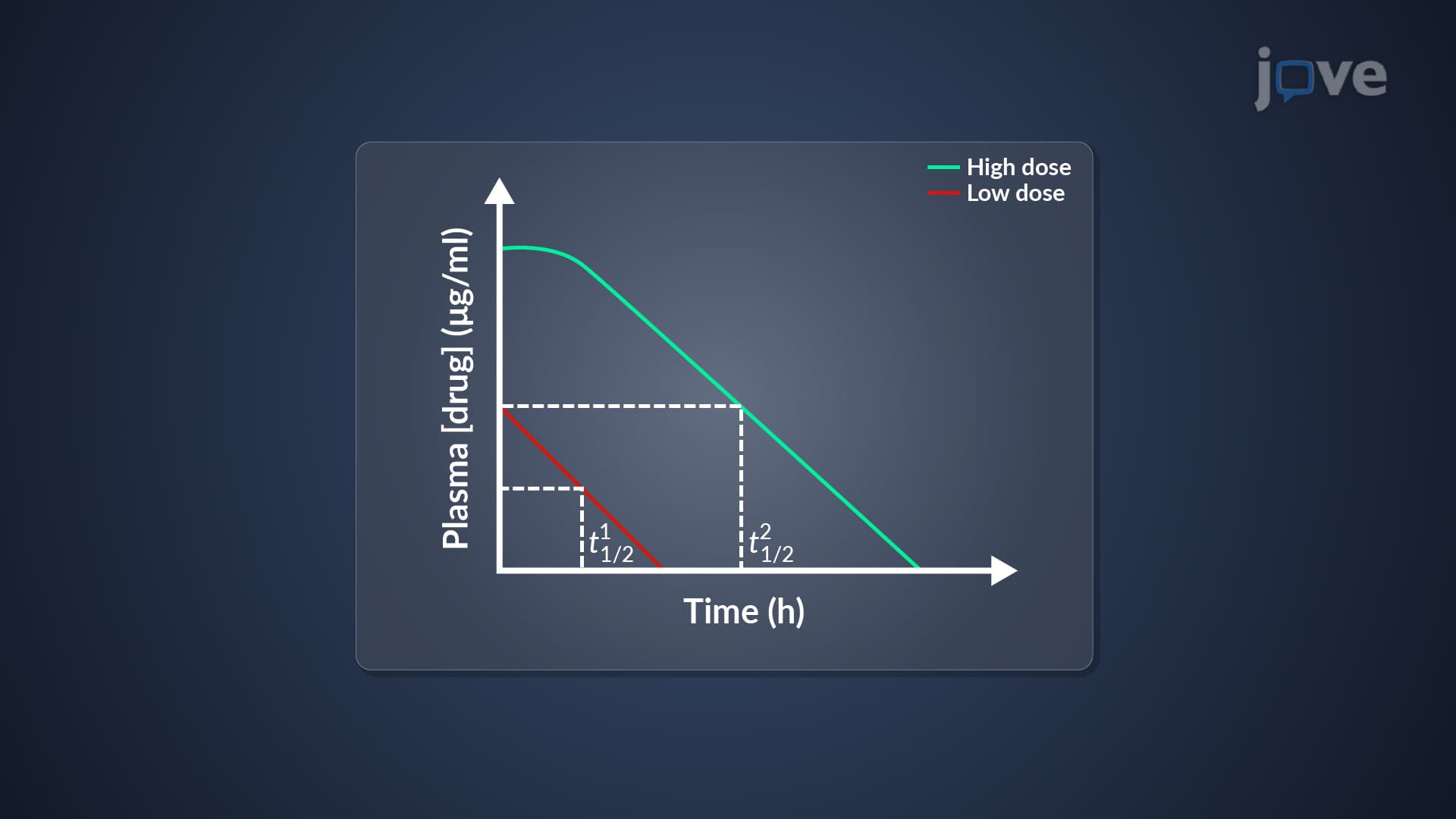
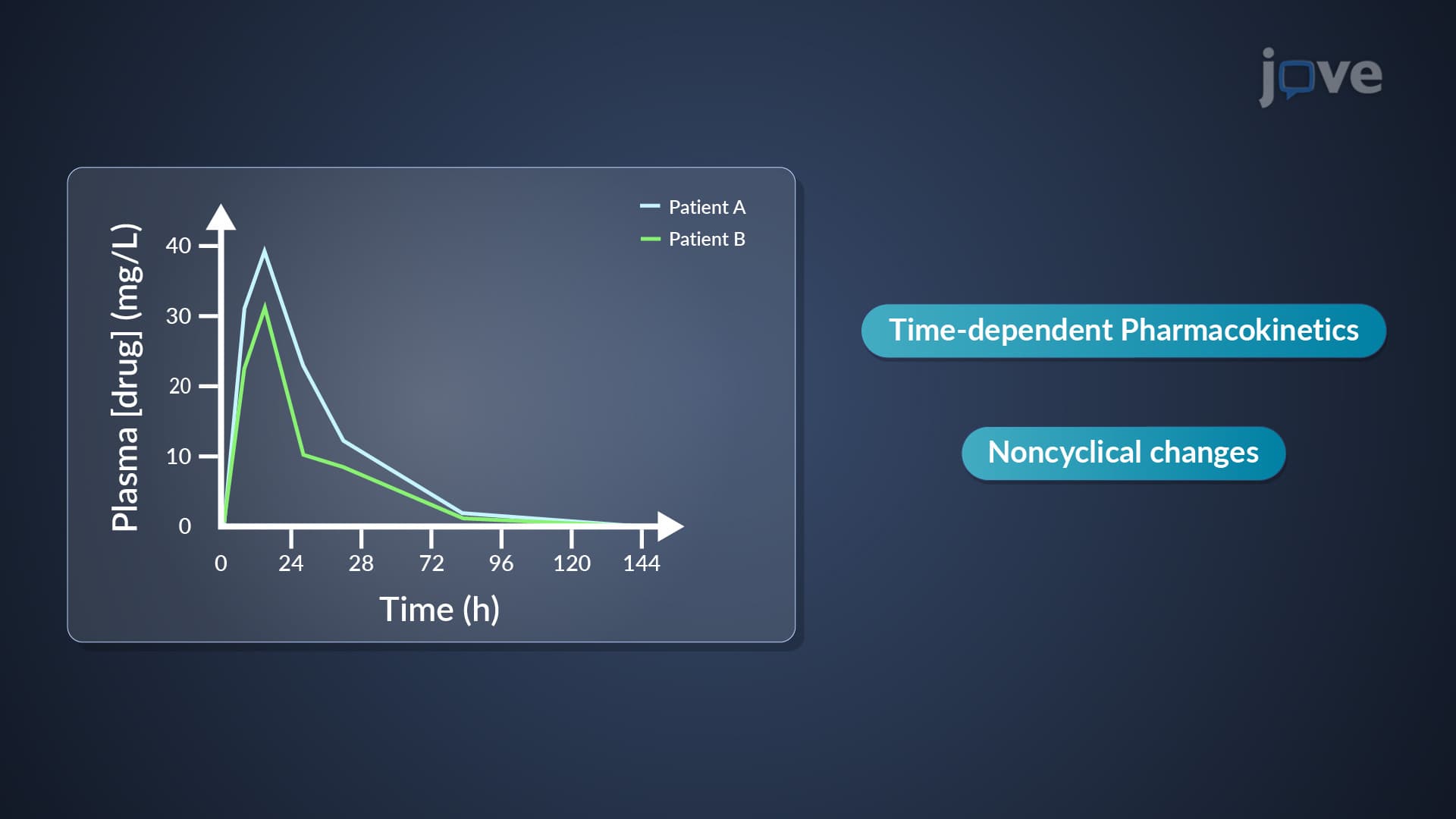
Nonlinear pharmacokinetics drug elimination represents a fundamental departure from the predictable, proportional drug clearance seen in most medications. Unlike linear systems where elimination rate increases proportionally with drug concentration, nonlinear elimination follows Michaelis-Menten kinetics-the same principles governing enzyme reactions you'll encounter in AP Biology and college biochemistry courses.
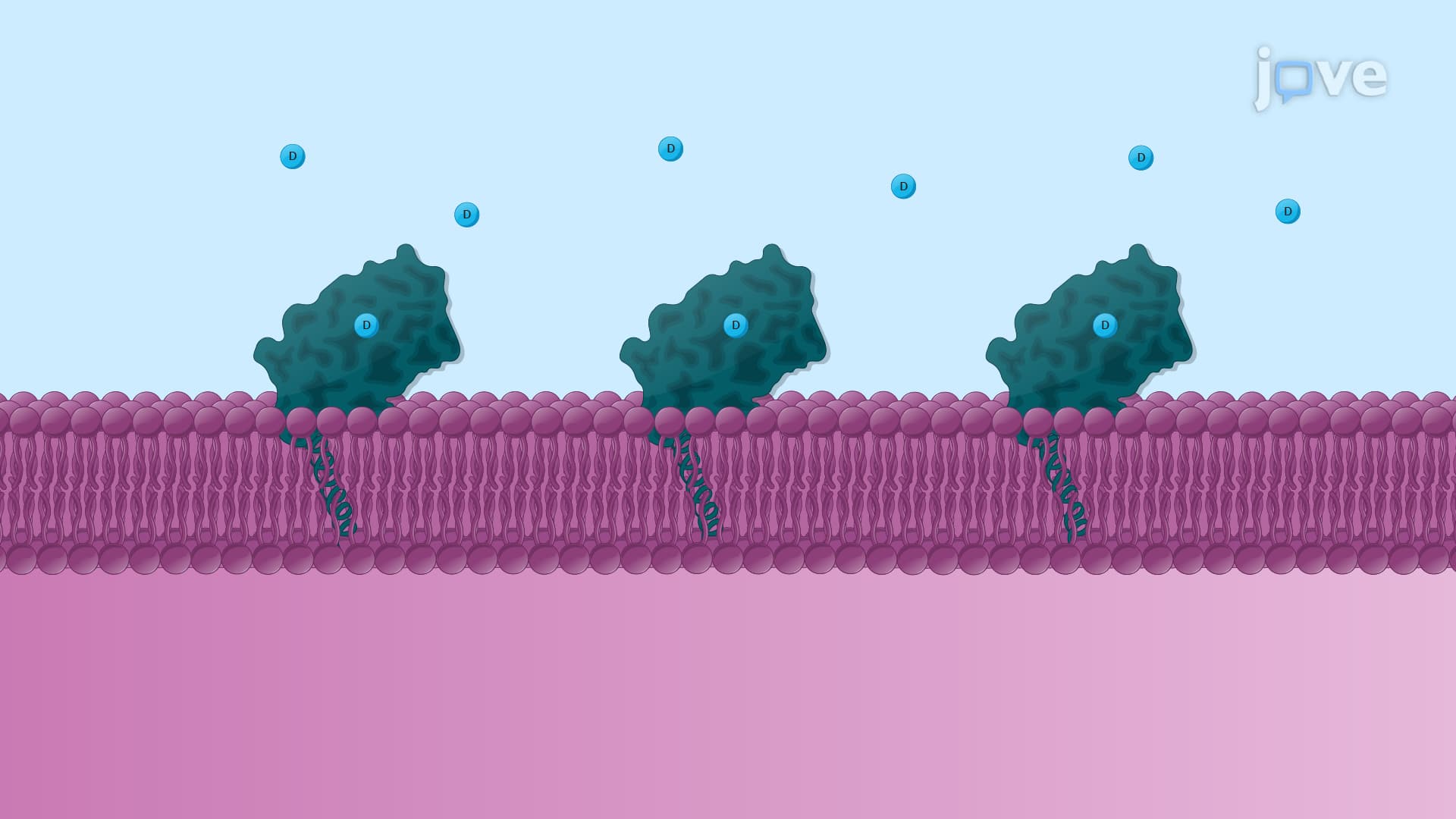
At the heart of nonlinear elimination lies enzyme saturation. When drug concentrations exceed the enzyme system's capacity, elimination becomes zero-order (constant rate) rather than first-order (proportional rate). The maximum elimination rate (Vmax) represents the system's absolute ceiling when all enzyme active sites are occupied. Meanwhile, the Michaelis constant (KM) indicates the drug concentration at which elimination occurs at half the maximum rate.
Consider phenytoin, an anti-seizure medication commonly studied in MCAT pharmacology sections. At therapeutic doses, phenytoin elimination becomes saturated in the liver's cytochrome P450 system. A small dose increase can lead to disproportionately higher blood levels because the elimination capacity cannot keep pace with the additional drug load.
The mathematical relationship governing nonlinear elimination follows: Rate = (Vmax × C) / (KM + C), where C represents drug concentration. This equation reveals two critical clinical insights that frequently appear on USMLE Step 1 examinations.
First, the inverse relationship between Vmax and elimination time means that patients with higher enzyme activity (higher Vmax) clear drugs faster than those with genetic variations causing lower enzyme expression. African American patients, for instance, may metabolize certain drugs differently due to genetic polymorphisms in cytochrome P450 enzymes.
Second, the direct relationship between KM and elimination time explains why drug interactions become particularly dangerous with nonlinear elimination drugs. When competing substrates increase the effective KM, elimination slows dramatically, potentially leading to toxicity.
Emergency departments across the United States routinely encounter nonlinear pharmacokinetics with alcohol elimination. The enzyme alcohol dehydrogenase becomes saturated at blood alcohol concentrations around 0.02%, explaining why intoxication duration doesn't correlate linearly with consumption amount-a concept tested in forensic toxicology and emergency medicine board examinations.
Related Micro-courses