Loading video…


 12 Concepts
 4K views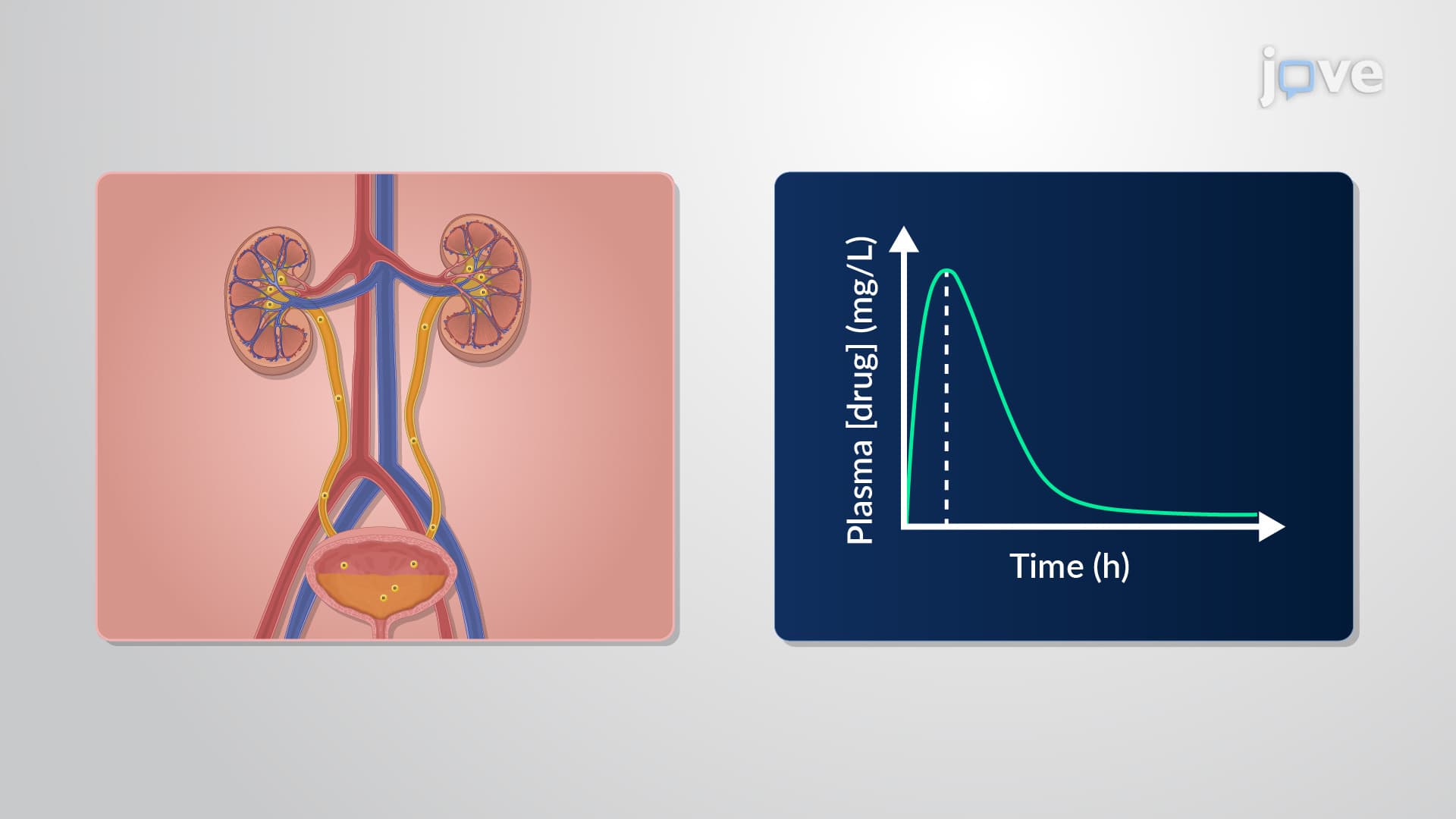

Video Summary: Parameters Affecting Nonlinear Elimination Zero Explained
Why do some medications like aspirin work differently at high doses compared to low doses? Parameters affecting nonlinear elimination determine how drugs are processed when the body's elimination pathways become saturated. Consider how acetaminophen (Tylenol) follows predictable clearance at normal doses but becomes dangerous at higher amounts due to enzyme saturation in the liver. Understanding Parameters Affecting Nonlinear Elimination Zero Explained helps predict drug behavior across different administration routes and dosing regimens. Watch the full video on JoVE Coach to master this concept with expert-led visuals and step-by-step explanations.
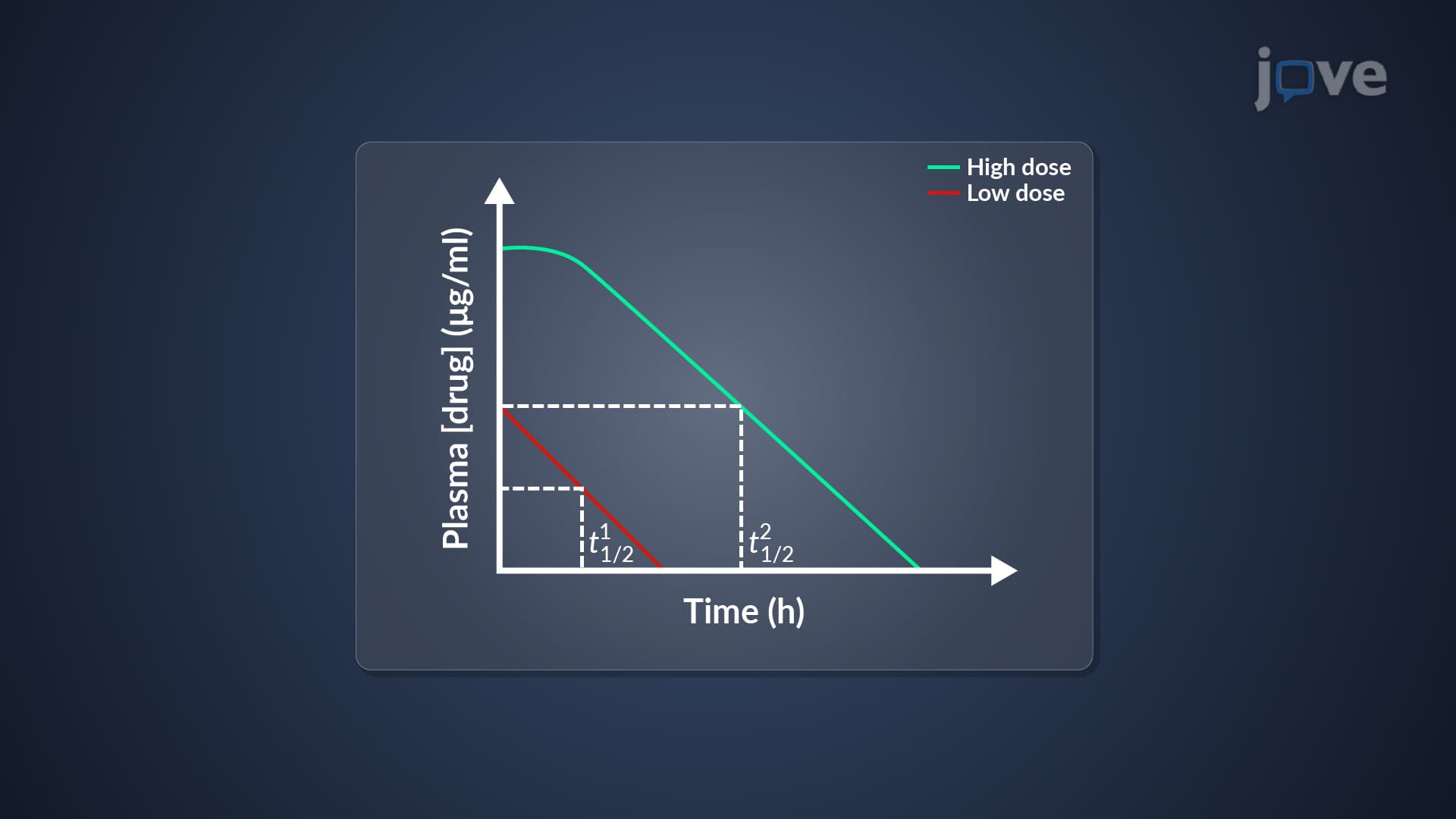
Parameters affecting nonlinear elimination become critical when drug concentrations exceed the capacity of elimination pathways. Unlike linear pharmacokinetics where elimination rate remains proportional to drug concentration, nonlinear systems exhibit saturation kinetics following the Michaelis-Menten equation: Rate = (Vmax × C) / (Km + C). This relationship explains why drugs like phenytoin (used for seizures) require careful monitoring-small dose increases can lead to disproportionately large increases in blood levels.
Different administration routes create unique elimination challenges. IV infusions provide zero-order input (constant rate), while oral medications undergo first-order absorption before entering nonlinear elimination pathways. The FDA's approach to drug approval considers these route-dependent variations. For example, subcutaneous insulin follows complex kinetics involving both absorption from injection sites and saturable receptor-mediated clearance. Understanding these patterns helps explain why switching between generic and brand medications sometimes produces different clinical effects.
Advanced nonlinear elimination often involves multiple compartments with different elimination mechanisms. Consider erythropoietin (EPO) used to treat anemia-it exhibits both saturable elimination through bone marrow receptors (high affinity, low capacity) and non-saturable renal clearance (low affinity, high capacity). This dual-pathway system explains EPO's complex dose-response relationship and why therapeutic drug monitoring becomes essential at higher doses.
These concepts appear frequently on the MCAT, particularly in passages combining pharmacology with enzyme kinetics. AP Biology students encounter similar principles when studying enzyme saturation curves. In clinical practice, understanding nonlinear elimination helps explain why drugs like warfarin (blood thinner) require frequent monitoring-small changes in dose or patient factors can dramatically alter drug levels due to saturable metabolic pathways. Healthcare providers use this knowledge to adjust dosing regimens and predict drug interactions, making it essential content for NCLEX and USMLE examinations.
Related Micro-courses