Loading subject page…

- Pharmacokinetics and Pharmacodynamics
- Nonlinear Pharmacokinetics
- Nonlinear Pharmacokinetics: Michaelis-Menten Equation
Micro-course: Nonlinear Pharmacokinetics
3,980 views
Learn key concepts and earn your certificate.






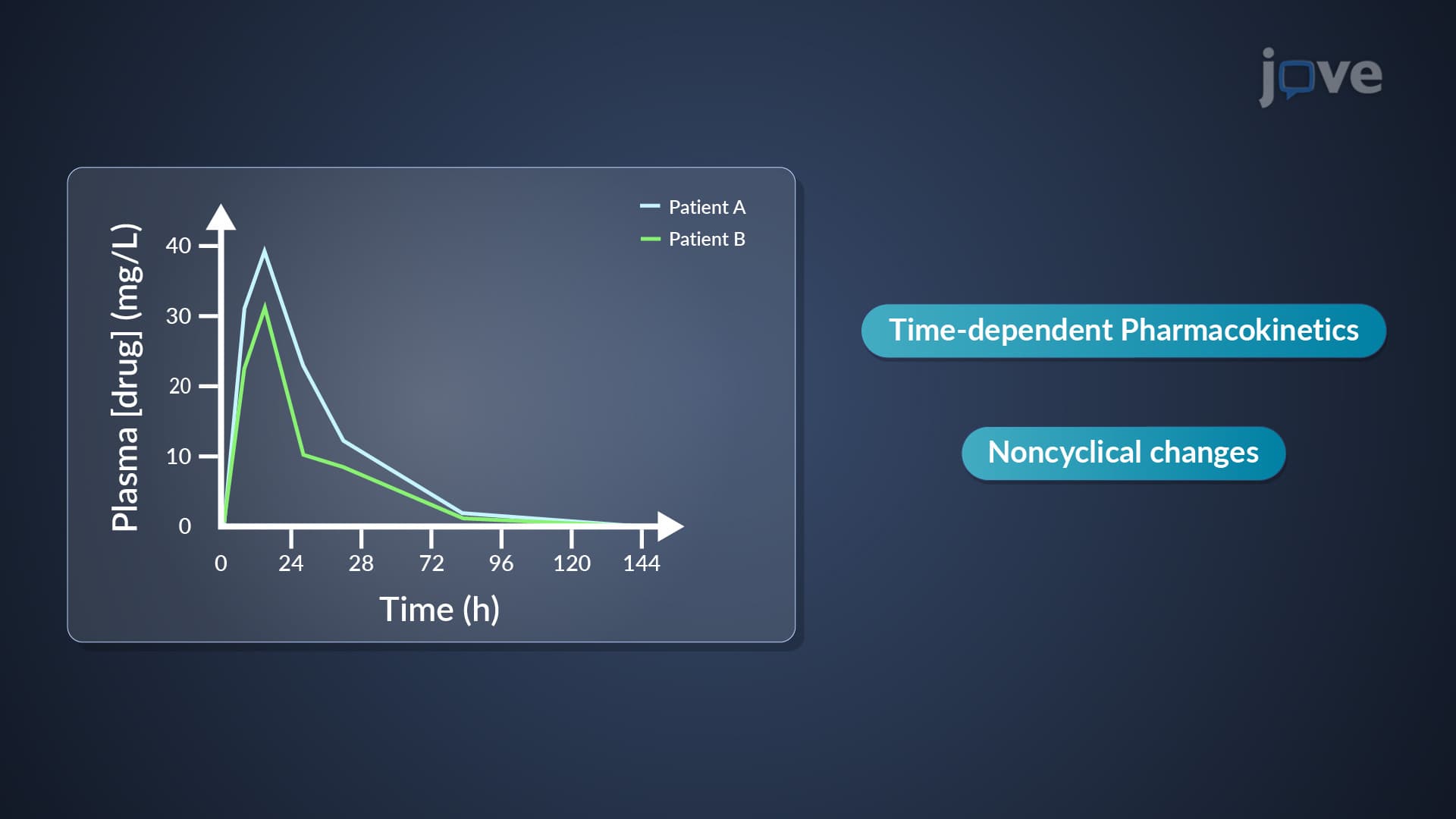
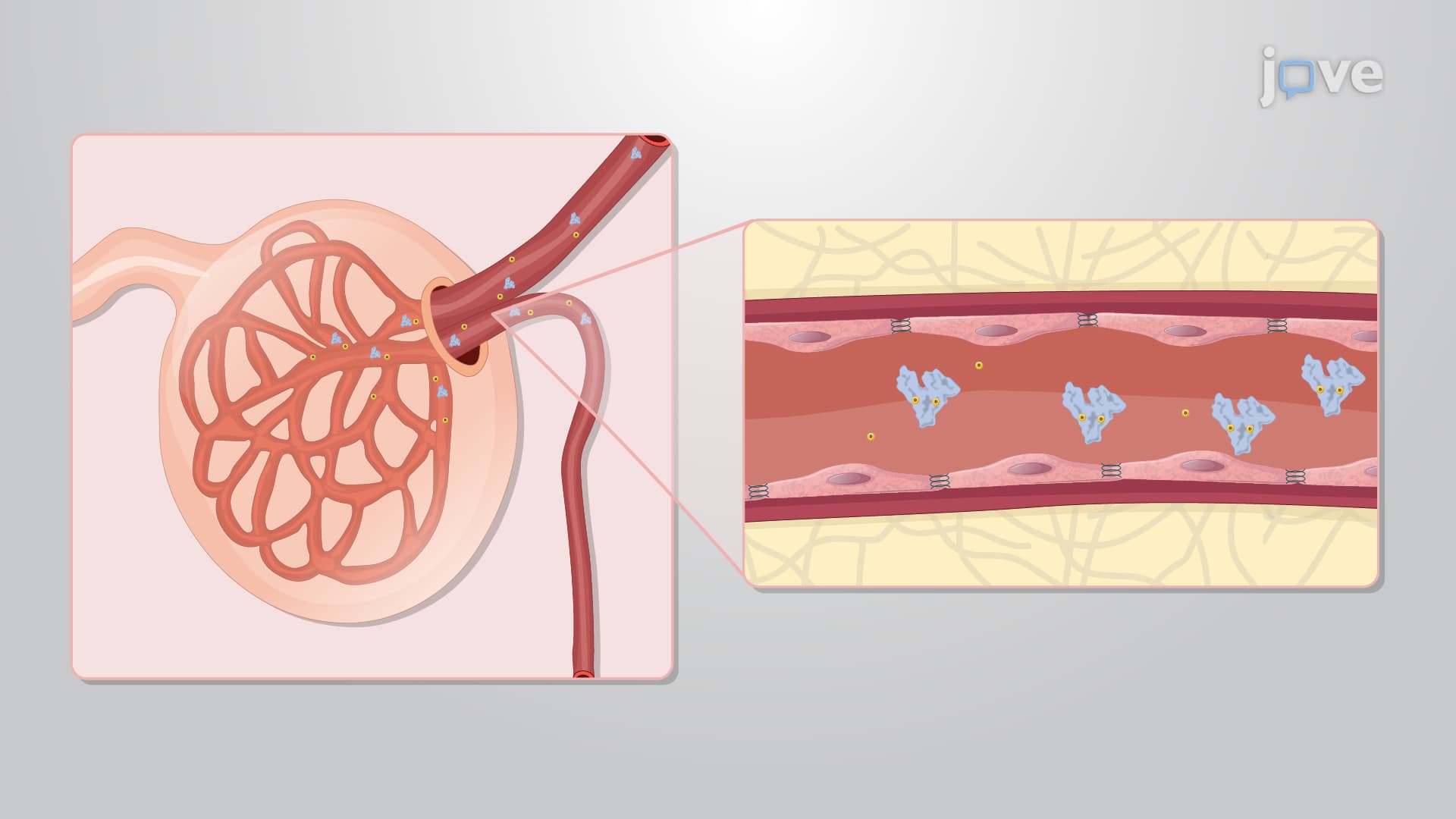

Nonlinear Pharmacokinetics: Michaelis-Menten Equation

00:00
01:18
Video Summary: Nonlinear Pharmacokinetics Michaelis Menten Equation Tutorial
Ever wonder why some medications like aspirin become dangerous at high doses while others remain predictable? Nonlinear pharmacokinetics michaelis menten principles explain this critical drug behavior that affects millions of Americans taking medications like phenytoin for epilepsy. The Nonlinear Pharmacokinetics Michaelis Menten Equation Tutorial reveals how drugs switch from predictable elimination to saturated, zero-order kinetics when therapeutic doses overwhelm the body's processing capacity. Watch the full video on JoVE Coach to master this concept with expert-led visuals and step-by-step explanations.
- Understand the Nonlinear Pharmacokinetics Michaelis Menten Equation Tutorial and how it describes capacity-limited drug metabolism in clinical settings
- Identify the key parameters Vmax and KM and their roles in determining drug elimination rates at different plasma concentrations
- Analyze three distinct kinetic scenarios based on the relationship between KM and plasma drug concentration (Cp)
- Compare zero-order, first-order, and mixed-order elimination patterns using real clinical examples
- Evaluate why drugs like salicylates and phenytoin exhibit nonlinear kinetics at therapeutic doses
- Apply Michaelis-Menten principles to predict drug behavior and potential toxicity risks
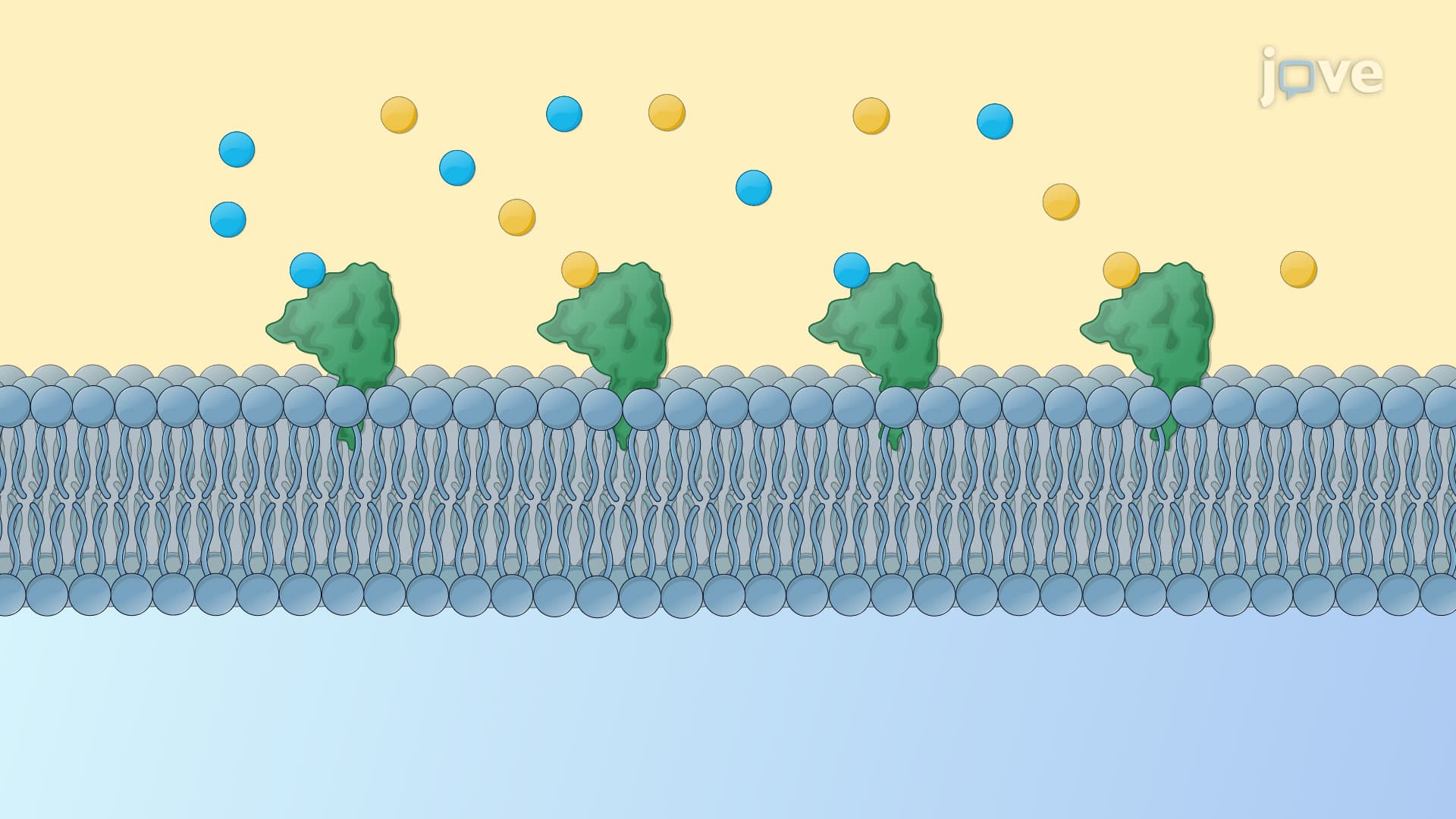
- Recognize when hepatic mixed-function oxidases become saturated and switch elimination patterns
- Explore the clinical implications of nonlinear pharmacokinetics in drug dosing and monitoring
Understanding Nonlinear Pharmacokinetics Michaelis Menten Fundamentals
The Nonlinear Pharmacokinetics Michaelis Menten Equation Tutorial addresses one of the most clinically significant concepts in pharmacology: how certain drugs behave unpredictably at higher doses. Unlike linear pharmacokinetics where drug elimination remains proportional to plasma concentration, nonlinear systems follow the Michaelis-Menten equation, originally developed for enzyme kinetics but perfectly applicable to drug metabolism.
Key Parameters: Vmax and KM Explained
Two critical parameters define this system. Vmax represents the maximum rate of drug elimination when all metabolic enzymes are completely saturated-think of it as the "speed limit" of your liver's processing capacity. The KM (Michaelis constant) indicates the plasma drug concentration at which elimination occurs at exactly half of Vmax. These parameters are drug-specific and determine clinical dosing strategies.
For students preparing for the MCAT or advanced pharmacology courses, understanding that KM has units of concentration (mg/L or μg/mL) while Vmax has units of rate (mg/hour or μg/min) helps distinguish these concepts from simple first-order elimination rates.
Three Clinical Scenarios in Practice
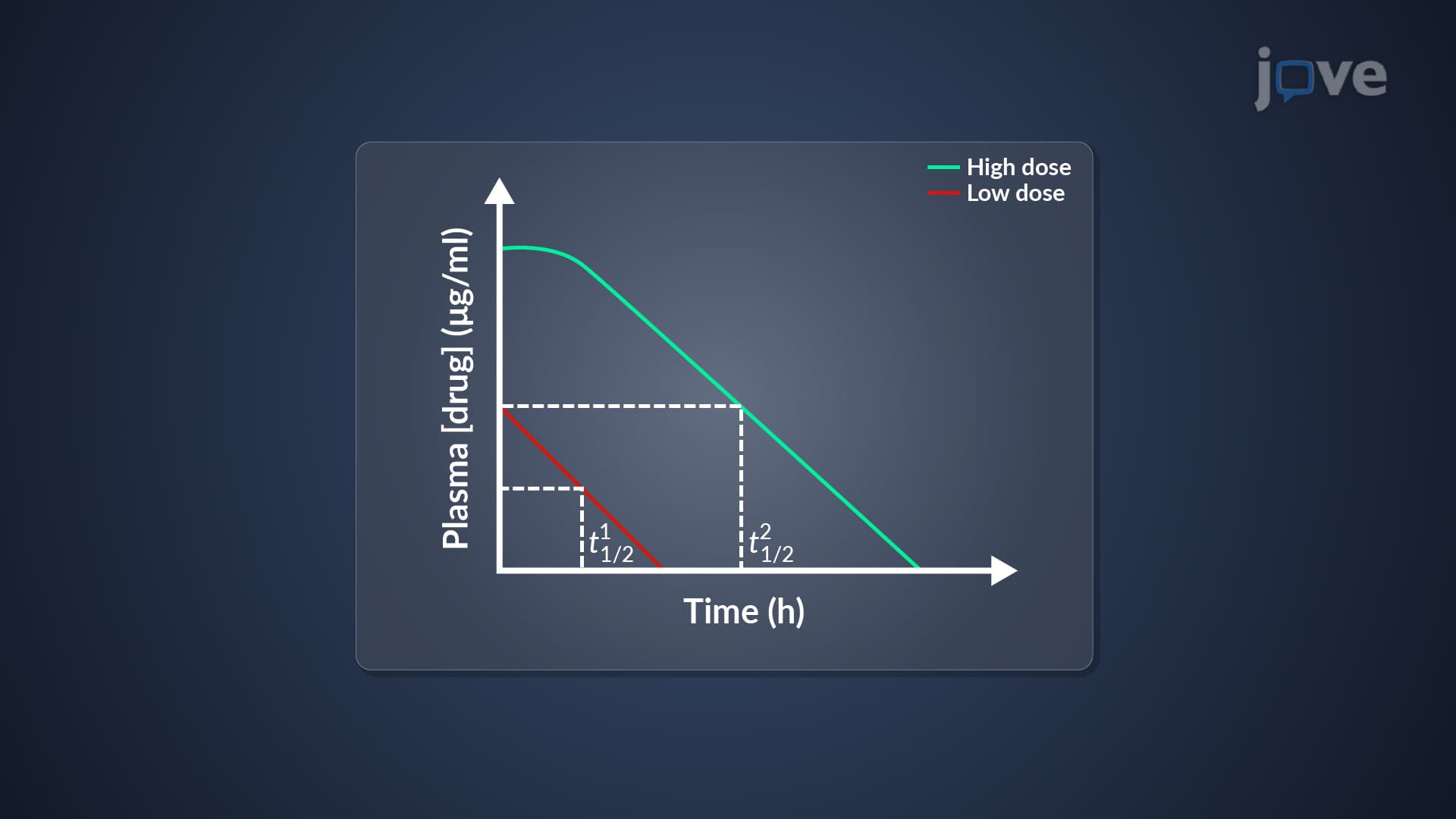
The relationship between KM and plasma concentration (Cp) creates three distinct elimination patterns. When KM equals Cp, elimination proceeds at exactly 50% of maximum capacity-a critical transition point. When KM exceeds Cp (typical for most drugs at therapeutic doses), the system behaves like first-order kinetics with predictable, proportional elimination. However, when Cp exceeds KM, the system switches to zero-order elimination with constant, non-proportional drug removal.
This transition explains why phenytoin (Dilantin), commonly prescribed for epilepsy, requires careful monitoring. At therapeutic doses around 10-20 mg/L, phenytoin approaches enzyme saturation, making small dose increases potentially dangerous due to disproportionate plasma level rises.
Real-World Clinical Applications
High-dose aspirin therapy demonstrates these principles clearly. At low doses (81mg daily for cardioprotection), salicylate follows first-order elimination. However, at anti-inflammatory doses (3-4 grams daily), hepatic enzymes become saturated, switching to zero-order kinetics and requiring careful monitoring to prevent toxicity.
This concept frequently appears on USMLE Step 1 examinations and advanced placement biology tests, particularly in questions about drug interactions and toxicology. Understanding that alcohol metabolism also follows Michaelis-Menten kinetics helps explain why blood alcohol levels don't decrease proportionally with time.
Frequently Asked Questions
Nonlinear pharmacokinetics michaelis menten describes drug elimination that becomes unpredictable at higher doses due to enzyme saturation. Unlike regular first-order elimination where doubling the dose doubles elimination rate, nonlinear systems reach a maximum processing speed (Vmax) regardless of drug concentration. This creates potentially dangerous situations where small dose increases cause disproportionately large increases in blood levels.
MCAT questions typically focus on identifying when drugs switch from first-order to zero-order kinetics and calculating elimination rates using the Michaelis-Menten equation. Expect scenarios involving phenytoin, salicylates, or alcohol metabolism where you must determine if KM is greater than, less than, or equal to plasma concentration. Practice interpreting Michaelis-Menten plots showing the transition from linear to plateau phases.
USMLE questions emphasize clinical applications, particularly drug monitoring and toxicity prevention. Common scenarios include phenytoin dose adjustments, aspirin overdose management, and predicting drug interactions when multiple medications compete for the same metabolic enzymes. Focus on understanding why therapeutic drug monitoring becomes crucial for drugs following Michaelis-Menten kinetics.
Phenytoin (Dilantin) for epilepsy and high-dose aspirin are classic examples taught in US medical schools. Alcohol metabolism also follows these principles, explaining why blood alcohol doesn't decrease linearly. Warfarin at high doses and some psychiatric medications like fluoxetine exhibit similar behavior, making dose adjustments particularly challenging for clinicians.
No advanced calculus is required for high school or undergraduate understanding. The equation Rate = (Vmax × Cp) / (KM + Cp) uses only basic algebra and fraction manipulation. Focus on understanding the conceptual relationship between the parameters rather than complex mathematical derivations. Most exam questions test interpretation rather than calculation.
Create comparison charts showing first-order versus zero-order elimination patterns with specific drug examples. Practice drawing and interpreting Michaelis-Menten plots, focusing on identifying the linear phase, transition zone, and plateau region. Use clinical scenarios to connect mathematical concepts with real patient care situations, particularly drug monitoring protocols.
Progress to pharmacogenetics and cytochrome P450 enzyme systems to understand individual variations in drug metabolism. Study drug-drug interactions involving enzyme inhibition and induction, particularly with warfarin and phenytoin. Advanced students should explore population pharmacokinetics and therapeutic drug monitoring protocols used in clinical practice.
Related Micro-courses