Loading subject page…


96,702 views

Video Summary: What Is Therapeutic Index
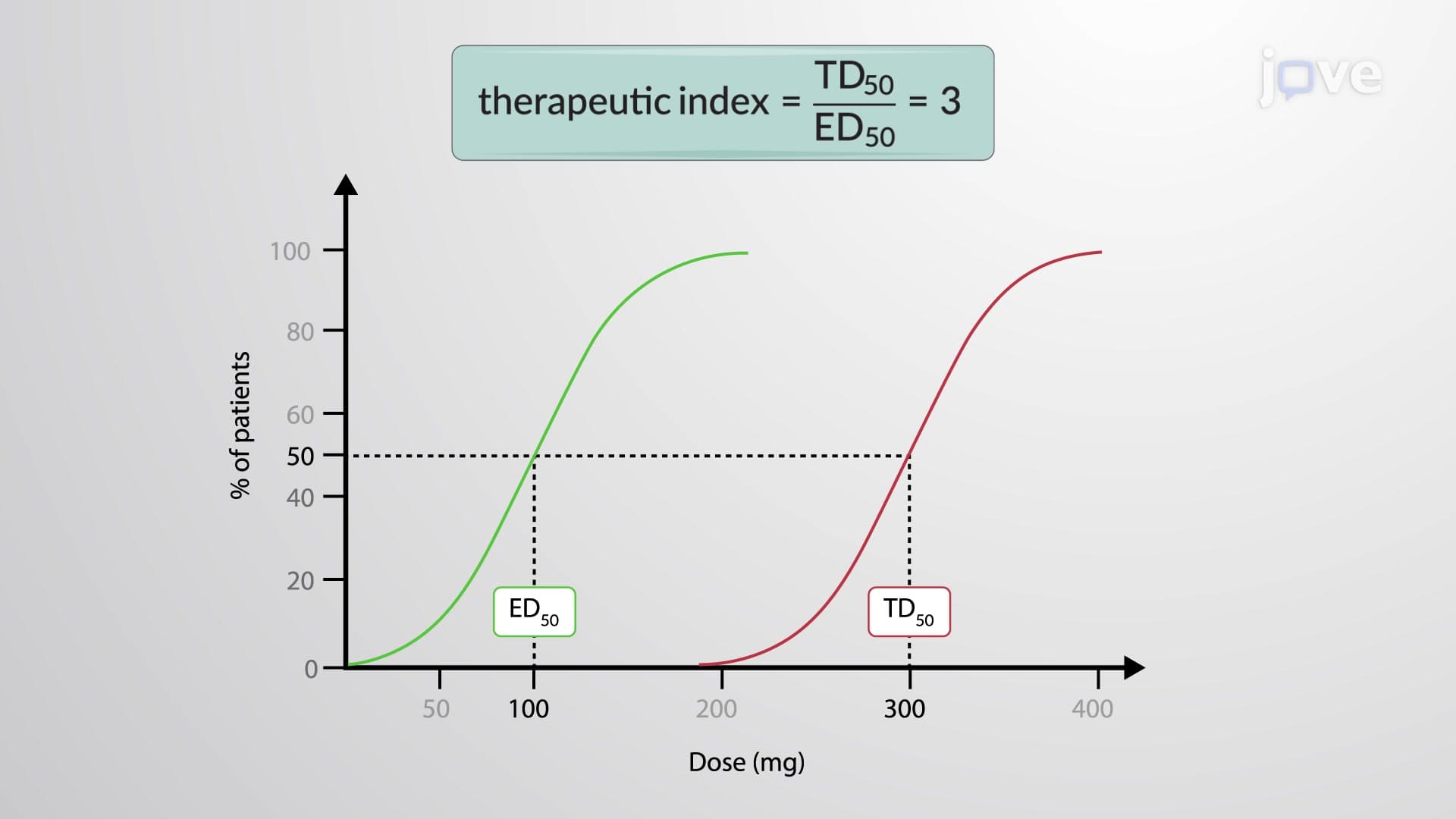
Why can two people take the same medication and one experiences life-threatening side effects while the other feels nothing? The therapeutic index measures the safety margin between a drug's effective dose and its toxic dose, calculated as the ratio of the toxic dose affecting 50% of the population to the effective dose for 50%. For example, warfarin, a blood thinner used by millions of Americans, has a narrow therapeutic index, making dosing critically important to prevent dangerous bleeding. Watch the full video on JoVE Coach to master this concept with expert-led visuals and step-by-step explanations.
The therapeutic index represents one of the most critical safety measurements in pharmacology, directly influencing how medications are prescribed and monitored in clinical practice. This ratio-based calculation provides healthcare professionals with essential guidance on drug safety margins, helping determine appropriate dosing strategies for millions of patients across American hospitals, clinics, and pharmacies.
The therapeutic index formula appears deceptively simple: TI = TD50/ED50, where TD50 represents the dose causing toxicity in 50% of the population, and ED50 represents the dose producing the desired therapeutic effect in 50% of the population. However, this calculation carries profound clinical significance. A high therapeutic index (greater than 10) indicates a relatively safe drug with a wide margin between effective and toxic doses. Conversely, a low therapeutic index (less than 2) signals a narrow safety window requiring precise dosing and careful patient monitoring.
For students preparing for the MCAT or AP Biology exams, understanding this concept proves essential, as questions frequently test the relationship between drug safety and dosing calculations. College pharmacology courses extensively cover therapeutic index applications, particularly when discussing drugs like digoxin (heart medication), lithium (mood stabilizer), and phenytoin (anti-seizure medication), all commonly prescribed in American healthcare settings.
Consider warfarin, prescribed to over 2 million Americans annually for stroke prevention and blood clot treatment. This anticoagulant demonstrates a classic narrow therapeutic index scenario. The effective dose prevents dangerous clots, but slightly higher doses can cause life-threatening hemorrhages. This narrow window explains why warfarin patients require regular blood tests (INR monitoring) and careful dose adjustments, a direct clinical application of therapeutic index principles.
Similarly, acetaminophen (Tylenol) illustrates a wider therapeutic index. The standard 325-650mg dose effectively reduces pain and fever, while toxic effects typically don't occur until doses exceed 4,000mg daily. This wider margin allows for more flexible dosing without constant monitoring, demonstrating how therapeutic index directly influences clinical practice patterns.
The therapeutic index carries important limitations that students must understand for comprehensive exam preparation. Most therapeutic index data derives from animal studies, which may not accurately predict human responses due to species differences in metabolism, genetics, and physiology. Additionally, individual patient factors like age, kidney function, liver health, and genetic variations can significantly alter both effective and toxic dose ranges, making the population-based therapeutic index an approximation rather than an absolute predictor.
Related Micro-courses