Loading…
Loading video…

70,900 views
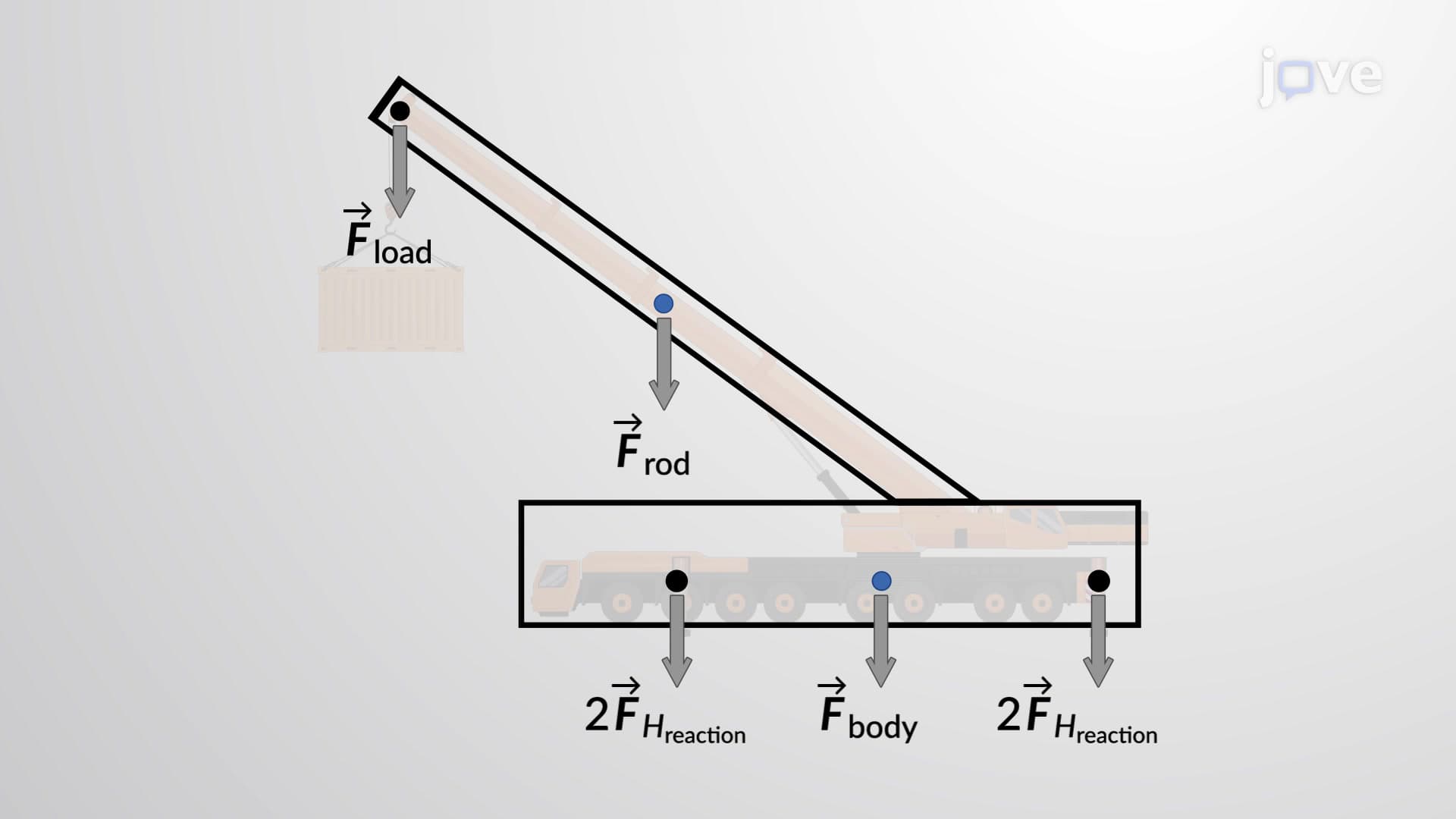
Ever wonder how engineers ensure that a 100-foot crane arm won't tip over when lifting heavy loads? Rigid body equilibrium problems II tackle exactly these complex multi-force scenarios that keep structures stable. Consider a construction crane in New York City—multiple forces act simultaneously: the crane's weight, lifted materials, and counterweights must all balance perfectly around pivot points. This Rigid Body Equilibrium Problems II Explained concept demonstrates how to analyze systems with multiple forces and torques acting on extended objects like rods, beams, and levers. Watch the full video on JoVE Coach to master this concept with expert-led visuals and step-by-step explanations.
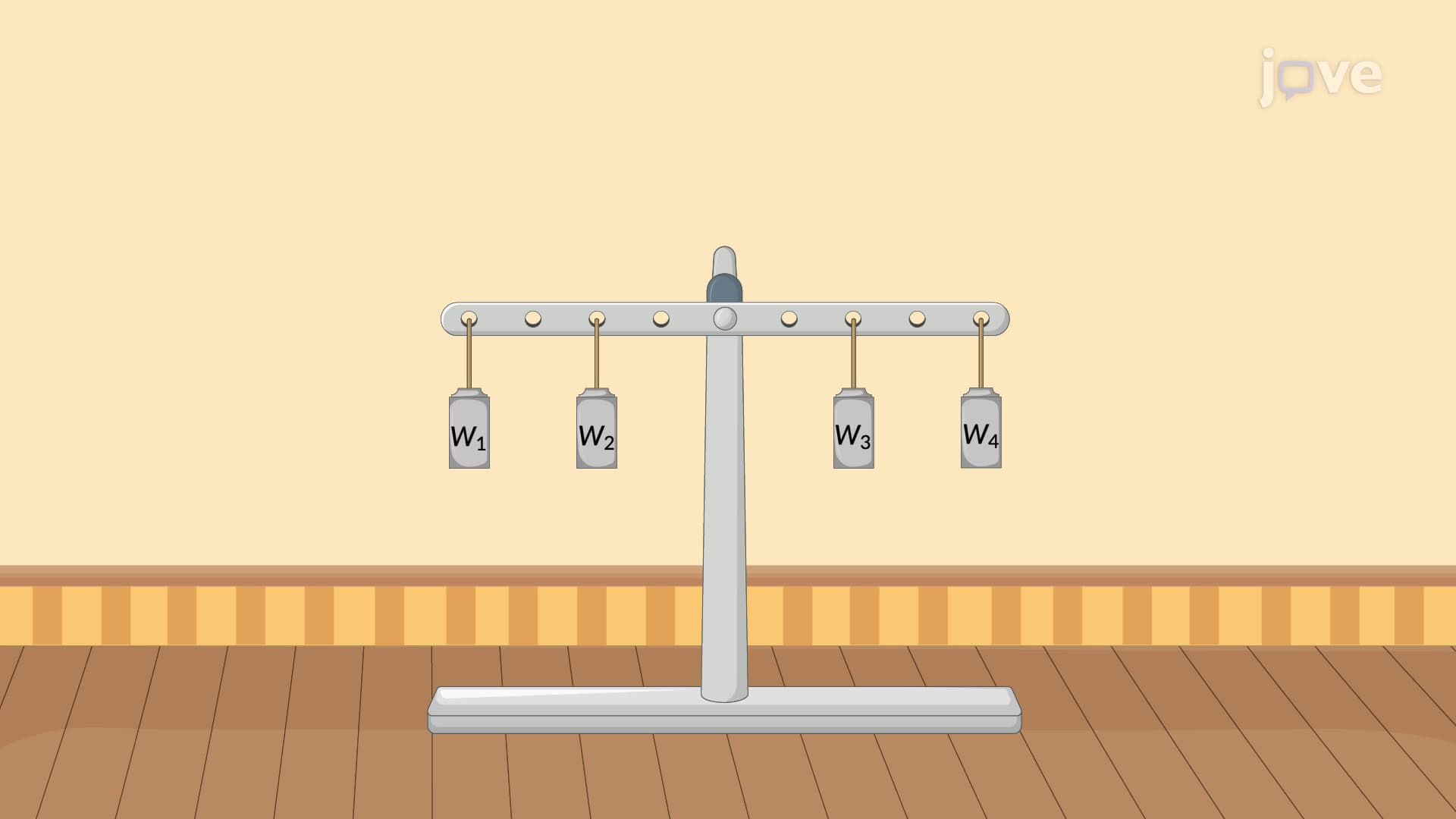
Rigid body equilibrium problems II represent a significant step up from basic equilibrium scenarios. Unlike point particles, rigid bodies have physical dimensions, meaning forces can act at different locations and create rotational effects called torques. These problems are fundamental to engineering design and appear frequently on AP Physics exams and college engineering coursework.
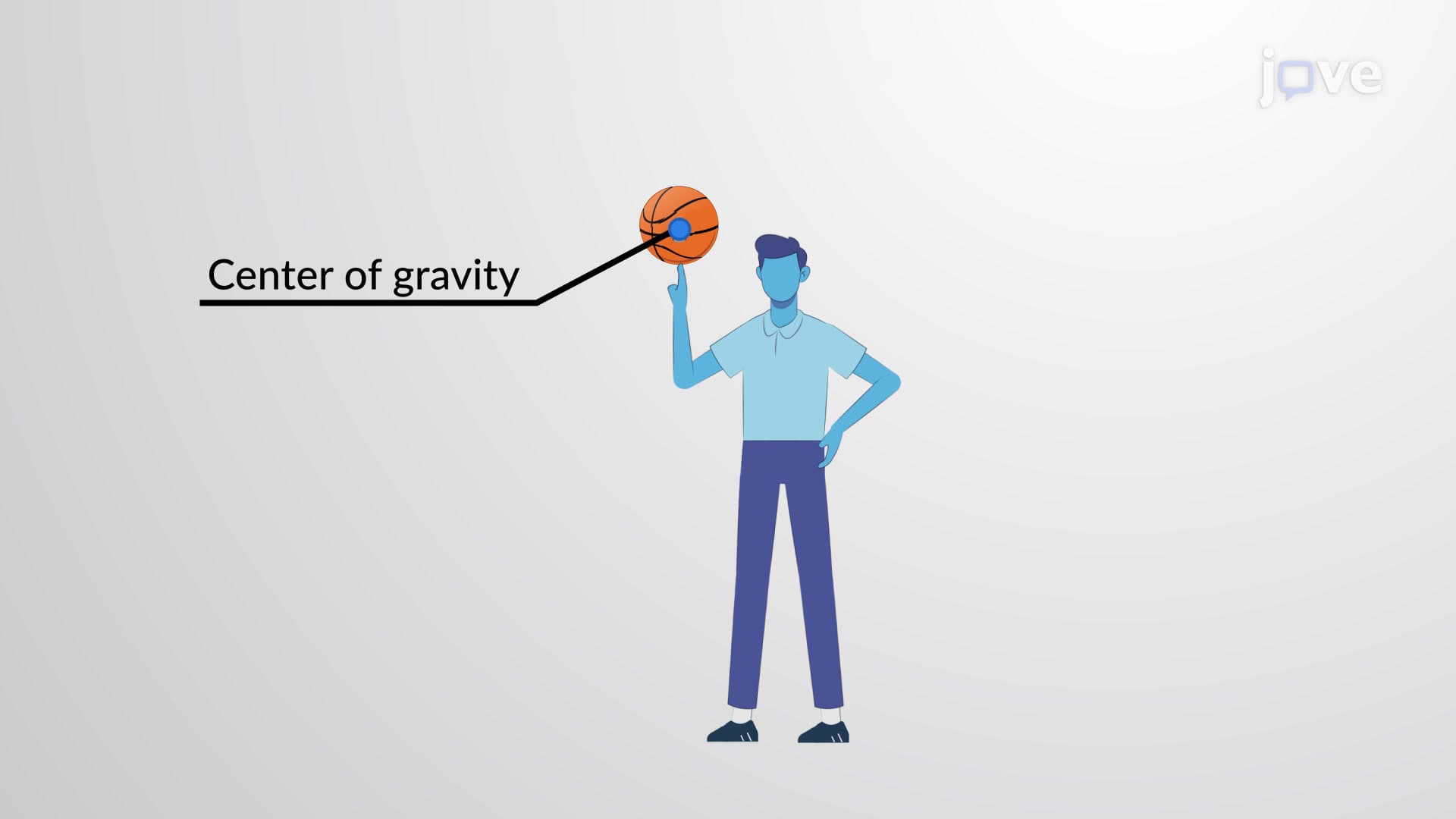
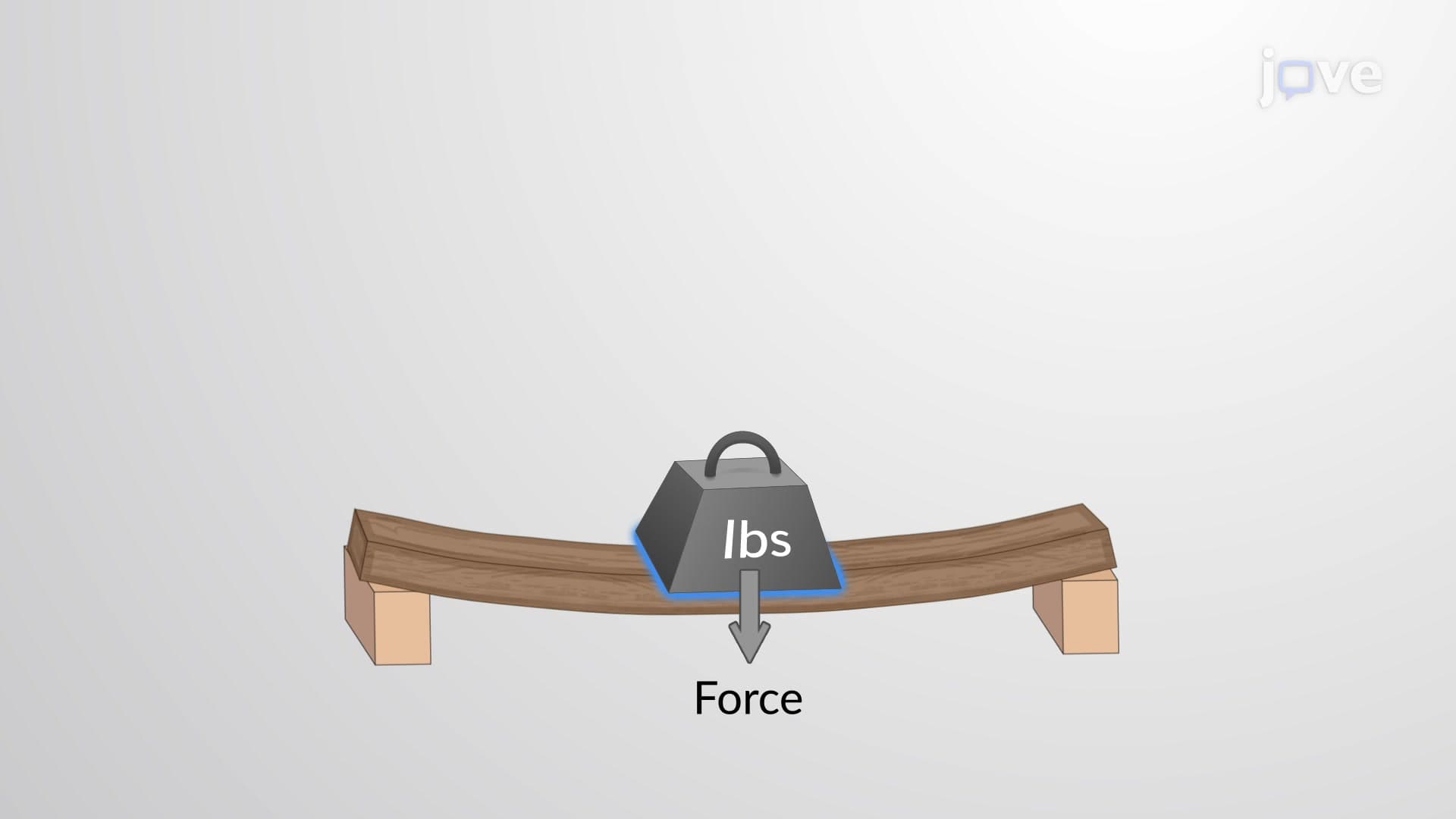
The key to solving these problems lies in constructing accurate free-body diagrams. For a rod pivoted at one end, you must identify all forces: the object's weight acting at its center of gravity, external loads at specific positions, support reactions at pivot points, and applied forces from springs or cables. Each force creates a moment (torque) about the pivot point, calculated as force multiplied by perpendicular distance.
For static equilibrium, two conditions must be satisfied simultaneously: the sum of all forces equals zero (preventing translation), and the sum of all moments about any point equals zero (preventing rotation). In practice, engineers often choose the pivot point as their moment reference because reaction forces there create zero torque, simplifying calculations significantly.
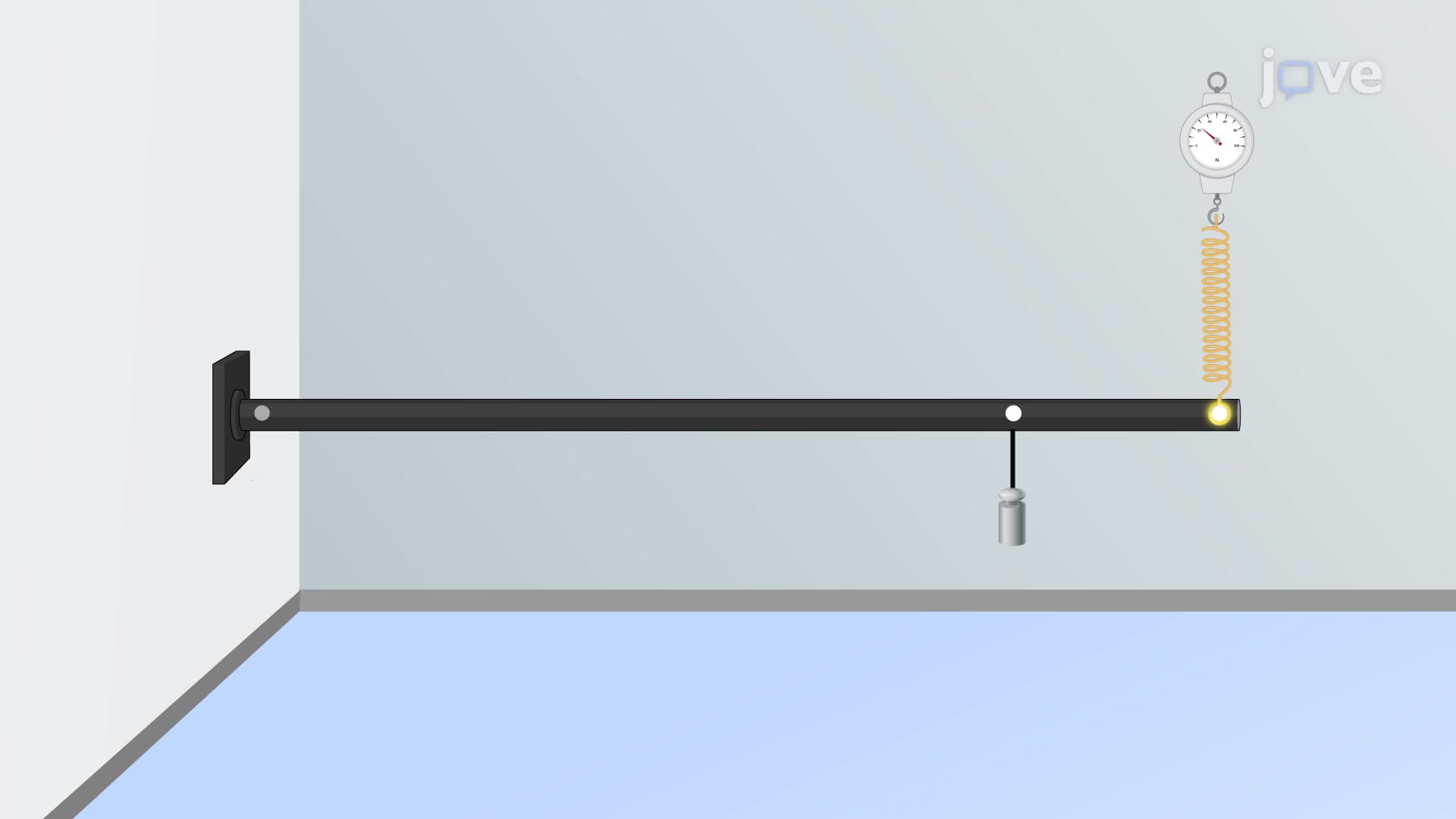
Consider the example of a 100-meter rod weighing 10 N, pivoted at point A. When a 70-meter positioned weight and a 26 N upward force at the end create equilibrium, the moment equation becomes: (10 N × 50 m) + (w × 70 m) = (26 N × 100 m). This yields w = 2.86 N.
These principles govern countless structures across America. The Golden Gate Bridge's suspension cables, oil derrick stability in Texas, and even playground seesaws all rely on equilibrium calculations. Civil engineers use these concepts when designing building frameworks, while mechanical engineers apply them to robotic arms and manufacturing equipment. Understanding these problems prepares students for advanced courses in statics, dynamics, and structural analysis that form the foundation of engineering curricula at universities like MIT, Stanford, and Georgia Tech.
Frequently Asked Questions
Rigid body equilibrium problems II involves analyzing extended objects where forces act at different locations, creating both translational and rotational effects. Unlike point particle equilibrium, you must consider torques (moments) about pivot points, making calculations more complex but applicable to real-world structures like bridges and cranes.
AP Physics 1 commonly includes these problems in free-response sections, typically involving levers, rods, or beams with multiple forces. Students must draw free-body diagrams, apply equilibrium conditions (sum of forces = 0, sum of torques = 0), and solve for unknown weights or distances. These problems often carry 10-15 points on the AP exam.
Start by drawing a clear free-body diagram showing all forces and distances. Choose your moment reference point strategically—usually the pivot or support point where reaction forces act, since they create zero torque there. Write equilibrium equations systematically: horizontal forces, vertical forces, then moments. This approach works well for exams at universities nationwide.
Construction engineers apply these principles when designing crane operations in cities like Chicago or Los Angeles. They calculate maximum safe loads, determine counterweight requirements, and ensure structural stability. For example, tower cranes must balance the moment from lifted materials with counterweights, following the same torque equilibrium principles taught in physics classes.
No advanced mathematics is required—just basic algebra and trigonometry covered in high school. The physics concepts are more important than complex calculations. If you can multiply, add, and solve simple equations, you can master these problems with practice and clear understanding of force and torque relationships.
Practice drawing free-body diagrams daily, focusing on identifying all forces and their locations. Create a systematic checklist: identify the system, draw the diagram, choose reference points, write equilibrium equations, and solve step-by-step. Use online physics simulators and work through problems from textbooks like Halliday & Resnick to build confidence.
These fundamentals lead directly into Engineering Statics and Dynamics courses required for mechanical, civil, and aerospace engineering majors. Advanced topics include structural analysis, machine design, and robotics. Students at schools like Purdue, UC Berkeley, and Virginia Tech encounter these concepts throughout their engineering curriculum.
While the MCAT physics section emphasizes biological applications, rigid body equilibrium appears in biomechanics contexts like analyzing forces in human joints and limb movements. Understanding torque and equilibrium helps with questions about muscle forces, bone stress, and body mechanics that appear on recent MCAT exams.
Related Micro-courses
Related Subjects
 Math Fundamentals 11 micro-courses›
 Statistics 17 micro-courses›