Loading…
Loading video…

70,900 views
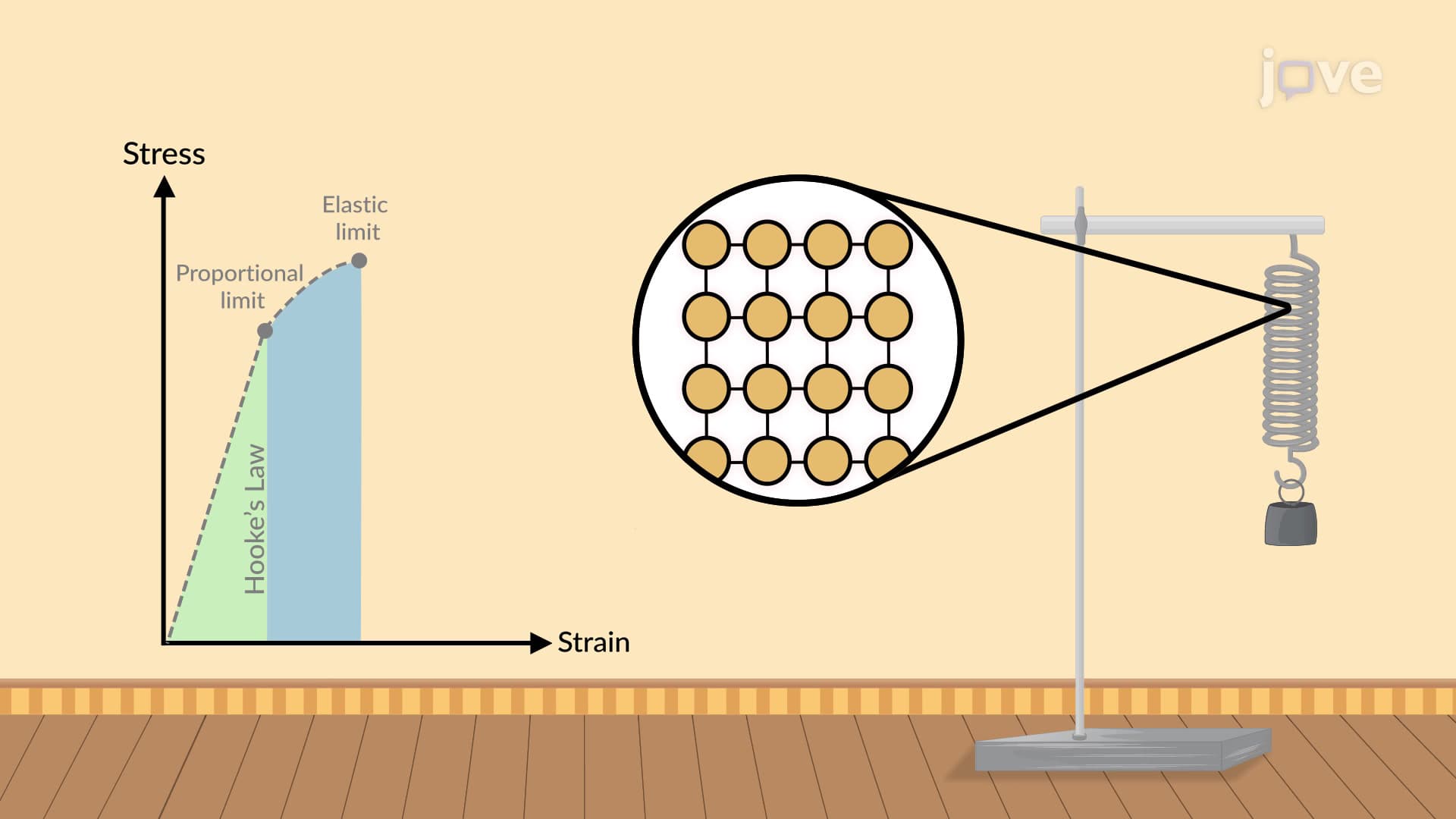
Ever wonder why a rubber band snaps back to its original shape after stretching, but a paper clip stays bent? Elasticity is the fascinating property that determines whether materials like the steel cables in San Francisco's Golden Gate Bridge can withstand massive loads and return to their original form. This fundamental physics concept explains how materials deform under stress and recover when forces are removed, involving critical points like proportional limits, elastic limits, and yield points that engineers must understand for safe construction. Watch the full video on JoVE Coach to master this concept with expert-led visuals and step-by-step explanations.
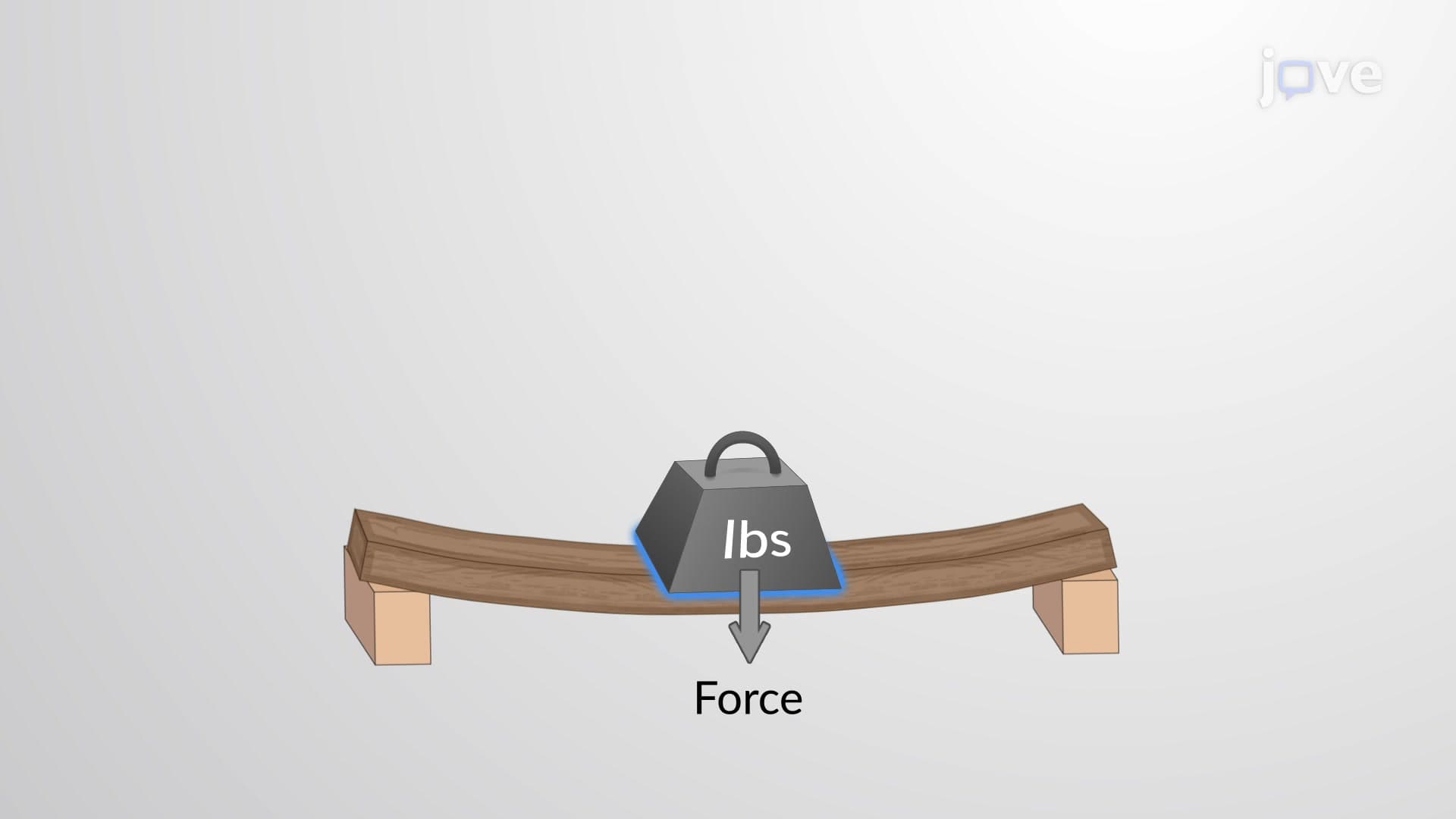
Elasticity represents one of the most fundamental properties in materials science and mechanical engineering. When you compress a spring or bend a diving board, you're witnessing elasticity in action. This property enables materials to absorb energy during deformation and release it completely upon unloading, returning to their exact original dimensions. Understanding elasticity basics is crucial for students preparing for AP Physics, college engineering courses, and professional licensing exams like the Fundamentals of Engineering (FE) exam.
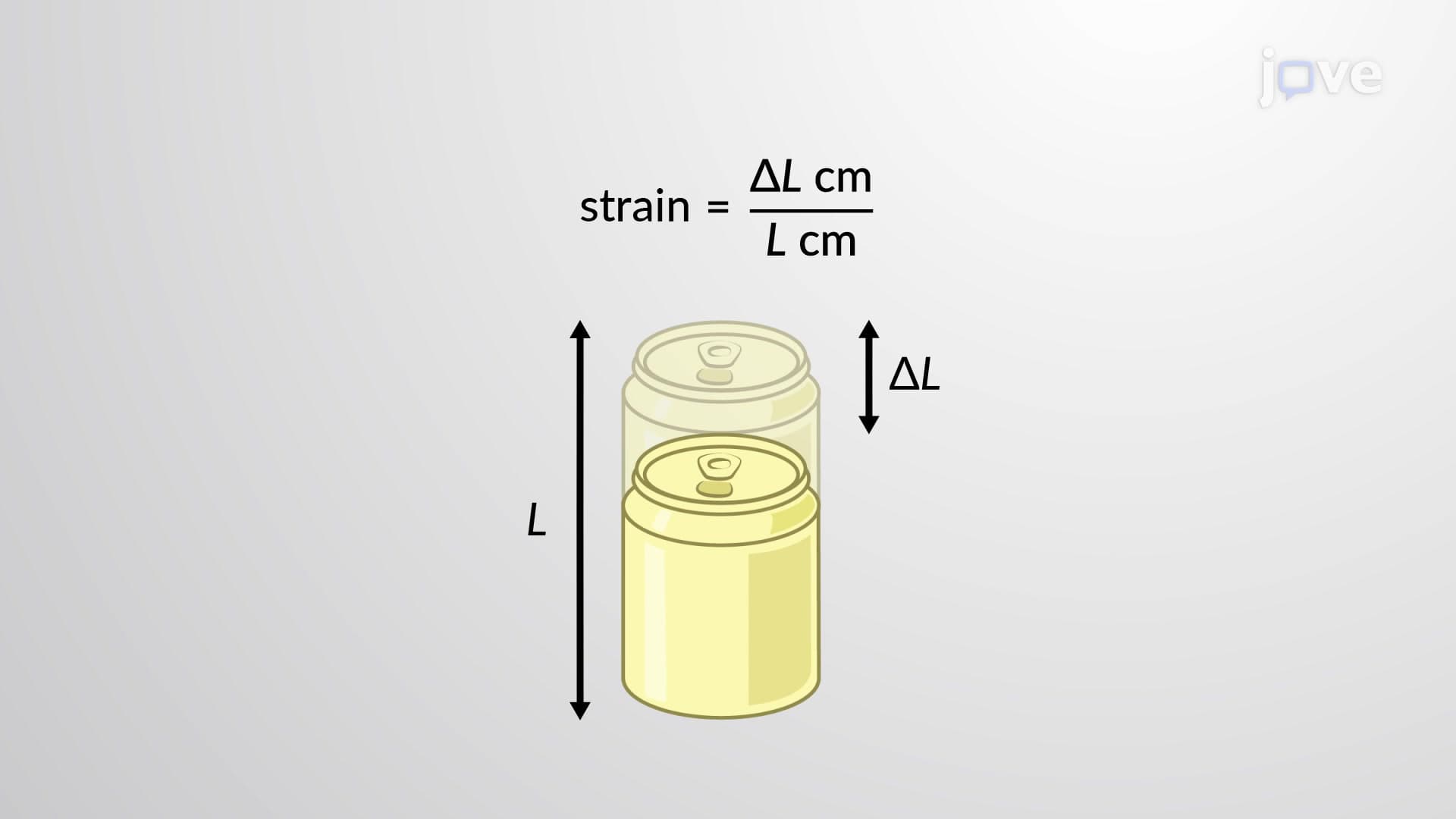
The elasticity concept becomes clearest when examining stress-strain curves, which map the relationship between applied force per unit area (stress) and resulting deformation (strain). In the initial linear region, stress and strain maintain a direct proportional relationship described by Hooke's Law: stress = E × strain, where E represents the elastic modulus. This proportional limit marks the boundary where this linear relationship holds true. Materials like structural steel used in American skyscrapers exhibit this behavior predictably up to specific stress levels, making them ideal for construction applications.
Beyond the proportional limit lies the elastic limit—the maximum stress a material can withstand while maintaining complete recovery. The yield point represents where permanent deformation begins, transitioning from elastic to plastic behavior. For example, aluminum aircraft components must operate well below their yield point to ensure structural integrity throughout repeated loading cycles. The ultimate stress point indicates maximum load-bearing capacity before failure, while the fracture point marks complete material failure.
Elasticity study guide materials emphasize applications in American infrastructure and industry. Bridge designers rely on elasticity calculations to ensure structures like the Mackinac Bridge can flex under wind loads without permanent damage. In biomechanics, understanding bone elasticity helps orthopedic surgeons plan procedures and select appropriate implant materials. Students encounter these concepts in AP Physics C: Mechanics, introductory materials science courses, and MCAT physical sciences sections, where problem-solving requires applying elastic modulus calculations and stress-strain analysis to real scenarios.
Frequently Asked Questions
Elasticity is a material's ability to return to its original shape and size after being deformed by external forces. Think of it like a rubber band that stretches when pulled but snaps back to its original length when released. This property is essential in everything from building construction to athletic equipment design.
AP Physics C and college physics courses frequently test elasticity through stress-strain curve analysis, Hooke's Law calculations, and elastic modulus problems. Expect questions involving spring constants, material deformation under load, and energy storage in elastic systems. The MCAT also includes elasticity concepts in its physical sciences section.
Elastic deformation is completely reversible—remove the force and the material returns to its original shape. Plastic deformation is permanent—like bending a paper clip, where it stays bent even after releasing pressure. The yield point on a stress-strain curve marks the transition between these two behaviors.
A material's elasticity depends on its atomic structure and bonding. Steel's crystalline structure allows atoms to move slightly under stress but return to equilibrium positions when stress is removed. Materials like clay have weaker bonds that break more easily, leading to permanent deformation rather than elastic recovery.
Aerospace companies like Boeing rely on elasticity calculations for aircraft wing design, ensuring wings flex safely during flight without permanent damage. Automotive manufacturers use elasticity principles in suspension systems and crash safety design. Construction companies apply elasticity concepts when designing earthquake-resistant buildings in California.
Basic elasticity concepts require only algebra and simple graphing skills taught in high school. You'll work with linear relationships, calculate slopes of stress-strain curves, and solve proportion problems. More advanced applications in engineering courses involve calculus, but fundamental understanding builds on accessible mathematical foundations.
Advanced topics include fatigue analysis, fracture mechanics, and composite material behavior. Students often progress to thermodynamics, fluid mechanics, or materials science courses. Engineering majors typically encounter elasticity applications in structural analysis, machine design, and finite element analysis courses.
Practice interpreting stress-strain curves and identifying the five key points (proportional limit, elastic limit, yield point, ultimate stress, fracture point). Work through Hooke's Law calculations with various units and focus on real-world applications like spring systems and structural materials. Create concept maps connecting elasticity to energy storage and material selection principles.
Related Micro-courses
Related Subjects
 Math Fundamentals 11 micro-courses›
 Statistics 17 micro-courses›