Loading subject page…

- Physics
- Gauss's Law
- Gauss's Law: Planar Symmetry
Micro-course: Gauss's Law
75,401 views
Learn key concepts and earn your certificate.





Gauss's Law: Planar Symmetry

00:00
01:27
Video Summary: Gausss Law Planar Symmetry Explained
Ever wondered why airplanes don't experience dangerous electrical buildup during flight? Gauss's law planar symmetry explains how charged surfaces like airplane wings create predictable electric fields. When friction charges an aircraft's wing uniformly, the resulting electric field follows specific patterns that engineers at Boeing and Airbus must understand for safety systems. This Gauss's Law Planar Symmetry Explained concept demonstrates how cylindrical Gaussian surfaces reveal that electric fields extend perpendicularly from charged planes with uniform strength. Watch the full video on JoVE Coach to master this concept with expert-led visuals and step-by-step explanations.
- Understand how Gauss's Law Planar Symmetry Explained applies to uniformly charged flat surfaces and their resulting electric field patterns
- Identify the key characteristics of planar symmetry: uniform charge distribution and rotational invariance about perpendicular axes
- Analyze why electric fields from charged planes are uniform and perpendicular to the surface on both sides
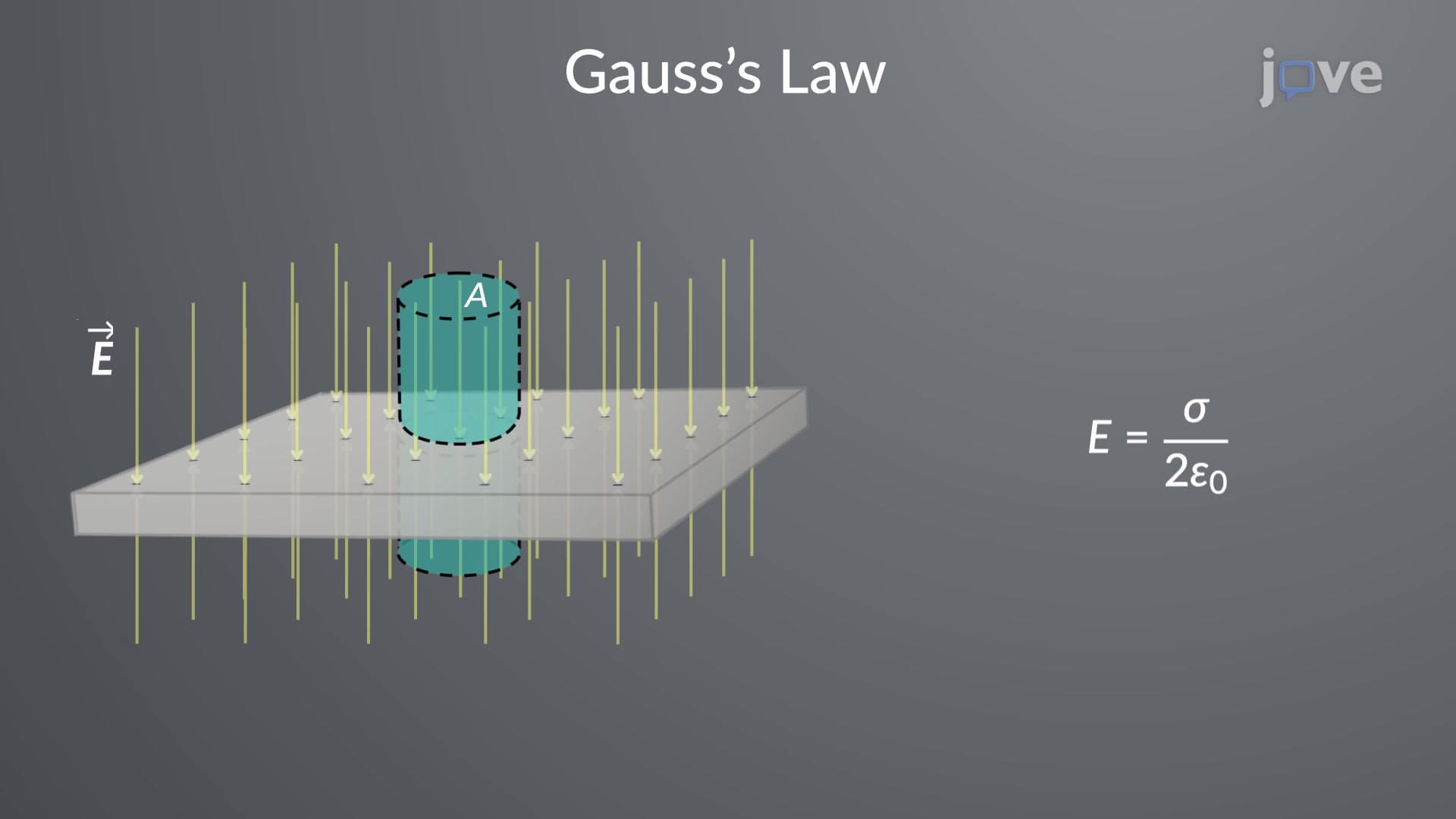
- Apply cylindrical Gaussian surfaces to calculate electric field strength using the relationship E = σ/(2ε₀)
- Recognize how flux calculations simplify when curved surfaces contribute zero flux due to perpendicular field orientation
- Evaluate real-world examples where planar symmetry approximations help solve complex electrostatic problems
- Compare the electric field behavior near infinite charged planes versus finite charged objects
- Explore the mathematical relationship between surface charge density, enclosed charge, and total electric flux
Understanding Gauss's Law Planar Symmetry Fundamentals
Gauss's law planar symmetry represents one of the most elegant applications of electromagnetic theory to real-world scenarios. When we encounter large, uniformly charged surfaces-like the wing of a commercial airliner during flight-the mathematical complexity of calculating electric fields dramatically simplifies. This occurs because planar symmetry creates predictable patterns that allow us to use Gauss's law effectively.
The fundamental principle relies on the concept that if you rotate a charged plane about any axis perpendicular to its surface, the charge distribution remains identical. This rotational invariance is the hallmark of planar symmetry and directly influences how electric fields behave around such surfaces.
Electric Field Behavior in Planar Symmetric Systems
Near a uniformly charged plane, the electric field exhibits two crucial characteristics. First, the field lines extend perpendicularly away from the surface on both sides. Second, the field magnitude remains constant at any given distance from the plane. This uniform behavior occurs because every point on an infinite plane is essentially equivalent from a symmetry perspective.
For students preparing for the AP Physics C exam or college-level electromagnetism courses, understanding this concept proves essential. The mathematical elegance emerges when we apply Gauss's law: the electric field strength equals σ/(2ε₀), where σ represents surface charge density and ε₀ is the permittivity of free space.
Gaussian Surface Construction and Flux Calculations
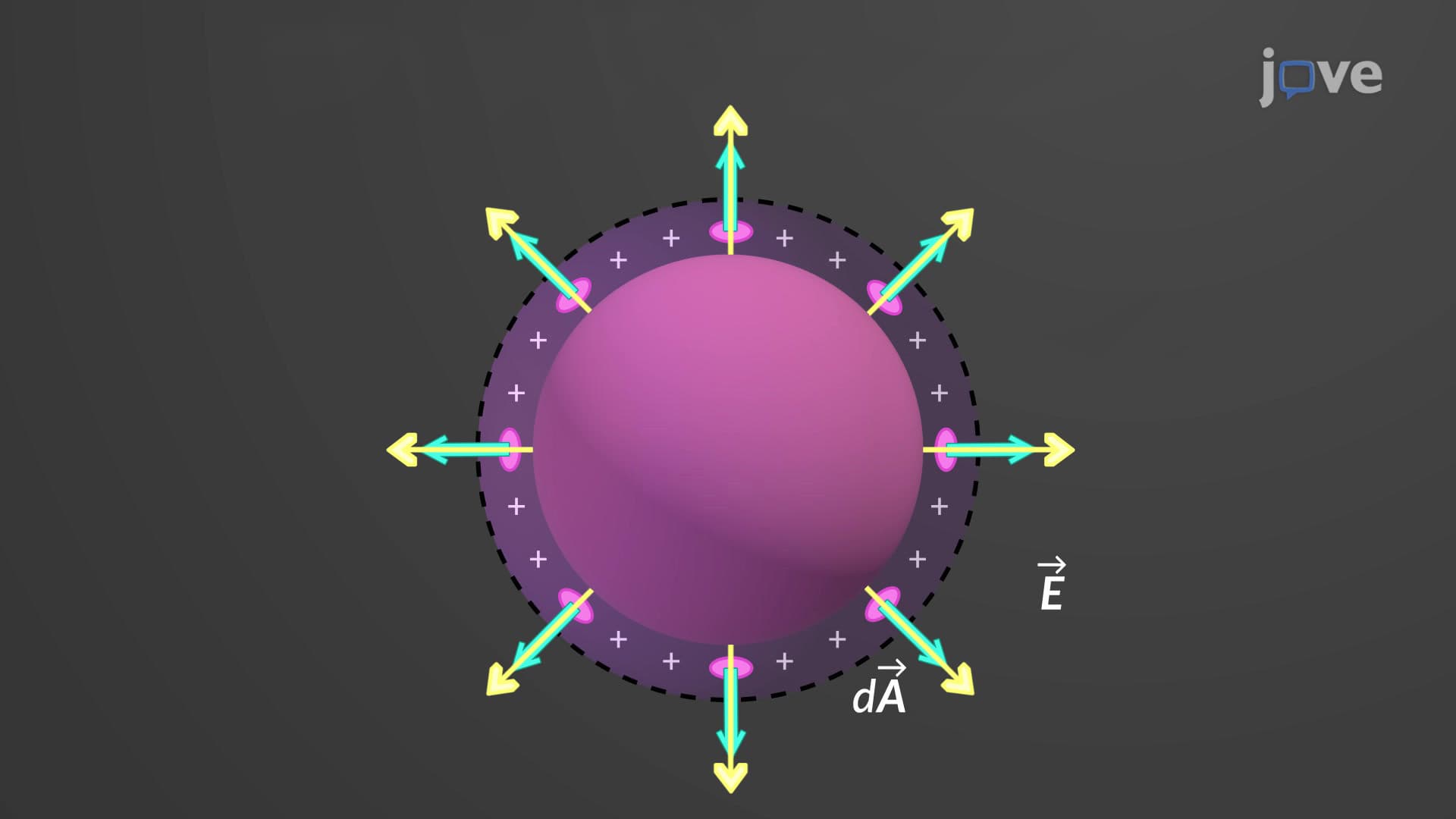
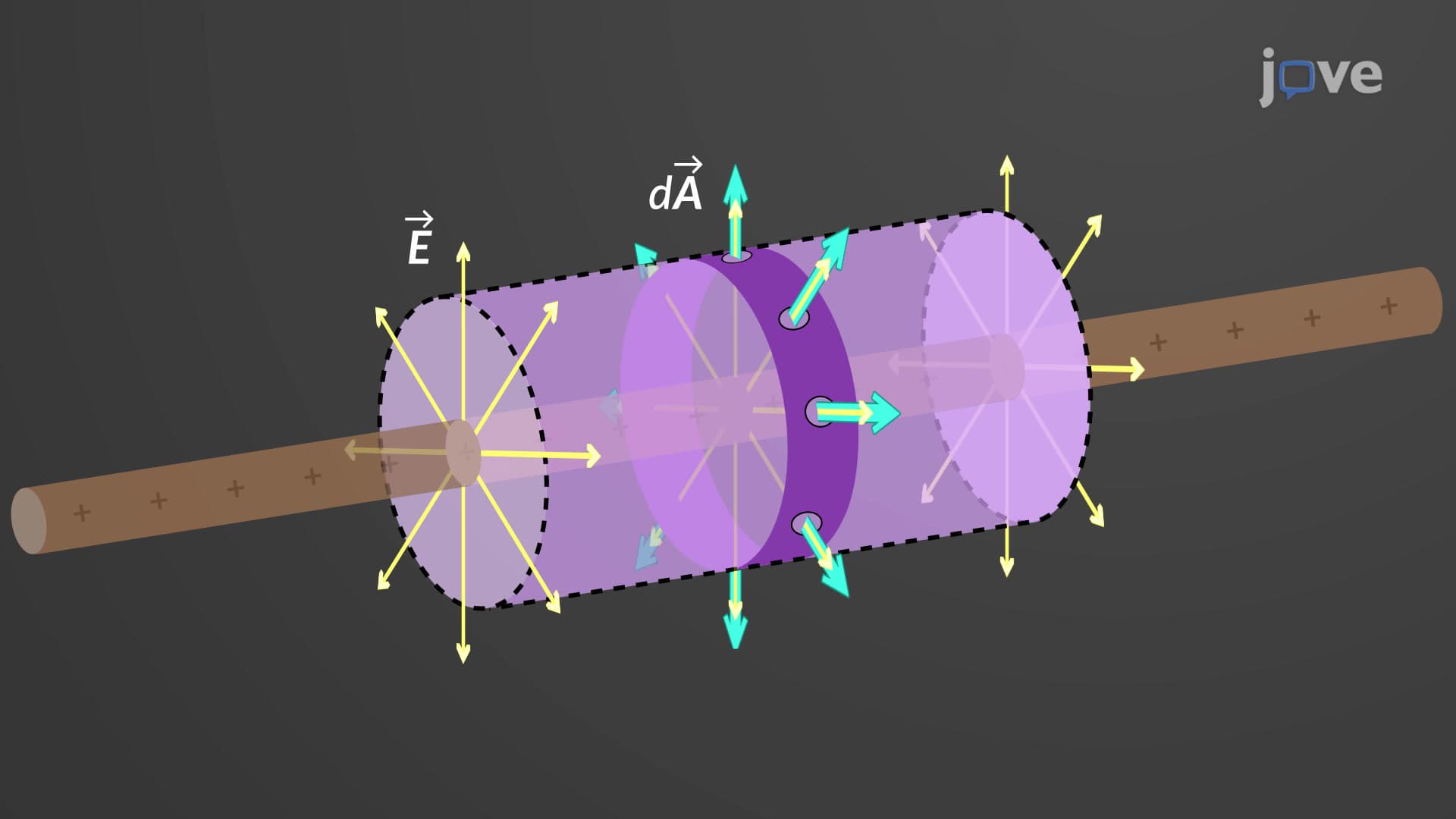
The cylindrical Gaussian surface strategy represents a masterful application of geometric reasoning to electromagnetic problems. By positioning a cylinder with its axis perpendicular to the charged plane and its flat ends equidistant from the surface, we create a system where calculations become remarkably straightforward.
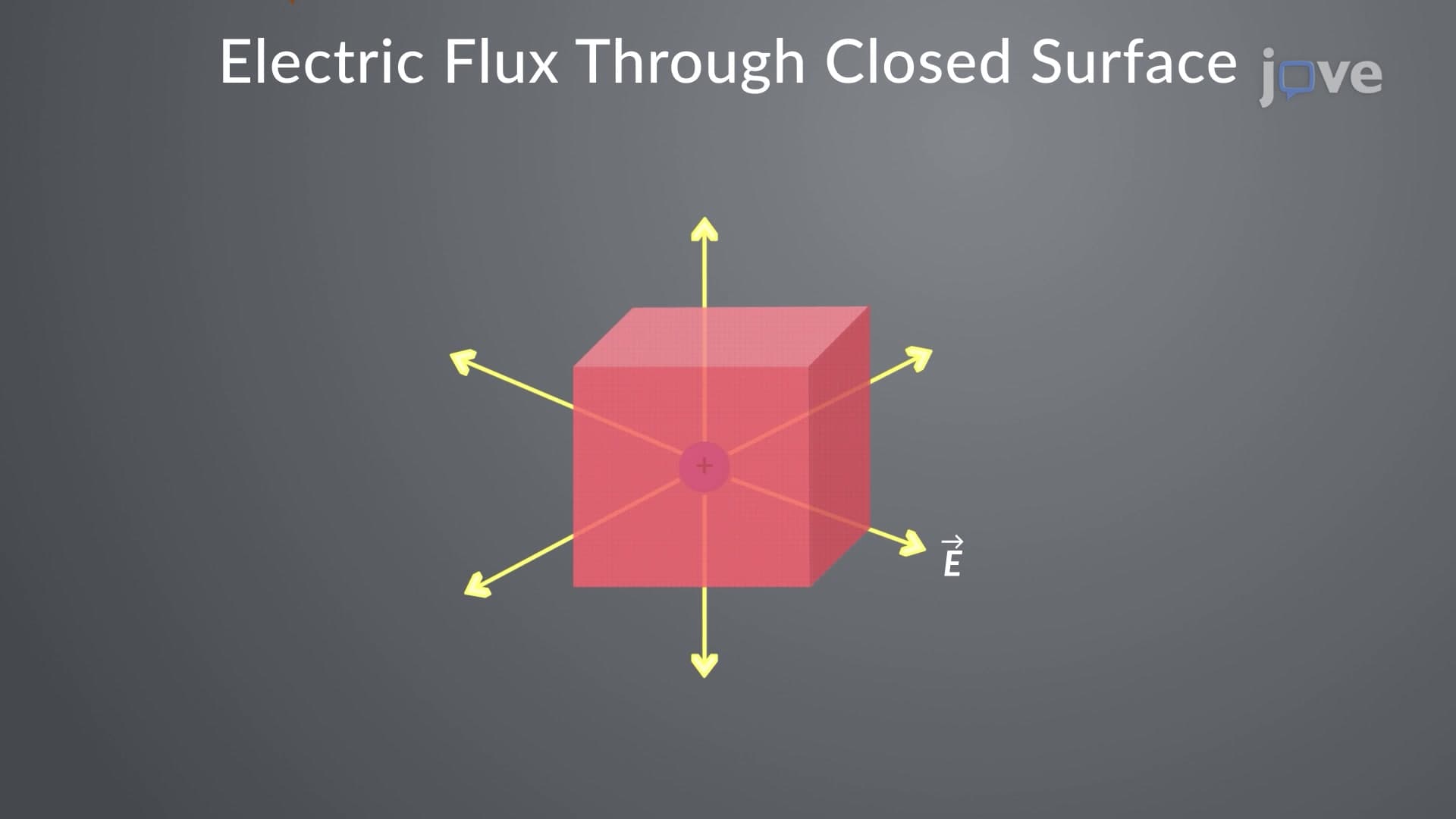
The curved surface of this cylinder contributes zero flux because electric field lines run parallel to it, never crossing through. Only the two flat circular ends contribute to the total flux calculation. Each end captures flux equal to E×A, making the total flux 2EA.
Practical Applications in Engineering and Technology
This concept extends far beyond academic exercises. Aerospace engineers at companies like Lockheed Martin and General Electric apply these principles when designing aircraft electrical systems. During flight, static charge accumulation on wing surfaces creates electric fields that must be managed to prevent interference with navigation systems.
Similarly, students studying for the MCAT encounter planar symmetry concepts when learning about cellular membrane potentials. The approximation of cell membranes as charged planes helps predict electric field behavior across biological interfaces, crucial for understanding neural transmission and cardiac electrophysiology.
Frequently Asked Questions
Gauss's law planar symmetry describes how electric fields behave around uniformly charged flat surfaces that look identical when rotated about perpendicular axes. This symmetry simplifies complex electromagnetic calculations and appears frequently in AP Physics C exams, college electromagnetism courses, and real-world engineering applications like aircraft design.
AP Physics C frequently tests planar symmetry through free-response questions involving charged sheets, capacitor plates, or conductor surfaces. Students must identify the symmetry, choose appropriate Gaussian surfaces, and calculate electric fields using E = σ/(2ε₀). Practice problems often involve multiple charged planes or combinations with other geometric symmetries.
The cylindrical surface works perfectly because its curved sides remain parallel to electric field lines, contributing zero flux, while its two flat ends capture all the relevant flux. This geometric choice transforms complex three-dimensional integration into simple multiplication: total flux equals 2EA, where E is field strength and A is the end area.
Boeing and Airbus engineers apply planar symmetry when analyzing static charge buildup on aircraft wings during flight. Understanding how charged wing surfaces create electric fields helps design proper grounding systems, prevent electromagnetic interference with avionics, and ensure passenger safety during thunderstorms.
No advanced calculus is required for basic planar symmetry concepts. High school students can master the fundamental principles using algebra and geometric reasoning. The mathematical beauty lies in how symmetry eliminates complex integrations, making these problems accessible to students in introductory physics courses.
Focus on pattern recognition: identify planar symmetry, visualize the perpendicular electric field, sketch the cylindrical Gaussian surface, and apply the flux relationship systematically. Practice with varied problems involving different charge densities and surface configurations. Create summary cards linking each symmetry type to its characteristic Gaussian surface and field formula.
Parallel-plate capacitors represent the most common application of planar symmetry in circuit design. The uniform electric field between capacitor plates follows planar symmetry principles, enabling engineers at companies like Texas Instruments to design precise electronic components. This connection bridges electrostatics with practical electronics applications.
Progress to cylindrical symmetry (charged rods and cables), spherical symmetry (point charges and charged spheres), and then combinations of multiple symmetries. Advanced topics include boundary conditions at conductor surfaces, dielectric materials between charged planes, and electromagnetic wave propagation through planar interfaces.
Related Micro-courses