Loading…
Loading video…

115,700 views
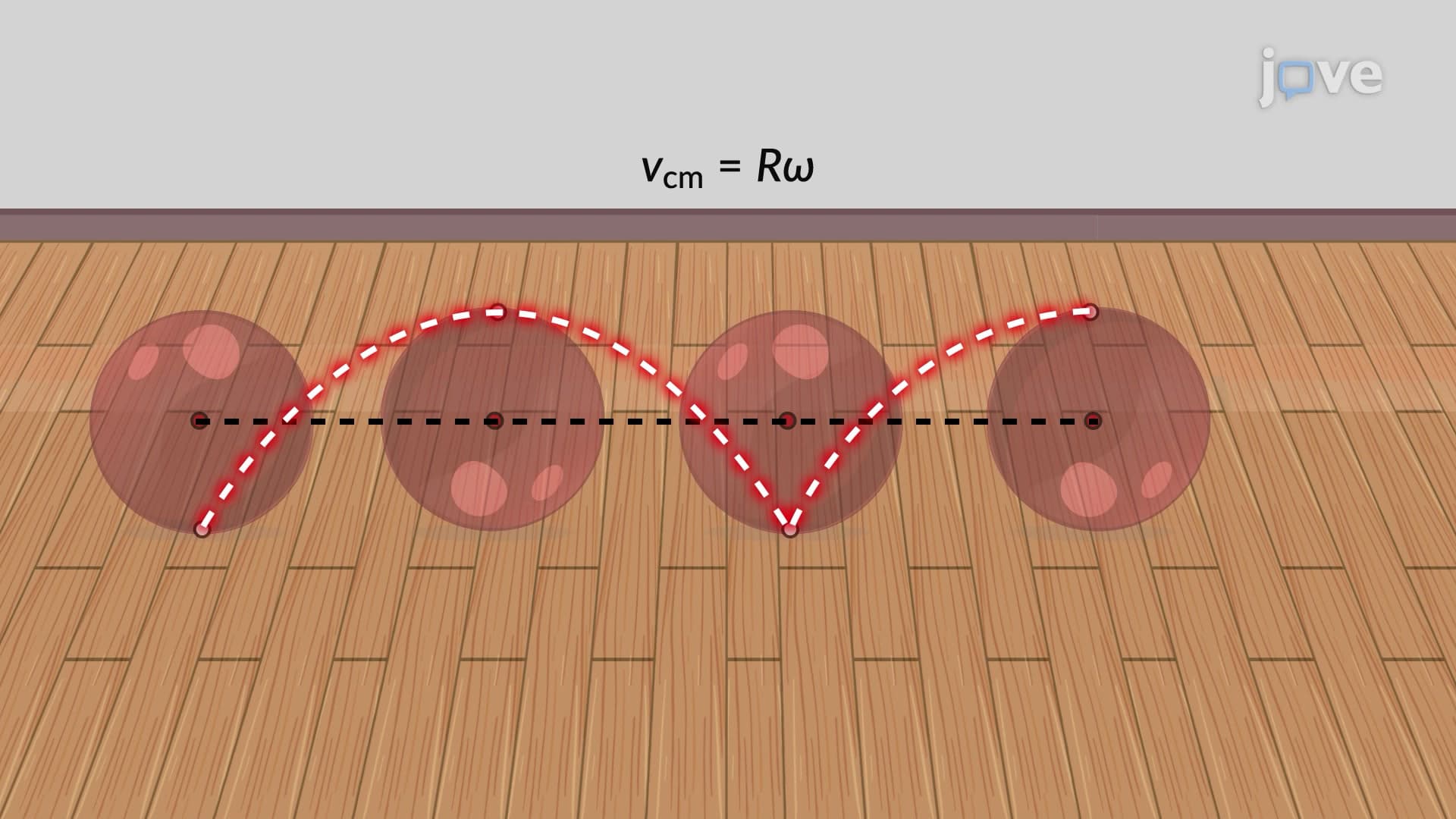
Ever wonder why a bowling ball gracefully curves down the lane while a hockey puck slides straight across ice? The secret lies in rolling without slipping, a fundamental physics concept where rotational and translational motion perfectly synchronize. When a basketball rolls across a gymnasium floor, its bottom point momentarily has zero velocity relative to the ground, creating this elegant motion. What is Rolling Without Slipping demonstrates how friction transforms simple sliding into complex rotational dynamics. Watch the full video on JoVE Coach to master this concept with expert-led visuals and step-by-step explanations.
Rolling without slipping represents one of physics' most elegant demonstrations of how rotational and translational motion can work in perfect harmony. This phenomenon occurs when an object moves along a surface such that its rotational speed exactly matches its forward motion, creating zero relative velocity between the contact point and the surface.
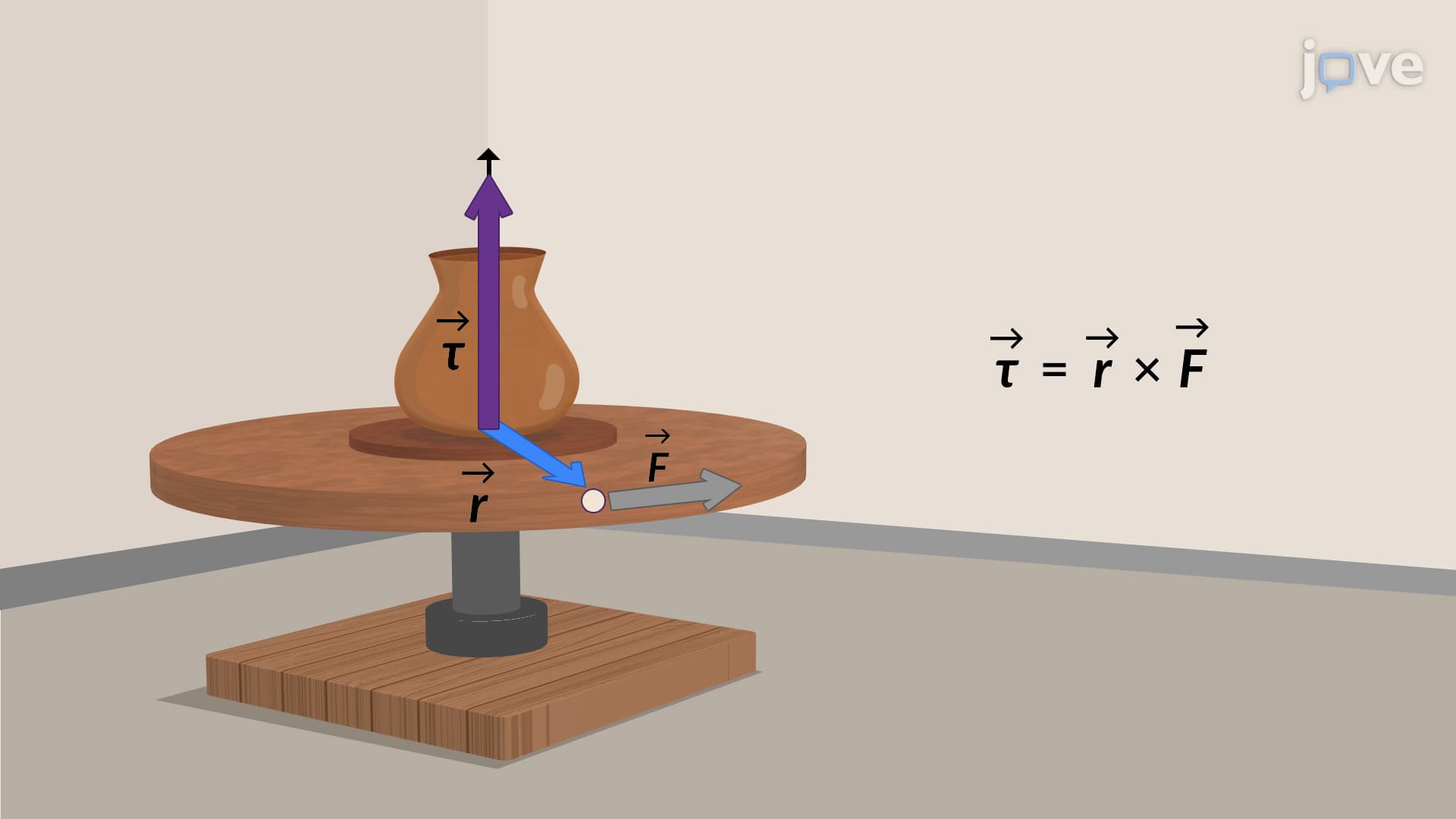
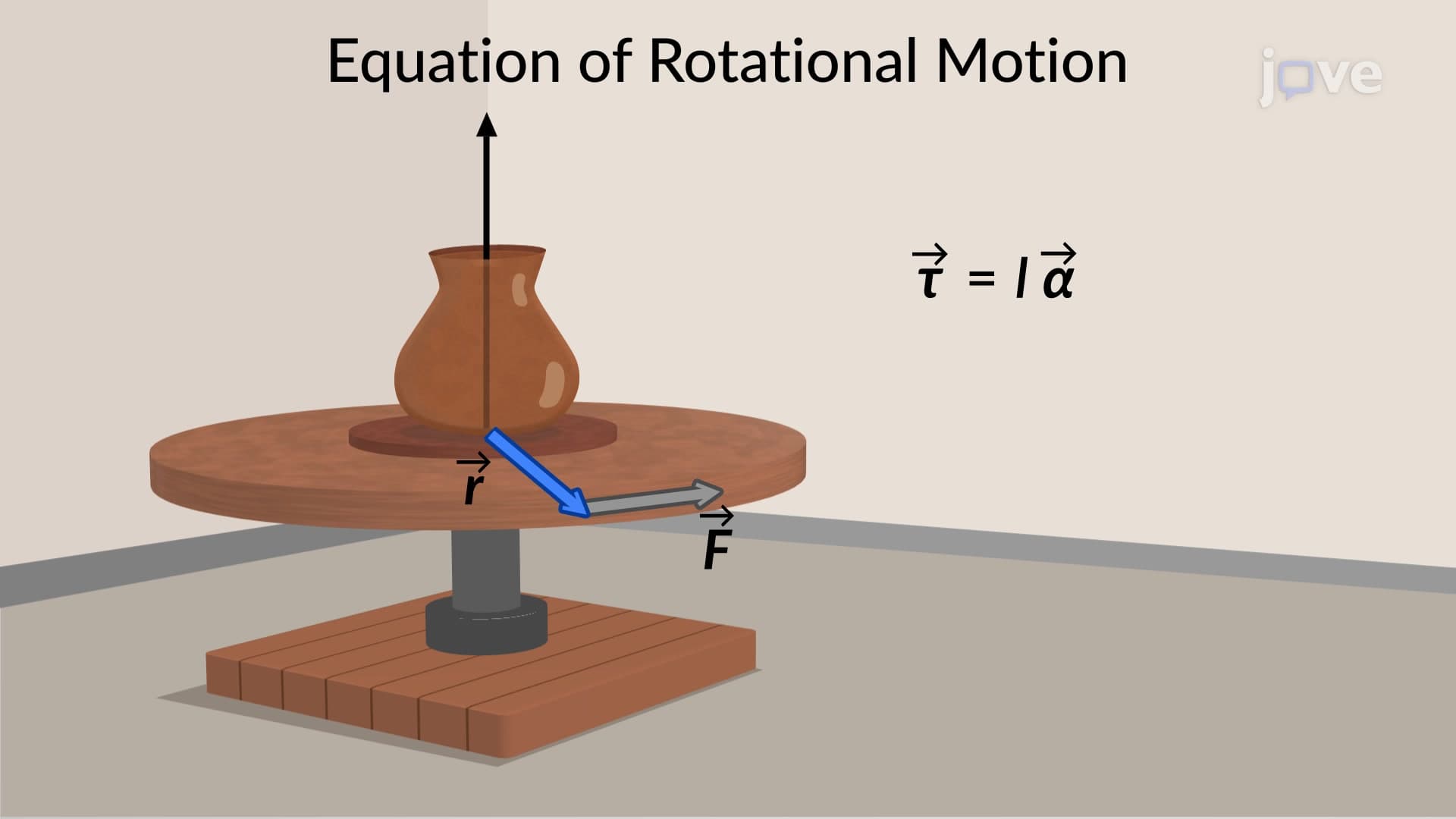
The transition from sliding to rolling involves a fascinating interplay of forces. When a sphere or cylinder moves on a frictionless surface, it experiences pure translation—sliding without rotation. However, introduce friction, and the dynamics change dramatically. The frictional force, acting opposite to the direction of motion, creates a torque about the object's center of mass. This torque generates angular acceleration, causing the object to begin spinning.
As the spinning speed increases, something remarkable happens. The tangential velocity of the bottom point (due to rotation) begins to oppose the translational velocity of the center of mass. When these velocities become equal in magnitude but opposite in direction, they cancel out, resulting in zero velocity at the contact point—the hallmark of rolling without slipping.
The fundamental equation governing this motion is v = ωr, where v represents the linear velocity of the center of mass, ω is the angular velocity, and r is the radius. This relationship appears frequently on AP Physics exams and college mechanics courses.
Consider a bicycle wheel rolling down a San Francisco hill. The wheel's center moves forward at velocity v, while the wheel rotates with angular velocity ω. At any instant, the topmost point of the wheel moves at 2v relative to the ground, while the bottom point remains stationary. This explains why bicycle spokes appear blurred at the top and clearest at the bottom when photographed.
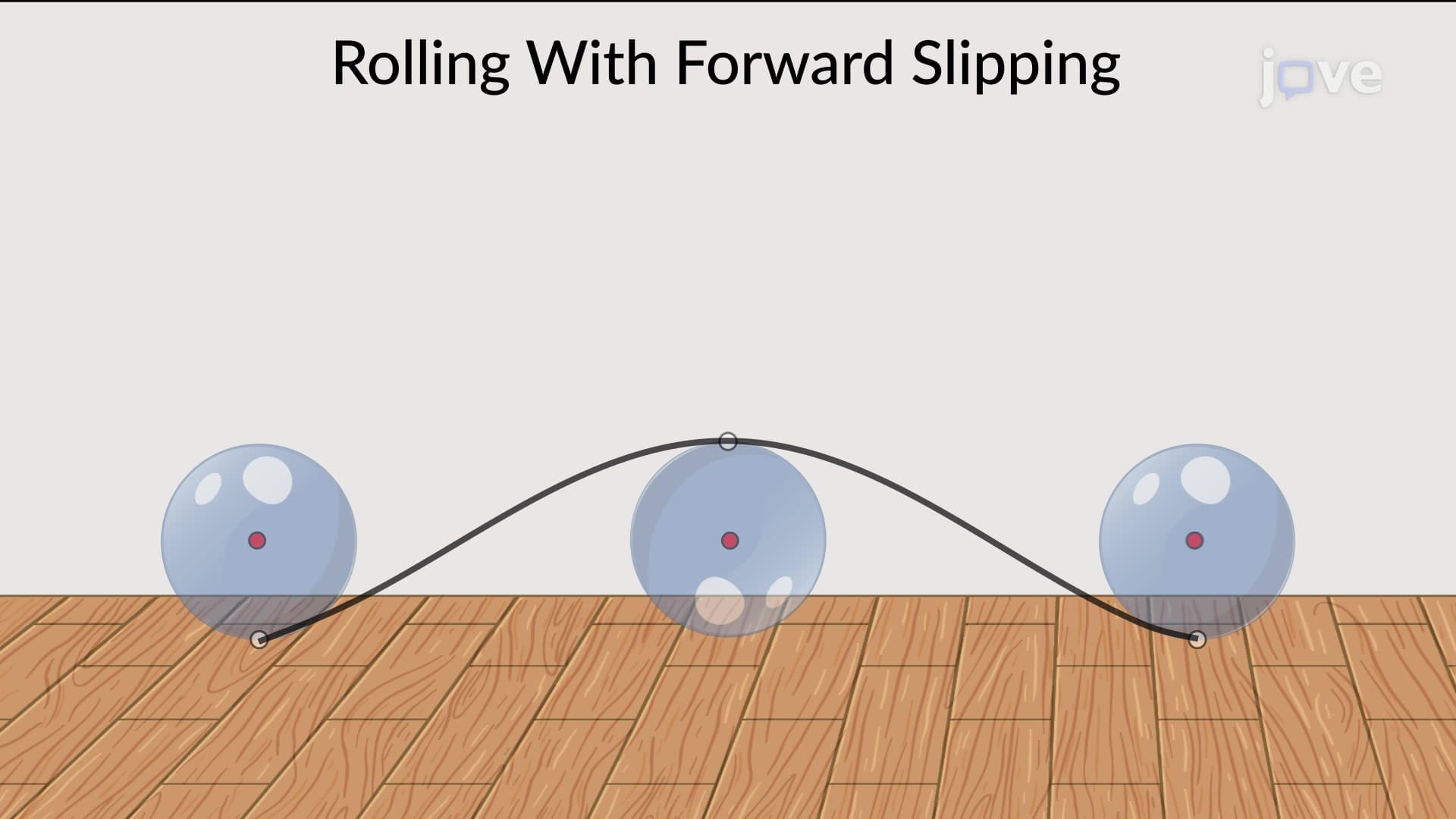
While the center of mass follows a straight path, any point on the rim traces a curve called a cycloid. This concept challenges students taking calculus-based physics courses at universities like MIT or Stanford. The cycloid represents the path traced by a point on a circle as it rolls along a straight line—a beautiful example of parametric motion that combines linear and circular components.
Understanding rolling without slipping proves essential for engineering applications, from designing efficient car transmissions to analyzing the motion of industrial conveyor systems in US manufacturing plants.
Frequently Asked Questions
Rolling without slipping occurs when an object rotates and moves forward simultaneously, with the bottom point having zero velocity relative to the surface. Think of a car tire rolling normally—not skidding or spinning out. This motion requires the perfect balance between rotational speed and forward motion, following the relationship v = ωr.
AP Physics C frequently tests this concept through problem-solving scenarios involving spheres or cylinders on inclined planes. Students must apply conservation of energy, relating translational and rotational kinetic energy. The College Board often includes questions about the motion of objects like bowling balls or bicycle wheels to test understanding of the v = ωr relationship.
The MCAT tests rolling motion within broader mechanics concepts, particularly in passages about biomechanics or medical devices. Understanding torque, rotational inertia, and energy conservation helps answer questions about joint movement or mechanical prosthetics. The concept appears in practice problems involving wheels, gears, or rotating medical equipment.
Car tires demonstrate rolling without slipping during normal driving conditions on US highways. The tire rubber's friction with asphalt provides the necessary force to prevent slipping, allowing efficient energy transfer from the engine to forward motion. When tires lose this grip—during rain or on ice—they transition to sliding motion, reducing control and efficiency.
Rolling without slipping builds naturally from basic rotational concepts taught in Physics 1 courses. Students who understand linear motion, torque, and angular velocity can master this topic with practice. The key is visualizing how rotation and translation combine, which becomes clearer through hands-on demonstrations and problem-solving practice.
Focus on identifying the constraint equation v = ωr first, then apply energy conservation methods. Practice with various scenarios—spheres on inclines, cylinders on rough surfaces, and combined translation-rotation problems. Create diagrams showing force directions and use dimensional analysis to check answers before submitting.
This concept serves as foundation for more complex topics in university mechanics courses, including gyroscopic motion, rigid body dynamics, and advanced rotational systems. Students pursuing engineering degrees at schools like Caltech or Georgia Tech will encounter these principles in courses on machine dynamics, robotics, and mechanical system design.
Rolling motion principles appear throughout American industry—from conveyor belt systems in Amazon warehouses to precision bearings in aerospace applications at companies like Boeing and SpaceX. Understanding these concepts helps engineers design efficient transmission systems, optimize tire performance for NASCAR racing, and develop robotic mobility systems for manufacturing automation.
Related Micro-courses
Related Subjects
 Math Fundamentals 11 micro-courses›
 Statistics 17 micro-courses›